Artwork
The Adoration of the Magi
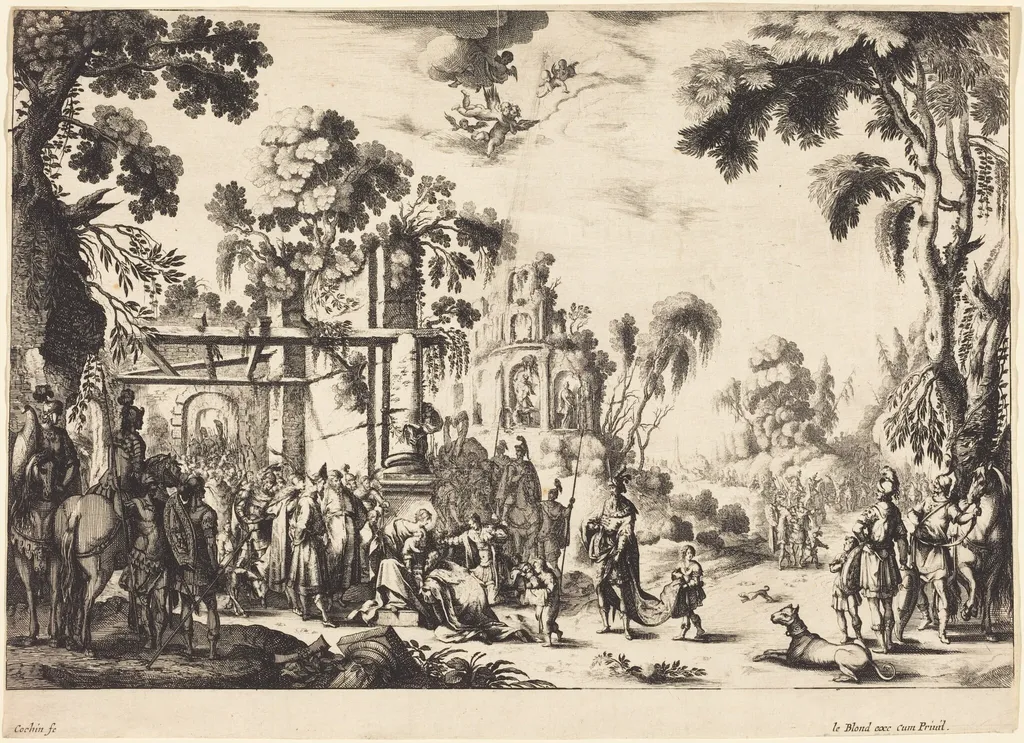
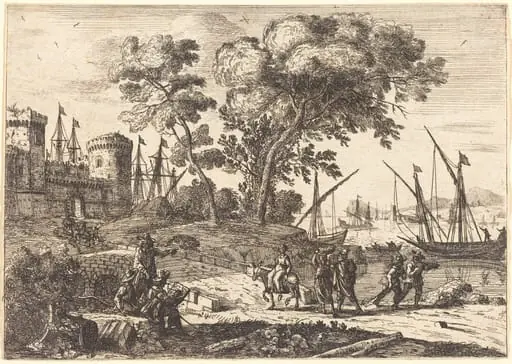
The Adoration of the Magi is an ink print by the Baroque artist Nicolas Cochin. It dates from 1648 and is held in the collection of the National Gallery of Art.
About this work
Overview
Executed in etching and engraving on laid paper, the work captures a crowded outdoor assembly beneath a canopy of trees.
Created in 1648 by Nicolas Cochin, this print depicts the biblical scene of the Magi paying homage to the infant Jesus. Executed in etching and engraving on laid paper, the work captures a crowded outdoor assembly beneath a canopy of trees. The composition centers on a raised platform where the Virgin and Child are seated, surrounded by figures in Renaissance-era attire, some kneeling, others standing with staffs or scrolls.
Subject & Meaning
The scene illustrates the moment when the Three Wise Men arrive to honor the newborn Christ, as described in the Gospel of Matthew. The arrangement of figures—kneeling in reverence, observing quietly, or gesturing toward the central group—emphasizes ritual and awe. The inclusion of a sleeping dog at the lower edge introduces a quiet, earthly counterpoint to the sacred event, grounding the divine moment in a tangible, human setting.
Technique & Style
Cochin employed fine, controlled lines typical of 17th-century printmaking to render texture and spatial depth. The foliage is rendered with delicate cross-hatching, while the folds of garments and architectural details are defined with precise engraving. The contrast between the dense, intricate background and the clearer, lighter forms of the central figures directs the viewer’s attention to the religious core of the scene.
History & Provenance
The print was produced during Cochin’s active period in Paris, where he was known for his reproductive engravings after paintings and religious subjects. Though the original commission or patron is unrecorded, the work reflects the demand for devotional imagery among educated collectors. It was likely circulated as part of a series or as a standalone devotional object, common in early modern print culture.
Context
In mid-17th-century France, religious imagery remained central to printmaking despite growing secular interests. Cochin’s work aligns with a tradition of detailed, narrative prints that served both spiritual and artistic purposes. His style, influenced by Flemish and Italian precedents, catered to a clientele seeking refined, miniature-scale scenes for private contemplation rather than public display.
Legacy
Cochin’s etching contributed to the dissemination of biblical narratives through accessible, reproducible media. While not widely exhibited today, the work exemplifies the technical precision and narrative clarity valued in French printmaking of the era. It remains a reference point for understanding how religious themes were visually translated for domestic and scholarly audiences in early modern Europe.
Artist & collection


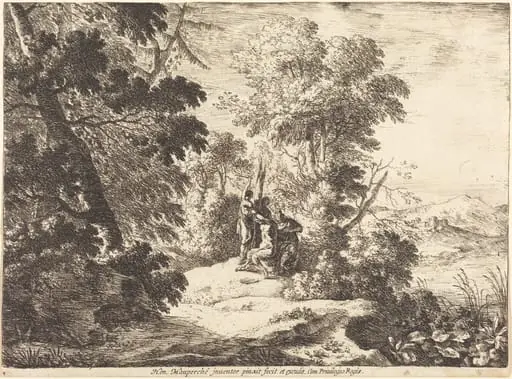 The Flaying of Marsyas
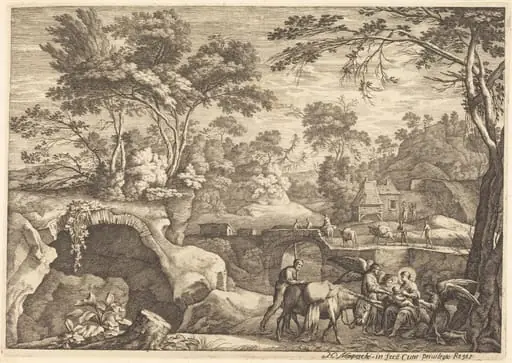 The Flight into Egypt
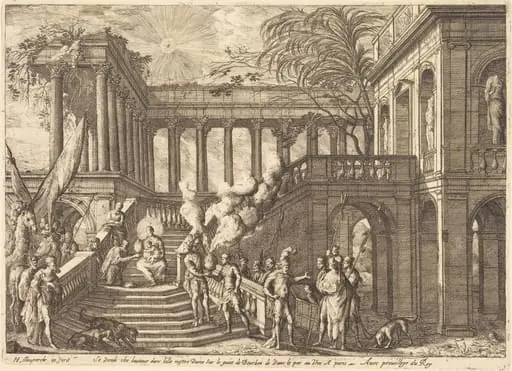 The Adoration of the Kings
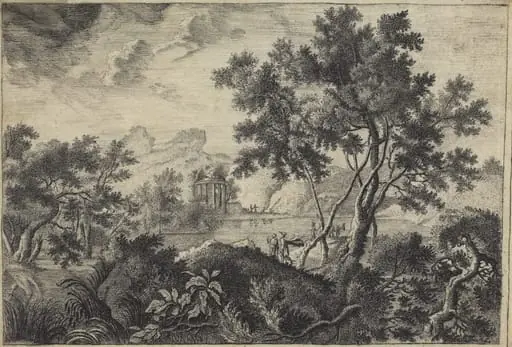 Classical Landscape with a Tempietto
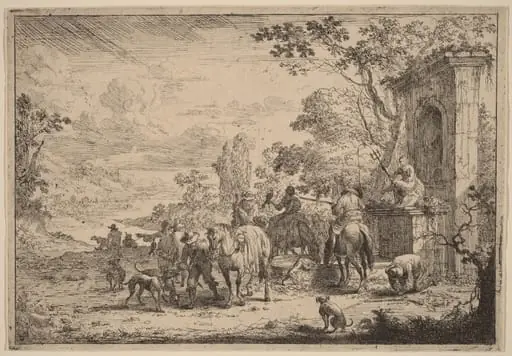 Huntsmen Resting
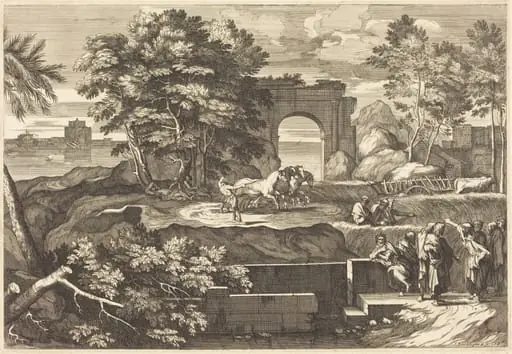 The Pharisees Complain to Our Lord
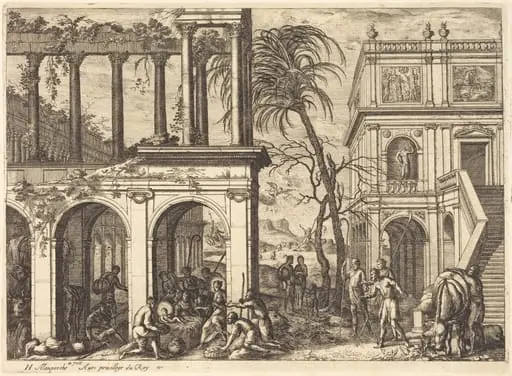 The Adoration of the Shepherds
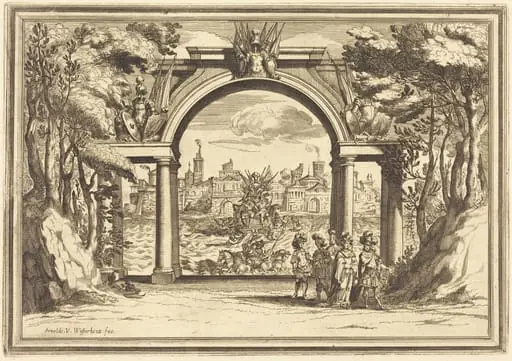 Il Greco in Troia: Plate 1
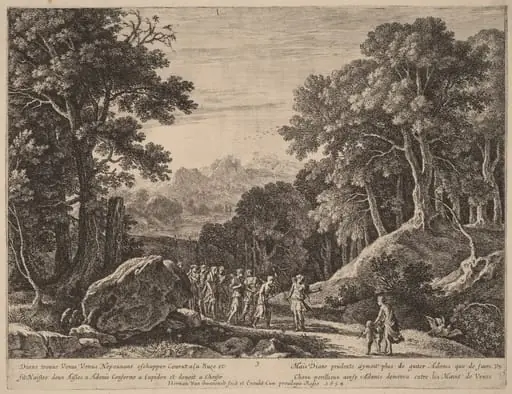 Venus Offering Diana a Choice between Cupid and Adonis
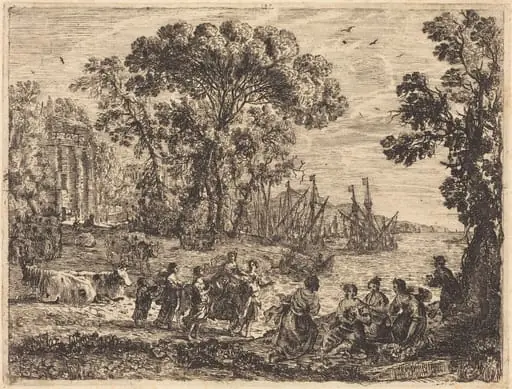 Europa and the Bull (L'enlèvement d'Europe)
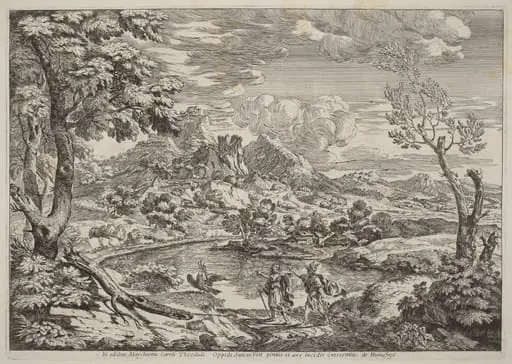 A Man Showing Mercury the Eagle of Jupiter
 Coast Scene with an Artist (Le dessinateur)