Artwork
Sibylla Delphica
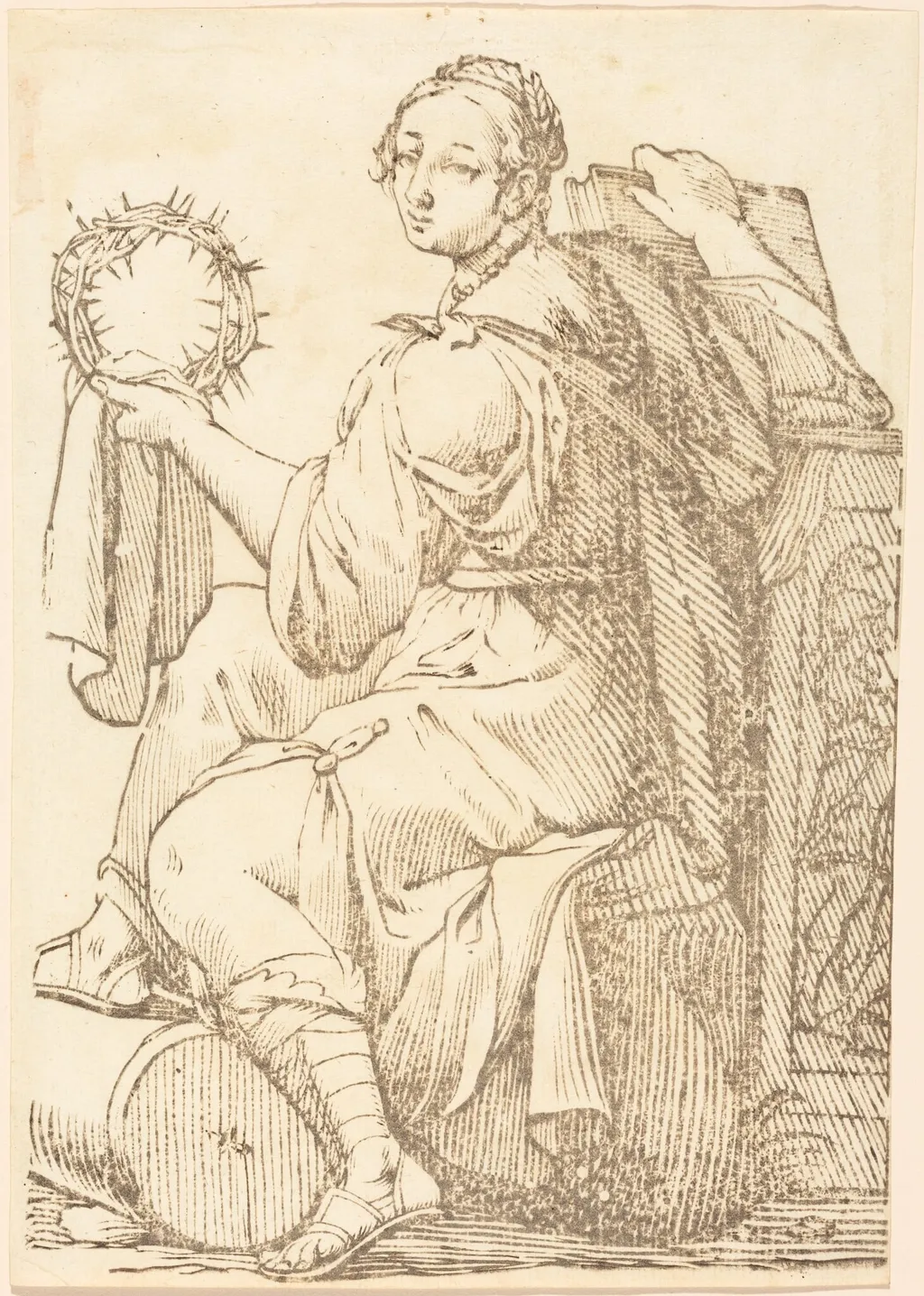
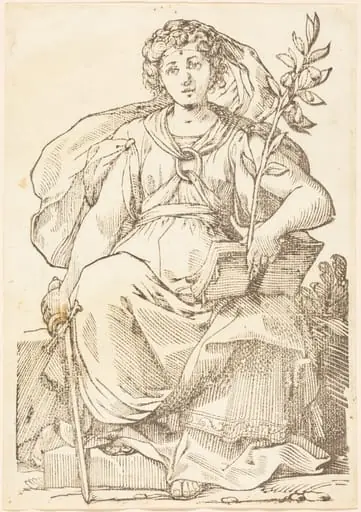
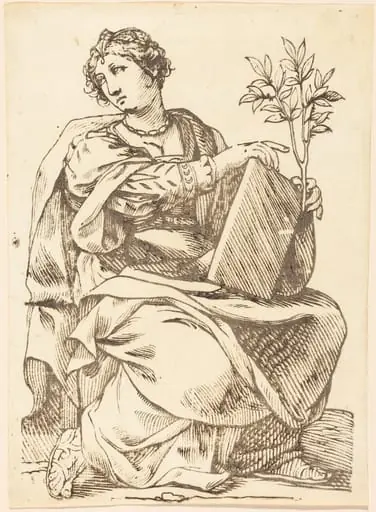
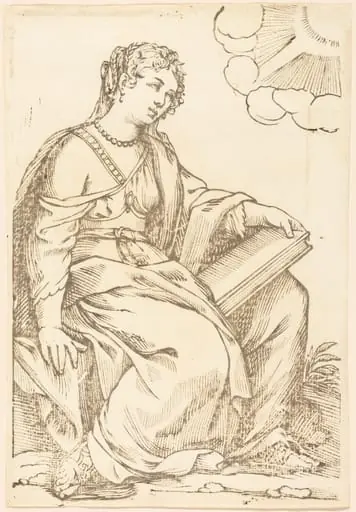
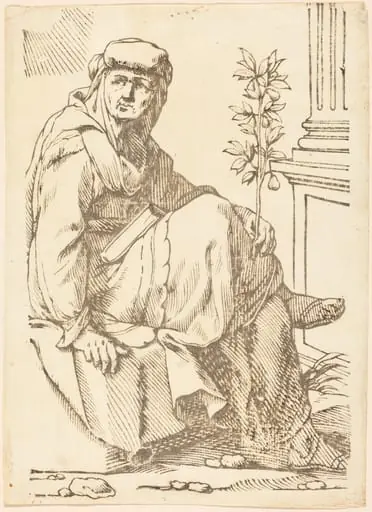
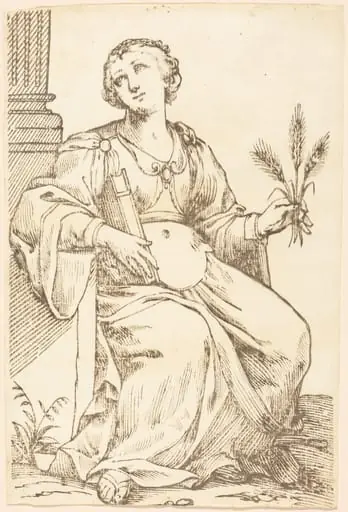
Sibylla Delphica is an ink print by the Baroque artist Paul Maupin. It dates from 1625 and is held in the collection of the National Gallery of Art.
About this work
Overview
Paul Maupin’s woodcut entitled Sibylla Delphica dates from around 1625. Executed on laid paper, the print presents a solitary female figure seated on a chair against an unadorned, light‑toned backdrop. The composition is restrained, emphasizing the sitter’s stillness and the subtle gradations of tone that give the image a palpable sense of presence.
Subject & Meaning
The central figure is a woman in a long robe, her right hand grasping a crown of thorns while her left rests calmly on her lap. Her gaze is inward, and the solemn expression suggests contemplation. The thorned crown invokes Christian symbolism of suffering and devotion, linking the sitter to themes of sacrifice and spiritual reflection.
Technique & Style
Maupin employs the woodcut medium to achieve a delicate balance of light and shadow, carving fine lines that render the folds of the robe and the texture of the thorns. The contrast between the deepened darks and the pale background creates a modest illusion of depth, characteristic of early Baroque printmaking’s interest in chiaroscuro.
Context
Created in the early seventeenth century, the work aligns with the Baroque period’s focus on emotional intensity and religious motifs. Prints such as this were widely circulated, serving both devotional purposes and the broader dissemination of artistic ideas across Europe during a time when print media expanded the reach of visual culture.
Artist & collection