Artwork
The Dissimilar Couple
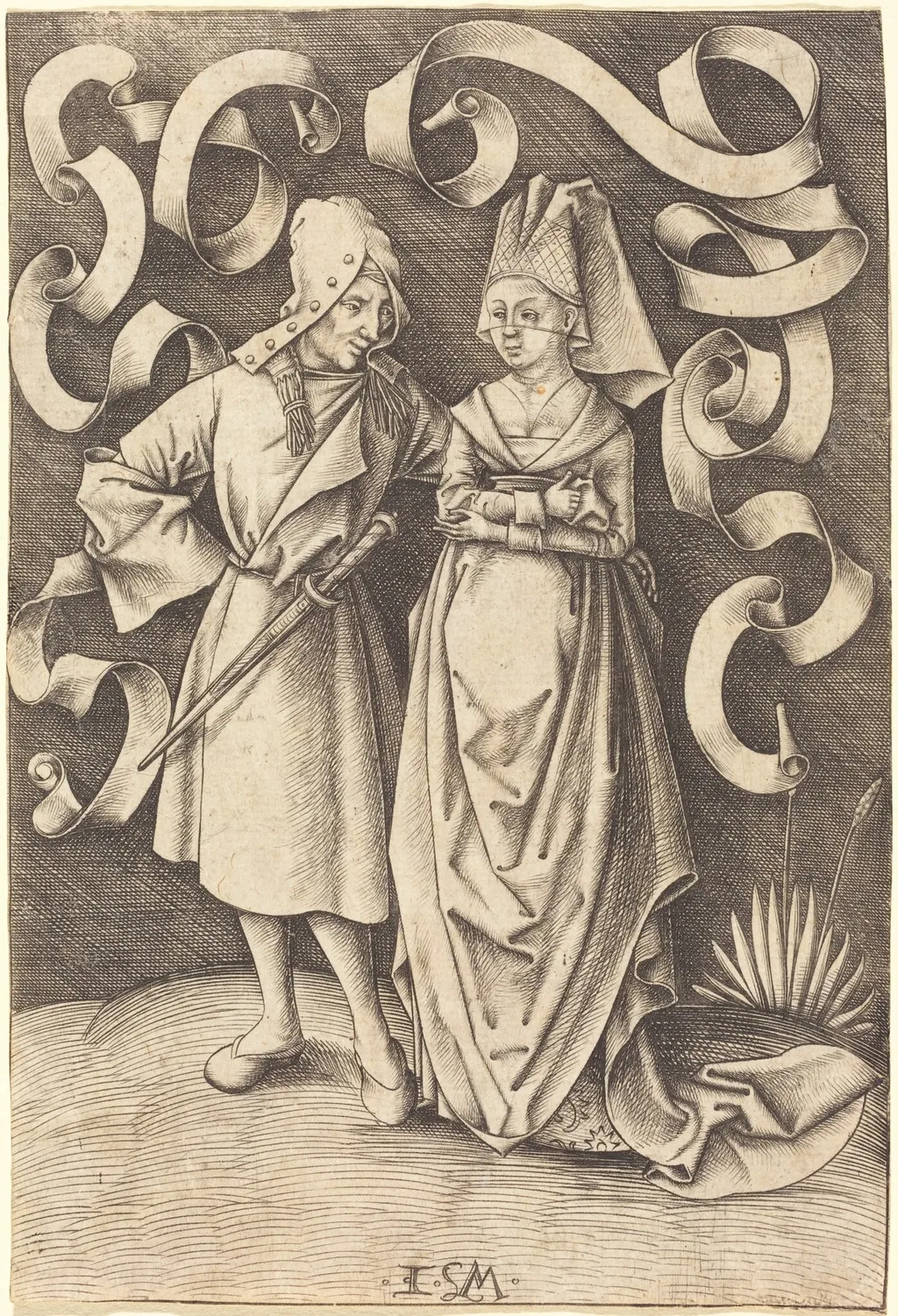
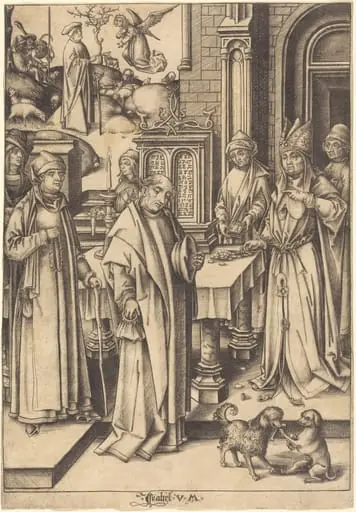
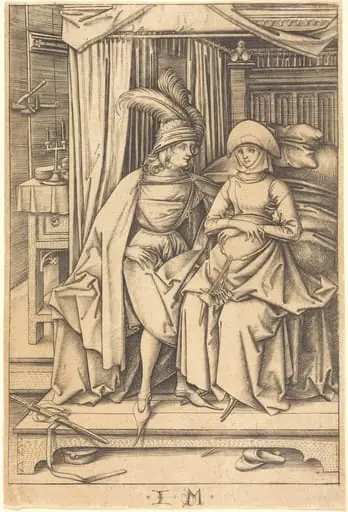
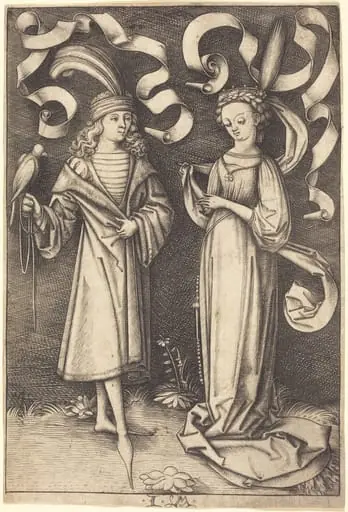
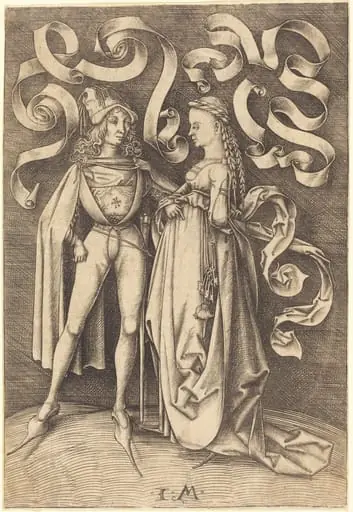
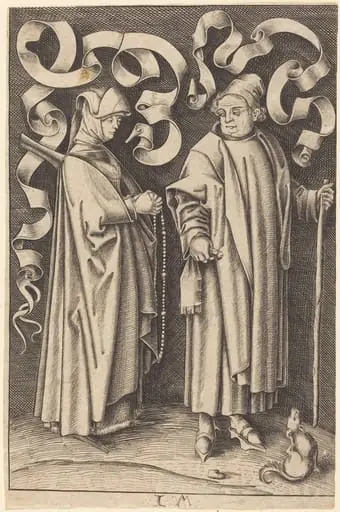
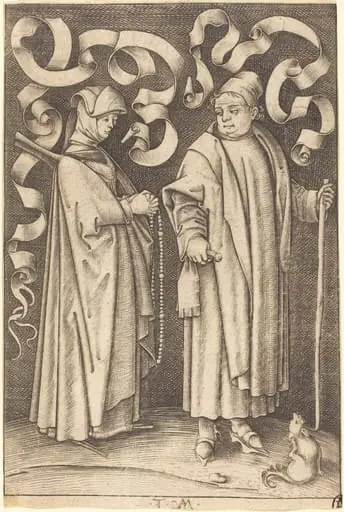
The Dissimilar Couple is an ink print by the Renaissance artist Israhel van Meckenem. It dates from 1499 and is held in the collection of the National Gallery of Art.
About this work
Overview
Created circa 1499, *The Dissimilar Couple* is an engraving by the German artist Israël van Meckenem, who worked as a printmaker and goldsmith between 1465 and 1503. The work belongs to the late‑15th‑century surge of Northern European printmaking and exemplifies the medium’s capacity for detailed line work on paper.
Subject & Meaning
The male figure carries a cane, wears a fur‑trimmed hat and a belted robe, while the female figure dons a tall, pointed hat and a long, belted dress.
The composition presents a man and a woman standing side by side, their gazes directed toward one another. The male figure carries a cane, wears a fur‑trimmed hat and a belted robe, while the female figure dons a tall, pointed hat and a long, belted dress. Their contrasting dress and demeanor have been interpreted as a visual exploration of social or moral opposites, a device common in the period’s allegorical imagery.
Technique & Style
Van Meckenem employed the traditional copper‑plate engraving technique, incising fine lines that allow for intricate detailing of clothing, accessories, and the ornamental scrolls that frame the scene. The artist’s hand is evident in the precise rendering of textures—fur, fabric folds, and the delicate feather fan—demonstrating the high level of craftsmanship characteristic of his prolific output.
History & Provenance
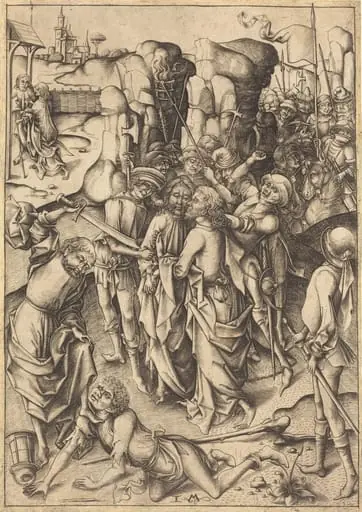
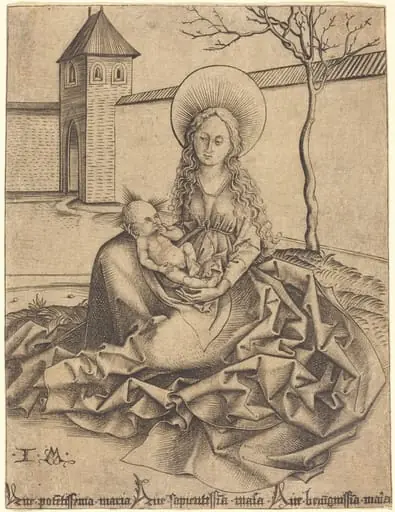
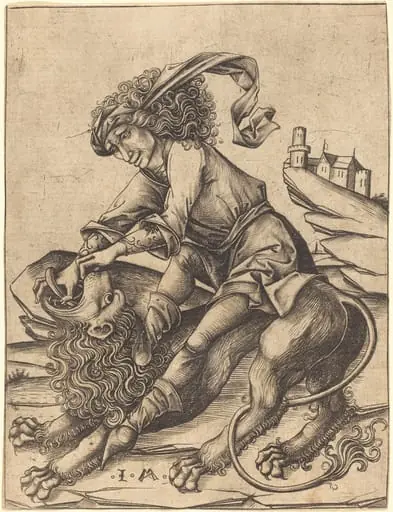
The print is one of more than 620 works attributed to van Meckenem, making him the most productive engraver of the fifteenth century. Many of his prints were copies of earlier compositions, but *The Dissimilar Couple* is an original design that reflects his role in disseminating visual ideas across Northern Europe during the transition from manuscript to print culture.
Context
Produced at the close of the medieval period, the engraving aligns with a broader trend of using paired figures to convey moral or didactic messages. The decorative borders of swirling scrolls echo contemporary manuscript illumination, while the emphasis on individual character traits anticipates the humanist interest in personal identity that would flourish in the Renaissance.
Artist & collection
Artist
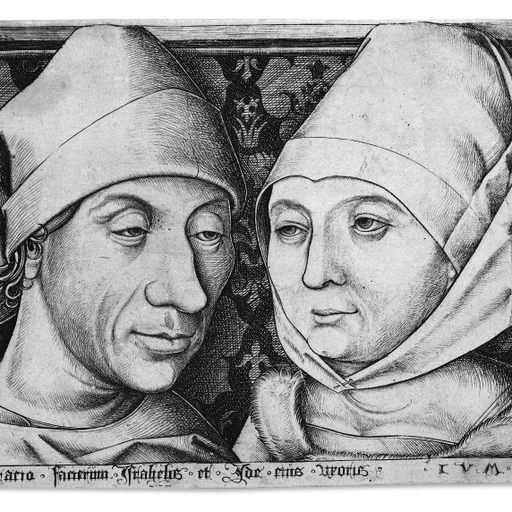
Israhel van Meckenem (c. 1445 – 10 November 1503), also known as Israhel van Meckenem the Younger, was a German printmaker and goldsmith, perhaps of a Dutch family origin. He was the most prolific engraver of the…