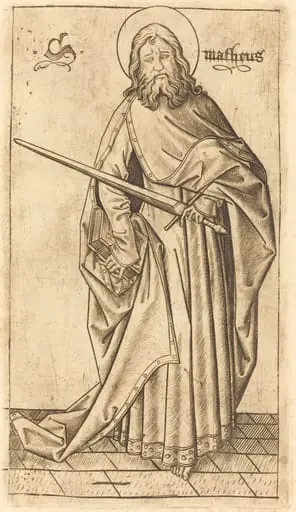
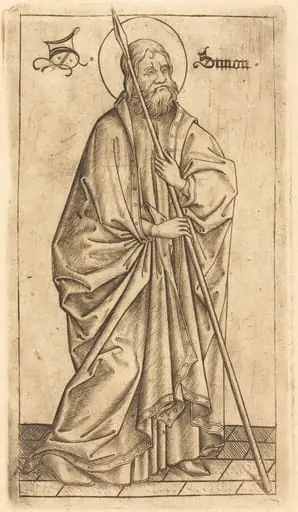
Artwork
Saint James the Less
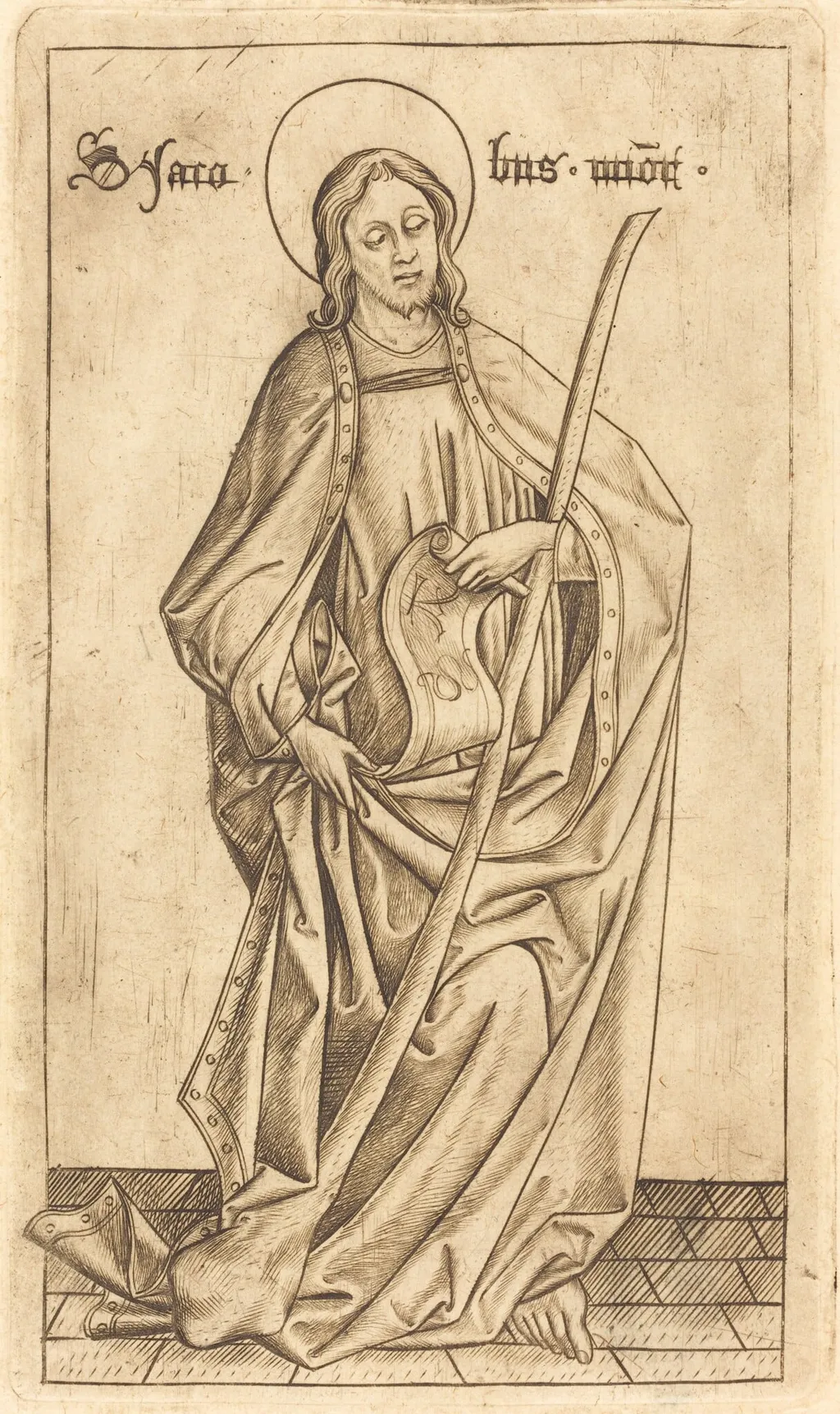
Saint James the Less is an ink print by the Renaissance artist Israhel van Meckenem. It dates from 1475 and is held in the collection of the National Gallery of Art.
About this work
Overview
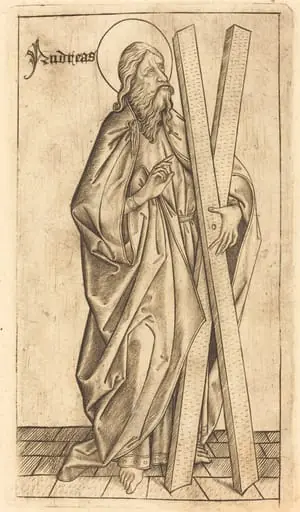
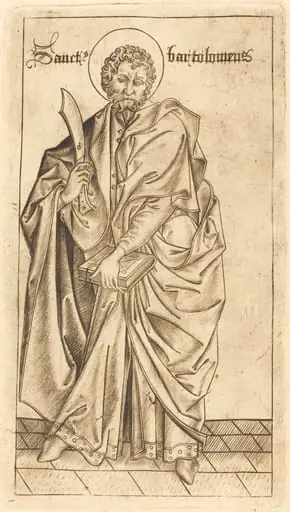
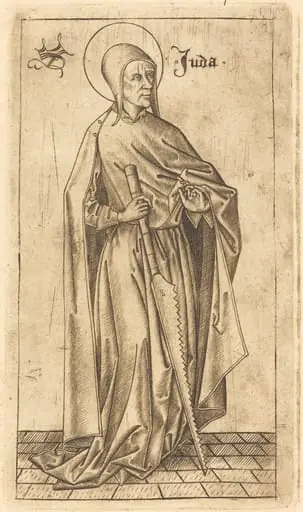
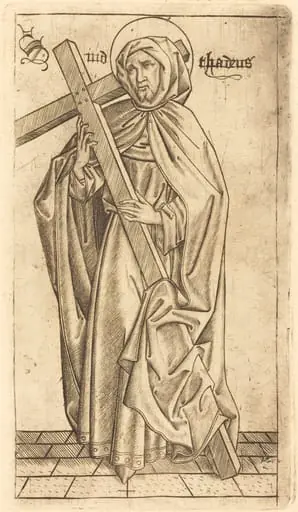
Around 1475 Israhel van Meckenem, a German engraver active in the late fifteenth century, produced an image titled Saint James the Less. Executed as an engraving on laid paper, the work presents a solitary saint standing before a plain wall, his serene expression and halo marking his sanctity. The composition is modest, emphasizing quiet devotion rather than narrative drama.
Subject & Meaning
The figure is identified as Saint James the Less, one of the Twelve Apostles traditionally associated with humility and martyrdom. He is shown in a long robe with a cloak, a sword at his side, and a book in his left hand—attributes that reference his apostolic authority, his martyr’s death, and his role as a teacher of the faith. The calm demeanor invites contemplative reverence.
Technique & Style
Meckenen’s print employs copper engraving, a process in which lines are incised into a metal plate and then transferred to laid paper. The fine, parallel hatching creates subtle tonal variations, rendering the folds of the robe and the texture of the tiled floor. The restrained palette of black ink against the off‑white paper reflects the Northern European devotional aesthetic of the period.
History & Provenance
Saint James the Less belongs to a phase when Meckenem frequently adapted existing compositions, disseminating religious imagery across the Holy Roman Empire.
Israhel van Meckenem (c.1465‑1503) was the most prolific engraver of his generation, leaving a legacy of over six hundred prints. Saint James the Less belongs to a phase when Meckenem frequently adapted existing compositions, disseminating religious imagery across the Holy Roman Empire. The print’s early ownership records are scarce, but it likely circulated among private devotional collections in late‑medieval Germany.
Context
In the fifteenth century, printed devotional images served both private prayer and the spread of saintly cults. Engravings like this one made holy figures more accessible beyond illuminated manuscripts and painted altarpieces. Meckenem’s work contributed to the burgeoning market for portable, affordable religious art, reflecting the growing demand for personal piety in Northern Europe.
Artist & collection
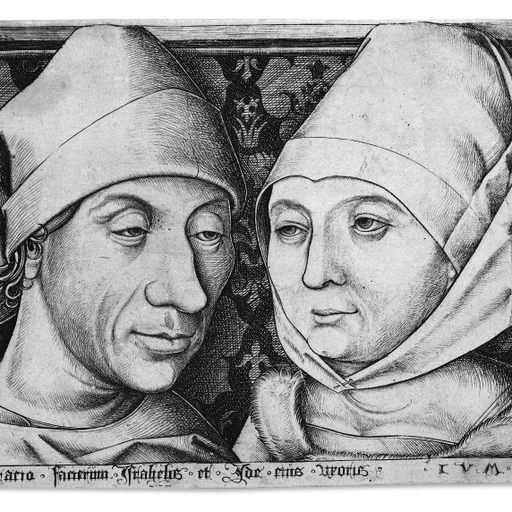
Artist
Israhel van Meckenem (c. 1445 – 10 November 1503), also known as Israhel van Meckenem the Younger, was a German printmaker and goldsmith, perhaps of a Dutch family origin. He was the most prolific engraver of the…