Artwork
The Twelve Apostles: Saint Simon (?) and Saint Matthew
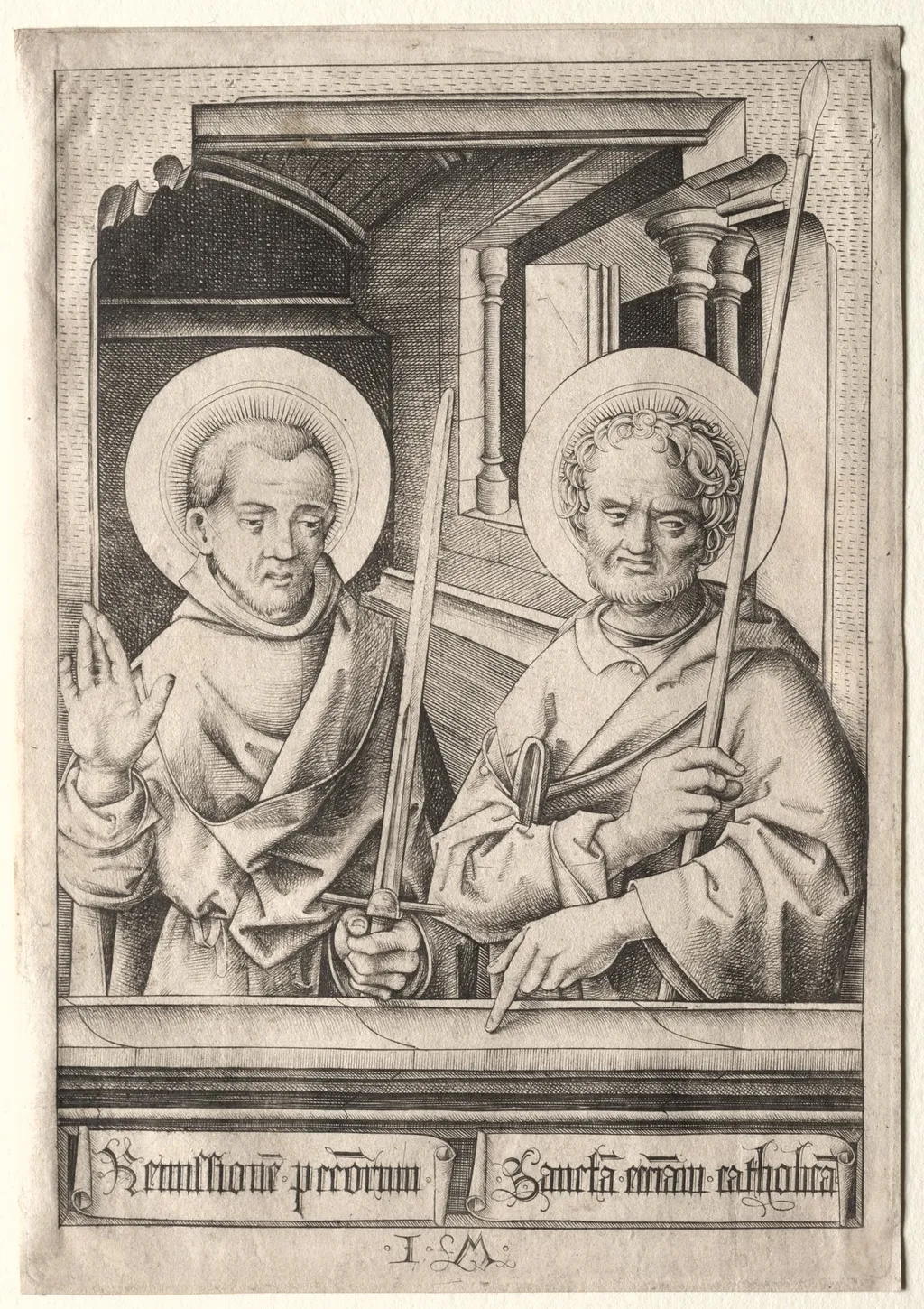
The Twelve Apostles: Saint Simon (?) and Saint Matthew is a print by the Renaissance artist Israhel van Meckenem. It dates from 1490 and is held in the collection of the Cleveland Museum of Art.
About this work
Overview
The work forms part of a series depicting the Twelve Apostles, each rendered in precise linear detail.
Created around 1490 by Israhel van Meckenem, this engraving is one of over six hundred prints produced by the German artist, who was among the most active printmakers of the late fifteenth century. The work forms part of a series depicting the Twelve Apostles, each rendered in precise linear detail. It is currently held in the collection of the Cleveland Museum of Art, where it represents the devotional and reproductive print culture of Northern Europe during the Renaissance.
Subject & Meaning
The print portrays two apostles identified by inscriptions as Saint Simon and Saint Matthew. Each figure bears a halo, signaling their sanctity. Simon is shown in a monastic robe holding a sword, a traditional attribute linked to his martyrdom. Matthew, with curly hair and beard, grips a spear, referencing his eventual death. Their placement side by side suggests a paired devotional function, possibly for private prayer or instruction within a religious household.
Technique & Style
Van Meckenem employed fine, controlled lines typical of Northern Renaissance engraving to define drapery, facial features, and architectural details. The figures are set against a plain stone wall with a small window and pillar, creating a modest spatial depth. The composition is tightly framed, emphasizing the saints’ presence without elaborate background narrative. His technique reflects both technical precision and an adaptation of earlier visual models, common among prolific printmakers of the era.
History & Provenance
The print entered the Cleveland Museum of Art’s collection as part of its broader holdings in early European prints. While its specific ownership history before the twentieth century is not fully documented, its survival in good condition reflects the widespread circulation and preservation of devotional prints in private and ecclesiastical settings. Van Meckenem’s prints were often reproduced and distributed across Europe, contributing to their endurance in institutional collections.
Context
During the late 1400s, religious imagery in print form became increasingly accessible due to advances in engraving and rising literacy among the laity. Van Meckenem’s output catered to this demand, offering standardized depictions of saints for personal devotion. His works often drew from established iconographic traditions, blending regional Northern styles with broader Catholic visual language, making them valuable tools for spiritual instruction outside formal church settings.
Legacy
Israhel van Meckenem’s prolific output helped shape the dissemination of religious imagery in the decades before the Reformation. His engravings, including this pair of apostles, served as models for other artists and printers. Though less celebrated than contemporaries like Dürer, his work remains significant for illustrating the commercial and devotional role of printmaking in late medieval Europe, bridging artisanal craft and spiritual practice.
Artist & collection
Artist
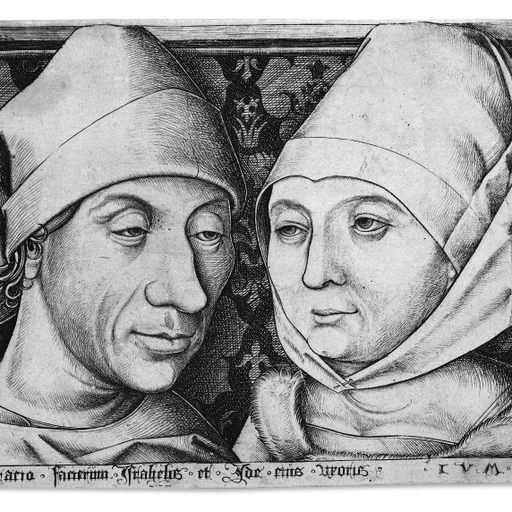
Israhel van Meckenem (c. 1445 – 10 November 1503), also known as Israhel van Meckenem the Younger, was a German printmaker and goldsmith, perhaps of a Dutch family origin. He was the most prolific engraver of the…

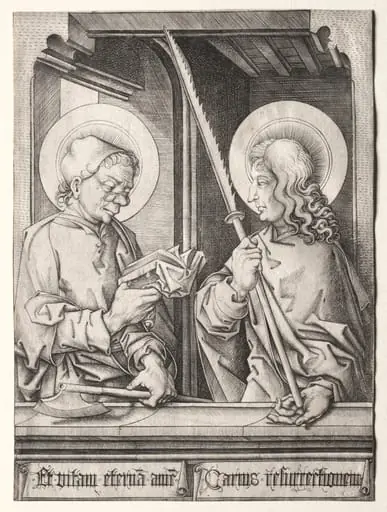 The Twelve Apostles at Gothic Windows: St. Matthias and St. Judas Thaddaeus
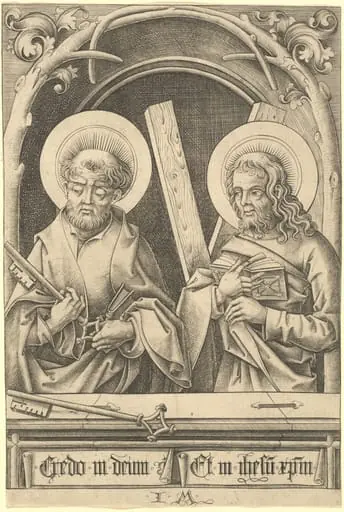 Saints Peter and Andrew
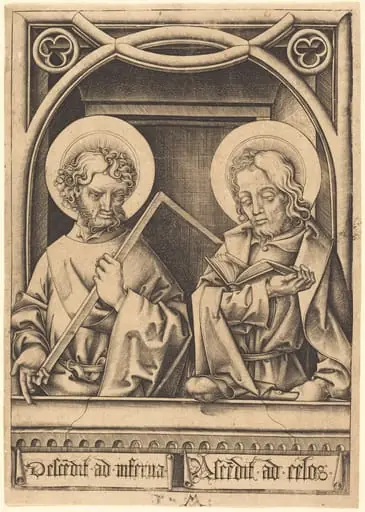 Saints Thomas and James the Less
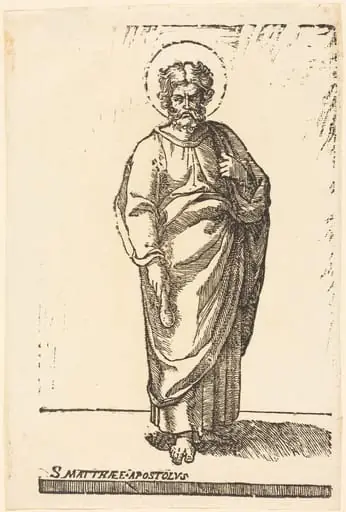 Saint Matthew
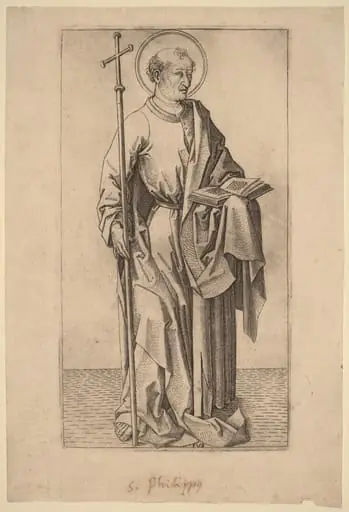 Saint Philip
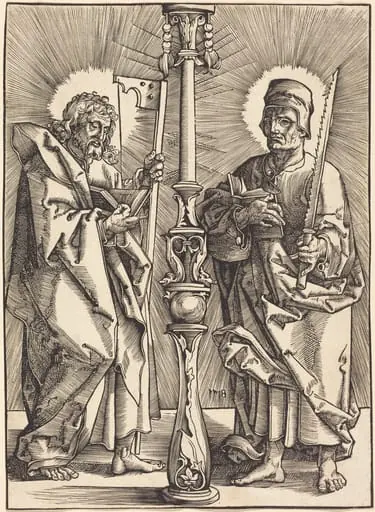 Saint James the Less and Saint Simon
 Christ and the Apostles: St. Peter and St. Paul
 Saints Peter and Paul
 Die hll. Augustinus und Andreas Außenseite: Buße des hl. Hieronymus und kniende Nonne