Artwork
The Juggler and the Woman
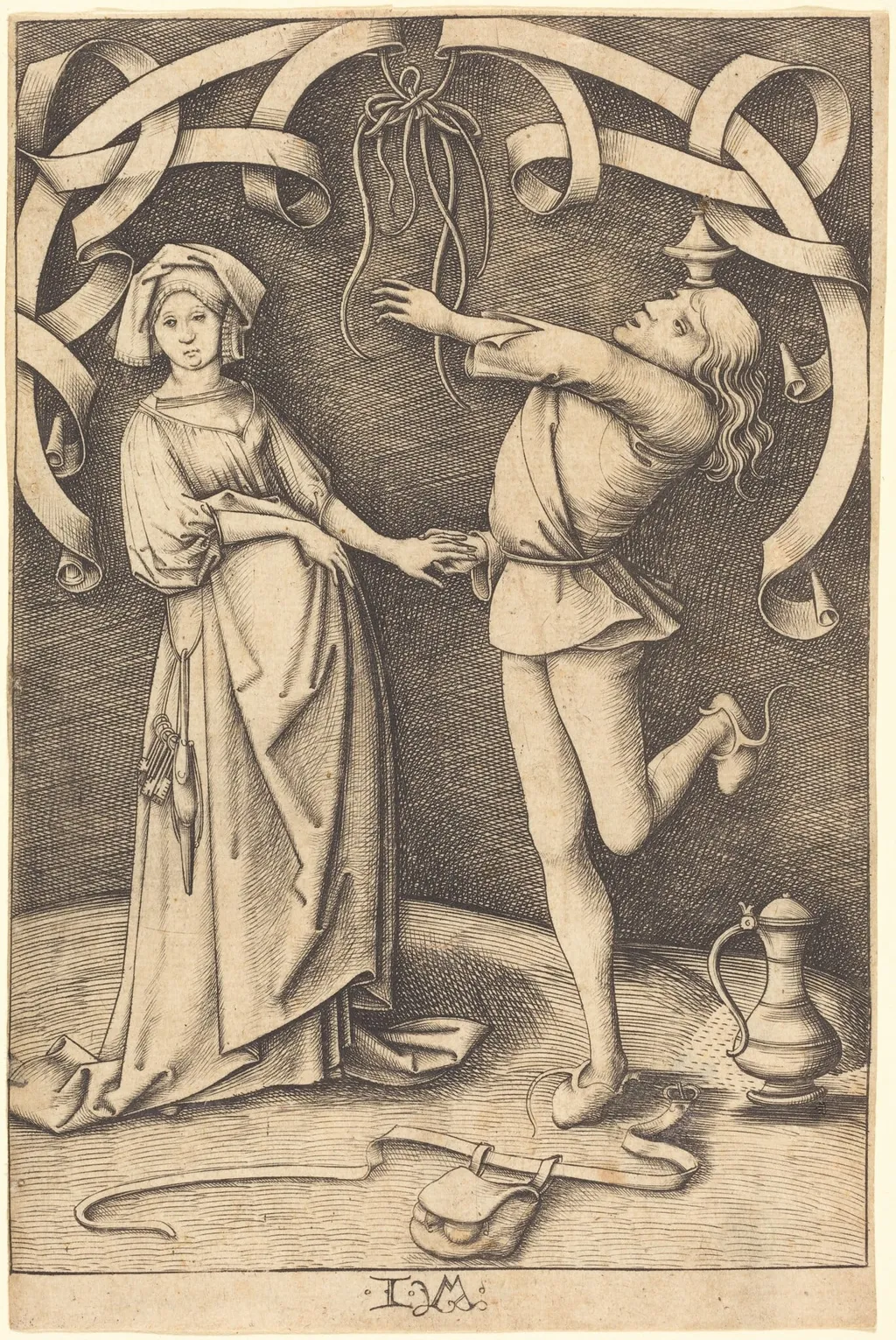
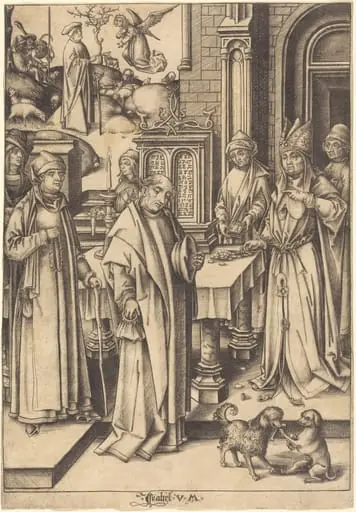
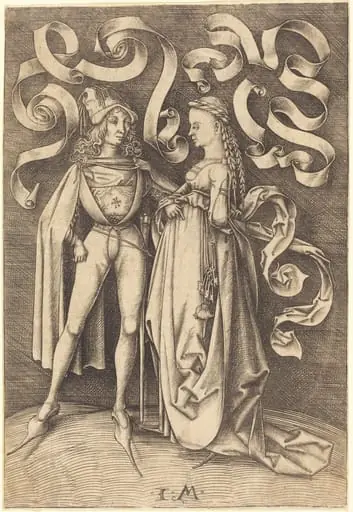
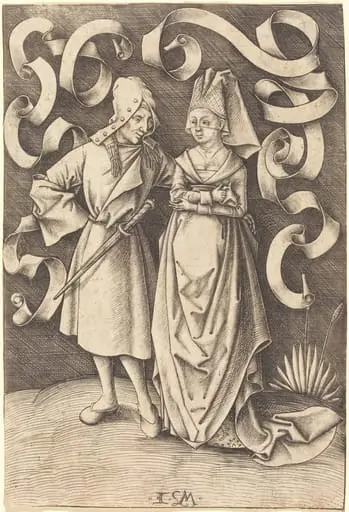
The Juggler and the Woman is an ink print by the Renaissance artist Israhel van Meckenem. It dates from 1499 and is held in the collection of the National Gallery of Art.
About this work
Overview
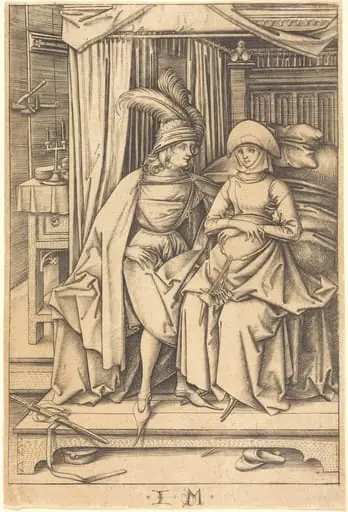
Executed in black‑line on paper, the print presents a modest interior where a male performer tosses objects while a seated female observer watches.
Created circa 1499, *The Juggler and the Woman* is an engraving by the German artist Israhel van Meckenem. Executed in black‑line on paper, the print presents a modest interior where a male performer tosses objects while a seated female observer watches. The composition captures a brief, quiet exchange between entertainer and patron, rendered with the restrained linear clarity typical of late‑15th‑century Northern prints.
Subject & Meaning
The image focuses on a solitary juggler in the act of a trick, his gestures directed toward a woman seated on a bench. Her attentive posture suggests a moment of personal amusement or perhaps a courtly entertainment. The work does not elaborate a narrative beyond this encounter, allowing viewers to contemplate the social dynamics of performance and observation in a domestic setting.
Technique & Style
Van Meckenem employed copperplate engraving, incising fine, parallel lines to model volume and texture. The rendering relies on cross‑hatching to suggest light and shadow, while the overall design remains economical, avoiding elaborate background detail. This approach reflects the artist’s mastery of line work and his preference for clear, readable compositions that could be reproduced widely.
History & Provenance
Active between 1465 and his death in 1503, Meckenem was the most prolific engraver of his century, producing over six hundred prints, many of which were copies of existing images. *The Juggler and the Woman* belongs to his later output, illustrating his continued interest in everyday scenes. Surviving copies are held in several European print collections, documenting the work’s circulation in the early modern art market.
Context
The print emerges from a period when portable images began to spread visual culture beyond elite patronage. Engravings like this one offered affordable access to scenes of daily life, entertainment, and moral reflection. Van Meckenem’s choice of a simple, intimate subject aligns with the growing demand for relatable, narrative prints among a burgeoning middle‑class audience in the Holy Roman Empire.
Artist & collection
Artist
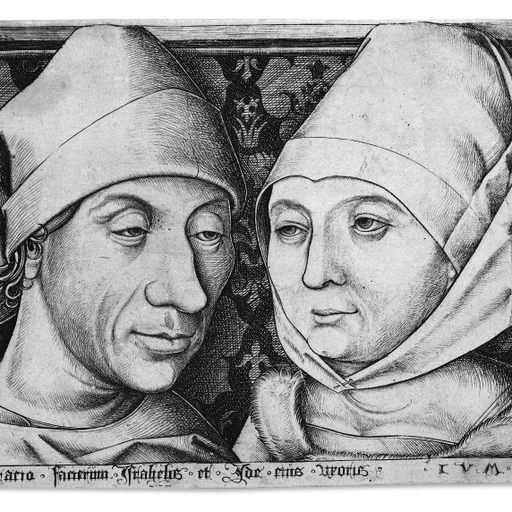
Israhel van Meckenem (c. 1445 – 10 November 1503), also known as Israhel van Meckenem the Younger, was a German printmaker and goldsmith, perhaps of a Dutch family origin. He was the most prolific engraver of the…