Artwork
The Stoning of Saint Stephen
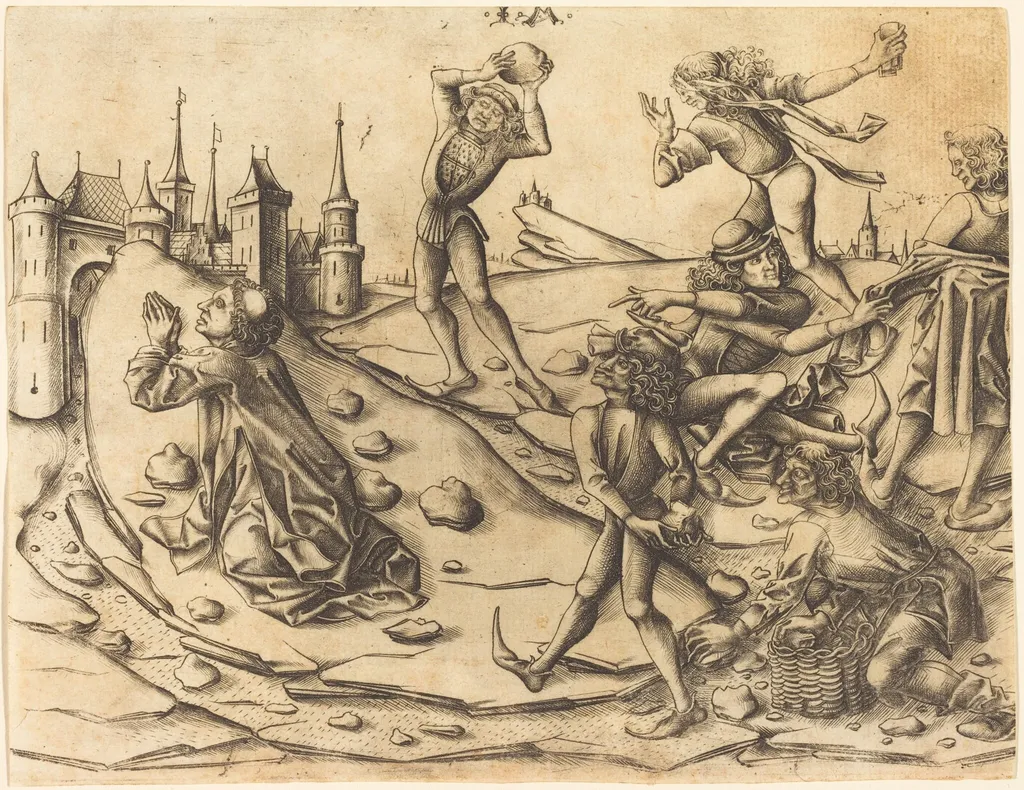
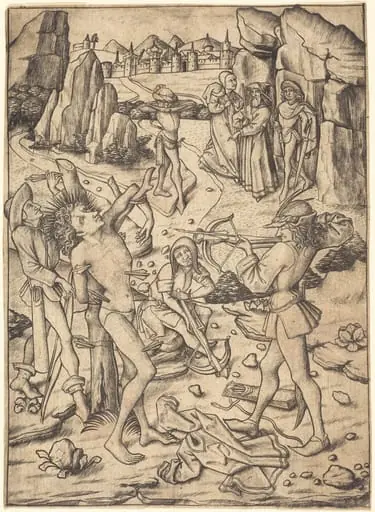
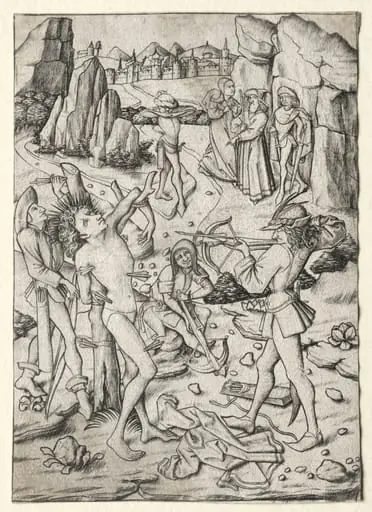
The Stoning of Saint Stephen is an ink print by the Renaissance artist Israhel van Meckenem. It dates from 1470 and is held in the collection of the National Gallery of Art. Created circa 1470, this engraving on laid paper portrays the martyrdom of Saint Stephen.
About this work
Overview
Created circa 1470, this engraving on laid paper portrays the martyrdom of Saint Stephen. Executed by Israhel van Meckenel, a German goldsmith and printmaker active in the late fifteenth century, the work belongs to the early phase of Northern European print culture. Its composition captures a tumultuous crowd surrounding the saint, set against a modest townscape with towers and a church.
Subject & Meaning
The chaotic arrangement of figures—some striking, others recoiling—conveys the violence of the execution and the collective involvement of the onlookers.
The image illustrates the biblical episode in which Stephen, the first Christian martyr, is stoned to death. The chaotic arrangement of figures—some striking, others recoiling—conveys the violence of the execution and the collective involvement of the onlookers. By focusing on this moment of sacrifice, the print underscores themes of faith, persecution, and the ultimate triumph of spiritual conviction over earthly hostility.
Technique & Style
Van Meckenel employed the engraving process, incising fine lines into a copper plate and transferring the image onto laid paper. The work relies on densely cross‑hatched lines to render shadows and volume, giving the scene a sense of depth despite its two‑dimensional surface. The rough, energetic line work and stark contrasts are characteristic of early Northern European prints, emphasizing narrative drama over delicate detail.
History & Provenance
Israhel van Meckenel, recognized as the most prolific fifteenth‑century engraver, produced over six hundred prints, many of which were adaptations of existing compositions. This particular piece reflects his sustained interest in religious subjects. While the original plate has not survived, the impression on paper has circulated in several collections, illustrating the wide distribution of prints in the late medieval market.
Context
The engraving emerges from a period when printmaking began to supplement manuscript illumination as a primary means of visual communication. In the German lands, workshops like van Meckenel’s catered to a growing demand for devotional images among lay audiences. The depiction of Saint Stephen’s stoning aligns with contemporary devotional practices that emphasized the veneration of martyr saints as exemplars of steadfast belief.
Artist & collection
Artist
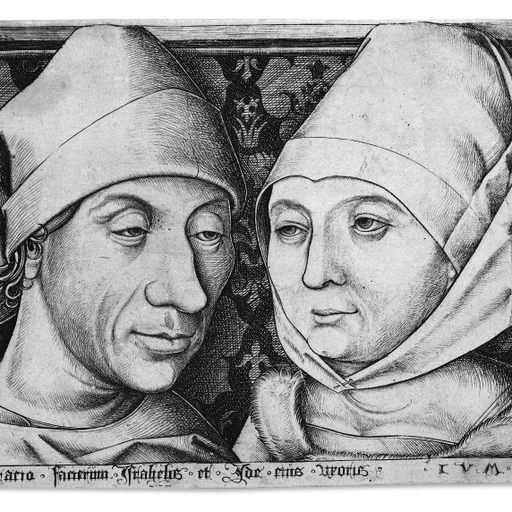
Israhel van Meckenem (c. 1445 – 10 November 1503), also known as Israhel van Meckenem the Younger, was a German printmaker and goldsmith, perhaps of a Dutch family origin. He was the most prolific engraver of the…