Artwork
Large Pendant, Surrounded by Thirteen Studs
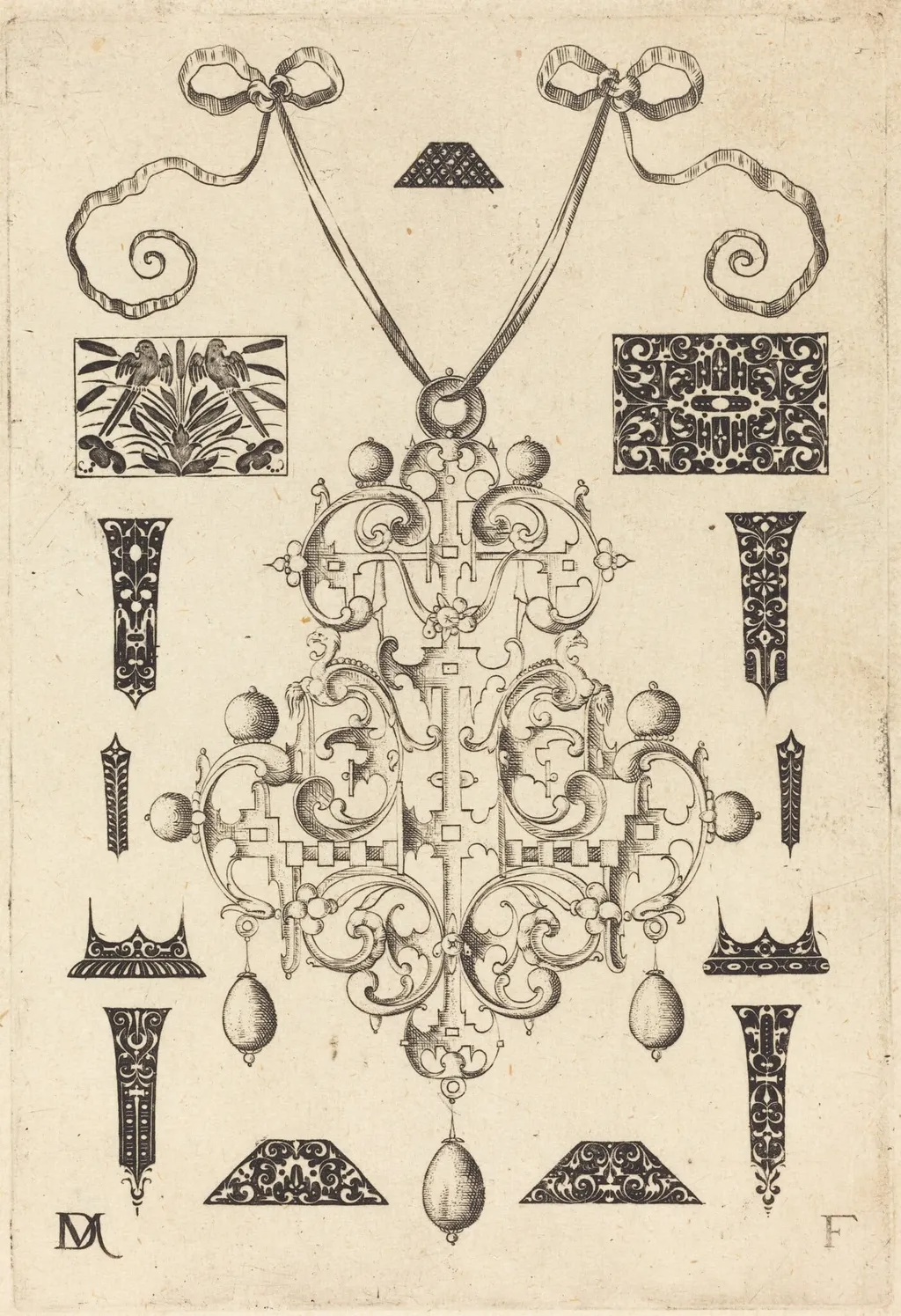
Large Pendant, Surrounded by Thirteen Studs is an ink print by the Renaissance artist Daniel Mignot. It dates from 1593 and is held in the collection of the National Gallery of Art.
About this work
The artist used a technique called cross-hatching—tiny crisscrossed lines—to build up shadow and depth.
A round, jewel-like pendant hangs centered, surrounded by thirteen small studs arranged in a circle. The background is dark and plain, making the object stand out like a symbol or badge.
This image was made using engraving, a method where lines are scratched into metal to hold ink. The artist used a technique called cross-hatching—tiny crisscrossed lines—to build up shadow and depth. It’s skillful work, showing how detailed black-and-white prints can be. Daniel Mignot made this in 1593, but we know very little about him.
Look up engraving, cross-hatching to see how artists created tone and texture before modern tools.
Overview
Large Pendant, Surrounded by Thirteen Studs is a black‑and‑white print executed as an engraving in 1593 by the little‑known artist Daniel Mignot. The composition features a solitary, round pendant positioned at the centre of the field, encircled by thirteen diminutive studs that form a tight ring. The background is uniformly dark, allowing the central motif to emerge as a stark, emblematic form.
Subject & Meaning
The work presents a stylised jewellery piece, its circular pendant and surrounding studs suggesting a badge or seal rather than a narrative scene. The arrangement may allude to concepts of completeness or protection, the number thirteen traditionally bearing symbolic weight in late‑sixteenth‑century iconography. However, without accompanying documentation, any interpretive reading remains speculative.
Technique & Style
Mignot employed the engraving process, incising fine lines into a copper plate that were later inked and pressed onto paper. The image relies on dense cross‑hatching, a method of intersecting parallel strokes, to render tonal variation and convey the three‑dimensionality of the metal objects. The precise, controlled line work demonstrates the high level of craftsmanship typical of late Renaissance printmakers.
History & Provenance
Created in 1593, the print is one of the few surviving works attributed to Daniel Mignot, about whom archival information is scarce. Its provenance traces through several European collections of early prints, appearing in catalogues of 19th‑century antiquarian dealers before entering a museum holding of graphic arts. No record of a specific patron or original commission is known.
Artist & collection


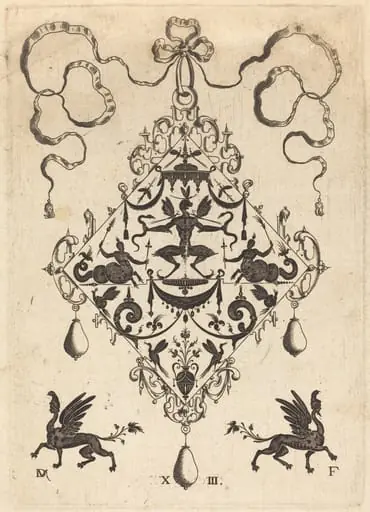 Large Pendant, Winged Fantasy Creature Holding Two Snakes
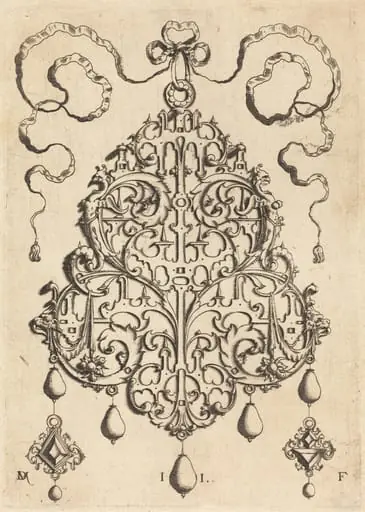 Large Strapwork Pendant with Two Hangers as Earrings at Left and Right
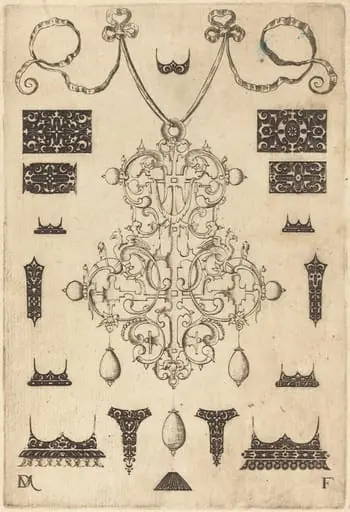 Large Pendant with Three Drops Below, Surrounded by Fifteen Different Studs
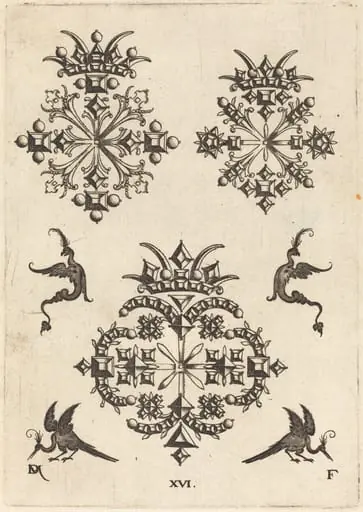 Three Brooches with Fantasy Birds at Left, Right, and Bottom
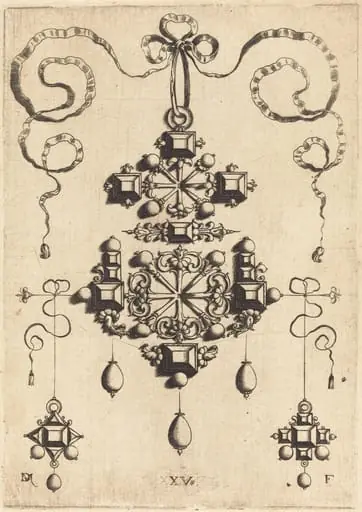 Pendant with Two Double Crosses, Surrounded by Four Diamond-Shaped Stones, Five Table-Stones, and Thirteen Pearls
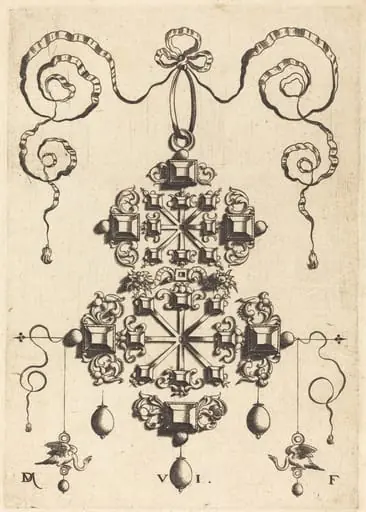 Large Pendant with Two Double Crosses, Surrounded by Six Large and Sixteen Small Table-Stones
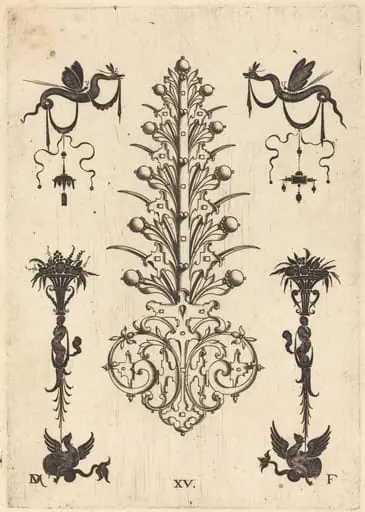 Hyacinth-Shaped Brooch with Winged Snakes at Top and Winged Animals at Bottom
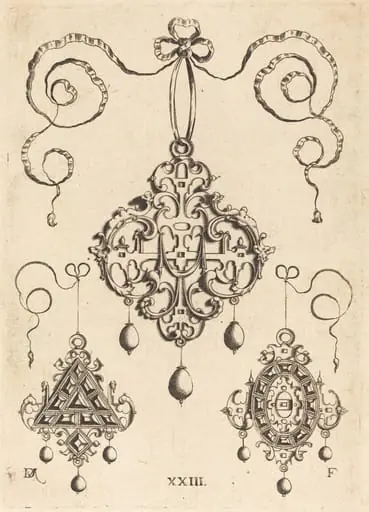 Three Strapwork Pendants, The Lower Ones Triangular and Oval
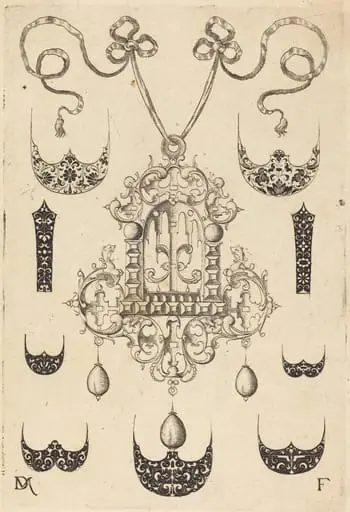 Pendant Surrounded by Seven Shields and Two Ornamental Bands
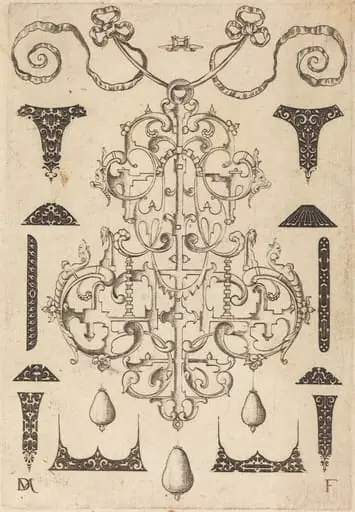 Large Pendant, Surrounded by Twelve Small Studs
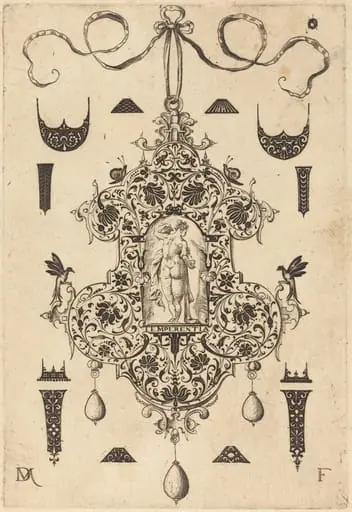 Large Pendant, Temperance Standing at Centre
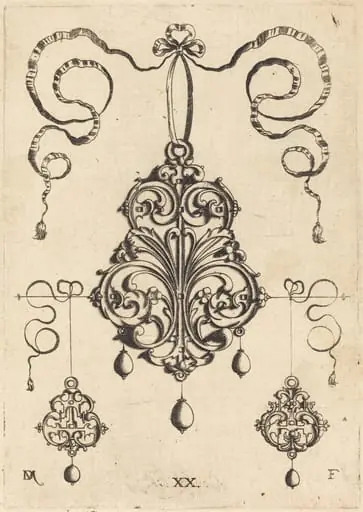 One Large and Two Smaller Strapwork Pendants
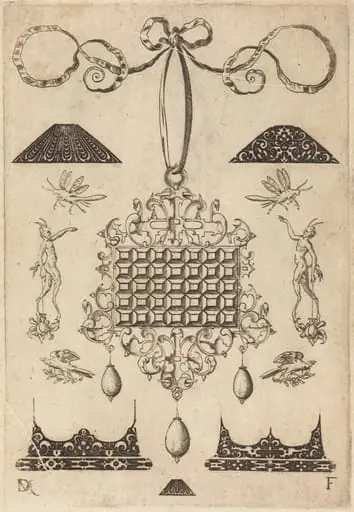 Large Pendant with Square with 35 Flat Stones
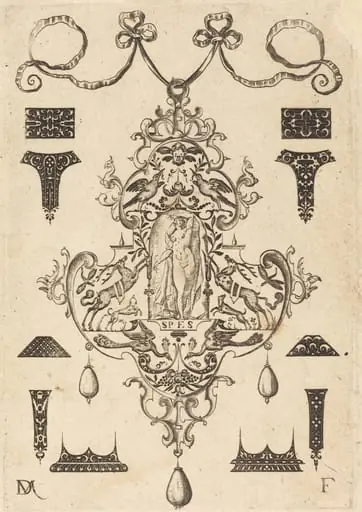 Large Pendant, Hope Standing at Centre
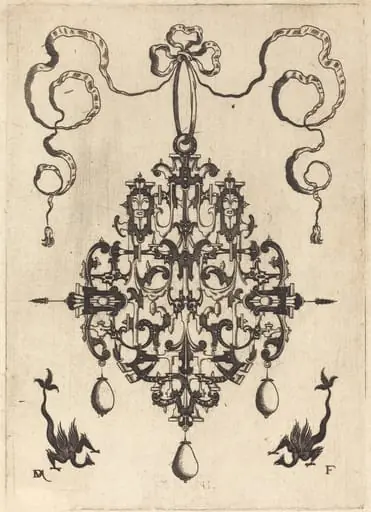 Large Pendant, Two Fantasy Creatures with Long Tails at Bottom
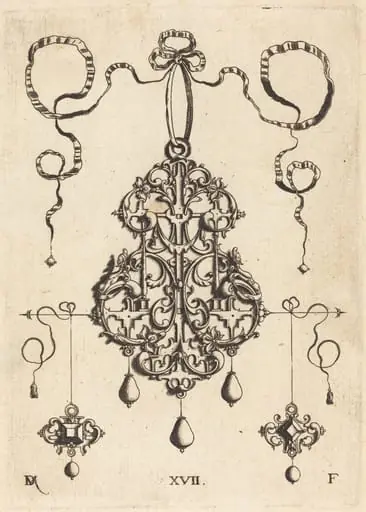 Strapwork Pendant with Two Square Tablestonesas Earrings at Left and Right
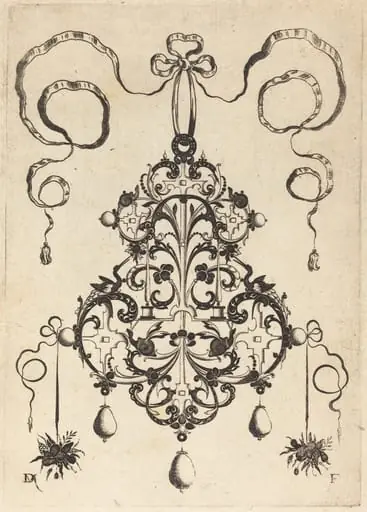 Large Pendant, Lower Left and Right Two Bunches of Grass and Fruit
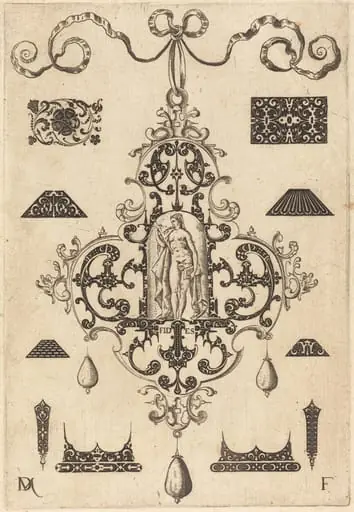 Large Pendant, Faith Standing at Centre