Artwork
Large Pendant, Temperance Standing at Centre
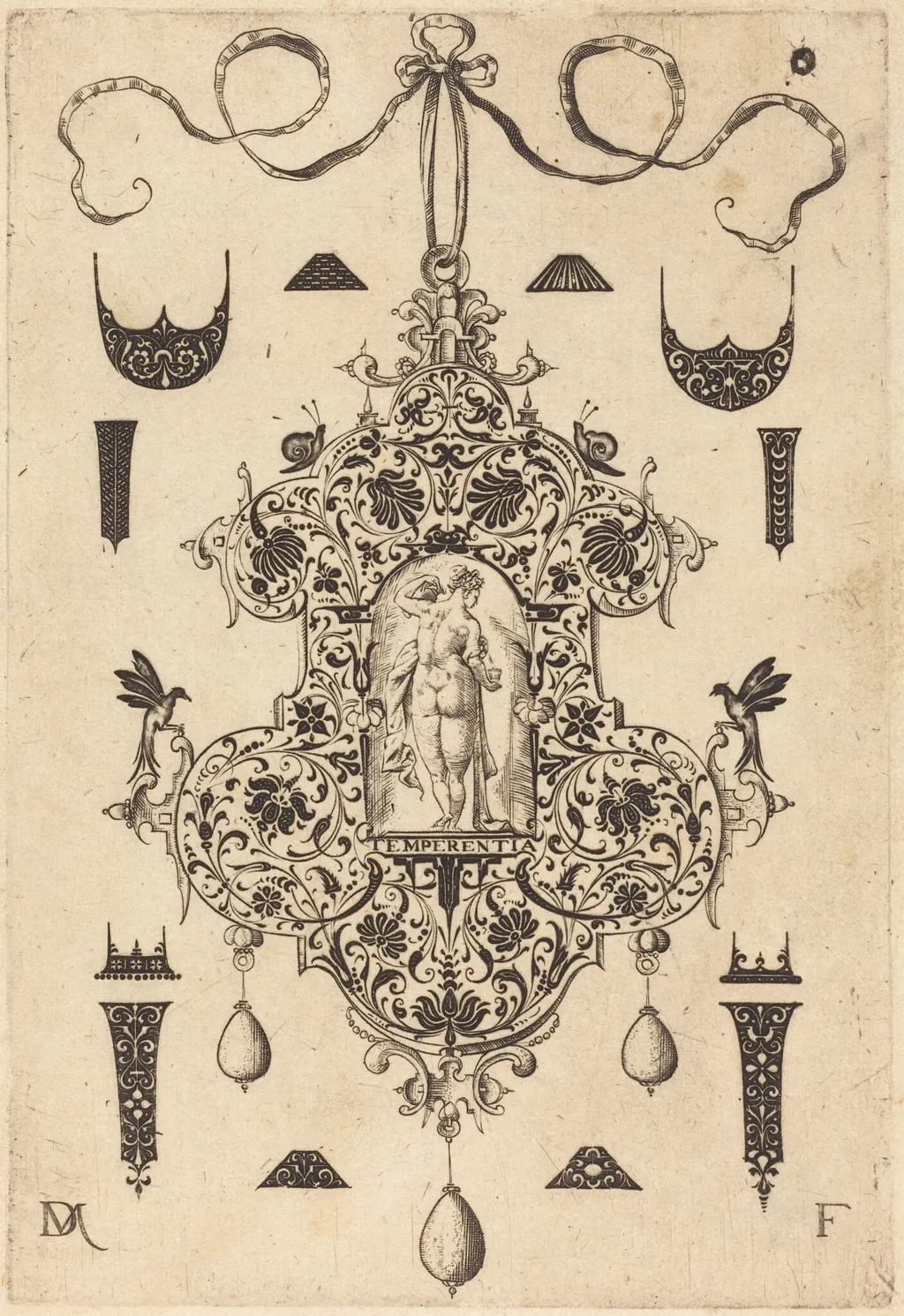
Large Pendant, Temperance Standing at Centre is an ink print by the Renaissance artist Daniel Mignot. It dates from 1593 and is held in the collection of the National Gallery of Art.
About this work
Overview
The inscription Temperentia appears beneath the figure, identifying the theme of self‑control.
Daniel Mignot’s 1593 engraving, titled Large Pendant, Temperance Standing at Centre, presents a richly ornamental composition typical of late‑Renaissance pendant prints. Executed in black ink on paper, the image is dominated by a central figure holding an elongated cup, surrounded by a profusion of decorative motifs such as birds, floral clusters, teardrop forms and miniature crowns. The inscription Temperentia appears beneath the figure, identifying the theme of self‑control.
Subject & Meaning
The central standing figure embodies the virtue of temperance, a moral ideal frequently illustrated in moralizing art of the period. The tall cup he holds symbolizes measured consumption, while the surrounding fauna and flora reinforce the notion of natural balance. The inclusion of crowns and teardrop shapes adds allegorical layers, suggesting the reward of restraint and the emotional equilibrium achieved through moderation.
Technique & Style
Mignot employed the traditional engraving method, incising fine lines into a copper plate before transferring the image onto paper with ink. The work is distinguished by its intricate, swirling line work that creates a dense decorative framework. Minute hatching and cross‑hatching generate tonal variation, allowing the artist to render delicate details such as feathered birds and intricate floral patterns within the limited monochrome medium.
History & Provenance
Created in 1593, the print reflects the flourishing market for devotional and emblematic pendants in late‑sixteenth‑century Europe. While specific ownership records are scarce, the piece is documented in several early modern print catalogues, indicating its circulation among collectors interested in moral allegories. Its survival in museum collections today attests to the durability of copper‑plate engravings and the continued scholarly interest in Mignot’s oeuvre.
Artist & collection


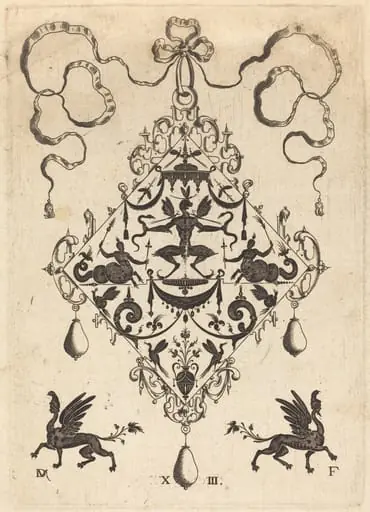 Large Pendant, Winged Fantasy Creature Holding Two Snakes
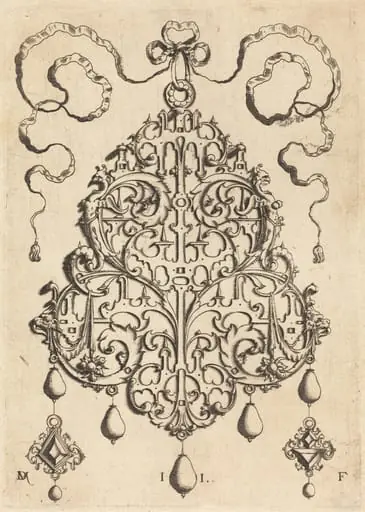 Large Strapwork Pendant with Two Hangers as Earrings at Left and Right
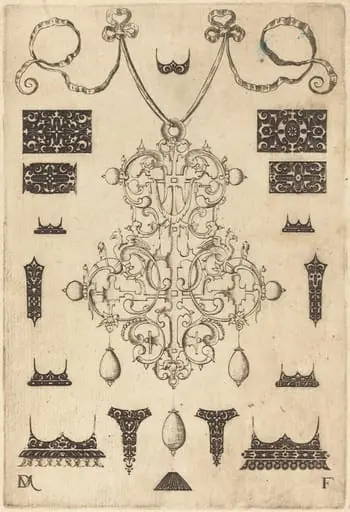 Large Pendant with Three Drops Below, Surrounded by Fifteen Different Studs
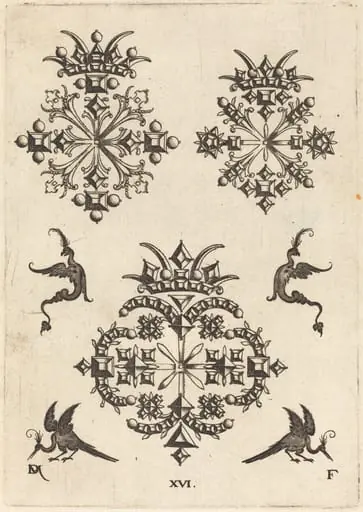 Three Brooches with Fantasy Birds at Left, Right, and Bottom
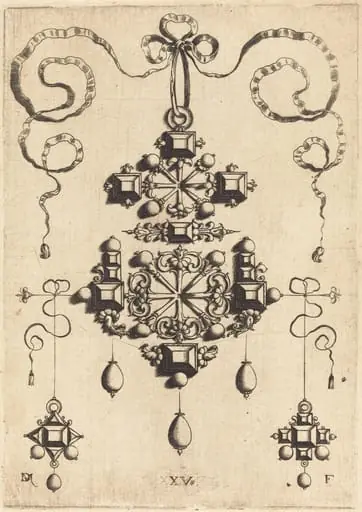 Pendant with Two Double Crosses, Surrounded by Four Diamond-Shaped Stones, Five Table-Stones, and Thirteen Pearls
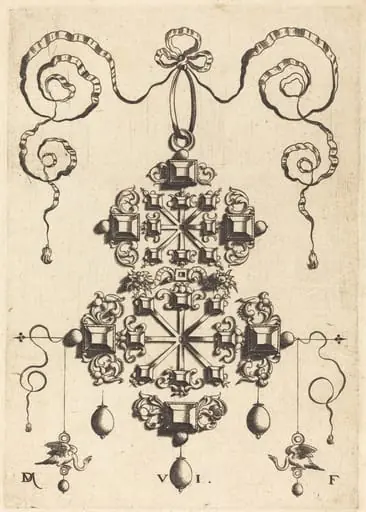 Large Pendant with Two Double Crosses, Surrounded by Six Large and Sixteen Small Table-Stones
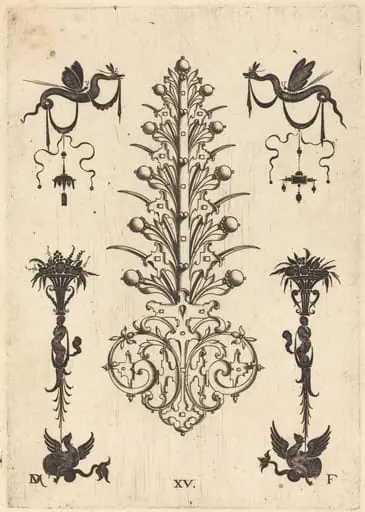 Hyacinth-Shaped Brooch with Winged Snakes at Top and Winged Animals at Bottom
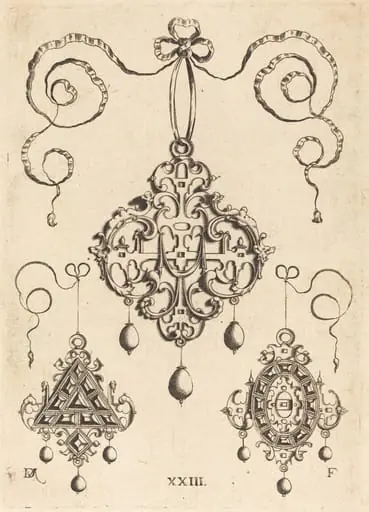 Three Strapwork Pendants, The Lower Ones Triangular and Oval
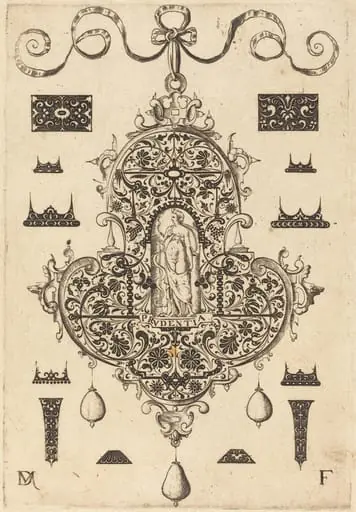 Large Pendant, Prudence Standing at Centre
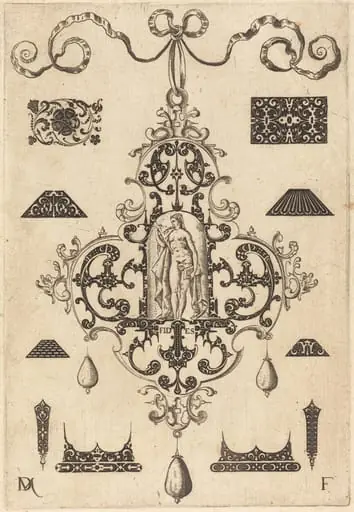 Large Pendant, Faith Standing at Centre
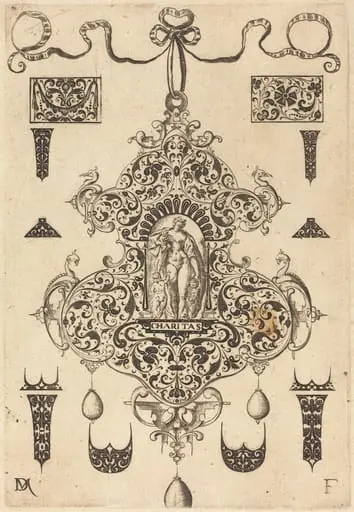 Large Pendant, Charity Standing at Centre
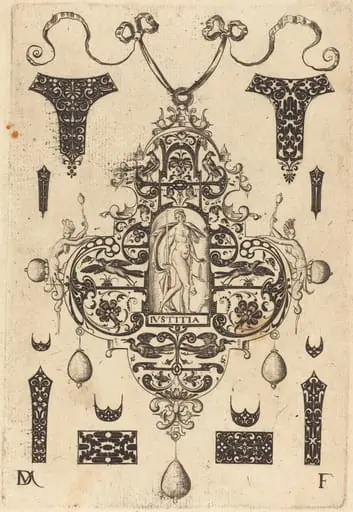 Large Pendant, Justice Standing at Centre
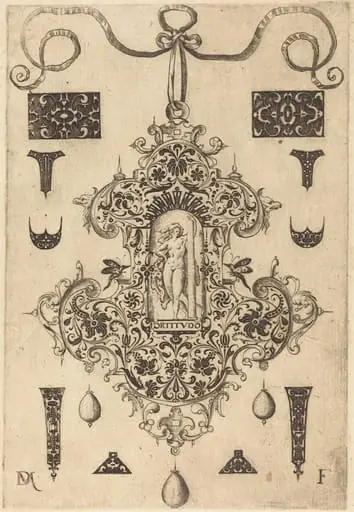 Large Pendant, Strength Standing at Centre
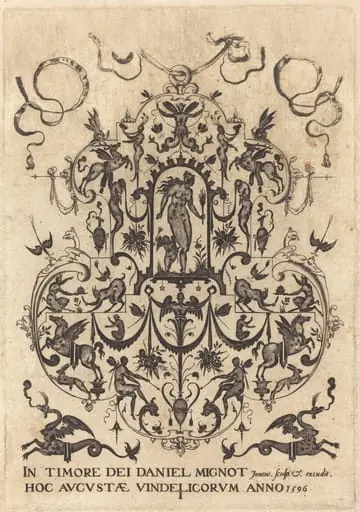 Title Page: Large Pendant, Venus and Amor at Centre
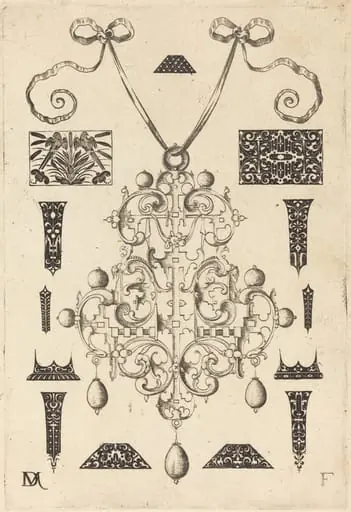 Large Pendant, Surrounded by Thirteen Studs
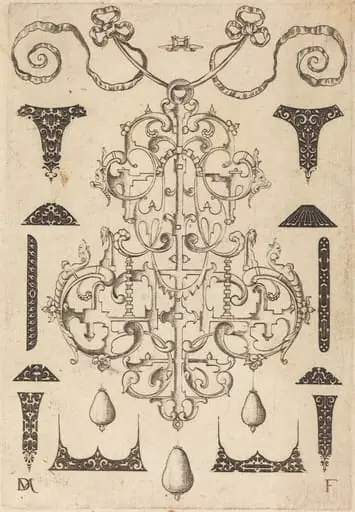 Large Pendant, Surrounded by Twelve Small Studs
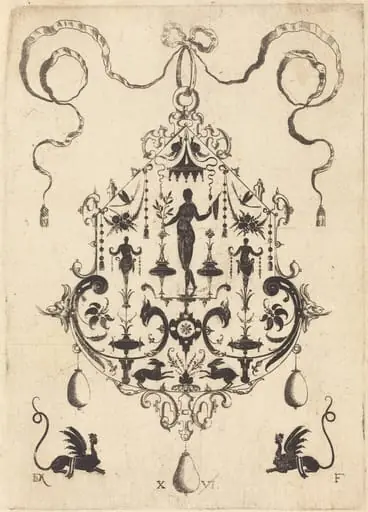 Large Pendant, Victory Flanked by Two Herms at Centre
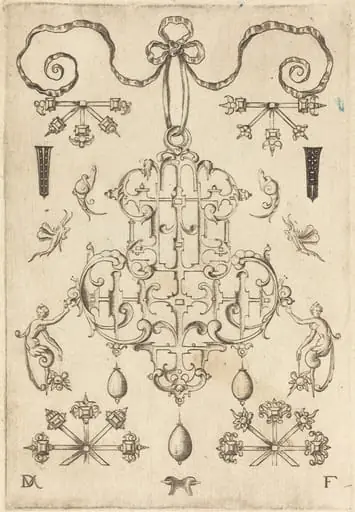 Large Pendant with Three Drops Below