Artwork
Turkish sultans, sultanas and other historical figures
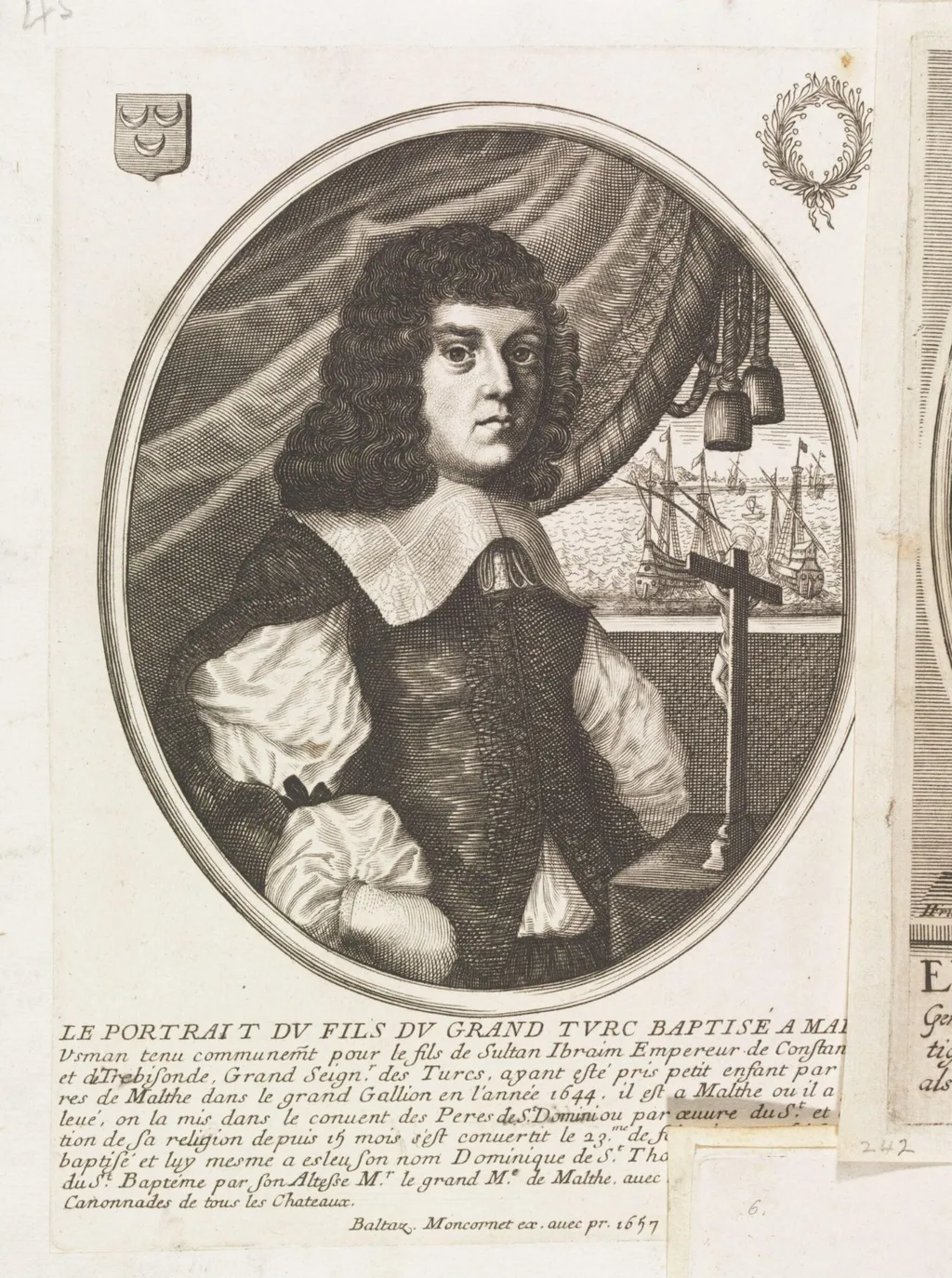
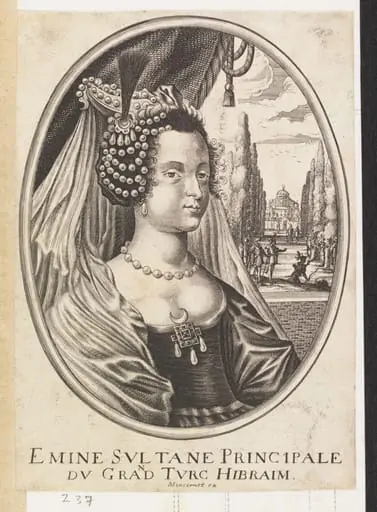
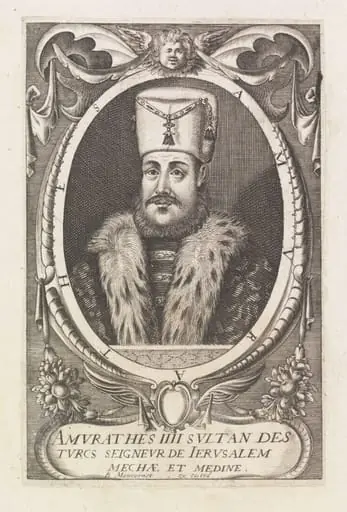
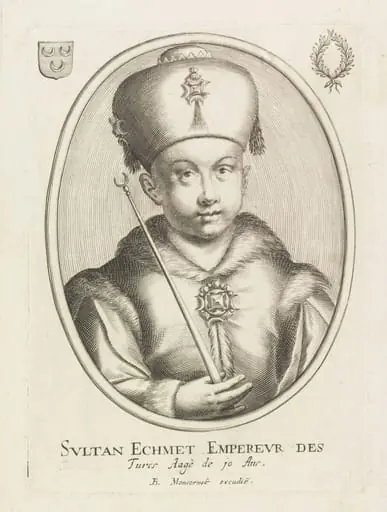
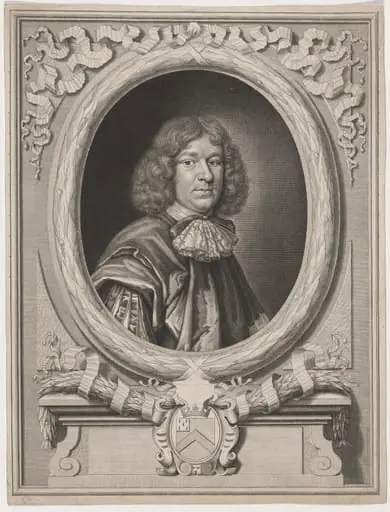
Turkish sultans, sultanas and other historical figures is a print by the Baroque artist Moncornet. It dates from 1657 and is held in the collection of the Victoria and Albert Museum.
About this work
Overview
The composition blends portraiture with symbolic elements, framing the subject within a theatrical setting that evokes both authority and distant lands.
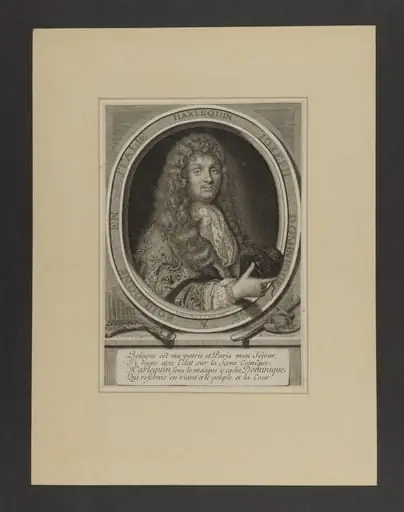
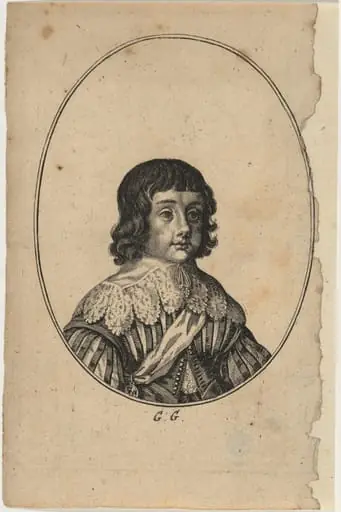
Created in 1657 by the French artist Moncornet, this oval print presents a portrait of a young Ottoman noble, likely a sultan’s son, surrounded by figures from Turkish imperial history. The composition blends portraiture with symbolic elements, framing the subject within a theatrical setting that evokes both authority and distant lands. The French inscription accompanying the image reflects European fascination with Ottoman court life during the mid-seventeenth century.
Subject & Meaning
The central figure, identified by his elaborate attire and sword, represents a member of the Ottoman ruling class, possibly a prince. His placement among other historical figures suggests a lineage of power, while the maritime backdrop—ships on a distant sea—hints at the empire’s naval reach and global engagements. The image functions as both a personal portrait and a visual assertion of Ottoman prestige, tailored for a European audience curious about Eastern courts.
Technique & Style
Moncornet employs chiaroscuro to model the figure’s form, lending volume to the fabric of the dark vest and the puffy white sleeves. Fine detailing in the embroidery, facial features, and the textured curtain behind him reveals a precision rooted in engraving traditions. The contrast between the shadowed interior and the luminous seascape enhances spatial depth, aligning the work with Baroque sensibilities that valued dramatic lighting and rich surface detail.
History & Provenance
The print was produced in Paris during a period of heightened diplomatic and cultural exchange between France and the Ottoman Empire. Moncornet, known for his portraits of foreign dignitaries, likely drew from existing engravings or firsthand accounts. The work circulated among French elites interested in exoticism and courtly power, serving as both documentation and decorative art in private collections of the time.
Context
In mid-17th century Europe, Ottoman rulers were subjects of fascination and myth. This print emerged amid French efforts to cultivate alliances with the Sublime Porte and a growing market for illustrated accounts of foreign cultures. The inclusion of sultanas and historical figures reflects a European tendency to conflate Ottoman royalty into a singular, exoticized narrative, blending fact with imaginative reconstruction.
Legacy
Moncornet’s print contributes to a broader genre of European Orientalist imagery that shaped perceptions of the Ottoman world for centuries. While not a direct record of individuals, it preserves the visual language through which Europeans interpreted Eastern sovereignty. Its survival in museum collections underscores its role as a cultural artifact of cross-cultural representation during the early modern era.
Artist & collection
Artist