Artwork
Sibyl
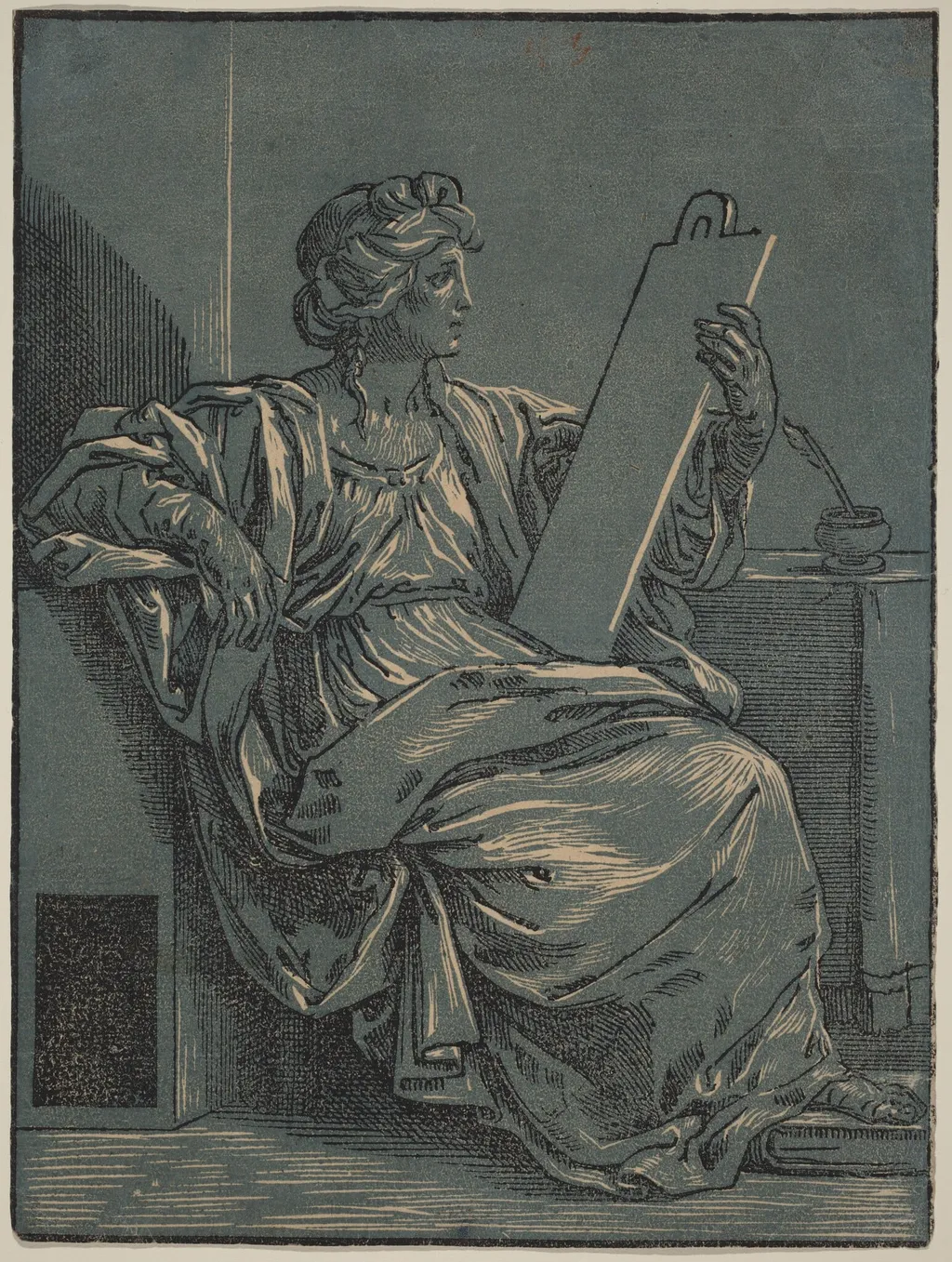
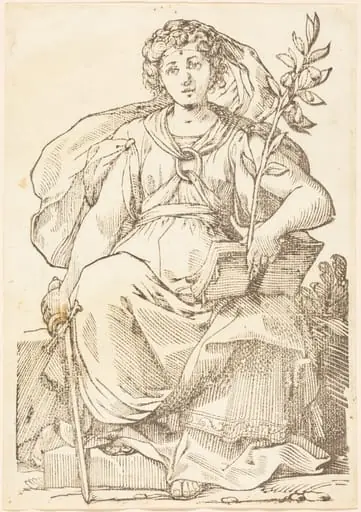
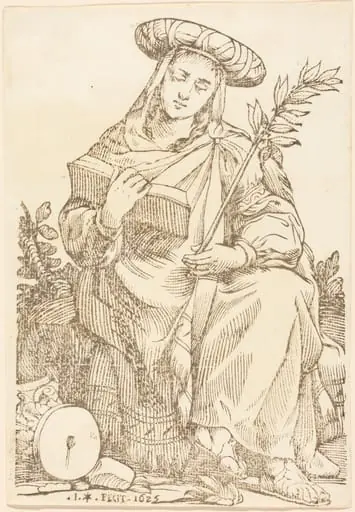
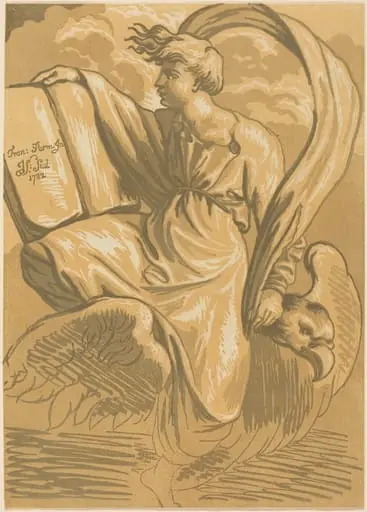
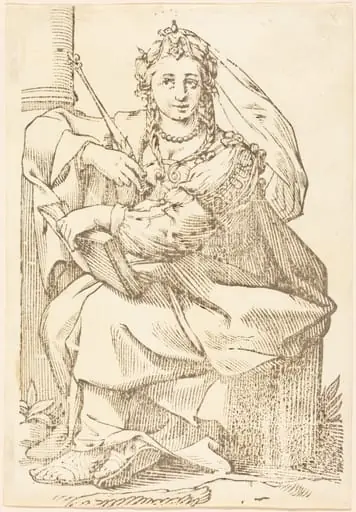
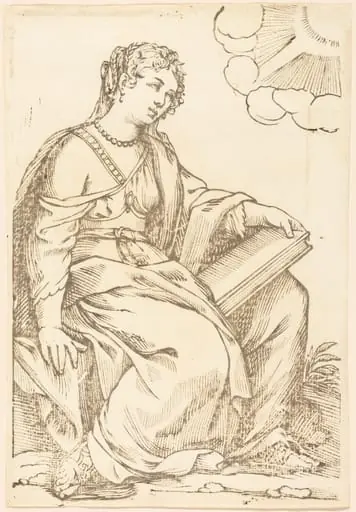
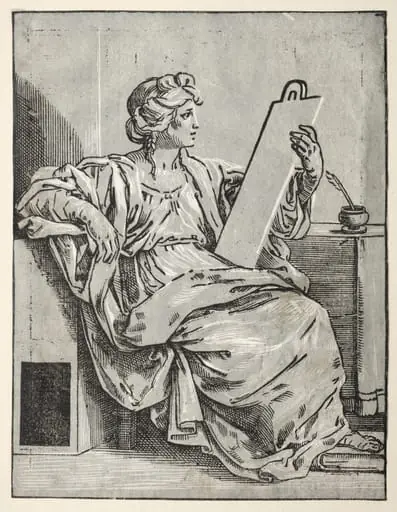
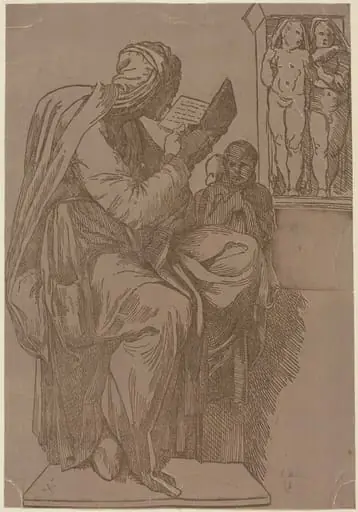
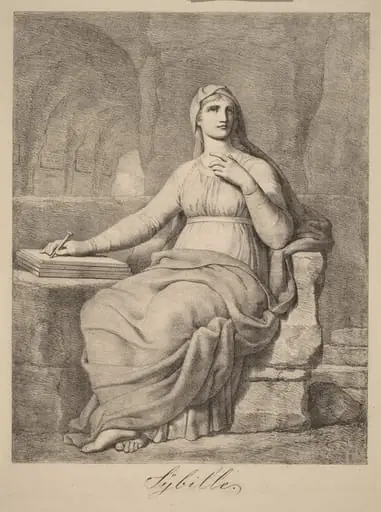
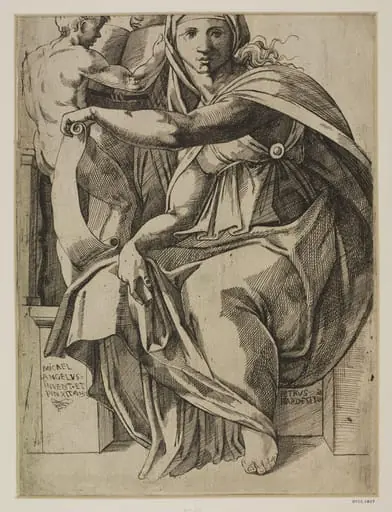
Sibyl is an ink print by the Renaissance artist Giuseppe Maria Moretti. It dates from 1630 and is held in the collection of the National Gallery of Art.
About this work
Overview
The work belongs to the printmaking tradition of early 17th-century Italy, where layered woodblocks were used to achieve tonal gradations.
Created in 1630 by Giuseppe Maria Moretti, this chiaroscuro woodcut portrays a seated female figure holding a scroll. The work belongs to the printmaking tradition of early 17th-century Italy, where layered woodblocks were used to achieve tonal gradations. Its restrained palette and emphasis on light and shadow distinguish it from brightly colored prints of the period, aligning it with the quiet intensity of devotional imagery.
Subject & Meaning
The figure is likely a sibyl, a prophetic woman from classical antiquity whose oracles were later integrated into Christian iconography. Her downward gaze and the scroll suggest an act of divine revelation or contemplation. The absence of overt symbolism or narrative context invites interpretation, emphasizing introspection over dramatic storytelling. The scroll, as a vessel of hidden knowledge, anchors the image in a tradition linking wisdom with quiet solitude.
Technique & Style
Moretti employed chiaroscuro woodcut technique, carving multiple blocks to layer tones of gray and white, creating depth without color. The smooth transitions between light and shadow model the figure’s robe and face with subtle precision. The background’s muted gradation enhances the figure’s stillness, while fine lines define hair and fabric folds. The method reflects a technical mastery rooted in Renaissance printmaking, prioritizing atmospheric effect over detail.
History & Provenance
The print originates from Moretti’s active period in Bologna, where he worked as an engraver and printmaker. Few of his woodcuts survive, and this piece is among the better-documented examples. It was likely produced for private collectors or ecclesiastical circles interested in humanist themes. Its early 17th-century date places it within a transitional phase between late Mannerist and early Baroque aesthetics in northern Italian print culture.
Context
In early 17th-century Italy, sibyls appeared in religious art as precursors to Christian prophecy, often paired with Old Testament figures. Moretti’s version diverges from theatrical Baroque treatments by favoring stillness and restraint. The use of chiaroscuro echoes Caravaggio’s influence but adapts it to the quieter medium of woodcut, reflecting a broader trend of integrating painterly effects into prints for scholarly and devotional audiences.
Legacy
Moretti’s Sibyl stands as a refined example of Italian chiaroscuro woodcut, a technique that declined after the mid-17th century. Its preservation offers insight into how printmakers adapted painterly ideals for intimate, tactile formats. While not widely reproduced, the work contributes to understanding the quiet, intellectual currents in printmaking that coexisted with the era’s more flamboyant styles.
Artist & collection