Artwork
Sibylle (Sibyl)
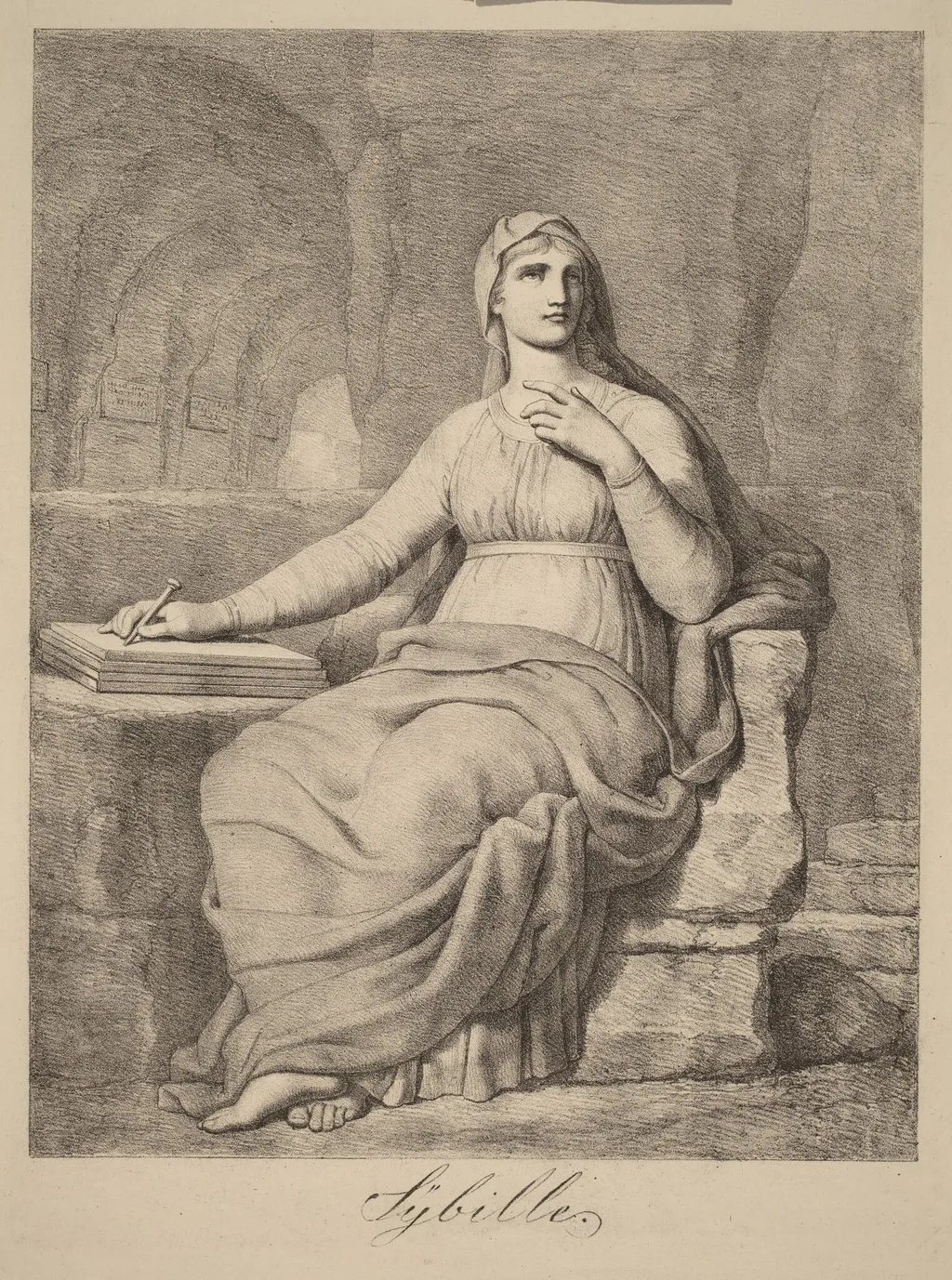
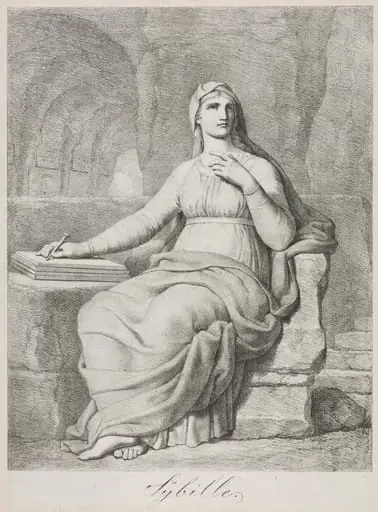
Sibylle (Sibyl) is an ink print by the Romanticist artist Simon Petrus Klotz. It dates from 1800 and is held in the collection of the National Gallery of Art.
About this work
Overview
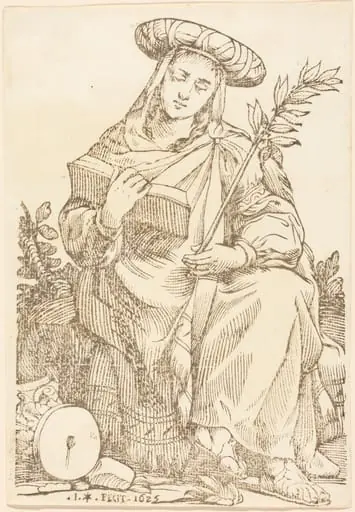
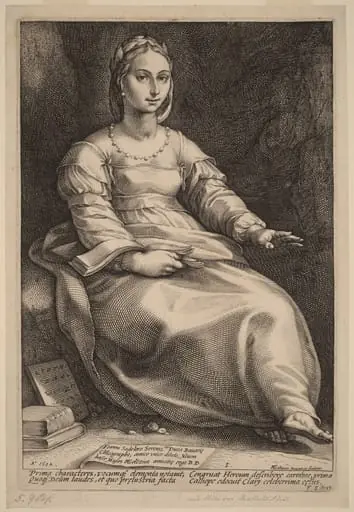
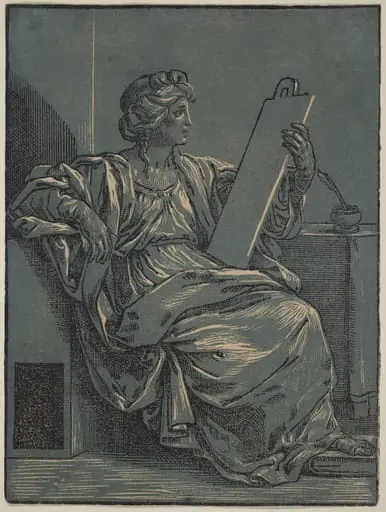
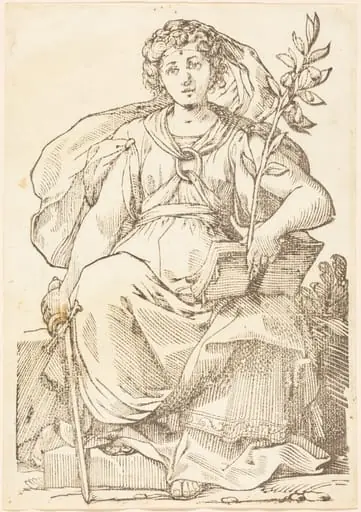
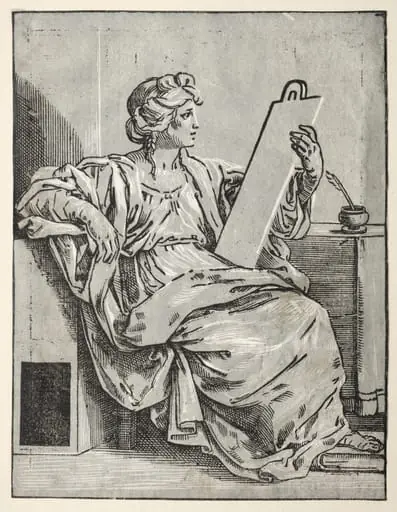
The composition centers on a woman seated upon a rugged ledge, her posture contemplative as she holds a pen in one hand and a stack of books in the other.
Simon Petrus Klotz’s lithograph Sibylle, executed in 1800, presents a solitary female figure rendered in black ink on wove paper. The composition centers on a woman seated upon a rugged ledge, her posture contemplative as she holds a pen in one hand and a stack of books in the other. The work is signed ‘Sibylle’ at its lower edge, indicating the subject’s identification as a prophetic or learned woman.
Subject & Meaning
The figure is portrayed as a sibyl—a classical prophetess—suggested by her scholarly accoutrements and the title. Dressed in flowing robes and a headband that secures her hair, she appears engaged in study or composition, embodying the intersection of wisdom and artistic creation. Her thoughtful gaze and hand placed on her chest reinforce the notion of inner reflection and prophetic insight.
Technique & Style
Created through lithography, Klotz employed a greasy drawing on a limestone plate, which was then treated with a chemical solution to accept ink only where the image was drawn. The resulting black marks on the wove paper convey a stark, linear quality, emphasizing contour and texture over tonal variation. The medium allows for fine detail in the figure’s drapery and the stacked books.
History & Provenance
The print dates to the turn of the nineteenth century, a period when lithography was gaining popularity among German artists for its capacity to reproduce detailed images quickly. While specific ownership records are limited, the work bears Klotz’s signature and title, confirming its authenticity as an original 1800 impression from the artist’s own hand.
Artist & collection