Artwork
Convent of San Payo, Santiago de Compostela
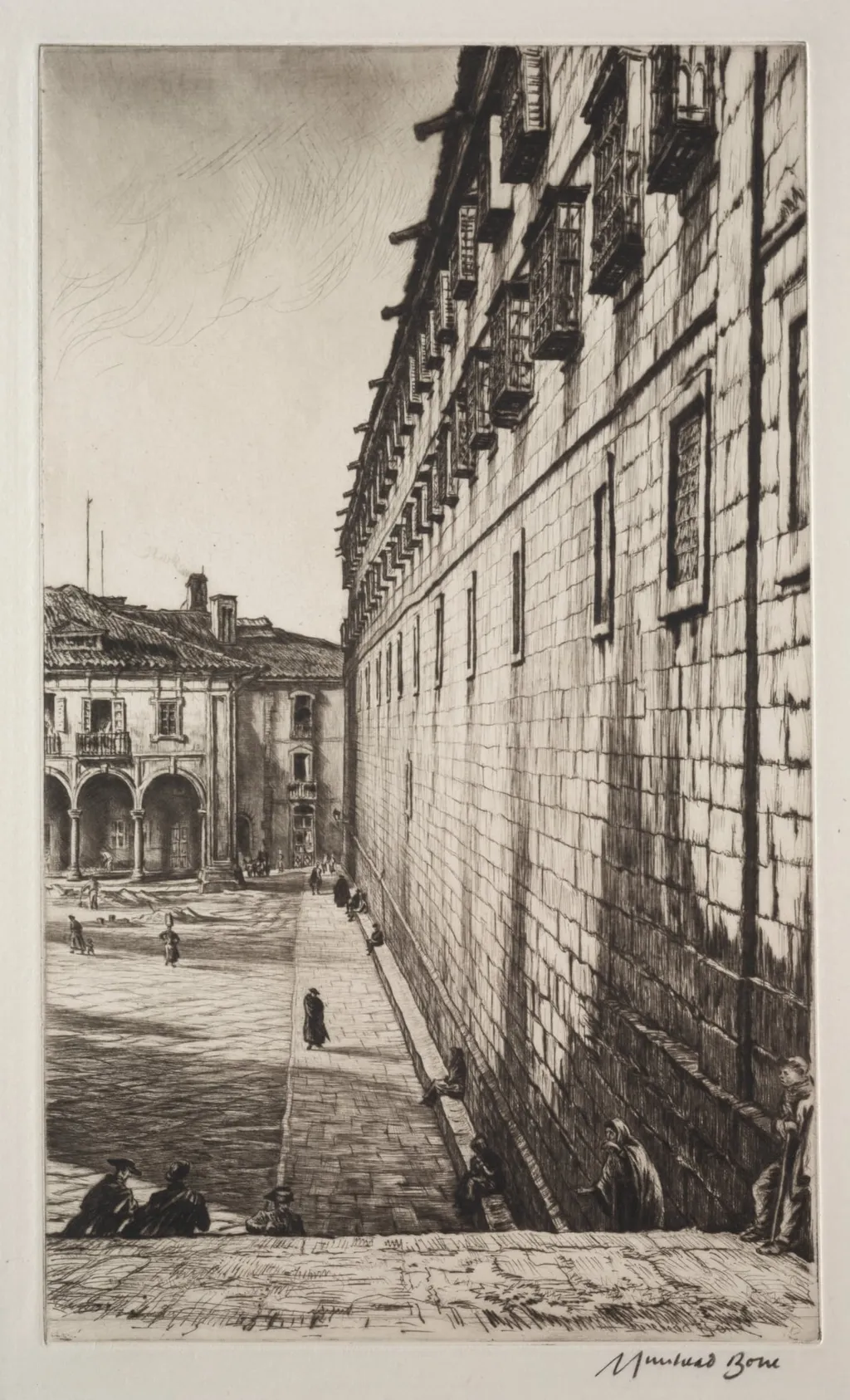
Convent of San Payo, Santiago de Compostela is a print by Muirhead Bone. It dates from 1924 and is held in the collection of the Cleveland Museum of Art.
About this work
Overview
Bone, known for his precise architectural renderings, captured the narrow urban alleyway with careful attention to structural detail and atmospheric tone.
Created around 1924 by Scottish artist Muirhead Bone, this etching depicts the Convent of San Payo in Santiago de Compostela. Bone, known for his precise architectural renderings, captured the narrow urban alleyway with careful attention to structural detail and atmospheric tone. The work reflects his engagement with European urban landscapes during the height of the Etching Revival, before the economic downturn of the late 1920s affected the print market.
Subject & Meaning
The scene portrays a quiet, lived-in street adjacent to a historic convent, emphasizing daily life within a medieval urban fabric. Figures move along the damp pavement, while laundry hangs from a high wall, suggesting domestic routines amid ancient stonework. The composition avoids grandeur, instead honoring the quiet dignity of ordinary spaces, revealing Bone’s interest in architecture as a vessel of human presence rather than monumentality.
Technique & Style
Bone employed etching to achieve fine linear detail and nuanced tonal gradations. Strong contrasts between light and shadow—chiaroscuro—define the facades, enhancing the sense of depth and volume. The wet pavement reflects ambient light, unifying the scene with a subtle sheen. His controlled line work and restrained ink application convey texture without ornament, aligning with the precisionist ethos of early 20th-century architectural printmaking.
History & Provenance
The print entered the collection of the Cleveland Museum of Art, where it remains part of its holdings of modern European prints. Bone’s reputation as a top-tier etcher during the 1920s ensured wide circulation of his works among collectors and institutions. Though the market for fine prints waned after 1929, his architectural studies, including this one, retained scholarly interest for their documentary and technical merit.
Context
Bone traveled extensively across Europe in the 1920s, documenting historic buildings amid rapid modernization. His focus on Spain’s religious architecture reflected broader European interest in medieval heritage. At the time, etching was experiencing a revival as artists sought to reclaim printmaking as a serious medium. This work sits within that movement, valuing craftsmanship over mass reproduction.
Legacy
Bone’s architectural prints, including this one, influenced later generations of documentary artists and printmakers. His ability to merge topographical accuracy with emotional atmosphere set a standard for urban observation in print. Though less widely known today, his works remain important for their quiet, unembellished record of European cities before the upheavals of the mid-20th century.
Artist & collection
Artist
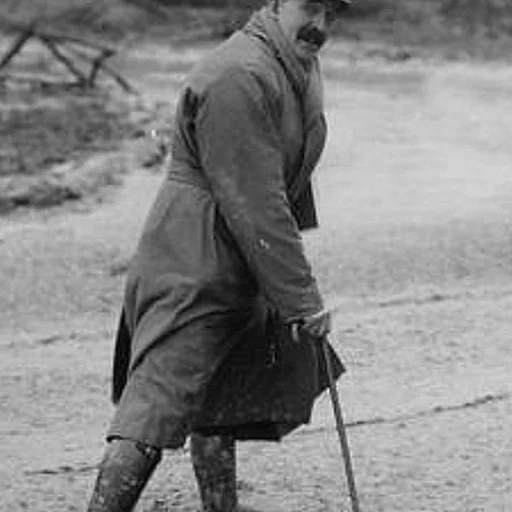
Sir Muirhead Bone (23 March 1876 – 21 October 1953) was a Scottish etcher and watercolourist who became known for his depiction of industrial and architectural subjects and his work as a war artist in both the First and Second World Wars.

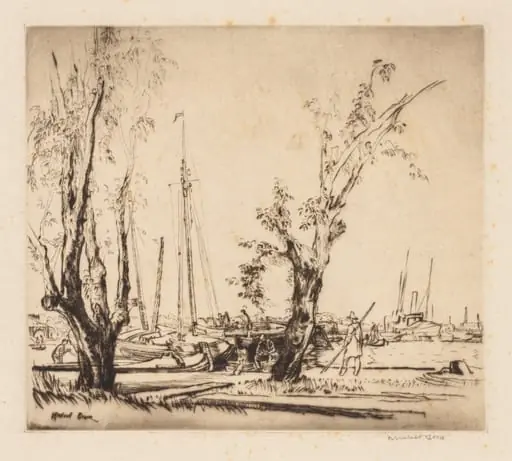
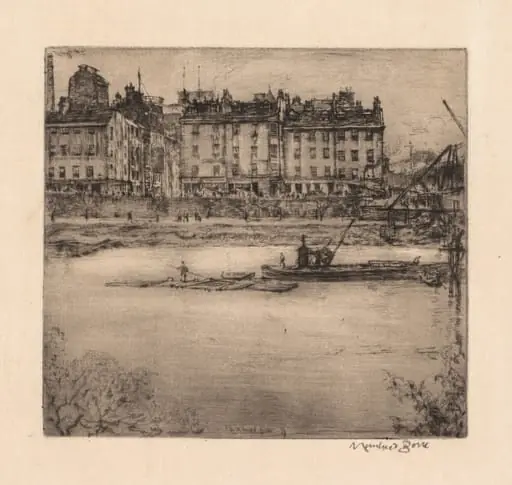
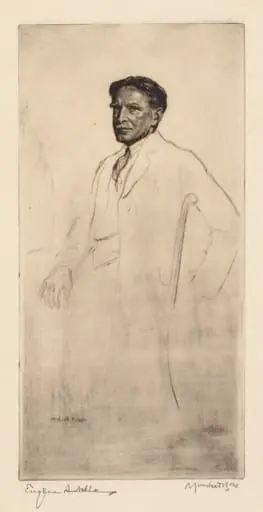
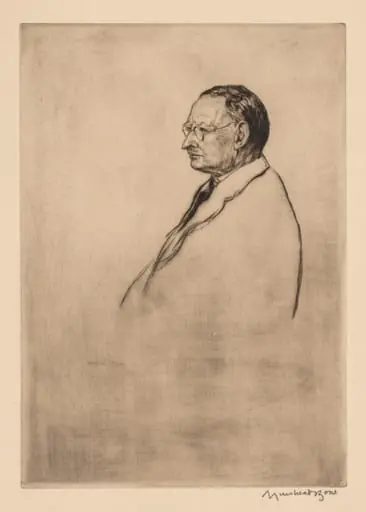
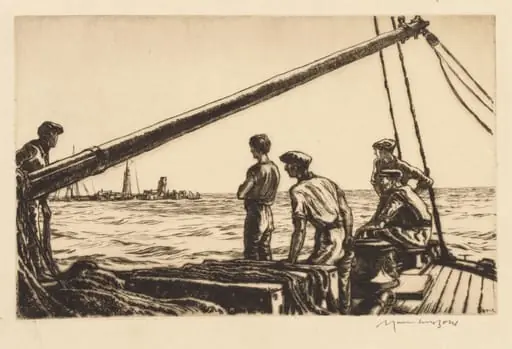
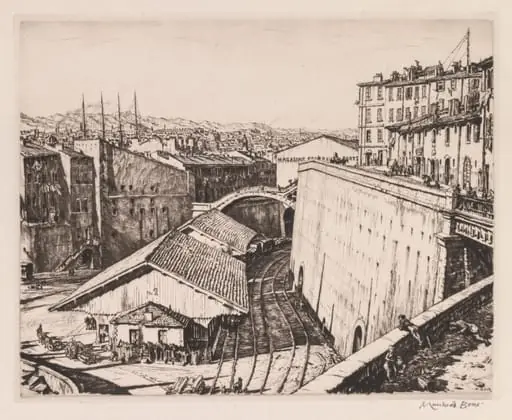
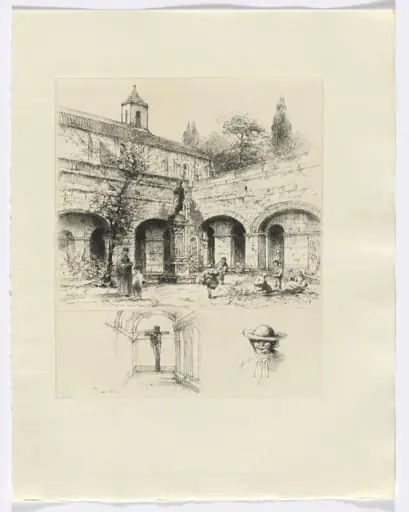 Frédéric Mistral: Mémoires et Recits by Frédéric Mistral: figures in a cloister/ crucifix and bust of a man (insert after p. 56)
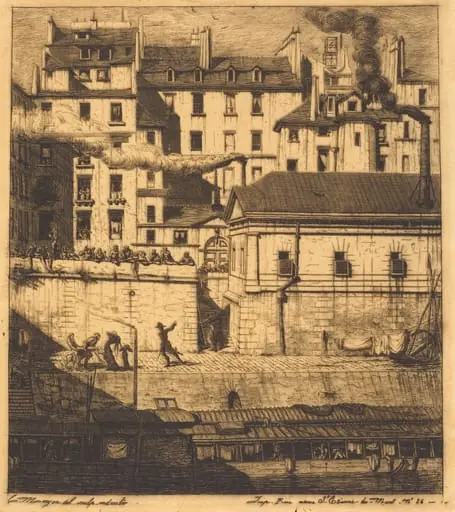 La morgue, Paris (The Mortuary)
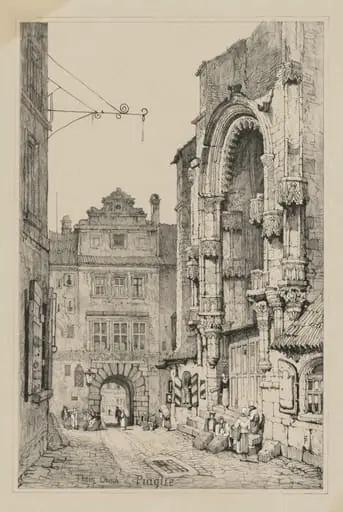 Facisimilies of Sketches made in Flanders and Germany: Thein Church, Prague
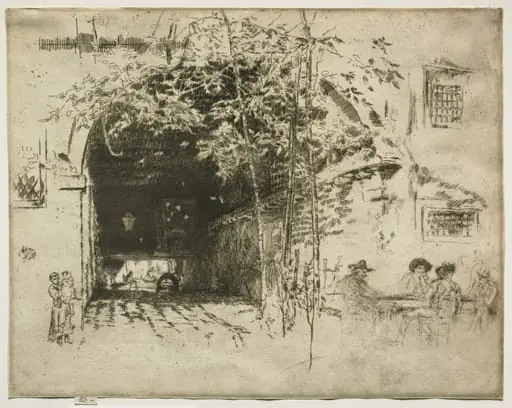 The Traghetto
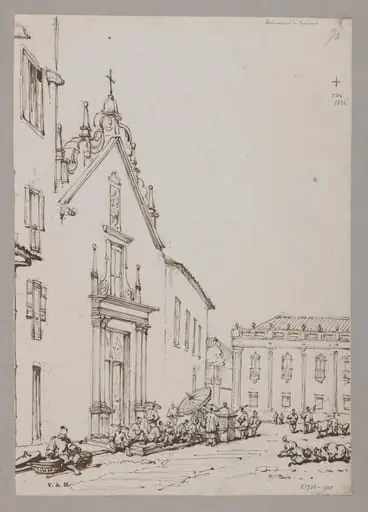 The Misericordia Church and part of the Senate House, Macao
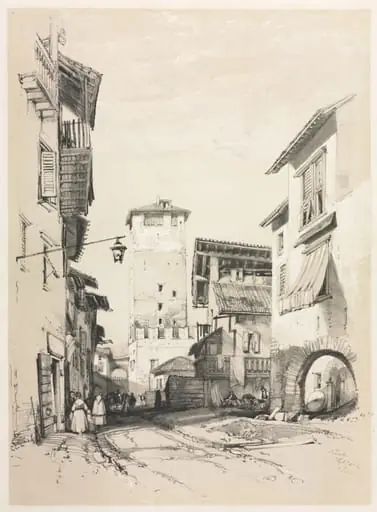 Sketches at Home and Abroad: Trento
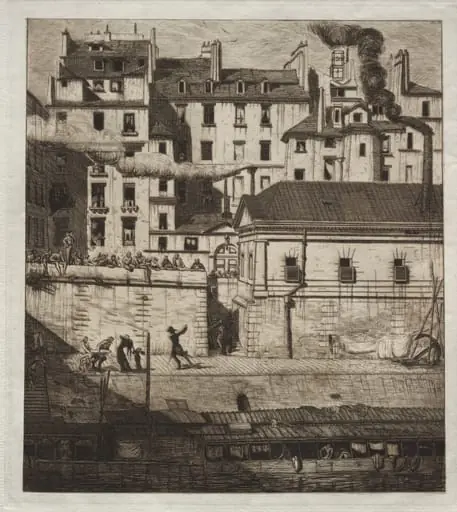 La Morgue
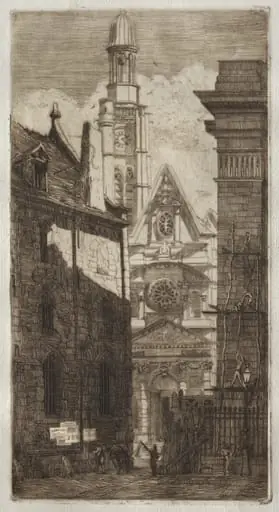 Saint-Etienne-du-Mont
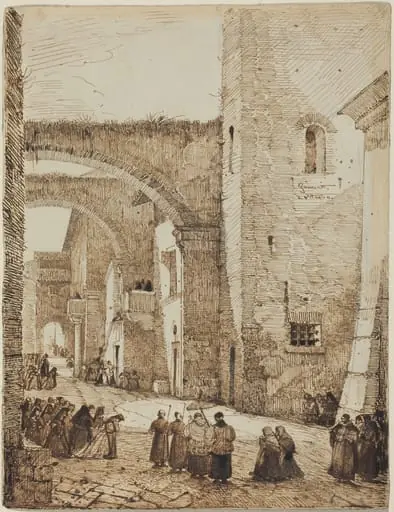 A Priest Processing through a Medieval Street in Viterbo
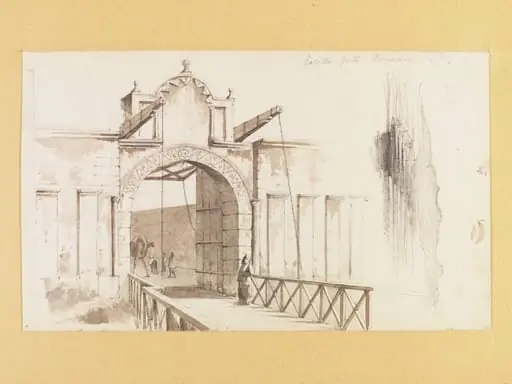 Rosetta Gate, Alexandria
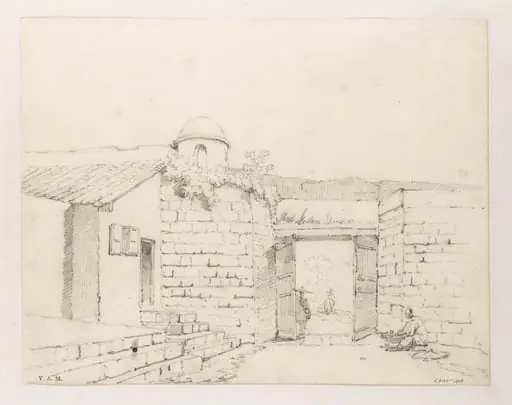 A gateway with a domed turret, Macau
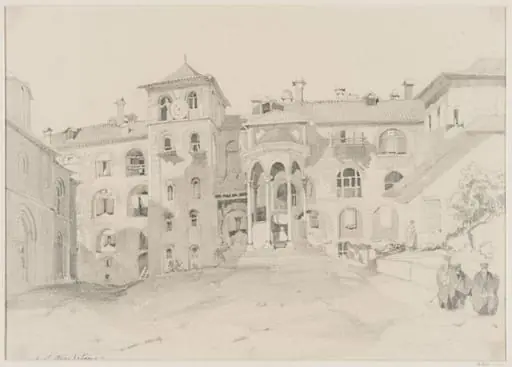 Convent of Xirapatamo