Artwork
Cardinal Jules Mazarin
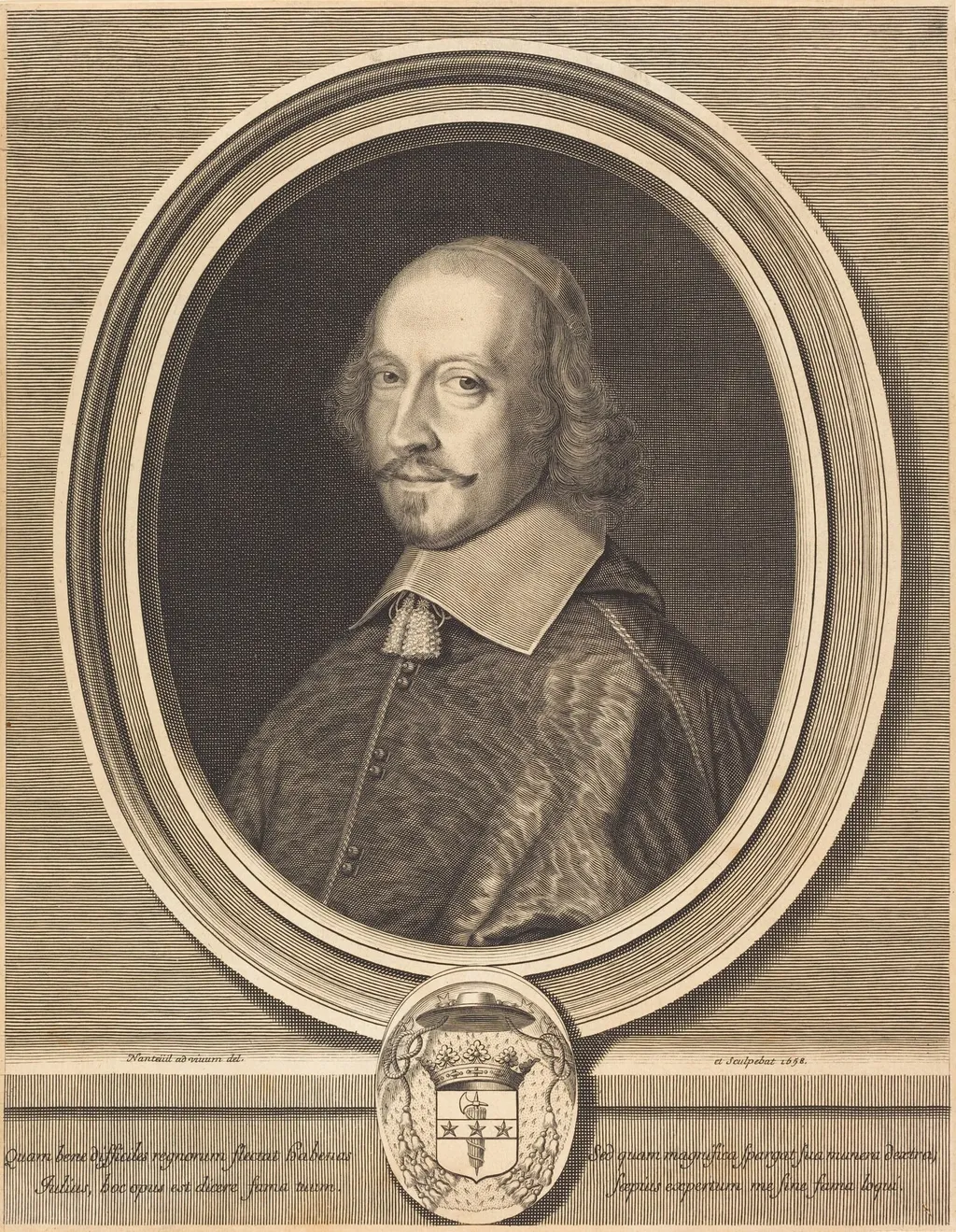
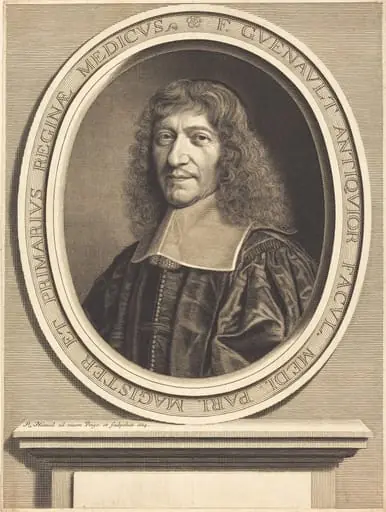
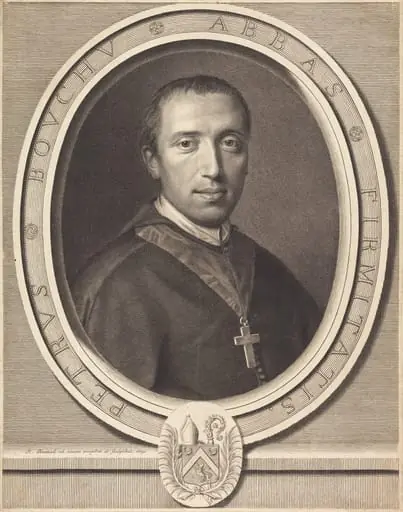
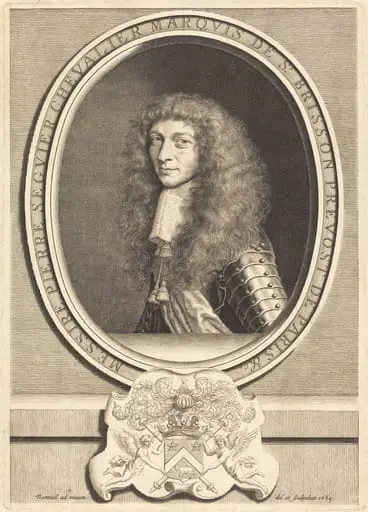
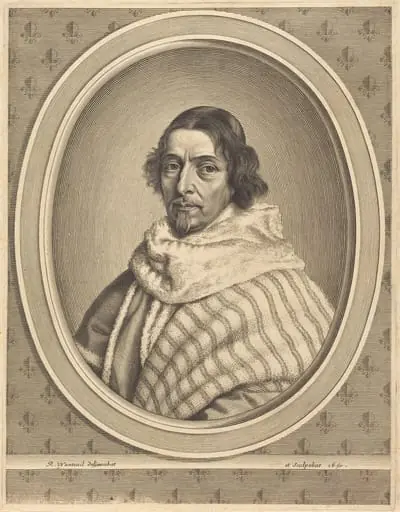
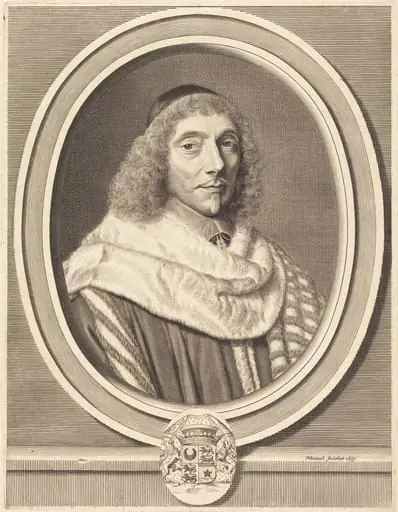
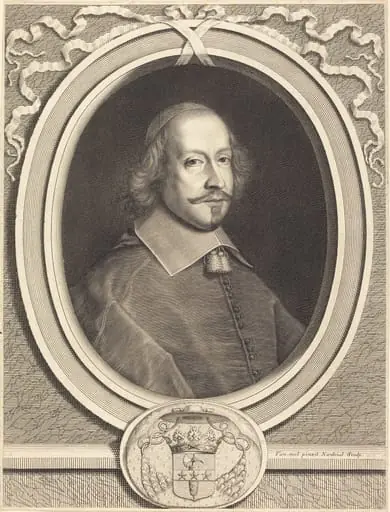
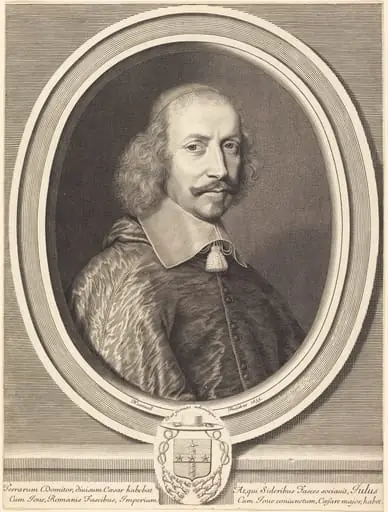
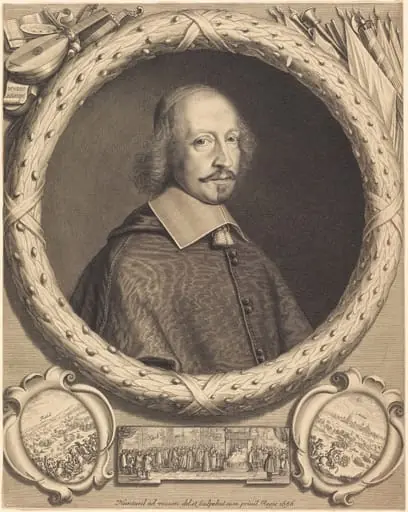
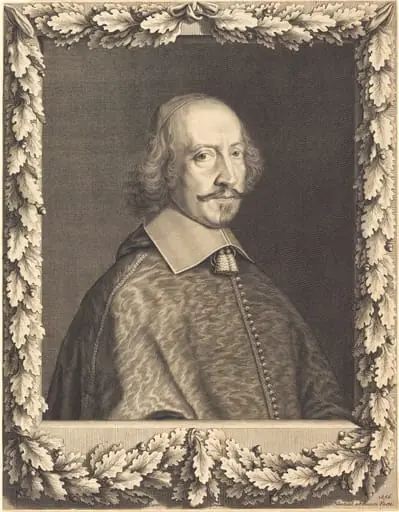
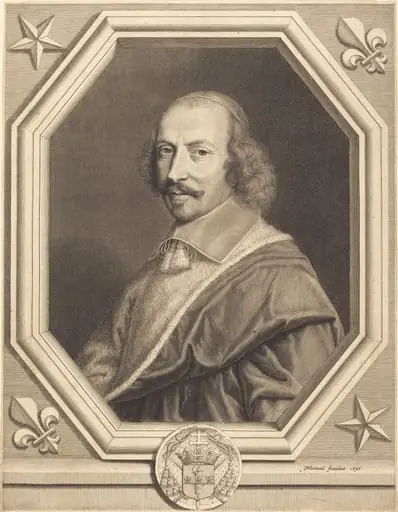
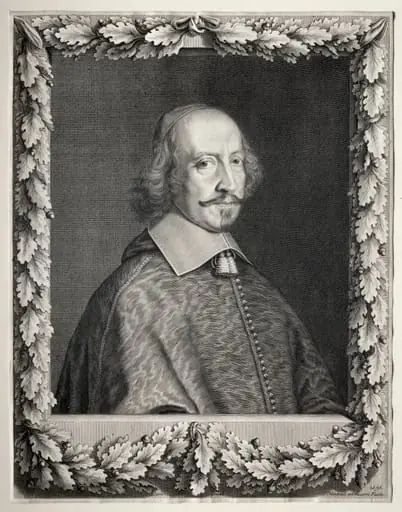
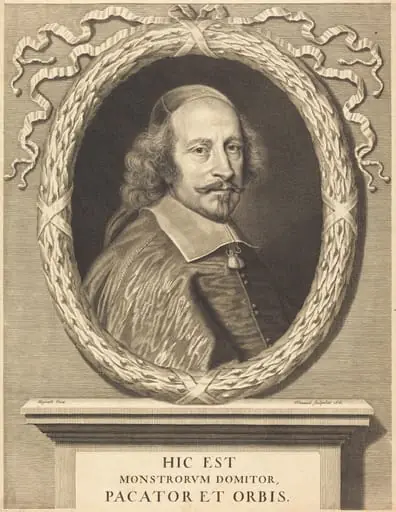
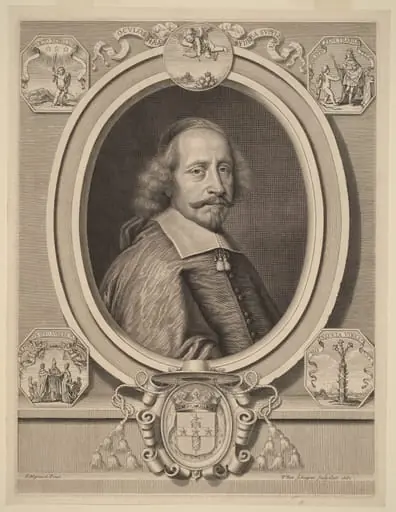
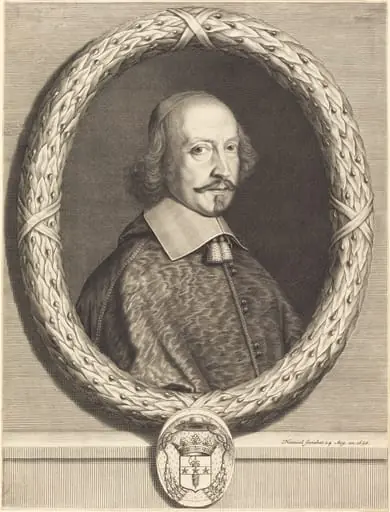
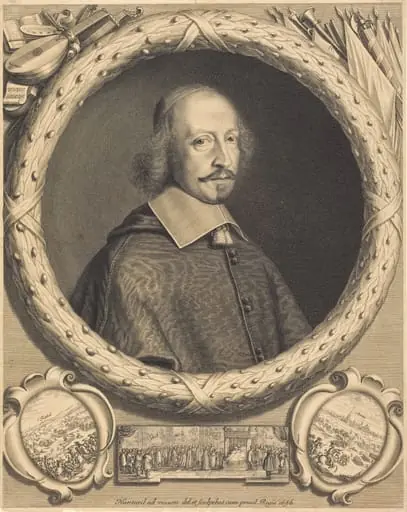
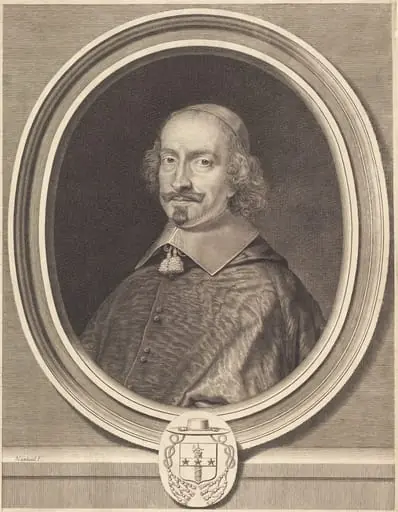
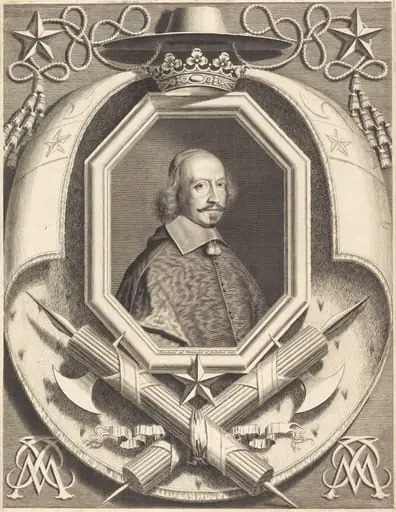
Cardinal Jules Mazarin is an ink print by the Baroque artist Robert Nanteuil. It dates from 1658 and is held in the collection of the National Gallery of Art.
About this work
Overview
The portrait is set within an oval frame whose edges are adorned with incised swirls, and a small shield bearing a coat of arms appears at the lower margin.
Robert Nanteuil’s 1658 engraving presents Cardinal Jules Mazarin, the chief minister of France under Louis XIV. Executed in black‑and‑white, the image shows the cardinal in a solemn pose, his short, curled wig framing a serious expression, while a high collar and a decorative chain emphasize his rank. The portrait is set within an oval frame whose edges are adorned with incised swirls, and a small shield bearing a coat of arms appears at the lower margin.
Subject & Meaning
The work captures Mazarin at the height of his political influence, conveying authority through formal dress and insignia. The chain and collar serve as visual markers of his ecclesiastical and governmental status, while the restrained expression reflects the dignified composure expected of a high‑ranking statesman in the mid‑seventeenth‑century French court.
Technique & Style
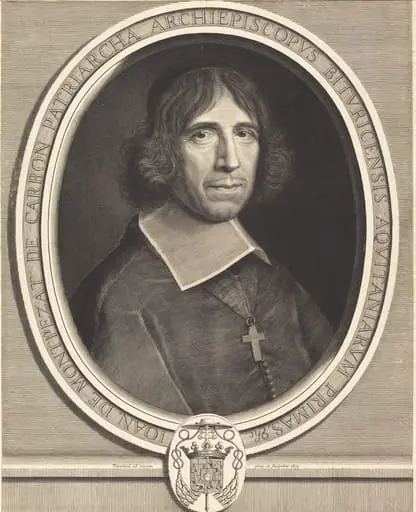
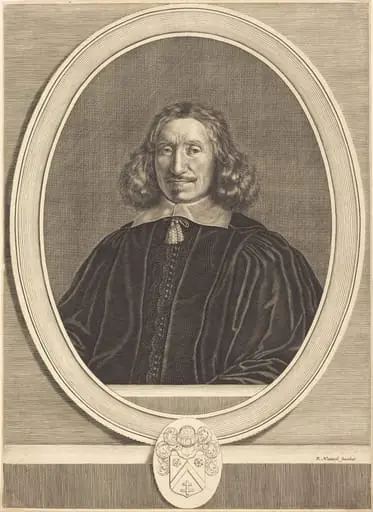
Nanteuil employed copper engraving, incising fine lines into a metal plate to produce tonal variations and delicate shading. The crisp hatching and controlled cross‑hatching render the textures of fabric and hair, while the ornamental oval border demonstrates the artist’s skill in integrating decorative elements with portraiture, a hallmark of courtly prints of the period.
History & Provenance
Created while Nanteuil served as the official portraitist to Louis XIV, the print was likely circulated among the royal entourage and diplomatic circles to reinforce Mazarin’s image. Surviving copies have appeared in several European collections, reflecting the work’s role as both a personal likeness and a political emblem of French power in the 1650s.
Context
Mid‑seventeenth‑century France placed great emphasis on portraiture as a means of projecting authority and lineage. Engravings such as this allowed rapid reproduction of a ruler’s close associates, extending their visual presence beyond painted portraits and reinforcing the hierarchical visual culture of the Sun King’s court.
Legacy
Nanteuil’s portrait of Mazarin exemplifies the high level of technical proficiency achieved in French engraving before the rise of etching. It remains a reference point for scholars studying the visual representation of political power and the development of portrait printmaking in early modern Europe.
Artist & collection
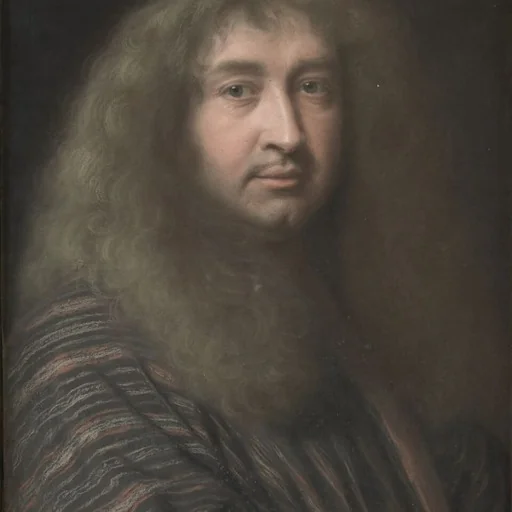
Artist
Robert Nanteuil (French pronunciation: ; 1623 – 9 December 1678) was a French portrait artist: engraver, draughtsman and pastellist to the court of Louis XIV.