Artwork
Saint Ottilia
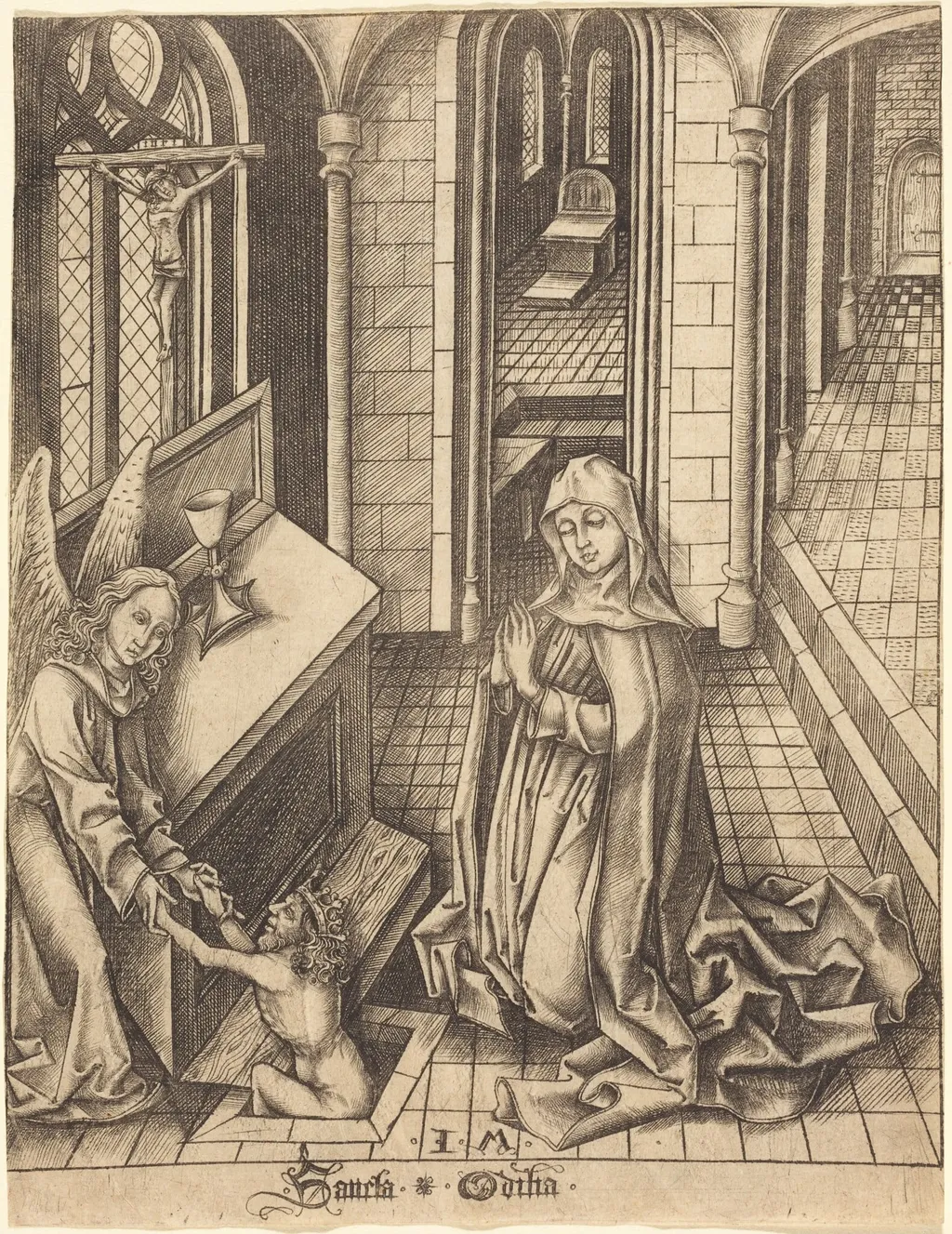
Saint Ottilia is an ink print by the Renaissance artist Israhel van Meckenem. It dates from 1478 and is held in the collection of the National Gallery of Art.
About this work
Overview
Van Meckenem was known for his technical precision and prolific output, often adapting compositions from other artists to meet demand for devotional subjects.
Created around 1478 by Israhel van Meckenem, a German engraver and goldsmith, this print is one of over six hundred works he produced during his career. Executed in engraving on copper, it belongs to a body of religious imagery widely circulated in late medieval Europe. Van Meckenem was known for his technical precision and prolific output, often adapting compositions from other artists to meet demand for devotional subjects.
Subject & Meaning
The print portrays Saint Ottilia, a figure venerated in parts of Germany for her association with healing and spiritual vision. She is shown in prayer within a sacred space, her posture and expression conveying quiet devotion. The presence of a small angel offering a flower suggests divine favor or a moment of revelation, reinforcing her role as an intercessor between the earthly and the heavenly realms.
Technique & Style
Van Meckenem employed fine, controlled lines to render texture and depth, characteristic of early engraving. The architecture of the church is meticulously detailed—arches, columns, and a latticed window are rendered with precision. The folds of the saint’s robe, the angel’s wings, and the crucifix in the background are defined through dense hatching, creating a sense of solidity and spatial recession within a compact frame.
History & Provenance
The print was made during a period when devotional imagery was increasingly accessible through printmaking. Van Meckenem’s workshop produced multiple impressions, allowing wider distribution across religious communities. While no specific early ownership records are documented, similar prints from his hand appear in ecclesiastical collections and private holdings across the Rhineland and southern Germany.
Context
In the late 15th century, engraving emerged as a medium for both artistic expression and religious instruction. Van Meckenem operated in a network of artists and printers who responded to growing lay piety. His work reflects the transition from manuscript illumination to printed images, making sacred figures like Ottilia visible beyond monastic walls and into domestic devotional practice.
Legacy
Van Meckenem’s technical mastery influenced later engravers in Germany and the Low Countries. Though less celebrated than contemporaries like Dürer, his prolific output helped standardize the visual language of saintly imagery in print. *Saint Ottilia* exemplifies how religious narratives were adapted for mass reproduction, contributing to the broader dissemination of devotional culture in the decades before the Reformation.
Artist & collection
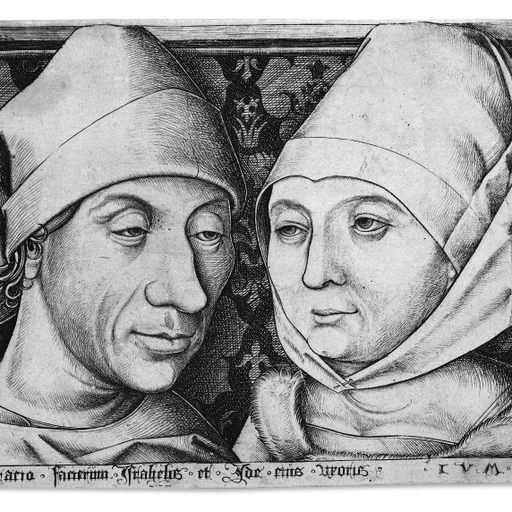
Artist
Israhel van Meckenem (c. 1445 – 10 November 1503), also known as Israhel van Meckenem the Younger, was a German printmaker and goldsmith, perhaps of a Dutch family origin. He was the most prolific engraver of the…

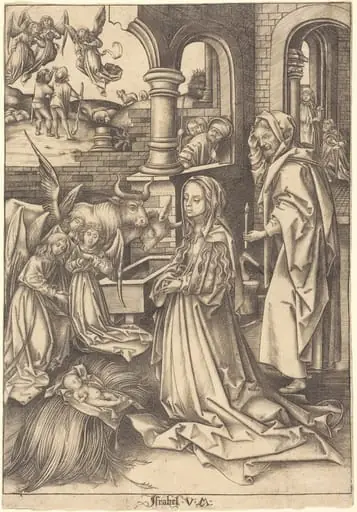 The Nativity
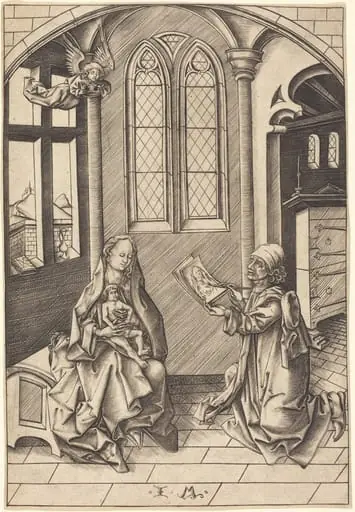 Saint Luke Drawing a Portrait of the Virgin
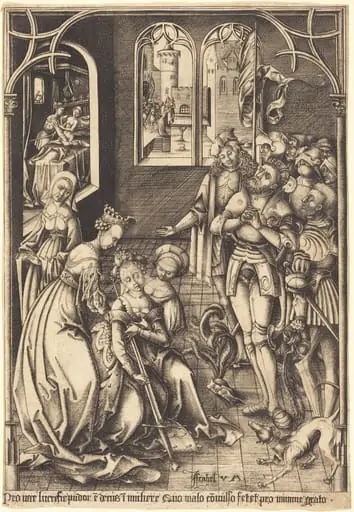 The Death of Lucretia
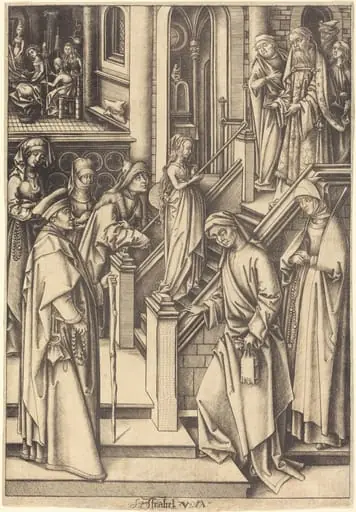 The Presentation of the Virgin
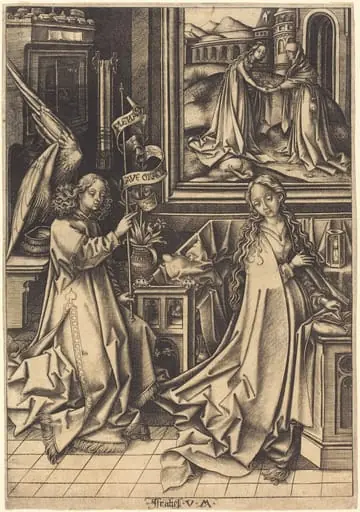 The Annunciation
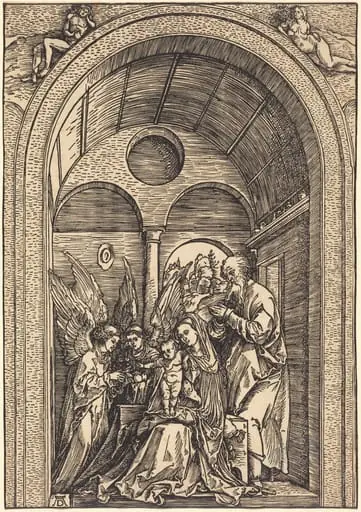 The Holy Family with Two Angels in a Vaulted Hall
 Solomon Worshipping False Gods
 The Death of the Virgin
 Adoration of the Shepherds
 The Glorification of the Virgin
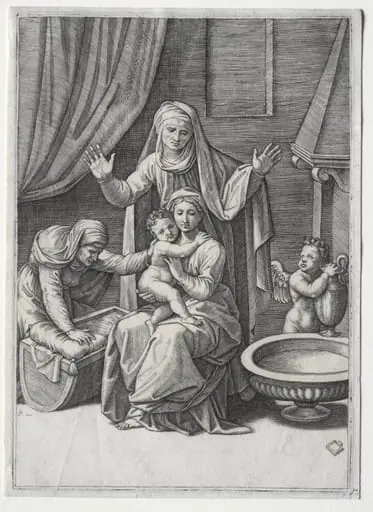 The Virgin and the Cradle with Saint Elisabeth and Saint Anne