Artwork
Tablou ulei pe pânză „Onor comandantului suprem”, semnat stânga jos în monogramă C.M., atribuit lui Maricel Chițac, nedatat. Tabloul îl prezintă pe ”comandantul suprem”, Nicolae Ceaușescu, la tribună primind onorul din partea aviației, trupelor de uscat și a marinei. Pe fundal tricolorul. Tablou comandat și oferit de Ministerul Apărării Naționale lui Nicolae Ceaușescu cu ocazia aniversării zilei de naștere (ianuarie 1989).
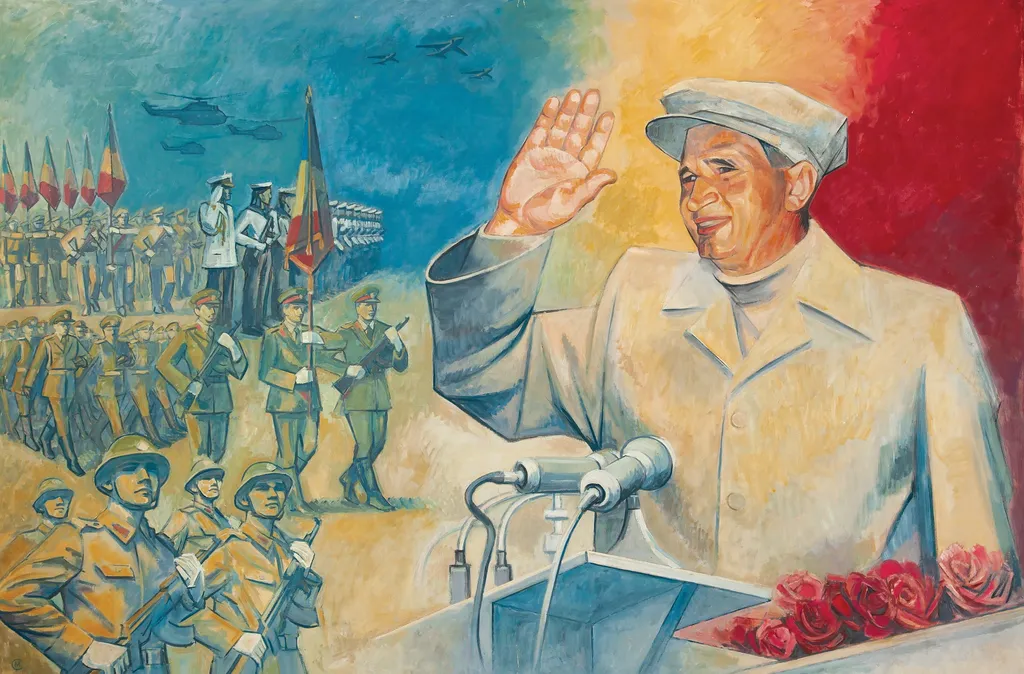
Tablou ulei pe pânză „Onor comandantului suprem”, semnat stânga jos în monogramă C.M., atribuit lui Maricel Chițac, nedatat. Tabloul îl prezintă pe ”comandantul suprem”, Nicolae Ceaușescu, la tribună primind onorul din partea aviației, trupelor de uscat și a marinei. Pe fundal tricolorul. Tablou comandat și oferit de Ministerul Apărării Naționale lui Nicolae Ceaușescu cu ocazia aniversării zilei de naștere (ianuarie 1989). is a print by Maricel Chițac. It is held in the collection of the National Museum of Romanian History.
About this work
Overview
The scene presents Ceaușescu on a podium, flanked by armed forces and national colors, emphasizing state-sanctioned reverence.
A painted portrait commissioned by Romania’s Ministry of National Defense in January 1989, this oil on canvas depicts Nicolae Ceaușescu receiving military honors on his birthday. Signed with the monogram C.M. and attributed to Maricel Chițac, the work was created for official ceremonial use. The scene presents Ceaușescu on a podium, flanked by armed forces and national colors, emphasizing state-sanctioned reverence.
Subject & Meaning
The painting portrays Ceaușescu as the supreme commander, accepting ceremonial tribute from the army, air force, and navy. His raised hand and smile convey authority and approbation. The tricolor flag behind him and the disciplined ranks of soldiers reinforce the state’s militarized cult of personality. Red flowers on the podium symbolize loyalty, while the bright sky and orderly formations suggest harmony under his leadership.
Technique & Style
The artist employs clear, simplified forms and saturated hues to create a ceremonial clarity. Bold outlines define figures and uniforms, while the blue sky and vivid reds of flags and flowers heighten the visual impact. The composition is symmetrical and hierarchical, directing attention to the central figure. Lighting is even and theatrical, minimizing shadows to sustain an idealized, propagandistic tone.
History & Provenance
Commissioned by the Ministry of National Defense for Ceaușescu’s 70th birthday in January 1989, the painting was part of a broader campaign to glorify his leadership. It was displayed in official settings and likely distributed to state institutions. Its origin is tied to the final year of the regime, before the December 1989 revolution dismantled the state structures that commissioned it.
Context
Created during the final months of Ceaușescu’s rule, the painting reflects the intensifying personality cult of the late 1980s. As economic hardship grew, state art increasingly emphasized military pageantry and loyalty. This work aligns with a pattern of official portraiture designed to project stability and reverence, even as public discontent mounted.
Legacy
Following the 1989 revolution, such state-commissioned portraits were removed from public view and largely archived or discarded. The painting survives as a historical artifact of institutionalized propaganda, offering insight into how visual culture was mobilized to sustain authoritarian rule. Its attribution to Chițac remains tentative, reflecting limited documentation of state artists under the regime.
Artist & collection
Artist

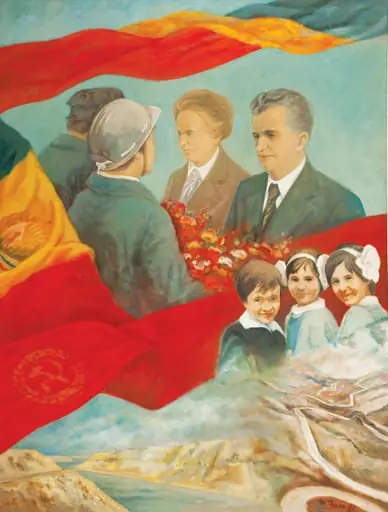 Tablou „Omagiul Președintelui Țării”, ulei pe pânză; semnat Gheorghe Pogan și datat în partea dreaptă jos. Tabloul îi prezintă pe soții Ceaușescu întâmpinați cu flori de două personaje masculine (un miner și un petrolist), învăluiți de tricolor și steagul PCR. În dreapta lui Nicolae Ceaușescu (dreapta tabloului) trei elevi. Partea de jos a tabloului este completată cu reprezentarea Transfăgărășanului și a Canalului Dunăre - Marea Neagră. Comandat și oferit de Comitetul Județean de Partid Hunedoara (1988).
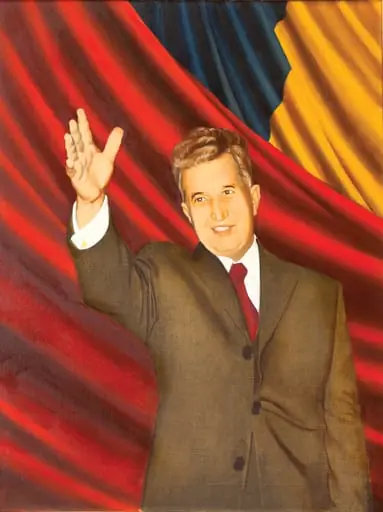 Tablou, ulei pe pânză, „Salutul președintelui”, atribuit lui Viorel Toma, nedatat. Nicolae Ceaușescu este reprezentat în centrul tabloului salutând, pe fundal steagul PCR și cel al RSR. Comandat și oferit de Comitetul Județean de Partid Timiș (1985).
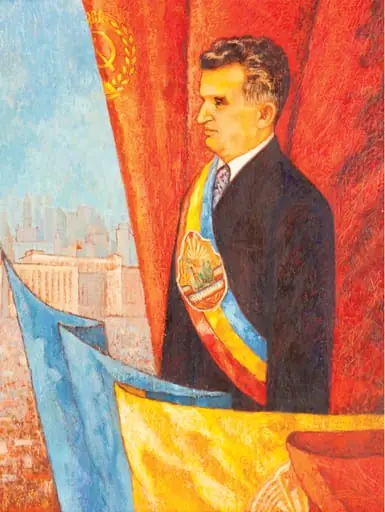 Tablou, ulei pe pânză, „Nicolae Ceaușescu, întâiul președinte al României”, semnat C.Aurel și datat 1974 în partea dreaptă jos. Nicolae Ceaușescu purtând banderolă tricoloră cu stema R.S.R., stând la balcon primind ovații din partea oamenilor muncii adunați într-o piață. În spatele său, steagul cu sigla PCR. Tablou oferit de către autor originar din Câmpina (Prahova), 19 august 1974.
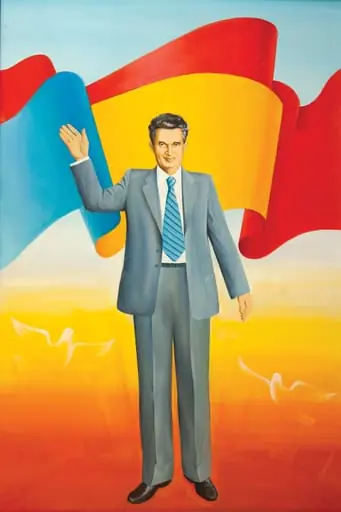 Tablou „ Ceaușescu Pace”, semnat M. Ceacîru și datat dreapta jos. Tabloul îl prezintă pe Nicolae Ceaușescu salutând, în spatele său flutură tricolorul și stegul PCR, în stânga și în dreapta sa doi porumbei albi în zbor.Comandat de Comitetul Județean de Partid Neamț (1989)
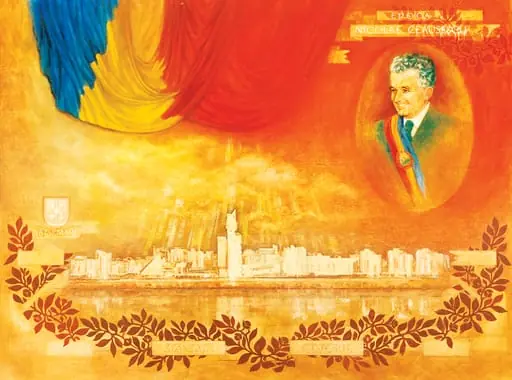 Tablou, ulei pe pânză, „Epoca Ceaușescu – Omagiu” semnat A. Cordea și datat 1986 în partea dreaptă jos. Tabloul îl prezintă pe Nicolae Ceaușescu în medalion dreapta sus privind zâmbitor la orașul Satu Mare scăldat de lumina soarelui, soarele reprezentat de tricolor și steagul PCR. Deasupra medalionului este notat cu majuscule ”EPOCA NICOLAE CEAUȘESCU”. În partea stângă stema județului Satu Mare. În partea de jos o ghirlandă, printre ramurile ei mesajul ”MĂREAȚĂ CTITORIE”. Comandat de Comitetul Județean de Partid Satu Mare (1986)
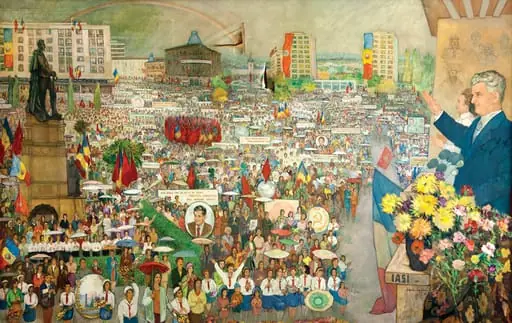 Tablou ”Mitingul din Piața Unirii din Iași de la 15 septembrie 1980”, semnat Costache Agafiței și datat în partea dreaptă jos. Tabloul îi înfățișază pe Elena și pe Nicolae Ceaușescu la balcon salutând mulțimea adunată în Piața Unirii din Iași. Comandat de Comitetul Județean de Partid Iași și dăruit soților Ceaușescu în octombrie 1981.
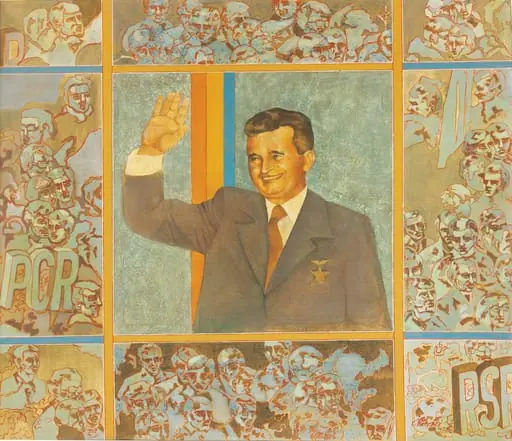 Tablou, ulei pe pânză, „Portret Nicolae Ceaușescu”, semnat în partea dreaptă jos C.Macavei și datat 1978. Tablou împărțit în mai multe registre, în plan central Nicolae Ceaușescu salutând oamenii muncii din celelalte registre. Comandat și oferit de Comitetul Județean de Partid Ilfov, 23 ianuarie 1978.
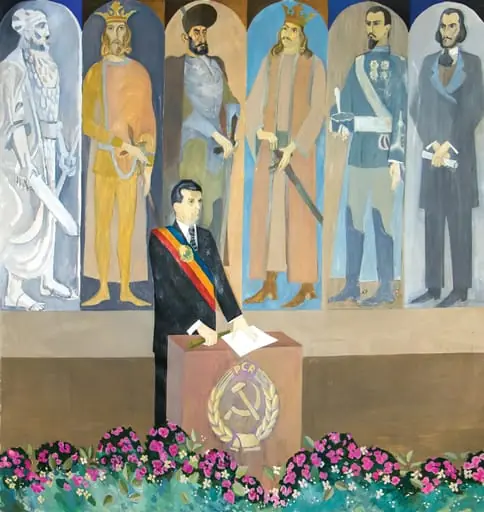 Tablou, ulei pe pânză, ”Omagiu”, semnat Constantin Piliuță. Nicolae Ceaușescu la un pupitru cu însemnele PCR depunând jurământul de învestire; poarte însemnele prezidențiale eșarfa tricoloră cu stema RSR, sceptrul, însemnul de ”Erou al Republicii Socialiste România”. Pe fundal sunt reprezentați Burebista, Mircea cel Bătrân, Mihai Viteazul, Ștefan cel Mare, Alexandru Ioan Cuza, Nicolae Bălcescu, personajele au o mimică solemnă, dau impresia că sunt garanții jurământului pe care-l face Nicolae Ceaușescu. Comandat și oferit lui Nicolae Ceaușescu de Consiliul Culturii și Educației Socialiste, ianuarie 1978.
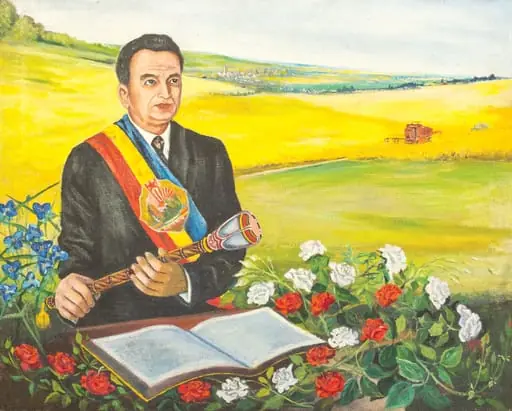 Tablou, ulei pe pânză, ”Nicolae Ceaușescu, președinte”, nesemnat, atribuit I.C. Popescu - Stolojan. Nicolae Ceaușescu este prezentat în momentul învestirii în funcția de președinte al Republicii Socialiste România. Poartă însemnele funcției eșarfa tricoloră, sceptrul prezidențial. Sala Marii Adunări Naționale a fost înlocută cu un fundal agricol - un lan de grâu treierat de o combină. Pupitrul este decorat cu trandafiri și iriși. Oferit de autor, 1976.
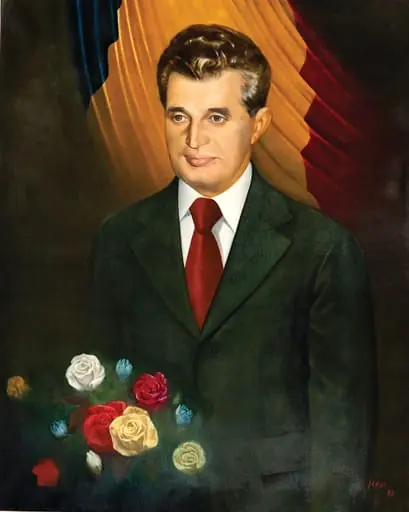 Tablou ulei pe pânză, portret Nicolae Ceaușescu semnat Ispas și datat în partea dreaptă jos. Este prezentat într-o postură solemnă cu un buchet de trandafiri, în spatele său tricolorul. Culorile drapelului se regăsesc și în coloritul trandafirilor. Comandat de Comitetul Județean de Partid Alba (1983).
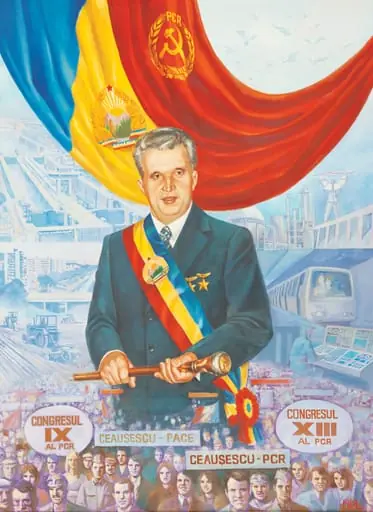 Tablou, ulei pe pânză, ”Ctitorul României Socialiste”, nesemnat, atribuit lui V.Tănase. Tabloul îl prezintă pe Nicolae Ceaușescu în prim plan purtând toate însemnele funcției: eșarfa tricoloră, sceptrul prezidențial, două însemne de ”Erou al Republicii Socialiste România”. În partea de sus a tabloului este redat steagul RSR unit cu steagul PCR. În partea de jos, poporul, oamenii muncii purtând pancarte cu ”Ceaușescu Pace”, ”Ceaușescu PCR”, ”Congresul IX al PCR” (alegerea lui Nicolae Ceaușescu în fruntea partidului), ”Congresul XII al PCR” (realegerea în fruntea partidului). Pe fundal sunt redate realizările socialismului: Canalul Dunăre Marea Neagră, Barajul Vidraru, metroul etc. Tablou comandat de Ministerul Apărării Nașionale (1985).
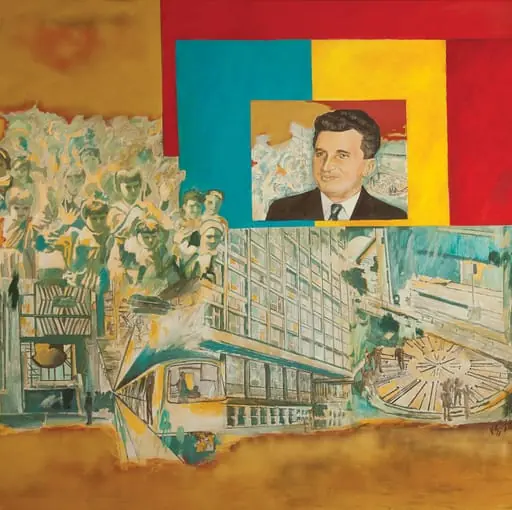 Tablou „Omagiu”, semnat Ion Bitzan și Vladimir Setran.Tabloul prezintă portretul lui Nicolae Ceaușescu încadrat de tricolor în partea dreaptă sus. Restul tabloului este completat de realizările epocii socialiste. Comandat de Comitetul Municipal de Partid 1981.
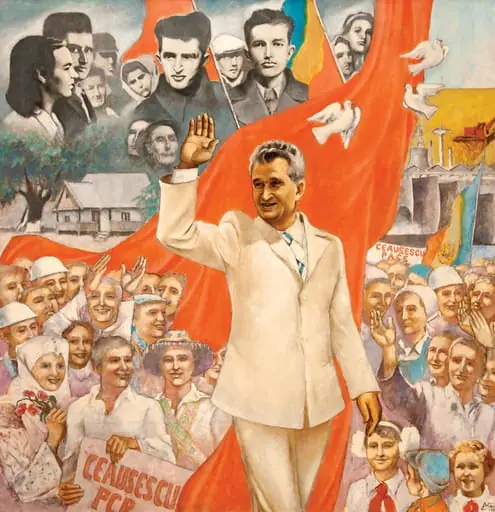 Tablou „Eroul României Socialiste” , semnat și datat în dreapta jos ”Constantin Nițescu 1988”. Comandat de Comitetul Județean de Partid Olt și oferit cadou lui Nicolae Ceaușescu la împlinirea vârstei de 70 de ani (ianuarie 1988).
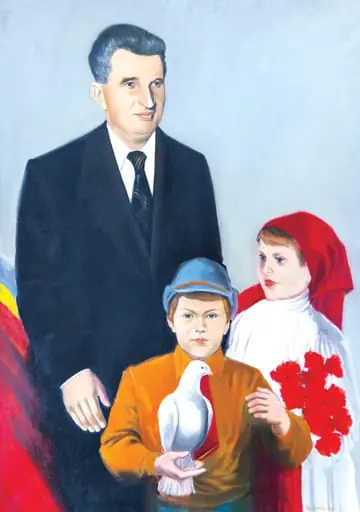 Tablou, ulei pe pânză, „Mesajul României”, semnat Nicolae Costachi în partea dreaptă jos și datat 1984. Nicolae Ceaușescu alături de doi copii, o fată îmbrăcată în costum popular ținând în mâini un buchet de garoafe roșii și un băiat în uniformă de șoim al patriei cu un porumbel alb în palma dreaptă. Comandat și oferit de Comitetul Județean de Partid Bistrița Năsăud (1985).
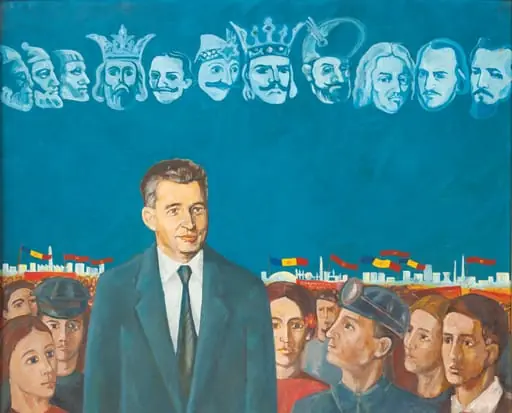 Tablou, ulei pe pânză, „Omagiu”, nesemnat. Nicolae Ceaușescu este prezentat în mijlocul oamenilor muncii vegheat de ”fantomele” eroilor neamului : Burebista, Decebal, Traian, Mircea cel Bătrân, Iancu de Hunedoara, Vlad Țepeș, Ștefan cel Mare, Mihai Viteazul, Dimitrie Cantemir, Nicolae Bălcescu, Alexandru Ioan Cuza (de la stânga la dreapta). Comandat și oferit de Comitetul Județean de Partid Tulcea, 22 ianuarie 1978.
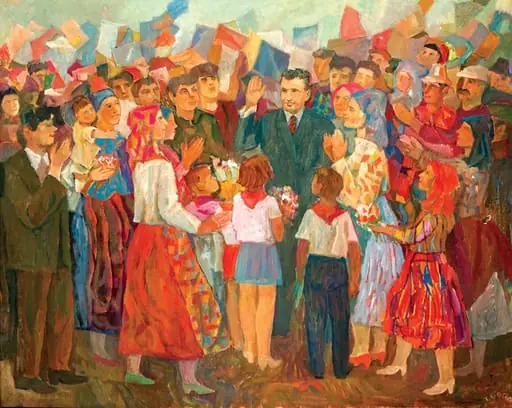 Tablou, ulei pe pânză, „Moment de sărbătoare bihoreană”, semnat T. Goga în partea dreaptă jos. Nicolae Ceaușescu este reprezentat în mijlocul oamenilor munci și al tinerilor din județul Bihor care-l întâmpină cu flori și aplauze. Comandat de Comitetul Județean de Partid Bihor,oferit lui Nicolae Ceaușescu în ianuarie 1978.