Artwork
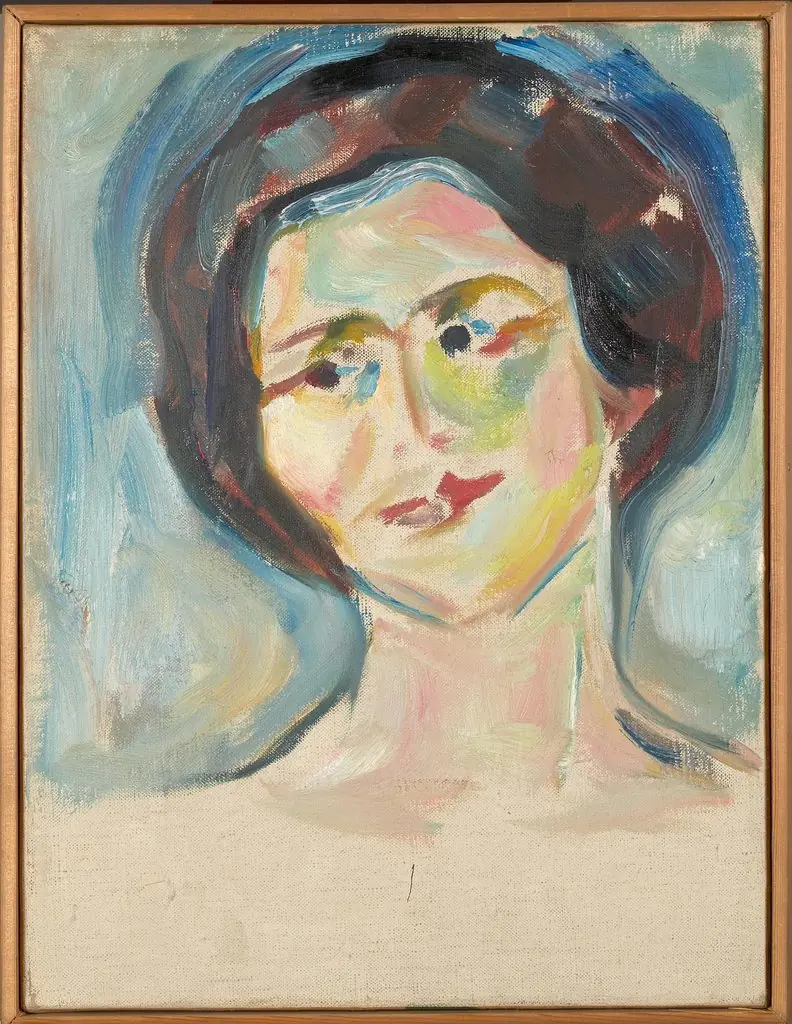
Tablou, ulei pe pânză, ”Portret Elena Ceaușescu”, nesemnat, atribui lui Nicolae Toma. Oferit de autor, cu ocazia zilei de naștere a Elenei Ceaușescu, Ploiești, ianuarie 1978.
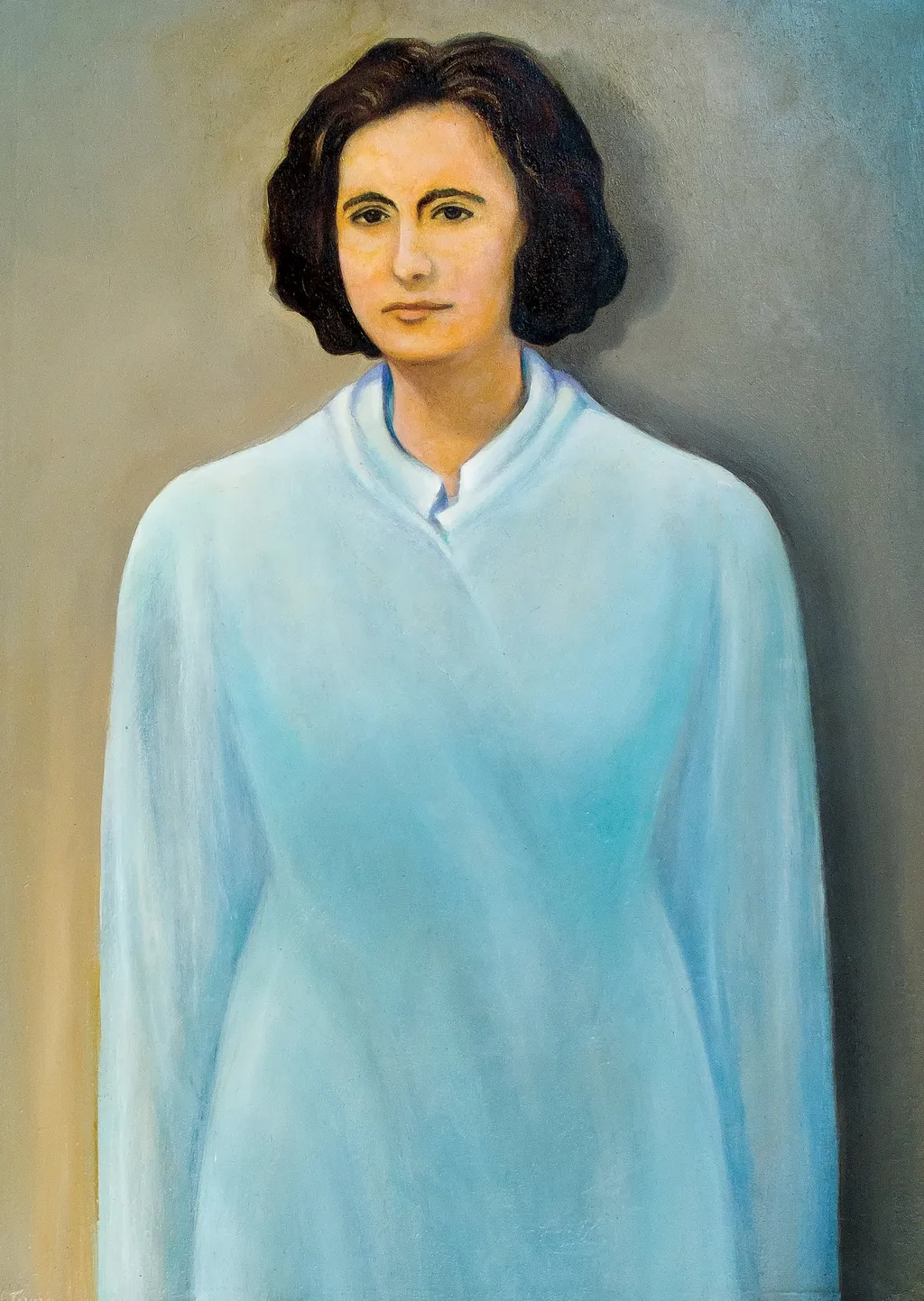
Tablou, ulei pe pânză, ”Portret Elena Ceaușescu”, nesemnat, atribui lui Nicolae Toma. Oferit de autor, cu ocazia zilei de naștere a Elenei Ceaușescu, Ploiești, ianuarie 1978. is a print by Nicolae Toma. It is held in the collection of the National Museum of Romanian History.
About this work
She’s wearing a light-colored dress with a high collar, standing against a plain, muted background.
This is a simple portrait of a woman with short, dark hair. She’s wearing a light-colored dress with a high collar, standing against a plain, muted background. Her expression is calm, with a slight hint of a smile.
The painting was given to the woman on her birthday in 1978, as a gift from the artist. That’s a quiet detail—someone took the time to create this for her.
If you like this style, look up *chiaroscuro* next. It’s the technique of using strong light and dark contrasts to shape faces.
Overview
The work is an oil on canvas portrait, unsigned but attributed to the Romanian painter Nicolae Toma. It depicts a woman with short dark hair, dressed in a light, high‑collared garment, set against a muted, unadorned background. The composition is restrained, presenting a calm facial expression with a faint smile, characteristic of formal portraiture of the period.
Subject & Meaning
The sitter is Elena Ceaușescu, the former wife of Romania’s communist leader. The portrait’s subdued tone and modest pose convey a dignified, almost austere presence, aligning with the public image cultivated for political spouses in the late 1970s. The slight smile hints at a personal, private aspect within the constraints of official representation.
Technique & Style
Executed in oil, the painting employs a limited palette and soft modeling of light, creating gentle transitions between light and shadow. While not overtly dramatic, the handling of chiaroscuro subtly defines the facial features and the folds of the dress, lending a three‑dimensional quality without excessive contrast.
History & Provenance
The portrait was presented to Elena Ceaușescu on her birthday in January 1978, a gift from the artist himself. The painting remained in the Ceaușescu family collection until the political changes of 1989, after which it entered the public domain through museum acquisition.
Context
Created during the final decade of Nicolae Ceaușescu’s regime, the portrait reflects the era’s emphasis on projecting stability and cultivated elegance among the ruling elite. Portraits of political figures and their families were often commissioned to reinforce the regime’s narrative of continuity and cultural refinement.
Artist & collection
Artist
Nicolae Toma spent the 1970s in Ploiești painting birthday gifts for the Ceaușescus—official portraits he never signed.

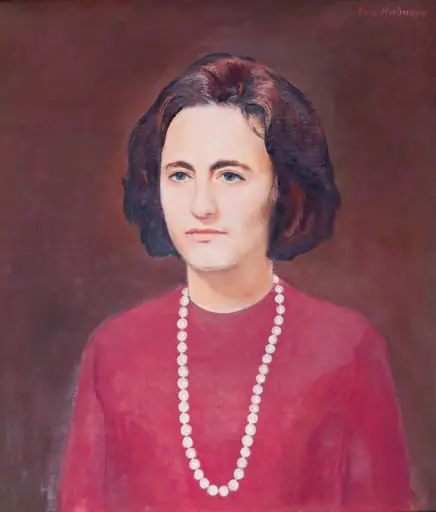 Tablou, ulei pe pânză, „Elena Ceaușescu”, semnat în partea dreaptă sus Dan Hatmanu. Oferit de autor, 6 ianuarie 1979.
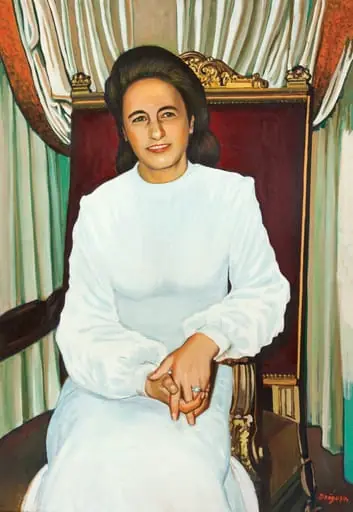 Tablou, ulei pe pânză, „Portret Elena Ceaușescu”, semnat Drăgușin în partea dreaptă jos, nedatat. Elena Ceaușescu, stând pe un scaun cu spătar înalt (jilț) într-o rochie elegantă de culoare albă. Comandat și oferit de Ministerul de Interne, 5 ianuarie 1979.
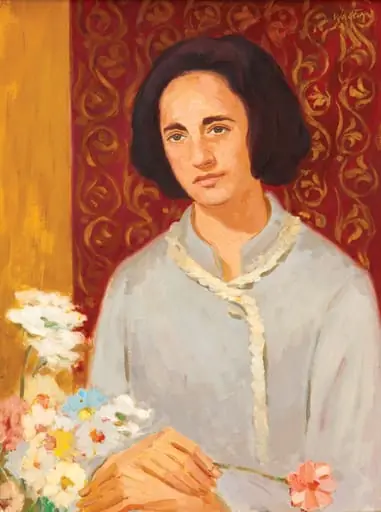 Tablou, ulei pe pânză, Portret Elena Ceaușescu, atribuit lui Fredric Bytoy. Elena Ceaușescu reprezentată înt-o atitudine melancolică alături de un buchet de flori. Comandat și oferit de Comitetul de Partid Maramureș, 7 ianuarie 1979.
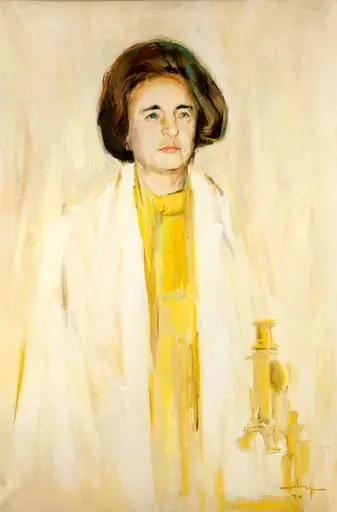 Tablou „Elena Ceușescu” semnat dreapta jos indescifrabil, atribuit lui Ion Țarălungă. Tabloul o prezintă pe Elena Ceaușescu într-o postură gravă de cercetător (halat alb și microscop alăturat). Comandat de Consiliul de Conducere al Ministerului Apărării Naționale și oferit Elenei Ceaușescu la 5 ianuarie 1979.
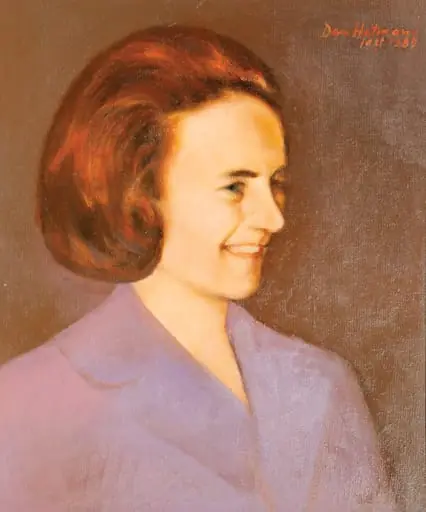 Tablou ”Portret Elena Ceaușescu” semnat Dan Hatmanu și datat dreapta sus.Ulei/pânză. Comandat de Comitetul Județean de Partid Iași și oferit cadou Elenei Ceaușescu cu ocazia aniversării a 70 de ani (ianuarie 1989).
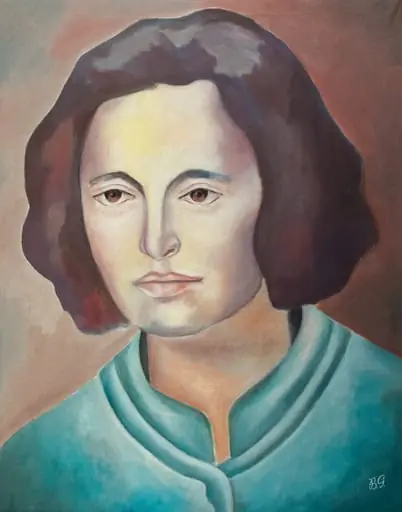 Tablou, ulei pe pânză, portret Elena Ceaușescu, semnat dreapta jos B.G. Comandat și oferit de Comitetul Județean de Partid Caraș Severin, 6 ianuarie 1979.
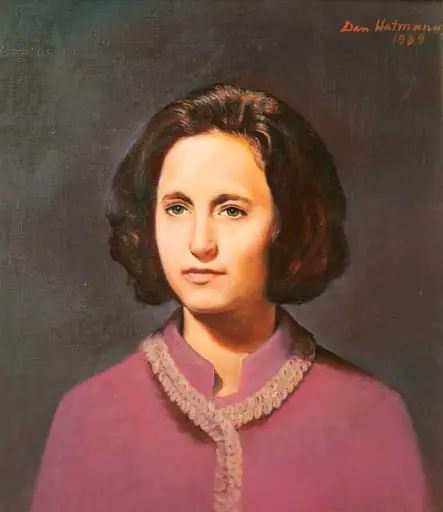 Tablou ulei pe pânză, , „Elena Ceaușescu”, semnat Dan Hatmanu și datat 1989 în partea dreaptă sus. Tabloul o înfățișază pe Elena Ceaușescu într-un costum cu volane în nuanțe de roz. Comandat de Consiliul Național al Femeilor și oferit Elenei Ceaușecu cu ocazia împlinirii vârstei de 70 de ani (ianuarie 1989).
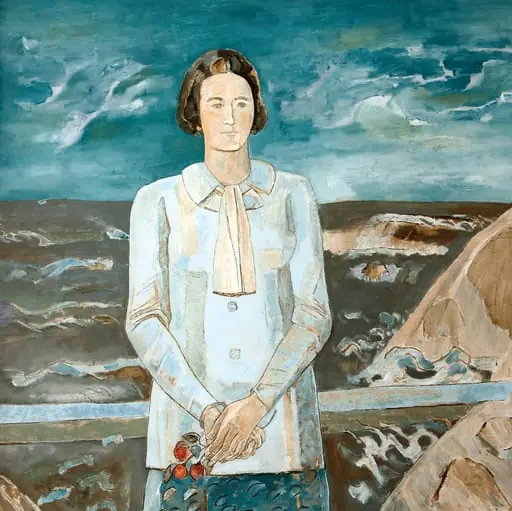 Tablou reprezentând-o pe Elena Ceaușescu, atribuit lui Traian Brădeanu. Tablou comandat de Consiliul Culturii și Educației Socialiste și oferit în dar Elenei Ceaușescu la împlinirea vârstei de 60 de ani (ianuarie 1979).
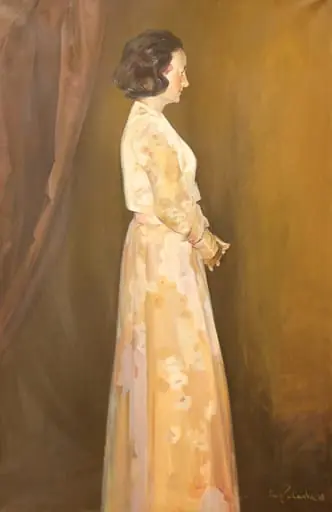 Tablou - portret întreg Elena Ceaușescu din profil, semnat și datat dreapta jos ”Eugen Palade 78”. Tablou comandat de Consiliul Culturii și Educației Socialiste și oferit în dar Elenei Ceaușescu la împlinirea vârstei de 60 de ani (ianuarie 1979).
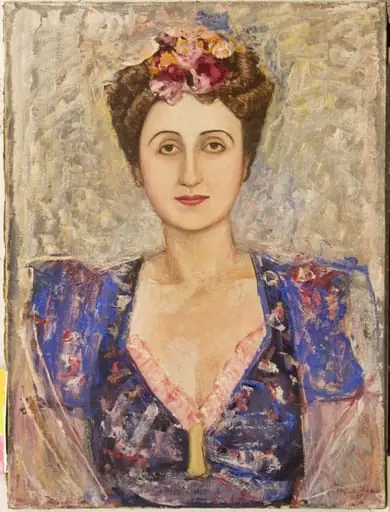 Portretul doamnei Viorica Mavrodin
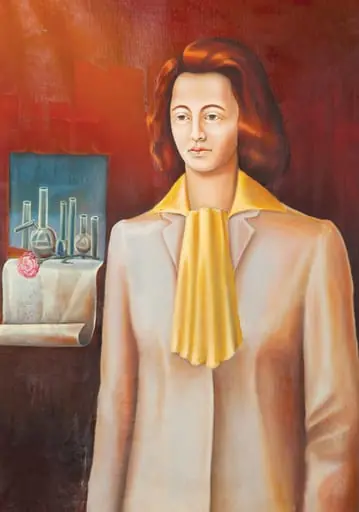 Tablou, ulei pe pânză, portret Elena Ceaușescu, nesemnat, nedatat. Elena Ceaușescu este reprezentată alături de recipiente folosite în laboratoare, alături de o diplomă și o garoafă roz. Comandat și oferit de Comitetul Județean de Partid Caraș Severin, 6 ianuarie 1979.
 Portrait of Model