Artwork
Untitled
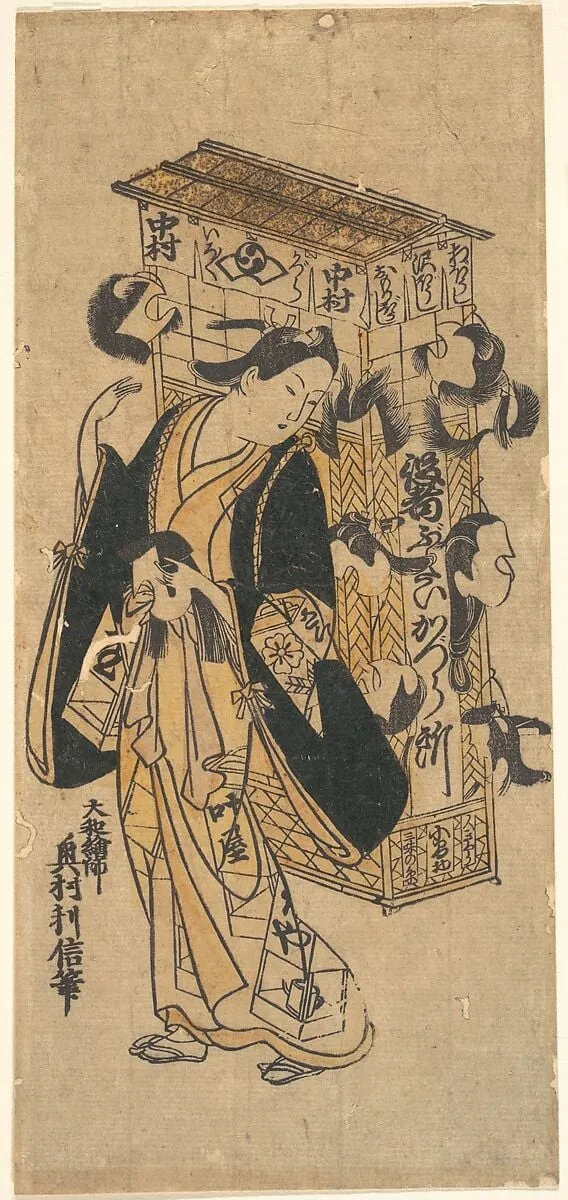
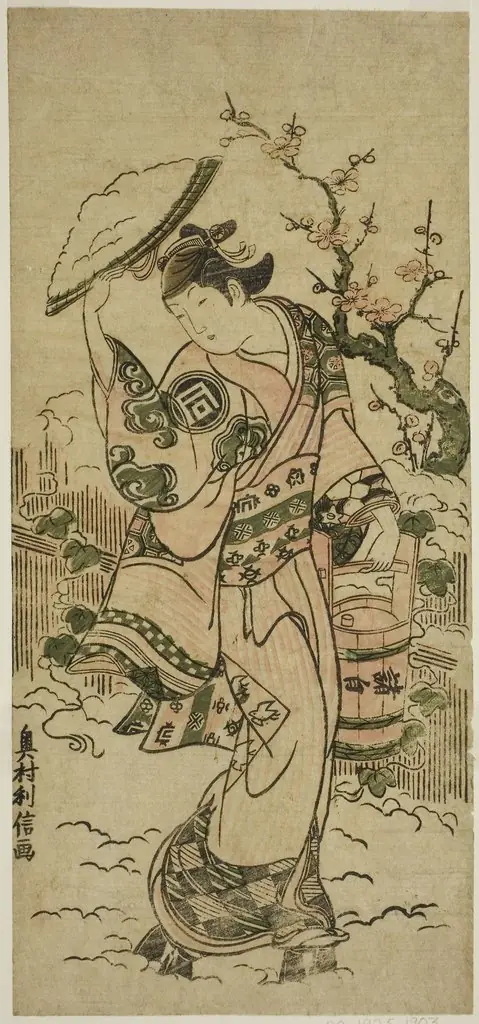
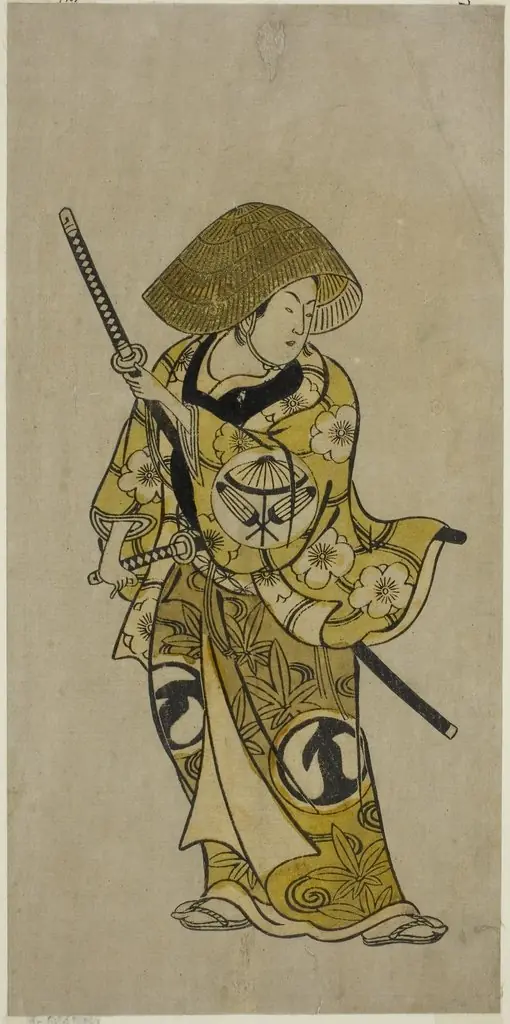
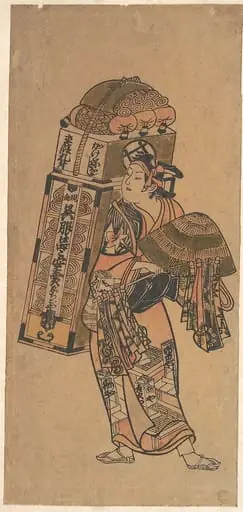
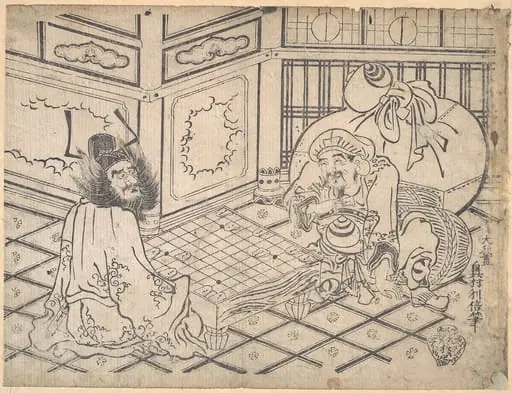
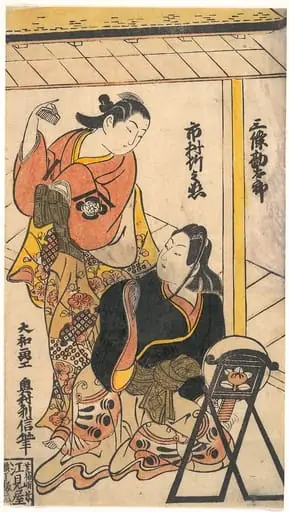
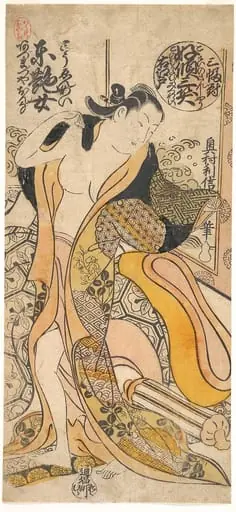
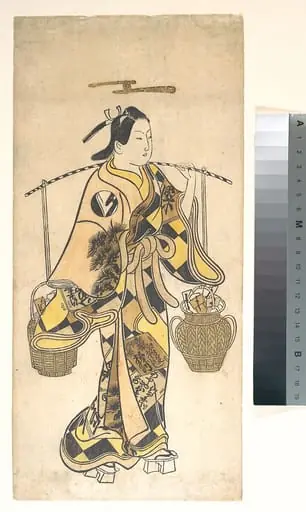
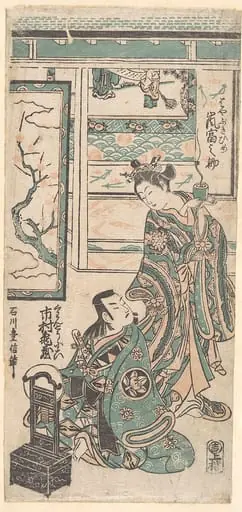
Untitled is an ink print by the Baroque artist Okumura Toshinobu. It dates from 1738 and is held in the collection of the Metropolitan Museum of Art.
About this work
Overview
The composition presents a quiet moment between two figures amid a theatrical backdrop, combining delicate human detail with stylized environmental elements.
Created in 1738 by Okumura Toshinobu, this woodblock print is rendered in ink and color on paper. It is part of the collection at The Metropolitan Museum of Art. The composition presents a quiet moment between two figures amid a theatrical backdrop, combining delicate human detail with stylized environmental elements. Its modest scale and restrained palette reflect the aesthetic priorities of early 18th-century Japanese printmaking.
Subject & Meaning
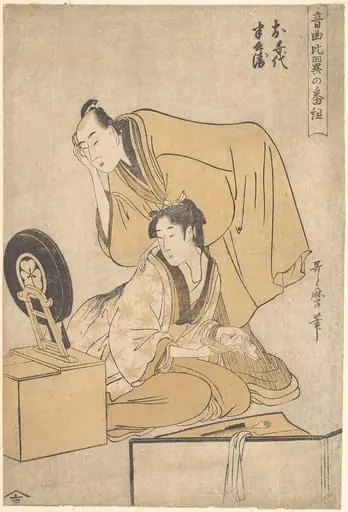
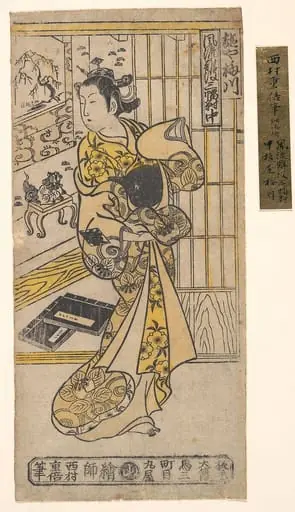
A man in a long robe plays a flute, while a woman kneels beside him, holding a fan. Behind them, a miniature stage displays two masked performers—one standing, one seated—suggesting a performance in progress. The scene evokes the intersection of private contemplation and public spectacle, possibly referencing Noh theater traditions. The figures’ stillness contrasts with the implied motion of music and drama, hinting at layered cultural narratives.
Technique & Style
The print employs bold, clean black outlines to define forms, with flat areas of muted earth tones—ochres, grays, and soft browns—applied through woodblock printing. The flute’s exaggerated height and the stage’s simplified lattice structure emphasize pattern over realism. Background elements are rendered with minimal detail, creating a dreamlike tension between the vivid foreground and the flattened, almost symbolic backdrop.
History & Provenance
Produced during the Edo period, this work belongs to a tradition of ukiyo-e prints that captured scenes of urban life and performance. Though unsigned in the manner of many commercial prints of the time, its attribution to Okumura Toshinobu is based on stylistic analysis and historical records. It entered The Metropolitan Museum of Art’s collection through documented acquisitions in the 20th century.
Context
In 1738, Edo-period Japan saw growing interest in theater and leisure culture, reflected in popular prints. Toshinobu worked within a network of publishers and artists who produced affordable imagery for a broad audience. This print’s fusion of intimate domesticity and theatrical spectacle aligns with contemporaneous trends, where private moments were framed by public entertainments, blurring boundaries between real and staged life.
Legacy
While not widely known outside specialist circles, this print exemplifies the quiet sophistication of mid-Edo period woodblock design. Its restrained palette and compositional balance influenced later artists exploring the relationship between figure and environment. Today, it remains a reference point for understanding how everyday scenes were elevated through stylization in Japanese print culture.
Artist & collection