Artwork
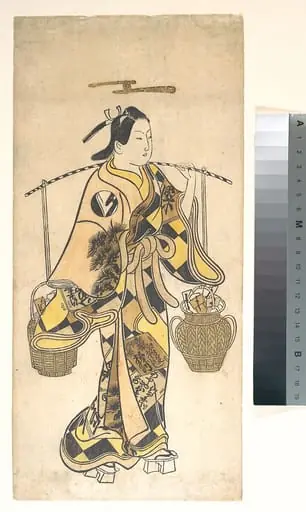
The Actor Sawamura Kamesaburo as Nagoya Kosanza in the play "Keisei Fukubiki Nagoya," performed at the Nakamura Theater in the first month, 1731
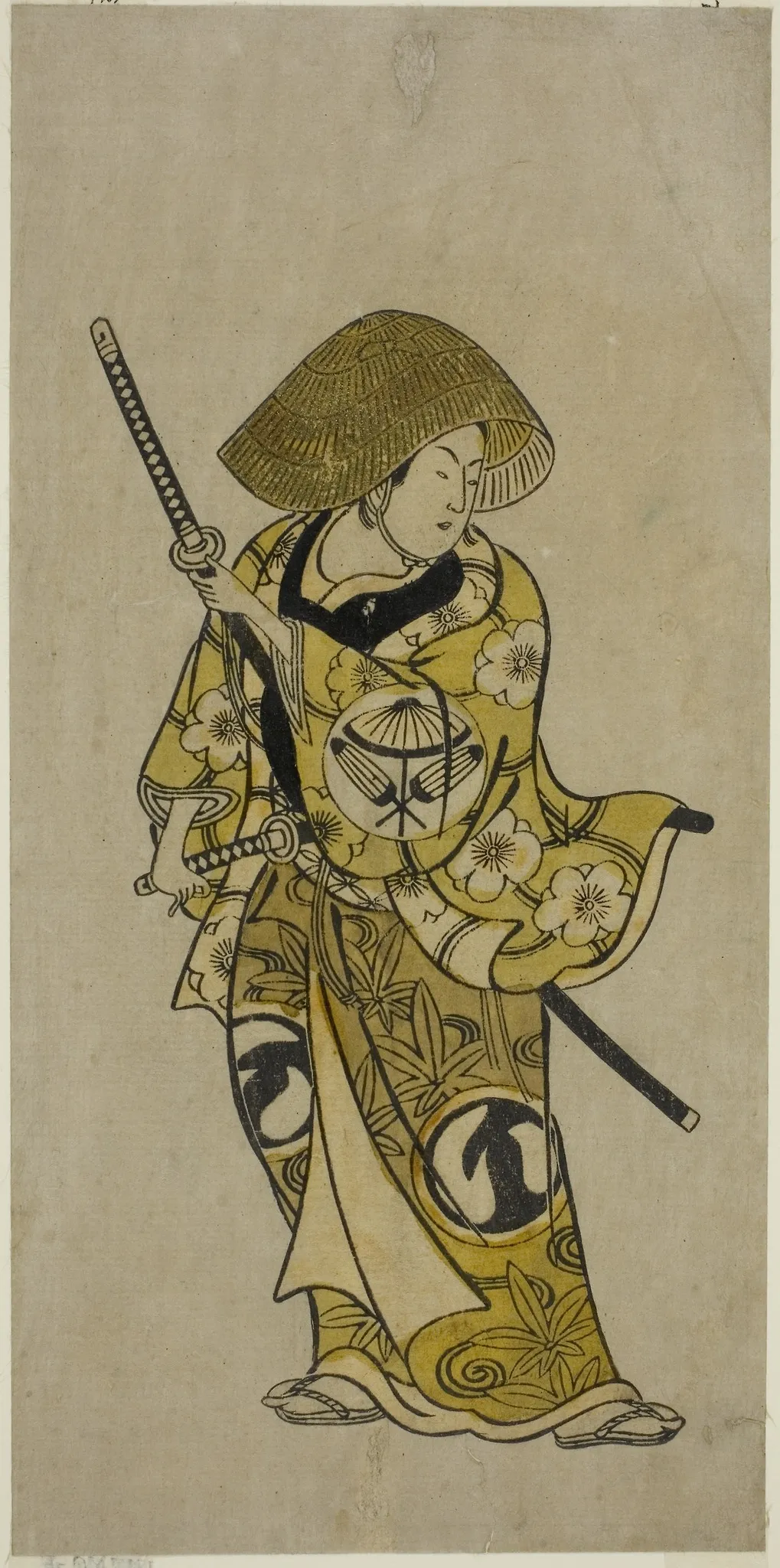
The Actor Sawamura Kamesaburo as Nagoya Kosanza in the play "Keisei Fukubiki Nagoya," performed at the Nakamura Theater in the first month, 1731 is an unspecified painting by the Ukiyo-e artist Okumura Toshinobu. It dates from 1731 and is held in the collection of the Art Institute of Chicago.
About this work
Overview
This 1731 painting by Okumura Toshinobu depicts actor Sawamura Kamesaburo as Nagoya Kosanza in the play 'Keisei Fukubiki Nagoya,' performed at the Nakamura Theater. The work is part of the Art Institute of Chicago's collection.
Subject & Meaning
The subject, Sawamura Kamesaburo, is portrayed in character as Nagoya Kosanza, highlighting the intersection of theater and visual art in Edo-period Japan. The depiction captures a moment from a specific theatrical performance.
Technique & Style
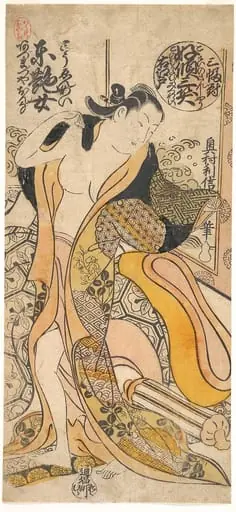
The painting features a dominant yellow kimono with black floral and leaf patterns, set against a light brown background. The actor's attire and the overall aesthetic are characteristic of Edo-period art, with attention to detail in the costume and props like the curved sword.
History & Provenance
Created in 1731, the painting is attributed to Okumura Toshinobu. Its current location is the Art Institute of Chicago, though the full provenance history is not detailed here.
Context
The work reflects the Edo period's vibrant theatrical culture, particularly the popularity of plays like 'Keisei Fukubiki Nagoya' at venues such as the Nakamura Theater. It also showcases the artist's engagement with capturing contemporary performing arts.
Artist & collection


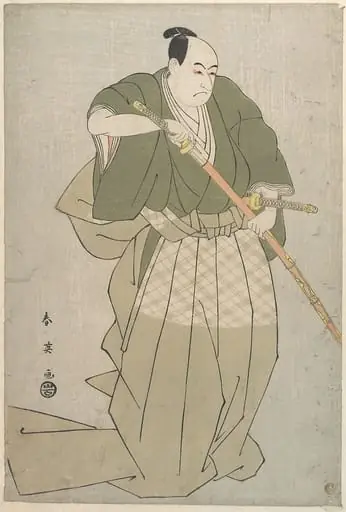 初代市川 男女蔵の桃井若狭之助|The Actor Ichikawa Omezō I as the Young Daimyo Momonoi Wakasanosuke
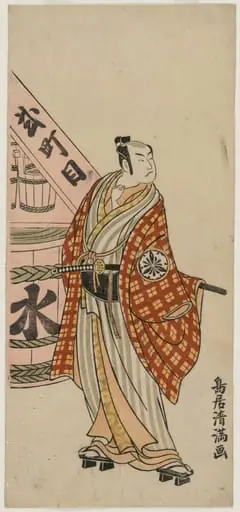 Matsumoto Koshiro IV as a Townsman Standing Beside a Water Barrel
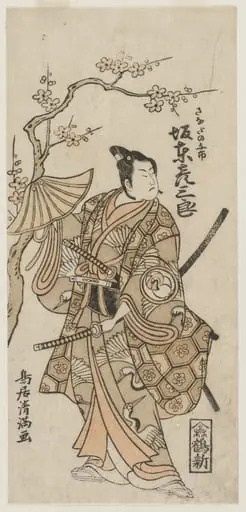 Bando Hikosaburo II as Sanada no Yoichi
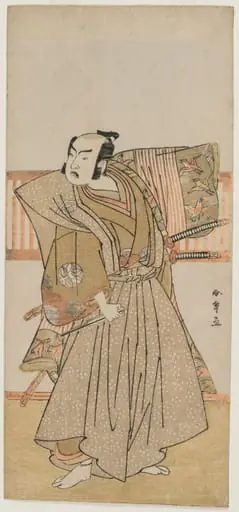 Ichimura Uzaemon IX as Soga no Juro
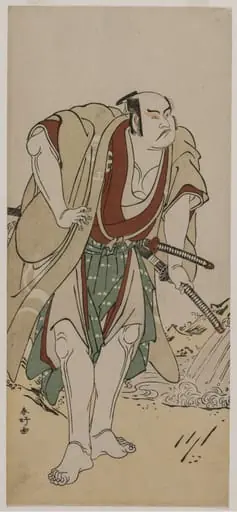 Otani Hiroji III as a Samurai Standing Beside a Stream
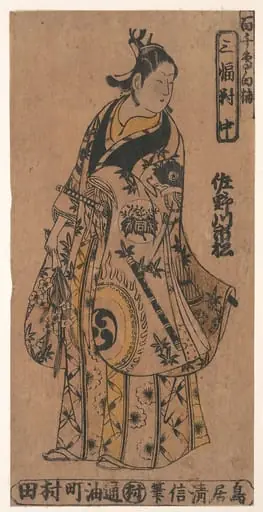 Untitled
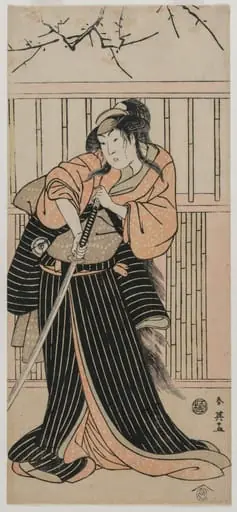 Iwai Hanshirō IV as a Woman with a Sword
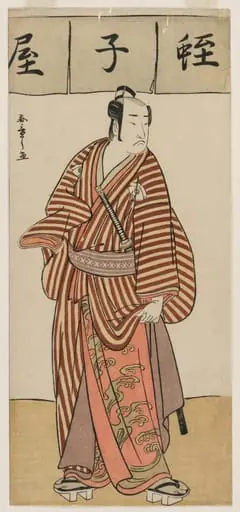 Onoe Matsusuke I as Ebisu, from The Stand-In Seven Gods of Good Fortune
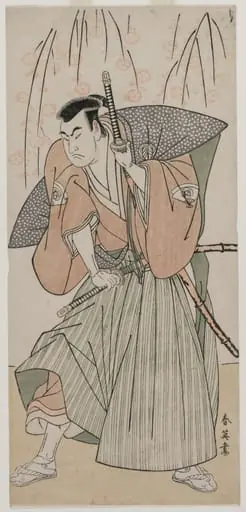 Onoe Matsusuke I as a Samurai Standing Beneath a Cherry Tree
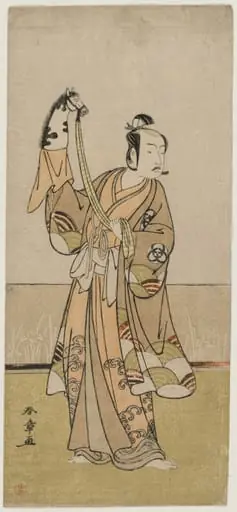 Bando Hikosaburo III Holding a Hand Pupper
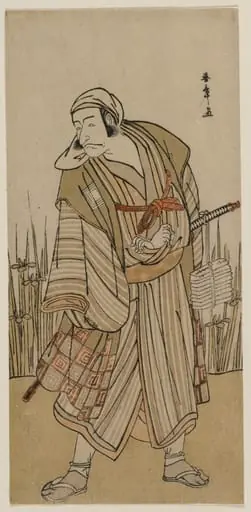 Ichikawa Danjuro V as a Traveller Beside a Clump of Iris
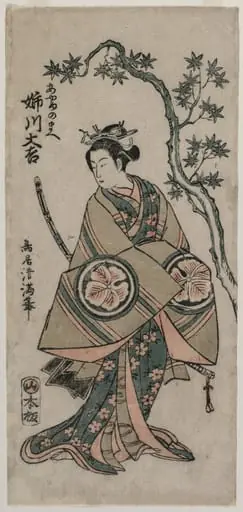 Anekawa Daisuke as Ayame-no-mae