Artwork
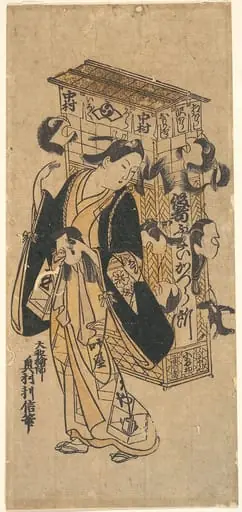
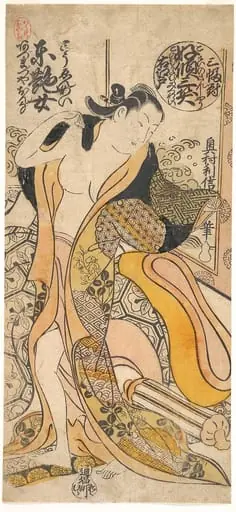
奥村利信画 恋愛御籤売り|A Young Man as a Seller of Love Prophecies
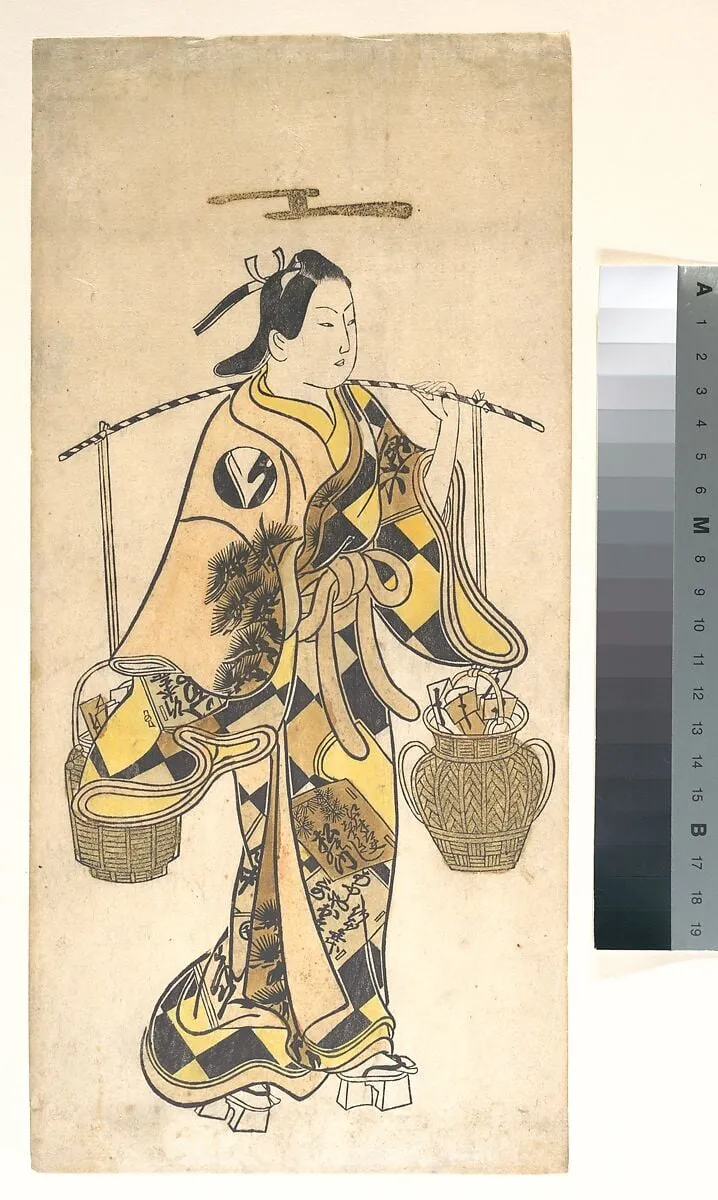
奥村利信画 恋愛御籤売り|A Young Man as a Seller of Love Prophecies is an ink print by the Baroque artist Okumura Toshinobu. It dates from 1734 and is held in the collection of the Metropolitan Museum of Art.
About this work
Overview
Created around 1734 by Okumura Toshinobu, this woodblock print depicts a vendor of love fortunes in Edo-period Japan. Hand-colored with ink on paper, it belongs to the ukiyo-e tradition of popular visual culture. The work is part of the collection at The Metropolitan Museum of Art, where it represents early 18th-century commercial printmaking and its engagement with everyday urban life.
Subject & Meaning
The act of purchasing a love prophecy reflects popular interest in fate and romance, blending spiritual custom with commercial activity.
The scene portrays a young woman offering love divinations, a common street practice in Edo. She carries a basket of fortune slips and a pole with a hook, suggesting mobility and trade. The act of purchasing a love prophecy reflects popular interest in fate and romance, blending spiritual custom with commercial activity. Her calm expression and poised stance convey dignity within a transient, market-driven world.
Technique & Style
The print employs hand-coloring over ink outlines, typical of early ukiyo-e before full-color printing became standard. The kimono’s black-and-yellow checkered pattern is rendered with bold, flat areas of color, emphasizing textile texture over naturalism. Backgrounds are minimally detailed, directing focus to the figure. Line work is precise yet fluid, characteristic of Okumura’s approach to capturing movement and costume.
History & Provenance
Produced during the Kyōhō era, the print emerged from a thriving Edo print industry catering to middle-class audiences. Okumura Toshinobu was among the first to specialize in bijin-ga, or pictures of beautiful women, often portraying them in commercial roles. The work entered The Metropolitan Museum of Art’s collection through documented acquisitions of Japanese prints in the early 20th century.
Context
In early 18th-century Edo, love divination was a popular pastime, especially among women seeking guidance in matters of the heart. Street vendors like the one depicted offered accessible spiritual services amid urban growth. This print reflects the era’s fascination with personal destiny and the blending of folk belief with emerging consumer culture, positioning the vendor not as a mystic but as a familiar urban figure.
Legacy
Okumura’s work helped shape the visual language of bijin-ga, influencing later artists like Suzuki Harunobu. By depicting ordinary women in commercial roles with quiet dignity, he expanded the scope of ukiyo-e beyond courtesans and actors. This print remains a key example of how early woodblock prints documented the social rhythms of Edo, preserving moments of daily life with subtle narrative depth.
Artist & collection


 Untitled
 Untitled
 Untitled
 Untitled
 Untitled
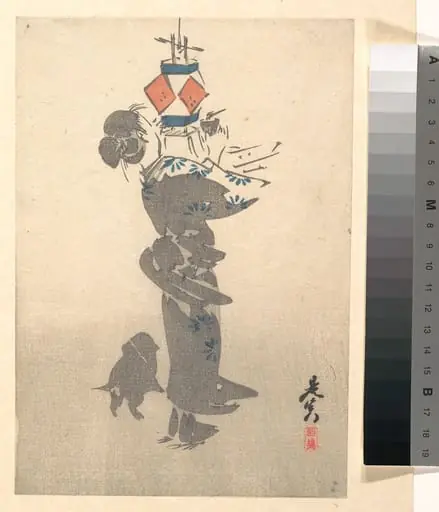 お盆燈籠の火付|Lighting a Hanging Lantern for the Obon Festival
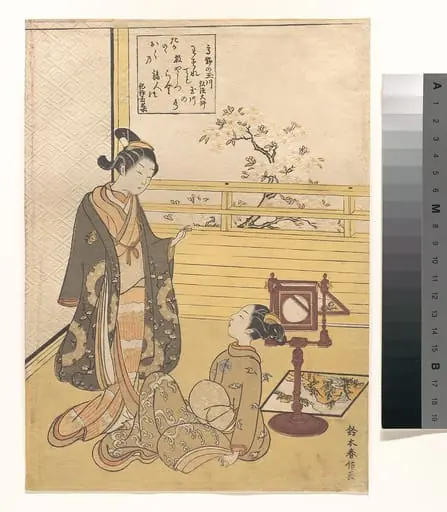 鈴木春信画 覗き絡繰り・「高野の玉川 弘法大師」|A Teenage Boy and Girl with a Viewer for an Optique Picture (Nozoki-karakuri); Kōbō Daishi’s Poem on the Jewel River of Kōya (Kōya no Tamagawa: Kōbō Daishi)
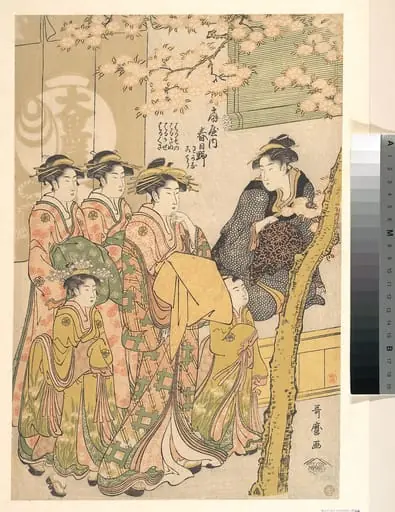 扇屋内春日野|The Oiran Kasugano of Ogiya on Parade under Blossoming Cherry Trees
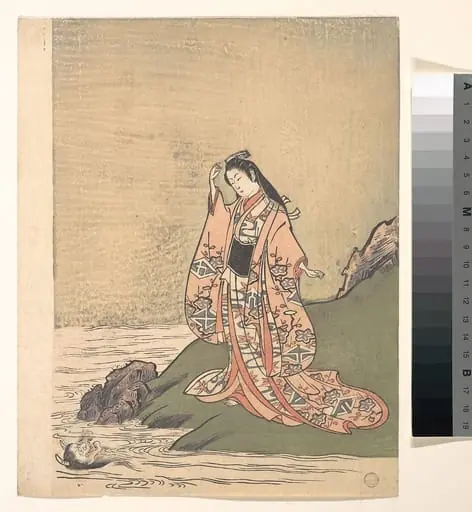 Untitled
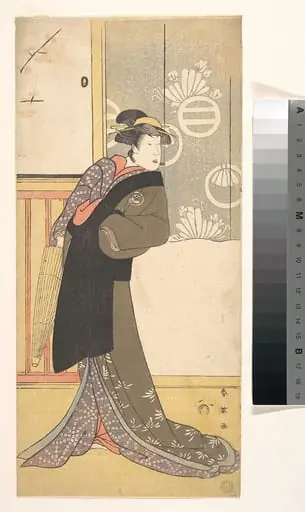 Untitled