Artwork
The Ludovisi Water Carrier
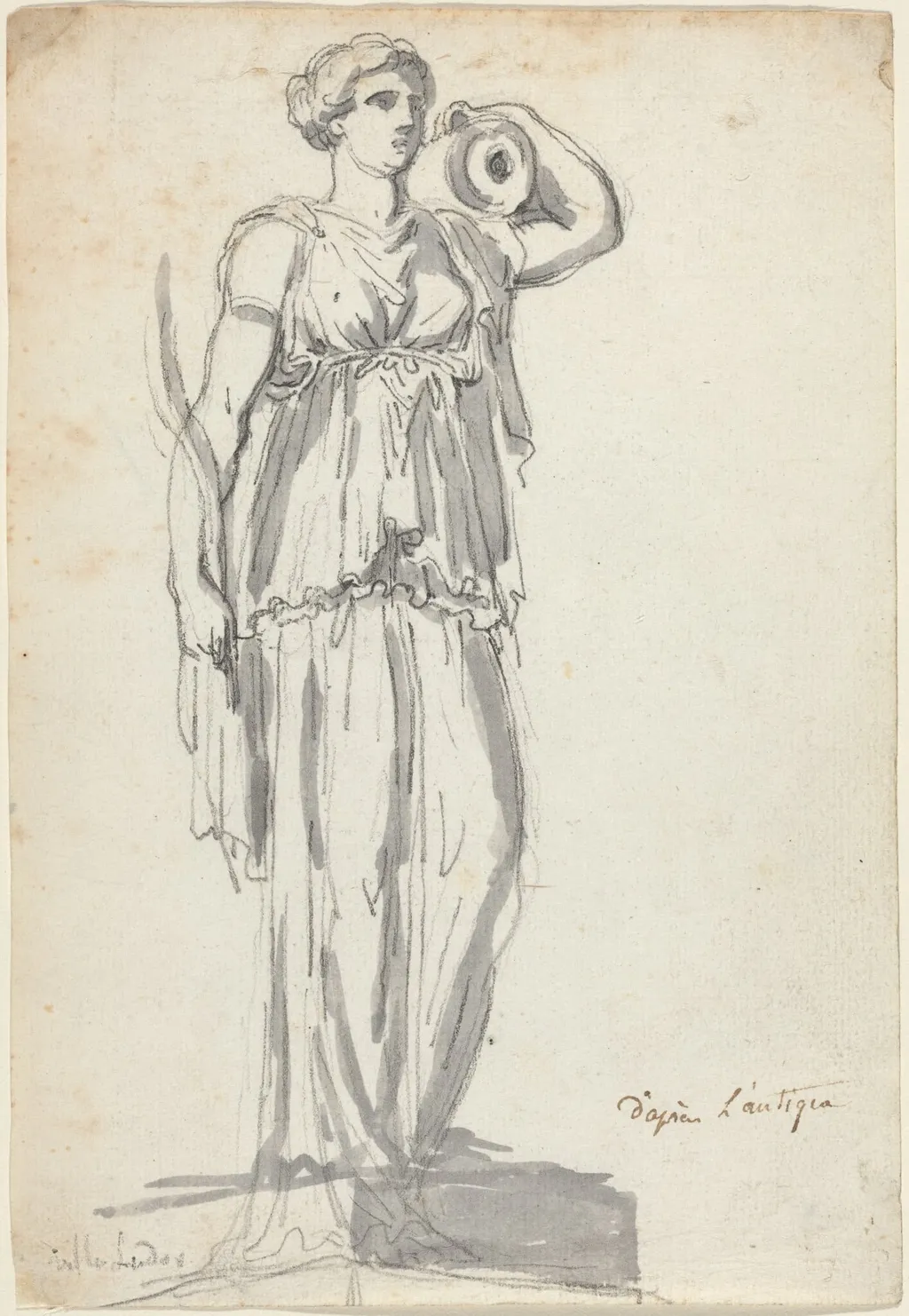
The Ludovisi Water Carrier is a chalk drawing by the Romanticist artist Augustin Pajou. It dates from 1754 and is held in the collection of the National Gallery of Art.
About this work
Overview
Created in 1754 by Augustin Pajou, this drawing depicts a female figure carrying a water jug on her shoulder. Executed in black chalk and gray wash on laid paper, the work captures a quiet, everyday moment with sensitivity. The medium’s soft tonal range lends a gentle, atmospheric quality to the figure, distinguishing it as a study rooted in observation rather than grand narrative.
Subject & Meaning
The figure is a working woman, likely a servant or laborer, depicted in a moment of restful burden. Her posture and attire suggest rural or domestic life, rendered without idealization yet imbued with dignity. The absence of context or narrative detail invites contemplation of her quiet endurance, aligning with 18th-century interests in ordinary human experience rather than myth or history.
Technique & Style
Pajou employed black chalk for precise, fluid contours and gray wash to model form with subtle gradations. The laid paper’s texture enhances the tactile quality of the drawing, while the restrained palette avoids theatricality. Lines are delicate and economical, emphasizing volume through tone rather than outline, reflecting academic training tempered by a naturalistic sensibility.
History & Provenance
The drawing entered the Ludovisi collection in Rome during the 18th century, likely acquired through Pajou’s connections with French and Italian patrons.
The drawing entered the Ludovisi collection in Rome during the 18th century, likely acquired through Pajou’s connections with French and Italian patrons. It remained in the family’s holdings until the early 20th century, when it was transferred to public ownership. Its survival as a standalone study, rather than a preparatory sketch for a larger work, suggests its value as an independent artistic exercise.
Context
Pajou worked during the transition from Rococo to Neoclassicism, yet this drawing resists both styles’ extremes. While contemporaries pursued mythological grandeur, he turned to quiet realism, influenced by Dutch genre scenes and French drawings of laborers. The work reflects a broader shift in artistic attention toward the dignity of common life, foreshadowing later 19th-century social realism.
Legacy
Though not widely exhibited, the drawing is recognized for its understated humanity and technical refinement. It exemplifies how academic artists of the period engaged with everyday subjects through sensitive draftsmanship. Its preservation in major collections underscores its role as a quiet but significant document of 18th-century observational practice.
Artist & collection
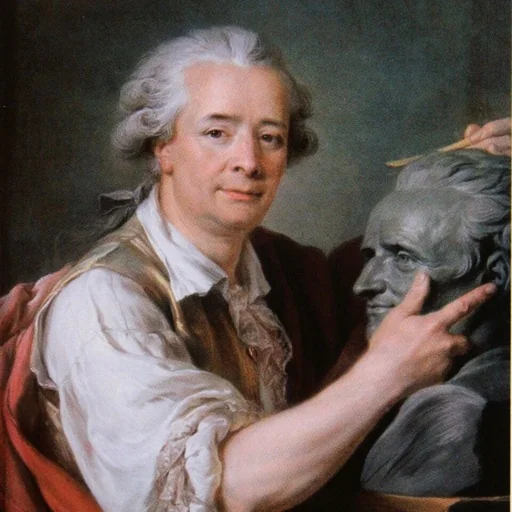
Artist
Augustin Pajou (French pronunciation: ; 19 September 1730 – 8 May 1809) was a French sculptor, born in Paris. At eighteen he won the Prix de Rome, and at thirty exhibited his Pluton tenant Cerbère enchaîné (now in the Louvre).

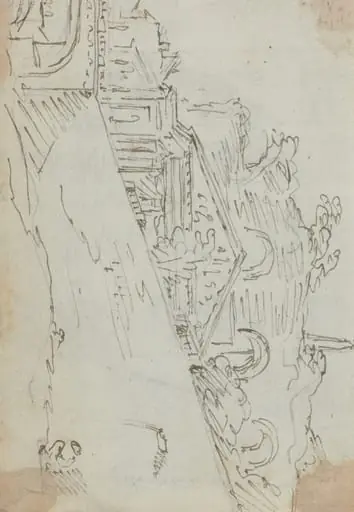
![The Ripetta in Rome [verso], by Augustin Pajou](https://artifactworldgallery.com/img/augustin-pajou--the-ripetta-in-rome-verso--4bc04e9c9476a91b-w320.webp)
![Angel from the Assumption [recto], by Augustin Pajou](https://artifactworldgallery.com/img/augustin-pajou--angel-from-the-assumption-recto--59871eebf02790c8-w320.webp)
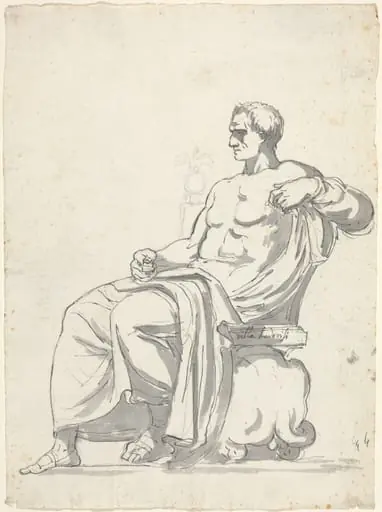
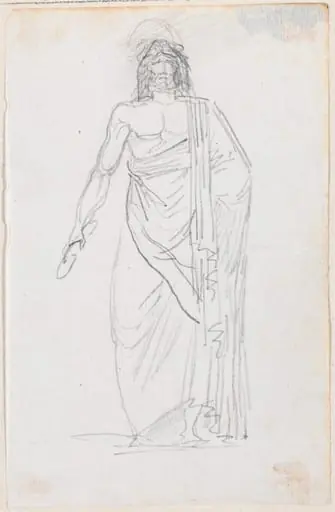 Statue of Zeus Holding a Thunderbolt
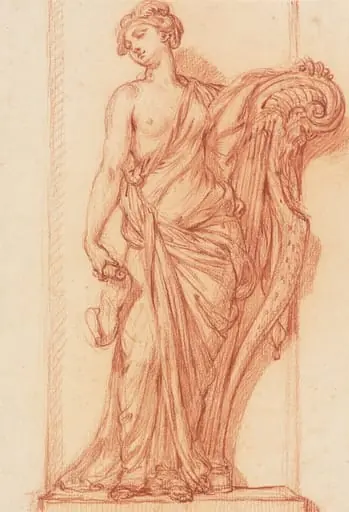
![Statue of Abundance [recto], by Hubert Robert](https://artifactworldgallery.com/img/hubert-robert--statue-of-abundance-recto--af10c767ab97b269-w320.webp) Statue of Abundance [recto]
Statue of Abundance [recto]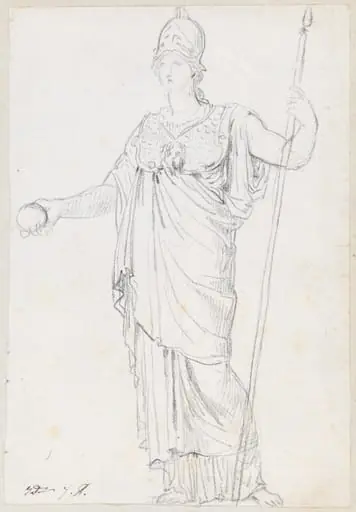 Statue of Minerva
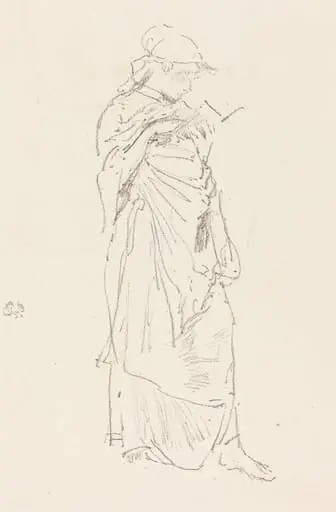 The Novel: Girl Reading
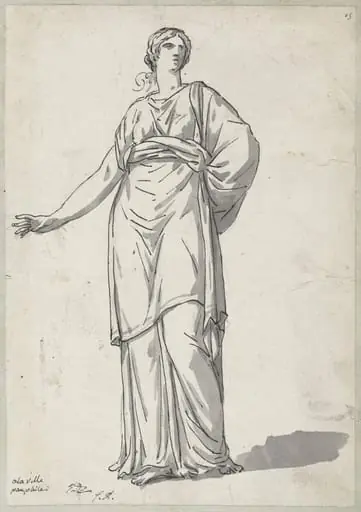 Woman from the Villa Pamphili
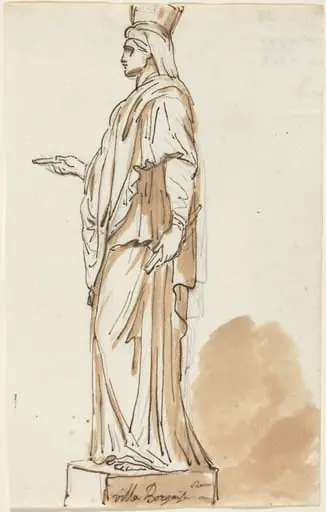
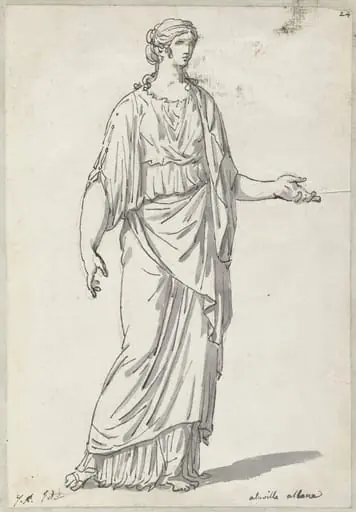 Classical Sculpture of a Woman with an Outstretched Arm
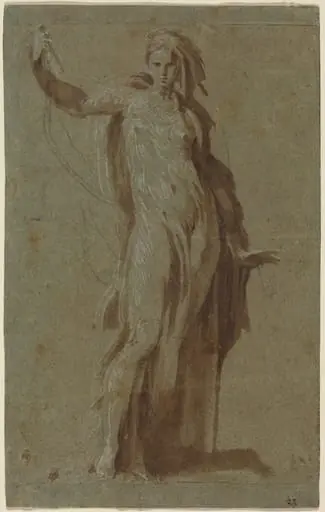 Standing Woman Holding a Scroll
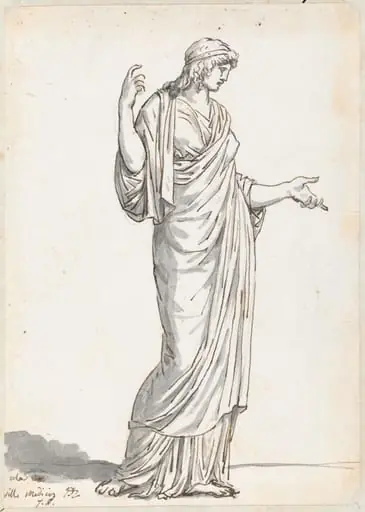 Woman from the Villa Medici
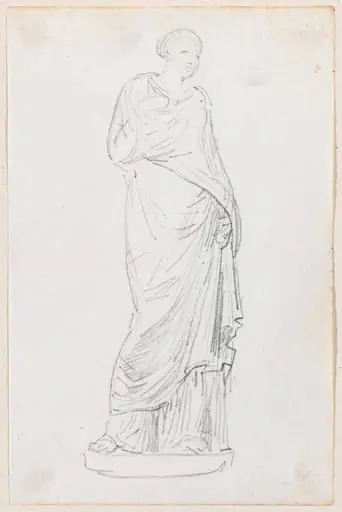 Statue of a Female in a Toga
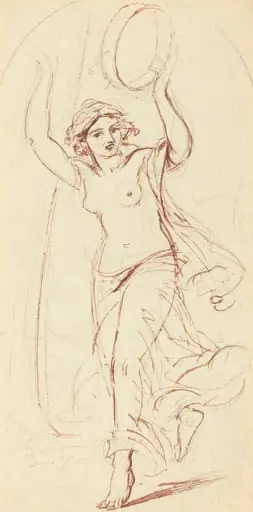 Dancing Woman with a Tambourine
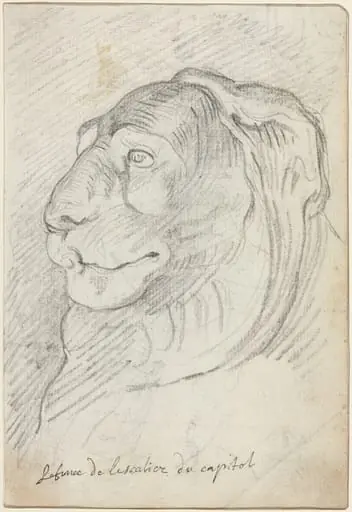
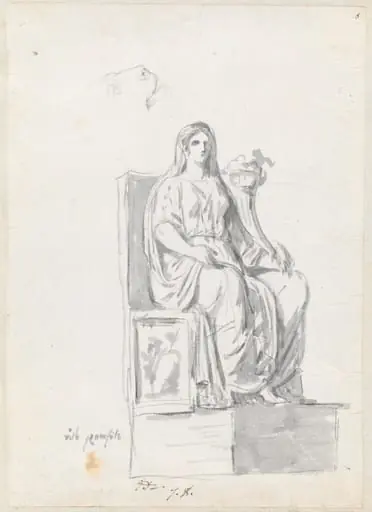 Abundance and the Face of a Lion, from the Villa Pamphili