Artwork
The Muse Terpsichore
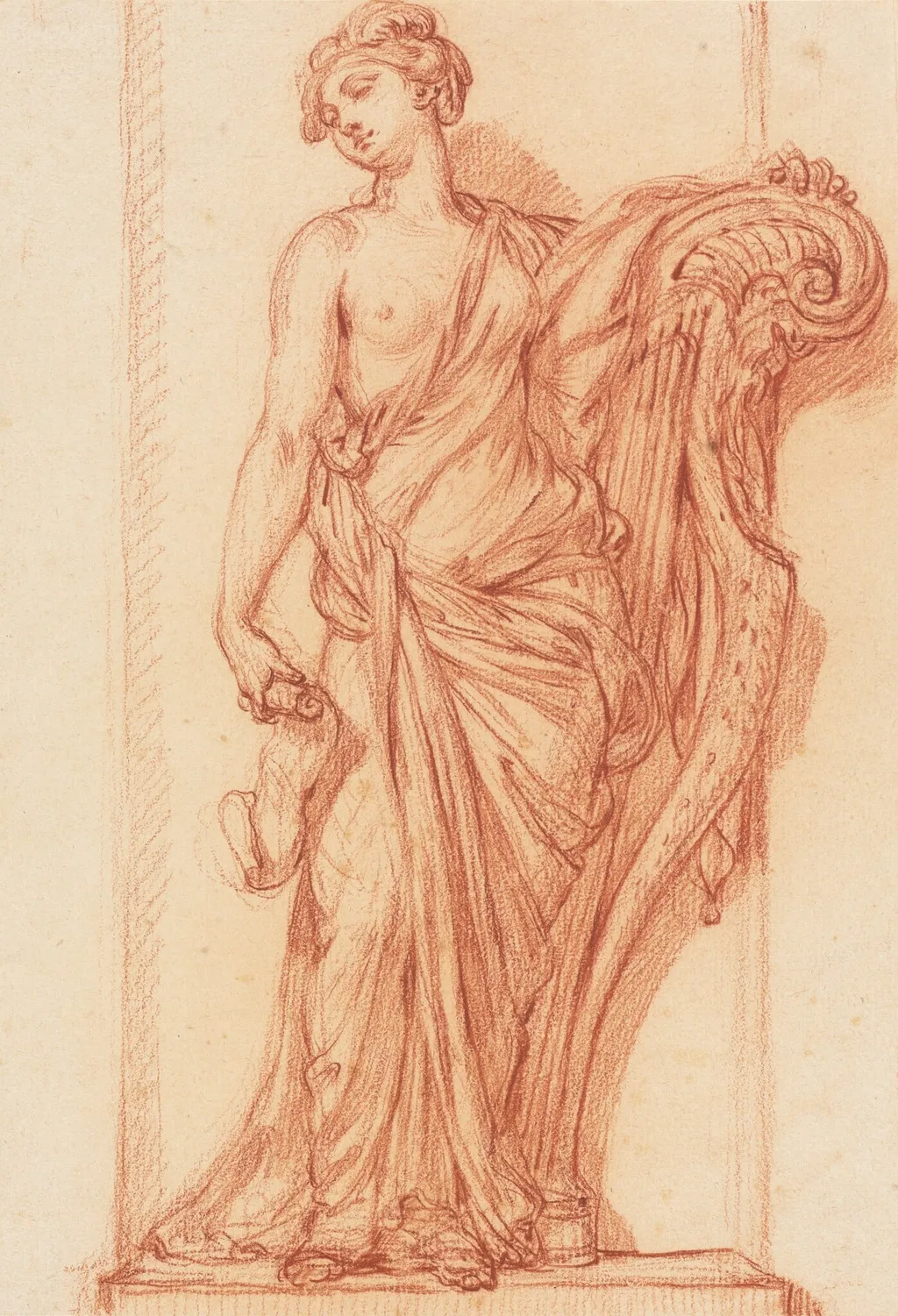
The Muse Terpsichore is a chalk drawing by the Romanticist artist Augustin Pajou. It dates from 1768 and is held in the collection of the National Gallery of Art.
About this work
Overview
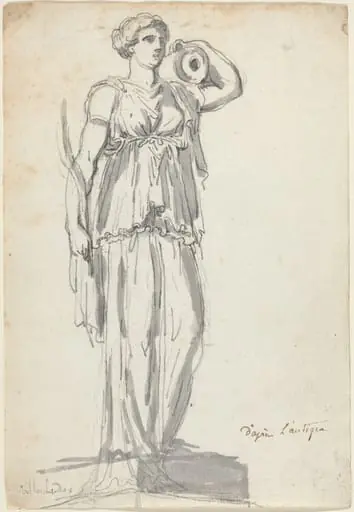
Augustin Pajou's drawing, The Muse Terpsichore, dates to circa 1768 and is executed in red chalk on laid paper. It depicts a female figure identified as the muse of dance and chorus, characterized by her calm yet confident demeanor.
Subject & Meaning
The subject, Terpsichore, is represented holding a scroll and a trumpet, symbols of her association with music and poetry. She stands on a pedestal, wearing a draped, shoulder-baring robe, with her hair styled in an elevated coiffure.
Technique & Style
Pajou utilized red chalk to achieve a warm, soft tonal quality. The drawing features loose yet controlled lines, effectively conveying the folds of the fabric and the subtle movement of the figure.
History & Provenance
Limited provenance information is available for this specific work. Augustin Pajou, a French artist, created The Muse Terpsichore around 1768.
Context
This drawing reflects the Neoclassical interest in classical mythology and the arts, common during the late 18th century. Pajou's work aligns with the era's emphasis on elegance and classical themes.
Legacy
The Muse Terpsichore contributes to Pajou's broader oeuvre, illustrating his skill in capturing the essence of mythological figures through nuanced, expressive drawings.
Own this work as a print
Artist & collection
Artist
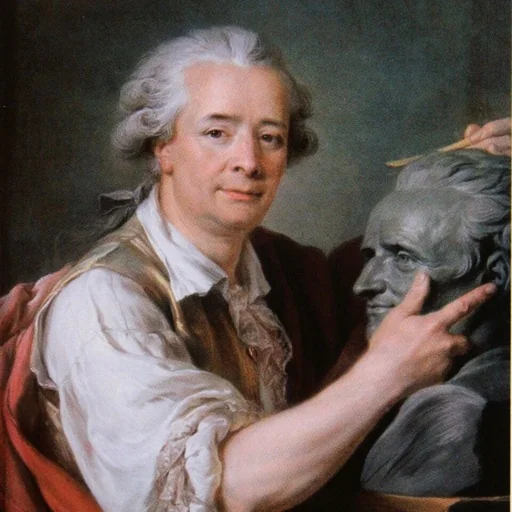
Augustin Pajou (French pronunciation: ; 19 September 1730 – 8 May 1809) was a French sculptor, born in Paris. At eighteen he won the Prix de Rome, and at thirty exhibited his Pluton tenant Cerbère enchaîné (now in the Louvre).

![The Ripetta in Rome [verso], by Augustin Pajou](https://artifactworldgallery.com/img/augustin-pajou--the-ripetta-in-rome-verso--4bc04e9c9476a91b-w320.webp)
![Angel from the Assumption [recto], by Augustin Pajou](https://artifactworldgallery.com/img/augustin-pajou--angel-from-the-assumption-recto--59871eebf02790c8-w320.webp)
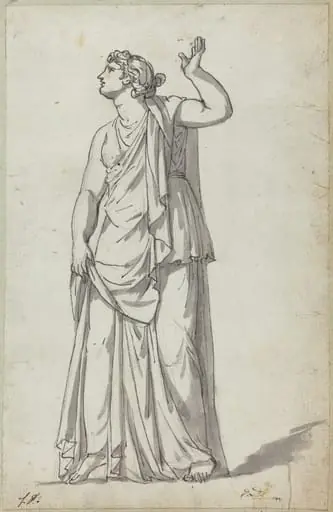 Roman Statue of a Muse (Anchyrrhoe)
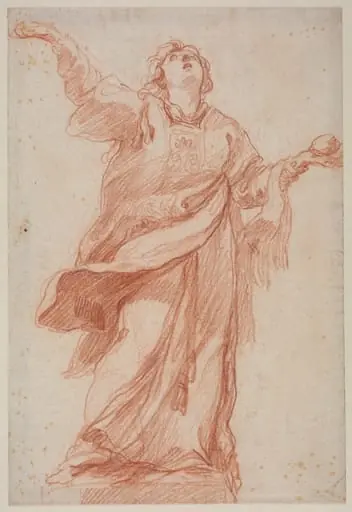 Saint Stephen in Ecstasy
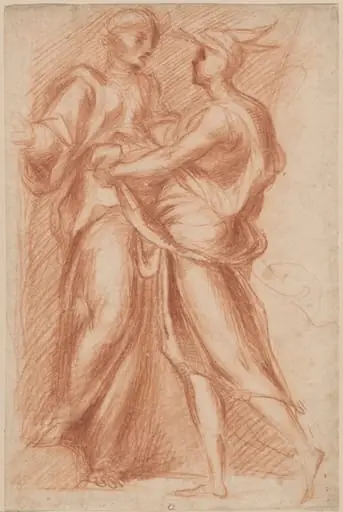 Mercury and Aglauros
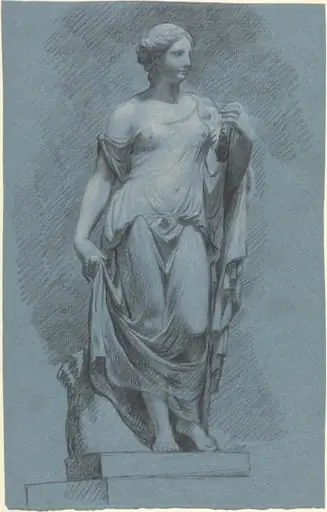 The "Farnese Flora" at Stourhead
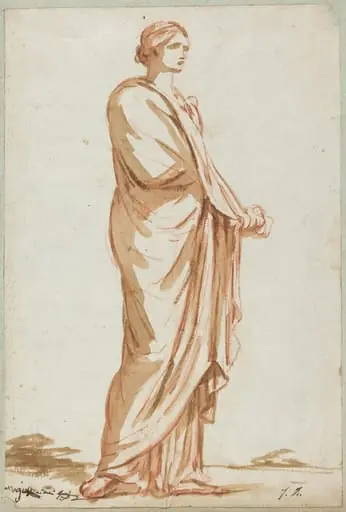 Roman Statue of a Standing Woman
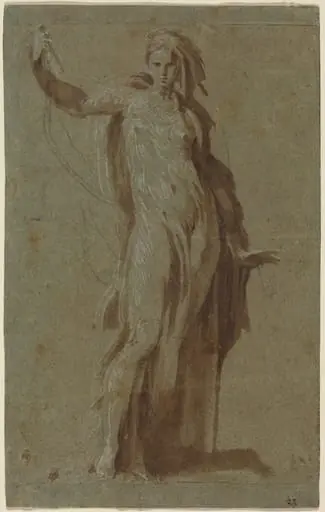 Standing Woman Holding a Scroll
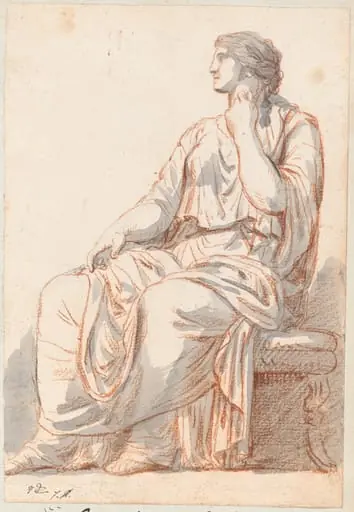 Faustine
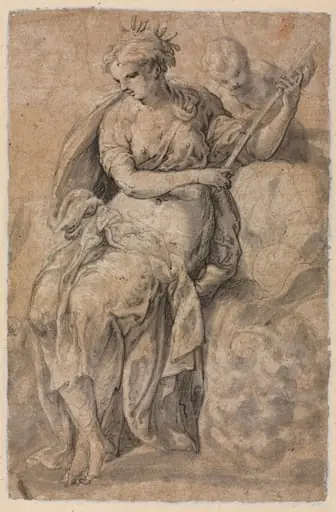 Allegorical Figure (verso)
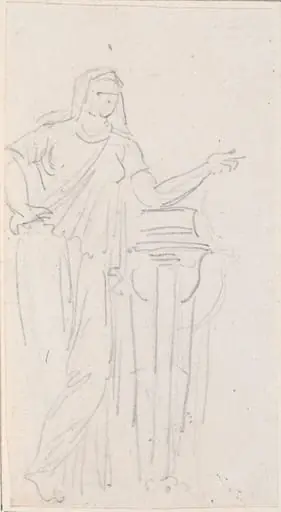 Statue of a Vestal Virgin
![Statue of Abundance [recto], by Hubert Robert](https://artifactworldgallery.com/img/hubert-robert--statue-of-abundance-recto--af10c767ab97b269-w320.webp) Statue of Abundance [recto]
Statue of Abundance [recto]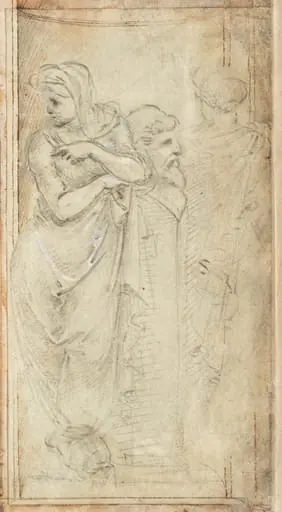 Two Draped Women Standing on Either Side of a Herm
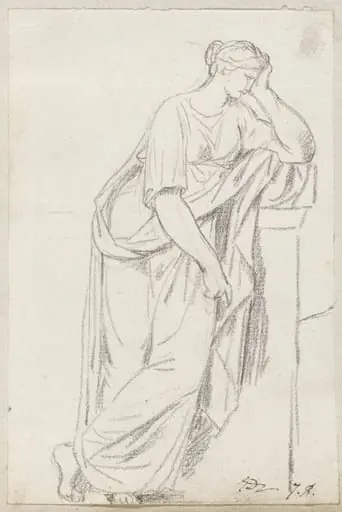 A Muse from the Sarcophagus of the Muses