Artwork
Sir John Cheke, Tutor to Edward VI
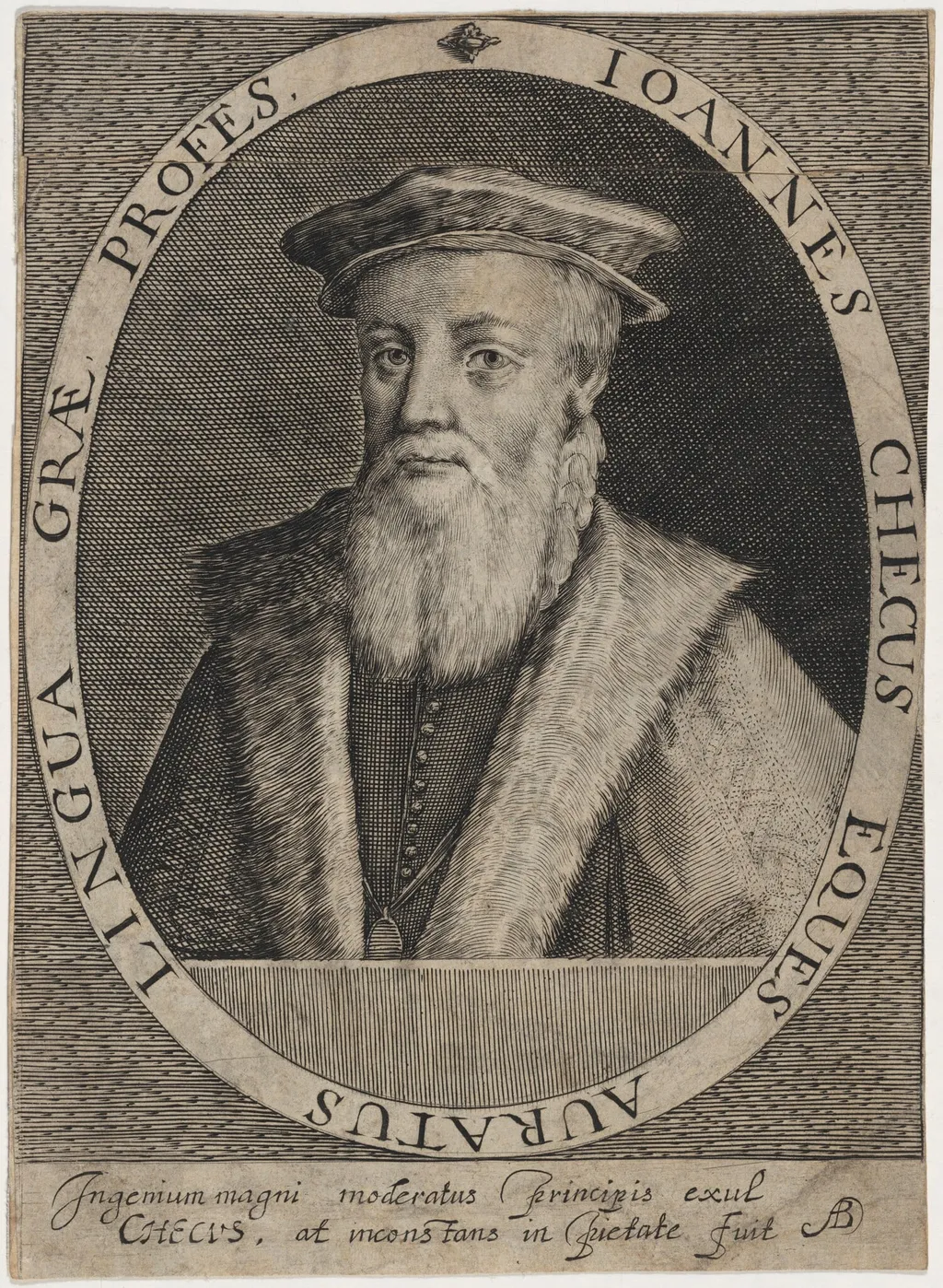
Sir John Cheke, Tutor to Edward VI is an ink print by the Baroque artist Willem de Passe. It dates from 1620 and is held in the collection of the National Gallery of Art.
About this work
Overview
This 1620 engraving by Willem de Passe portrays Sir John Cheke, a prominent scholar and tutor to King Edward VI. Rendered in a circular format, the portrait emphasizes the sitter’s intellectual stature through formal composition and precise line work. The image is framed with Latin inscriptions identifying Cheke and his scholarly role, reinforcing his reputation as a humanist and linguist.
Subject & Meaning
The Latin phrase 'LINGUA GRAE PROFES' highlights his expertise in Greek language and literature, central to his role in shaping Edward VI’s education.
Sir John Cheke is depicted as a learned man of the Renaissance, his long white beard and solemn gaze conveying authority and wisdom. The Latin phrase 'LINGUA GRAE PROFES' highlights his expertise in Greek language and literature, central to his role in shaping Edward VI’s education. The direct eye contact with the viewer suggests an appeal to intellectual engagement rather than mere commemoration.
Technique & Style
Willem de Passe employed fine cross-hatching to model the textures of Cheke’s fur-trimmed coat and hat, creating a sense of volume and material depth. The engraving’s linear precision reflects the Northern European tradition of portrait prints, where clarity and detail were prioritized over painterly effects. The circular format and inscribed border align with contemporary medallion-style portraiture.
History & Provenance
Created in 1620, the engraving was produced decades after Cheke’s death in 1557, likely as part of a series honoring notable English figures. De Passe, a Dutch artist working in England, was known for his portraits of European elites. The print circulated among scholars and collectors, preserving Cheke’s image as a symbol of Tudor humanism.
Context
In early 17th-century England, engraved portraits served both commemorative and propagandistic functions, especially for figures associated with Protestant reform and classical learning. Cheke’s role in advancing Greek studies and his influence on royal education made him a fitting subject for posthumous veneration during a period of renewed interest in classical education.
Legacy
The engraving remains a key visual record of Cheke’s public persona, reflecting how Renaissance scholars were memorialized through print. Its enduring presence in collections underscores the value placed on textual and linguistic scholarship in early modern England. The work exemplifies how portraiture could encode intellectual identity beyond mere likeness.
Artist & collection

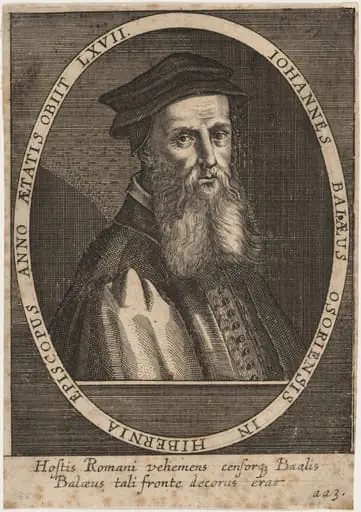 John Bale, Bishop of Ossory
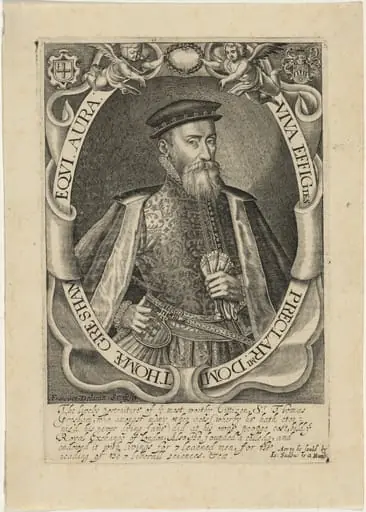 Sir Thomas Grisham
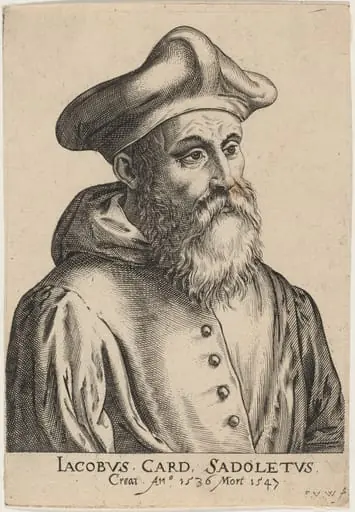 Cardinal Jacopo Sadoleto
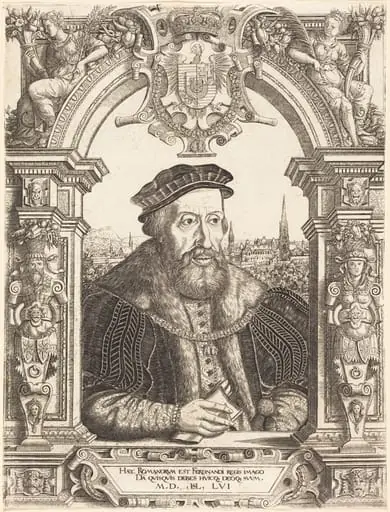 Ferdinand I
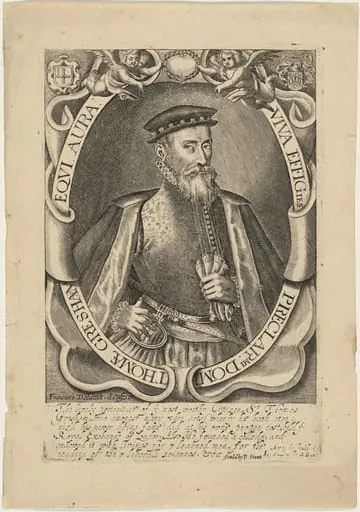 Thomae Gresham, Equi. Aura (Sir Thomas Gresham)
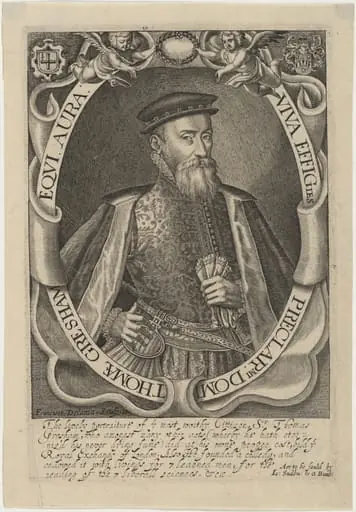 Thomae Gresham Equi. Aura (Sir Thomas Gresham)
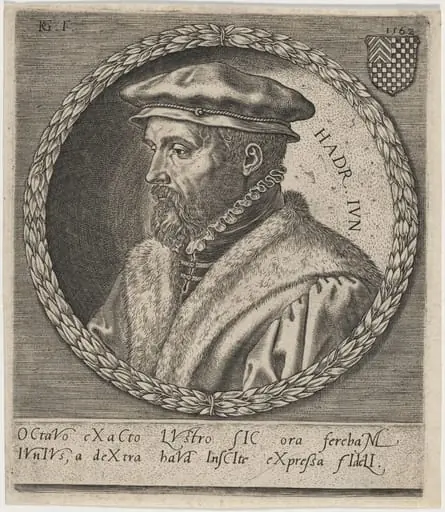 Hadrianus Junius
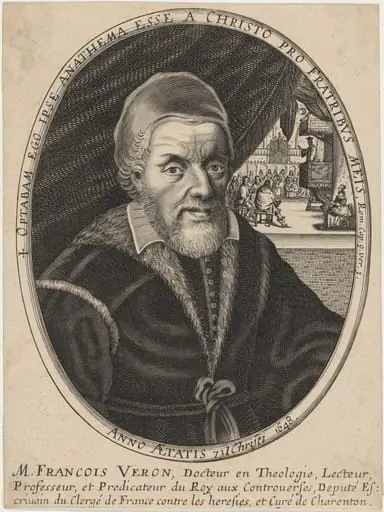 M. Francois Veron, Doctor of Theology, Lecturer, Professor, under Louis XIV
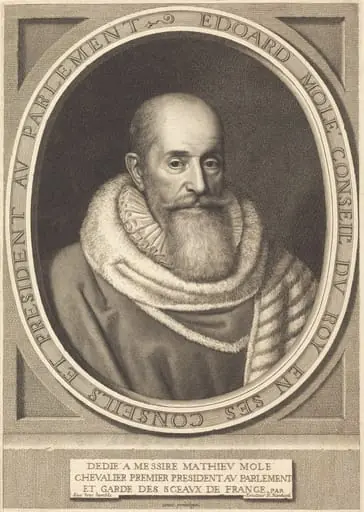 Edouard Mole
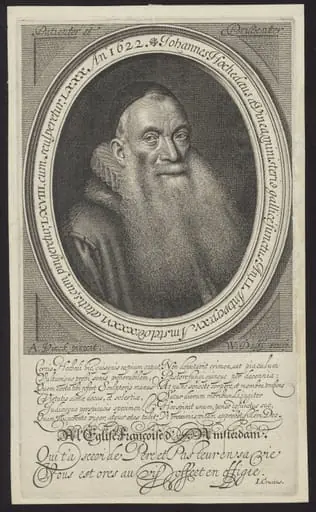 Portrait of Johannes Hochedaeus, Walloon minister in Amsterdam
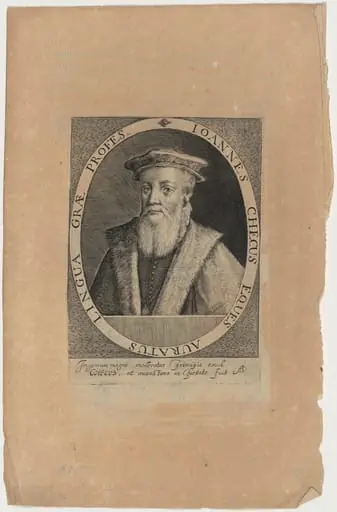 Sir John Cheke, Tutor to Edward VI
 Cardinal Reginald Pole, Archbishop of Canterbury