Artwork
Sir John Cheke, Tutor to Edward VI
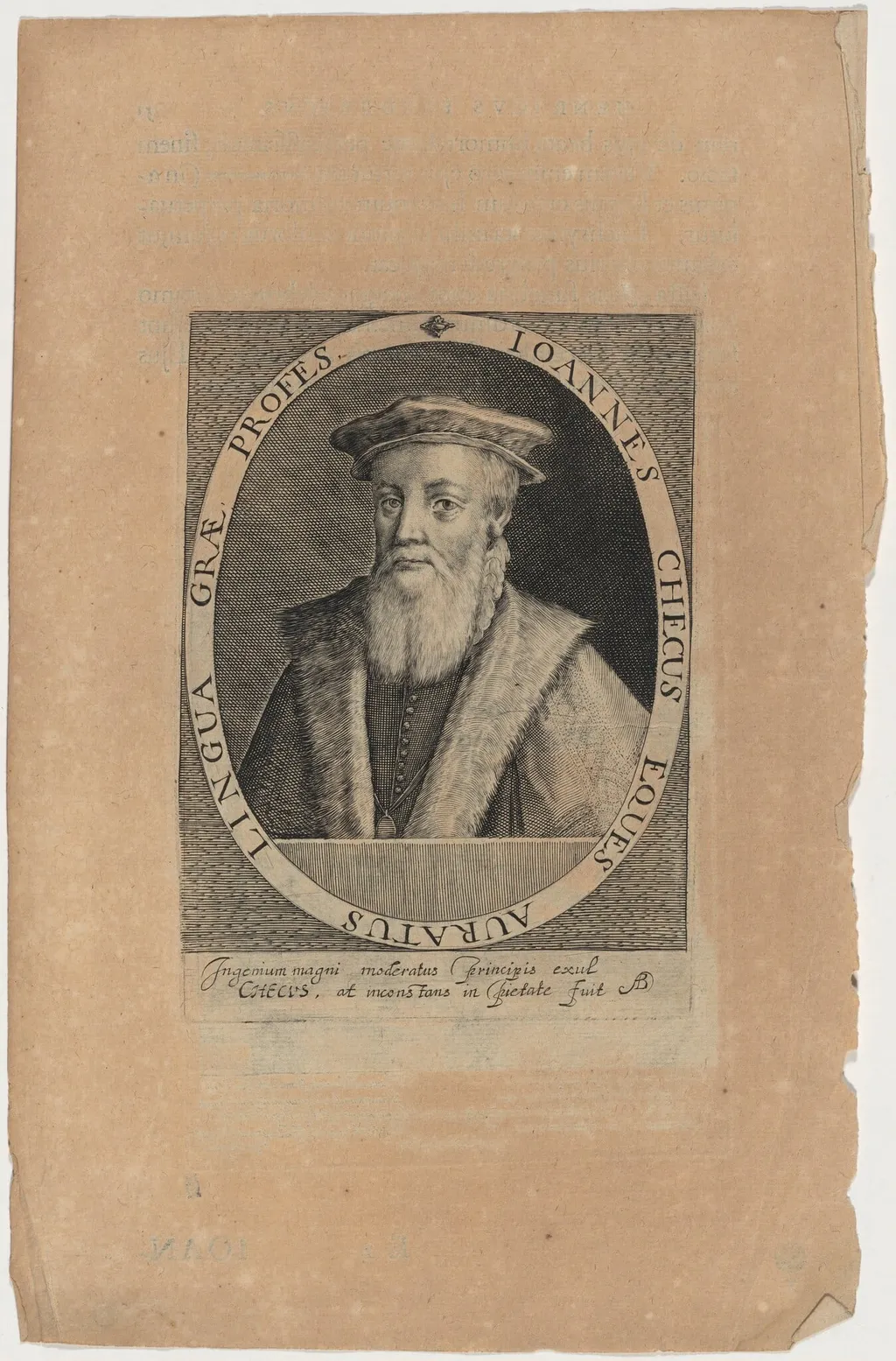
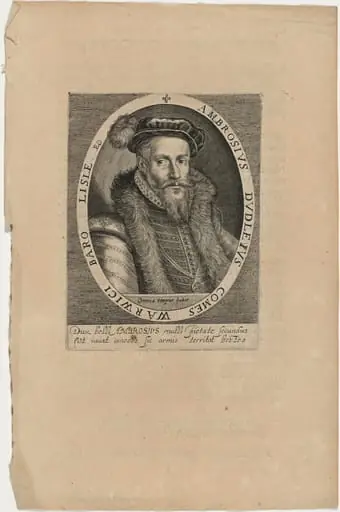
Sir John Cheke, Tutor to Edward VI is an ink print by the Baroque artist Magdalena van de Passe. It dates from 1620 and is held in the collection of the National Gallery of Art.
About this work
The man is Sir John Cheke, a tutor to a king, and this picture was made from an engraving, which is a way of carving a design into metal.
This painting shows a man sitting at a table.
He's dressed in old-fashioned clothes.
The man is Sir John Cheke, a tutor to a king, and this picture was made from an engraving, which is a way of carving a design into metal.
The engraving technique used here is interesting because it allows for a lot of detail.
It was published in 1620, which is a long time ago, and it's still in good condition.
You can learn more about this kind of artwork by looking into the technique: engraving.
Overview
An engraving from 1620 by Magdalena van de Passe depicts Sir John Cheke, educator to King Edward VI. Executed in fine line work on metal, the print captures Cheke in a seated pose, facing slightly to the viewer’s left. The image was produced as part of a series documenting notable figures of the English court, reflecting the period’s interest in preserving the likenesses of influential scholars and advisors.
Subject & Meaning
Sir John Cheke was a humanist scholar and tutor to the young King Edward VI, known for his role in shaping the prince’s education in classical languages and Protestant theology. The portrait emphasizes his intellectual stature through restrained posture and scholarly attire, avoiding overt symbolism. The image serves as a commemorative record, aligning Cheke with the ideals of Renaissance learning and royal service during a turbulent era of religious reform.
Technique & Style
Magdalena van de Passe employed fine-line engraving on copper, a technique allowing precise control over tone and texture. Delicate hatching defines the folds of Cheke’s clothing and the grain of the wooden table, while the face is rendered with subtle gradations to suggest volume. The composition is tightly framed, focusing attention on the subject’s expression and posture, typical of portraiture in early 17th-century Northern European printmaking.
History & Provenance
The engraving was published in 1620, over forty years after Cheke’s death, as part of a broader effort to document Tudor-era figures. It likely originated from an earlier portrait, possibly a painting or drawing now lost. The print circulated among collectors and scholars, contributing to Cheke’s posthumous reputation. Its survival in good condition suggests careful handling and preservation within private or institutional collections.
Context
Produced during the reign of James I, the engraving reflects a growing interest in historical memory and the visual documentation of state figures. Van de Passe, part of a family of Dutch engravers active in England, contributed to a genre that linked portraiture with political and intellectual legacy. Such prints were often bound into albums or used as educational tools, reinforcing the cultural authority of past scholars.
Legacy
The engraving remains a key visual source for understanding how Cheke was remembered in the decades following his death. It influenced later depictions of Tudor educators and exemplifies the role of print in shaping historical identity. Though not widely known today, it continues to be referenced in scholarly works on Tudor education and the transmission of humanist ideals through visual media.
Artist & collection

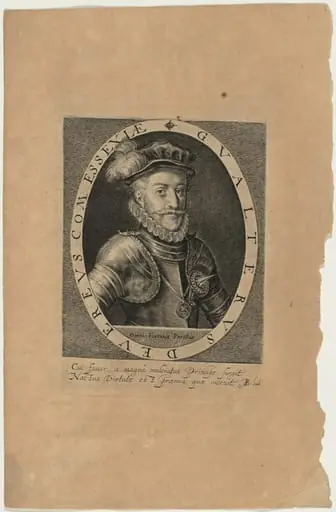 Walter Devereux, First Earl of Essex
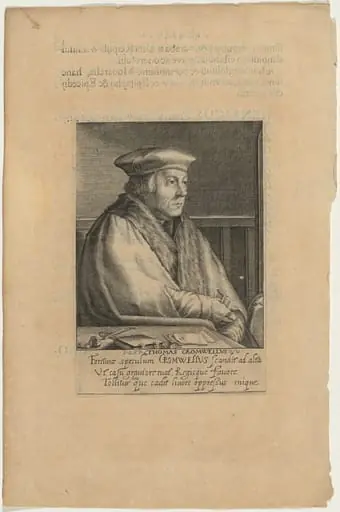 Thomas Cromwell, Earl of Essex
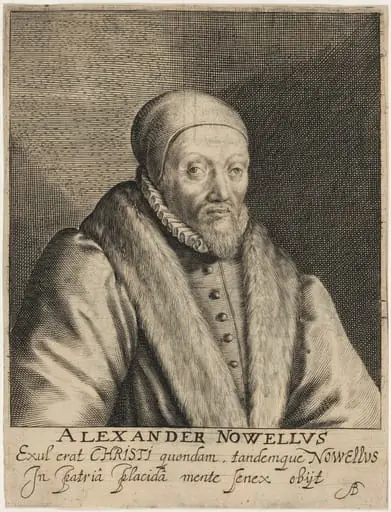 Alexander Nowell, Dean of Saint Paul's
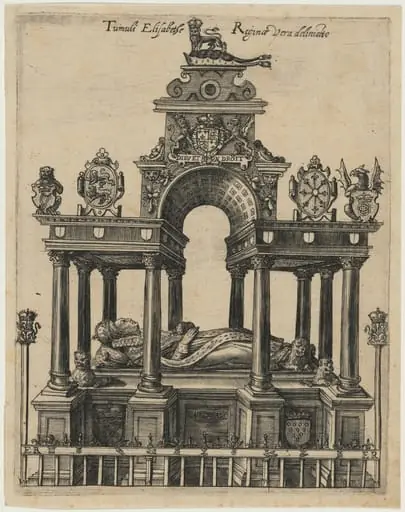 Elizabeth's Tomb
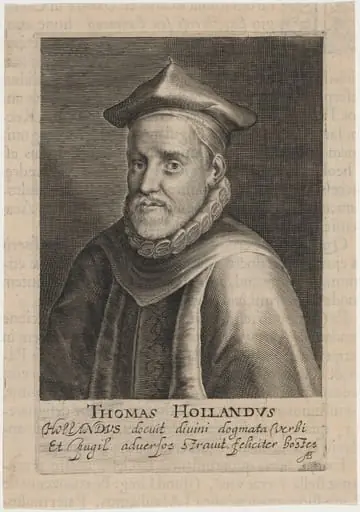 Thomas Holland, Regius Professor of Divinity at Oxford, and Rector of Exeter College
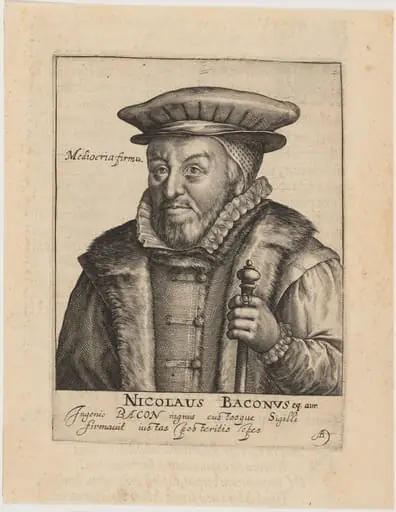 Sir Nicholas Bacon, Lord Keeper
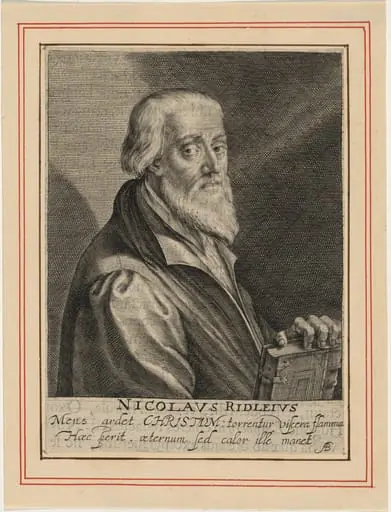 Nicholas Ridley, Bishop of London, Protestant Martyr
 Ambrose Dudley, Earl of Warwick