Artwork
Thomas Cavendish
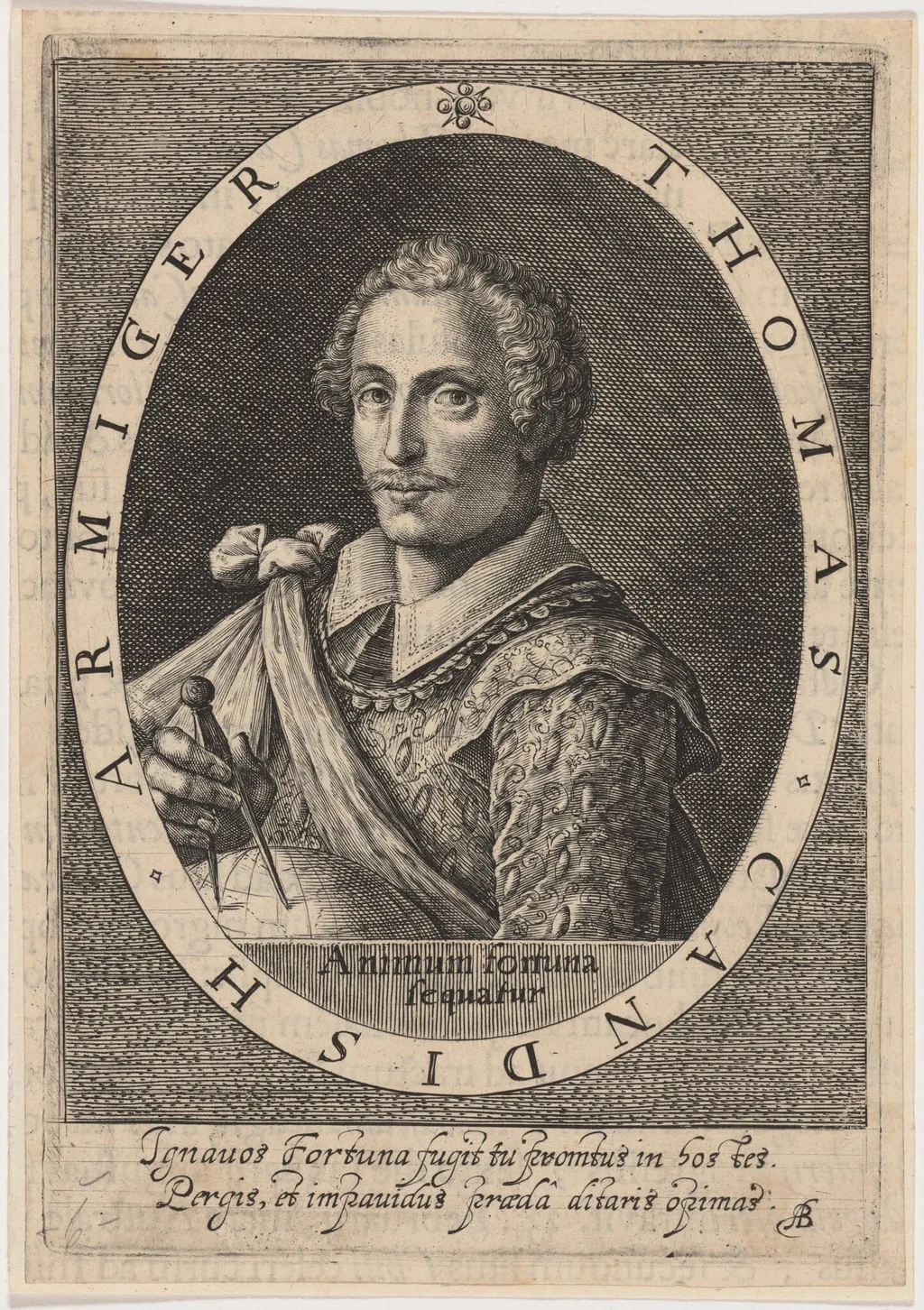
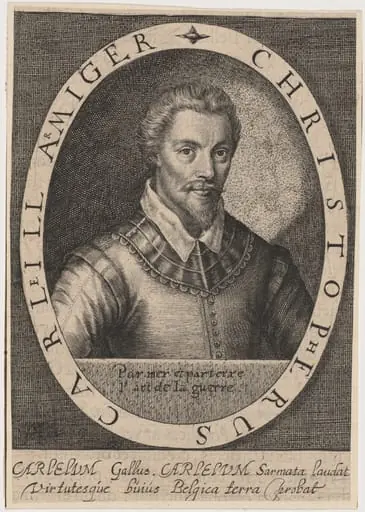
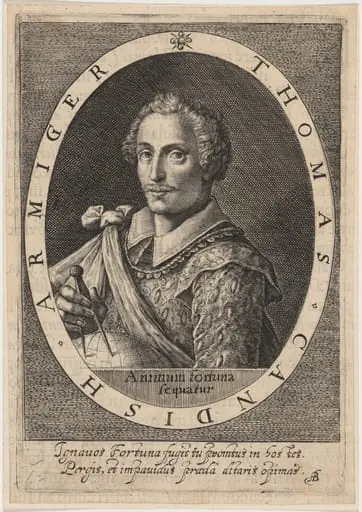
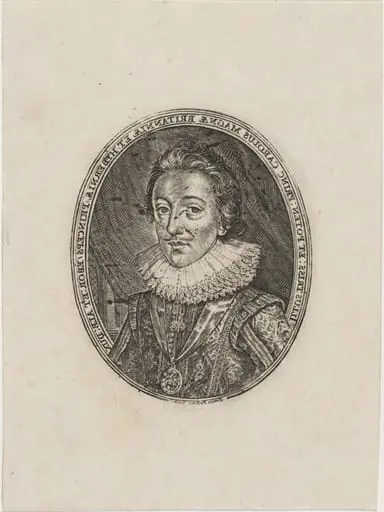
Thomas Cavendish is an ink print by the Baroque artist Willem de Passe. It dates from 1620 and is held in the collection of the National Gallery of Art.
About this work
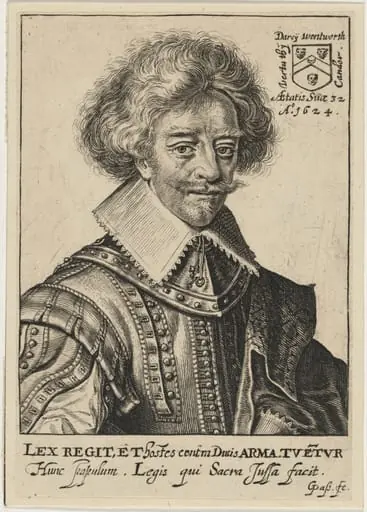
The painting is a portrait of a man, possibly a historical figure, with curly hair and a mustache.
The painting is a portrait of a man, possibly a historical figure, with curly hair and a mustache. He is wearing a fancy shirt with a high collar and a cloak over his shoulder. The background is dark, which makes the man stand out.
The man is holding a cloth in his right hand, and his left hand is resting on a table or a ledge. There are some words written around the edge of the painting, but they are hard to read.
This painting is an example of Baroque art, which was popular in Europe during the 17th century. To learn more about this style, look up the Baroque movement.
Overview
Willem de Passe’s 1620 engraving presents a portrait of Thomas Cavendish, an English seafarer of the Elizabethan era. Executed in fine line work on a copper plate, the image captures the subject in a darkened setting that emphasizes his features and attire.
Subject & Meaning
Cavendish is depicted with curly hair, a trimmed moustache, and a high‑collared shirt beneath a draped cloak. He holds a cloth in his right hand while his left rests on a ledge, suggesting a poised, perhaps contemplative stance typical of early‑modern portraiture.
Technique & Style
The engraving employs the intricate line engraving technique characteristic of de Passe’s workshop, using cross‑hatching to model light and shadow. The stark contrast between the dark background and the illuminated figure reflects Baroque sensibilities, though the work remains restrained compared with later dramatic compositions.
History & Provenance
Created in 1620, the print was likely intended for circulation among patrons interested in notable explorers. De Passe, a prominent Dutch engraver active in England, produced the image shortly after Cavendish’s death, contributing to the visual record of his voyages.
Context
The portrait belongs to the early 17th‑century wave of portrait engravings that documented prominent figures of the age of exploration. Its Baroque aesthetic aligns with contemporary European tastes for chiaroscuro and detailed rendering of clothing and accessories.
Artist & collection