Artwork
Frederick Henry and Ernst Casimir of Nassau-Dietz at the Siege of ’s Hertogenbosch
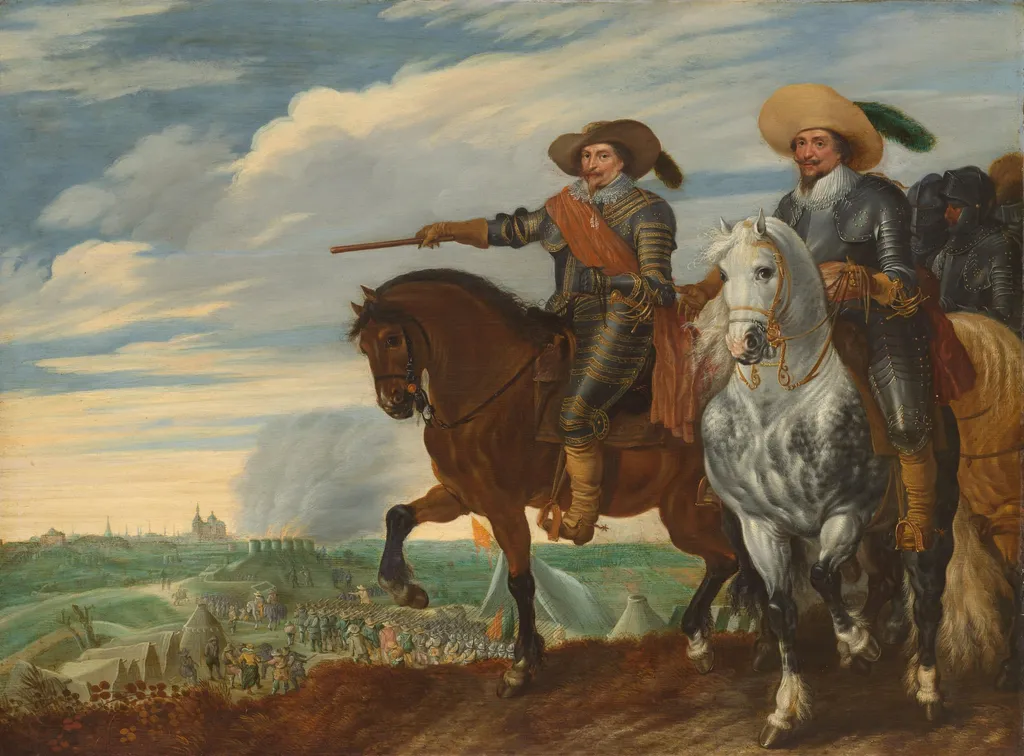
Frederick Henry and Ernst Casimir of Nassau-Dietz at the Siege of ’s Hertogenbosch is an unspecified painting by the Baroque artist Paulus van Hillegaert. It dates from 1629 and is held in the collection of the Rijksmuseum.
About this work
This is Prince Frederick Henry and his cousin after they took the city of ’s-Hertogenbosch from Spanish rule in 1629.
Two men on horseback stand in front of a burning city. One points a long staff toward the smoke. Soldiers march in the distance.
This is Prince Frederick Henry and his cousin after they took the city of ’s-Hertogenbosch from Spanish rule in 1629. The artist never signed the work, so we don’t know who painted it. The scene was meant to celebrate the prince’s victory—he was called “the conqueror of cities” for a reason.
If you like battle scenes with bold light and shadow, look up the Baroque movement.
Overview
This painting depicts Prince Frederick Henry and his cousin Count Ernst Casimir on horseback, positioned triumphantly before the besieged city of ’s-Hertogenbosch, capturing the moment of its recapture from Spanish rule in 1629.
Subject & Meaning
The scene commemorates Prince Frederick Henry’s military prowess, earned through the conquest of multiple cities from Spanish forces, with ’s-Hertogenbosch being a pivotal victory. Frederick Henry’s gesture with his commander’s staff emphasizes his leadership in the siege.
Technique & Style
Characterized by dramatic contrasts of light and shadow, the painting aligns with Baroque artistic tendencies, though the anonymous artist’s identity remains unknown.
History & Provenance
Created to celebrate Prince Frederick Henry’s 1629 victory at ’s-Hertogenbosch, the artist of the work remains unidentified due to the absence of a signature.
Context
The painting reflects the Dutch Revolt’s military context, highlighting a crucial moment in the conflict against Spanish rule. The capture of ’s-Hertogenbosch was a significant strategic gain for the Dutch.
Legacy
While the artist is unknown, the work illustrates the artistic commemoration of military victories during the Dutch Golden Age, reflecting the era’s political and artistic climate.
Own this work as a print
Artist & collection
Artist
Paulus van Hillegaert (I) or Pauwels van Hillegaert (I) (1596–1640) was a Dutch painter and draughtsman, known mainly for his landscapes, military scenes and equestrian portraits.

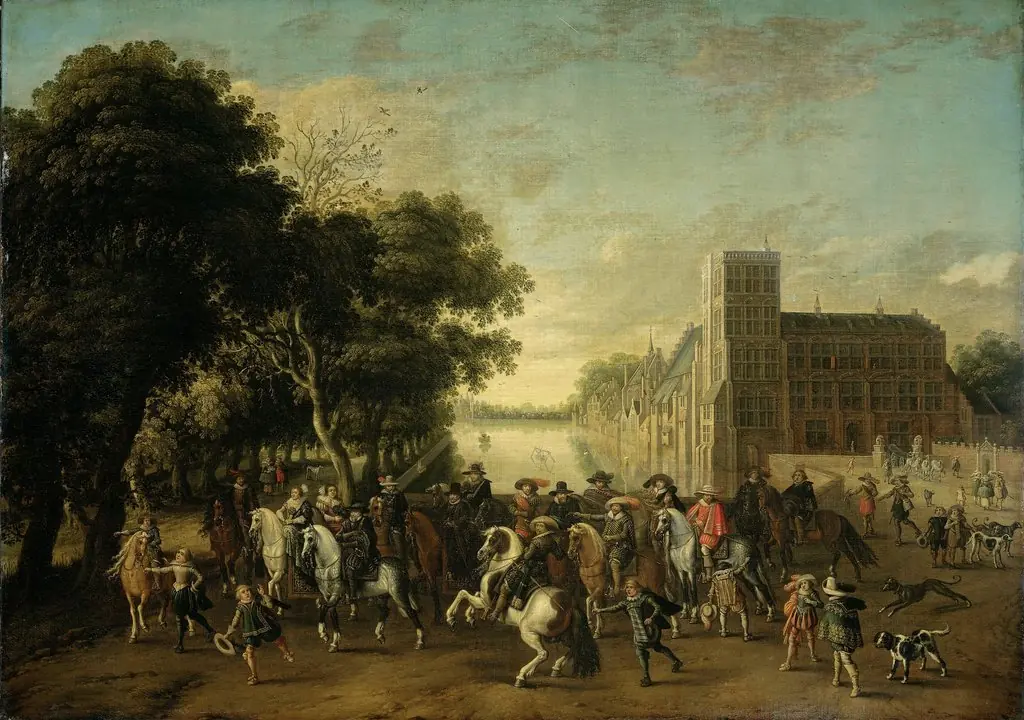 Prince Maurits, accompanied by Prince Frederik Hendrik, Frederick V of Bohemia and his wife Elizabeth Stuart, and others, on the Buitenhof, The Hague
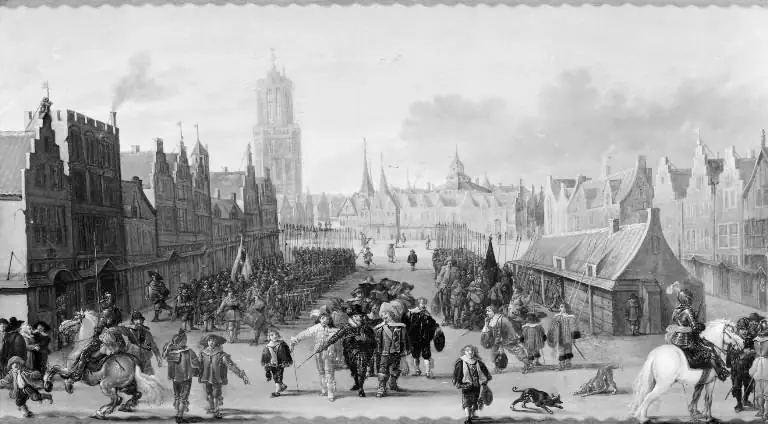 Disbanding of the Mercenary Troops on the Neude, Utrecht, July 31st, 1618
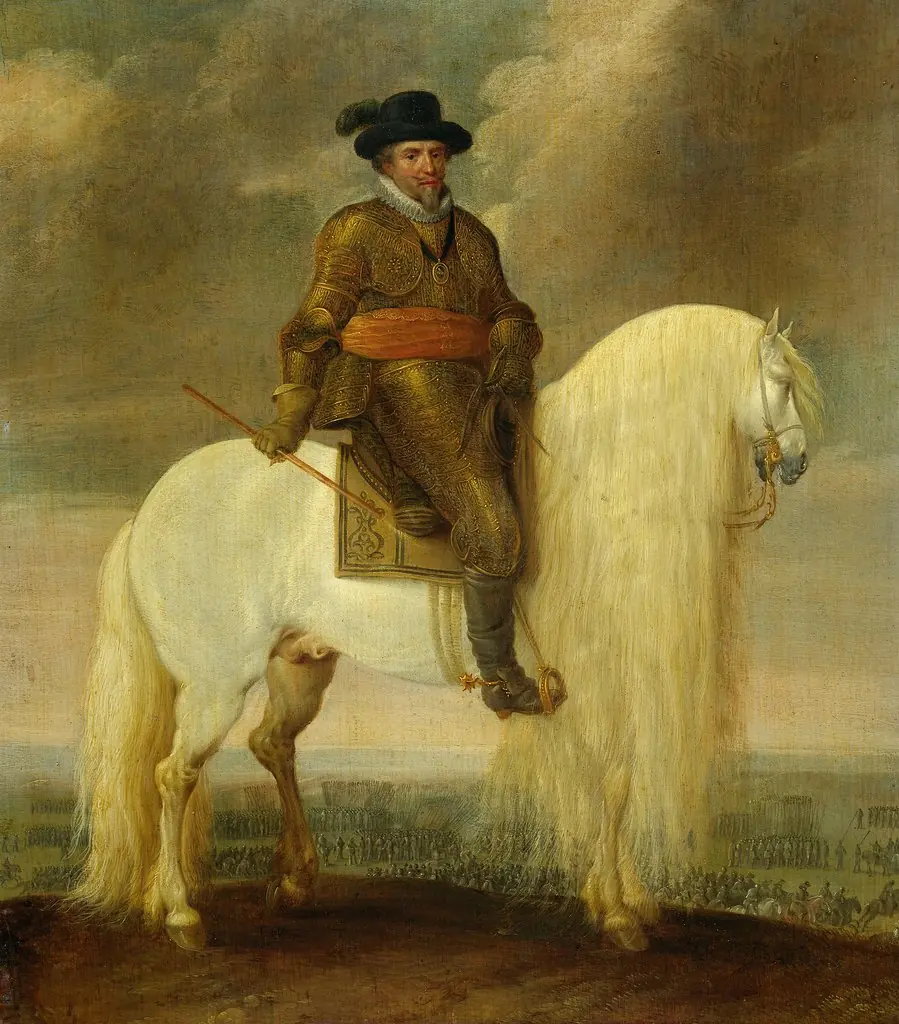 Prince Maurits astride the white warhorse presented to him after his victory at Nieuwpoort
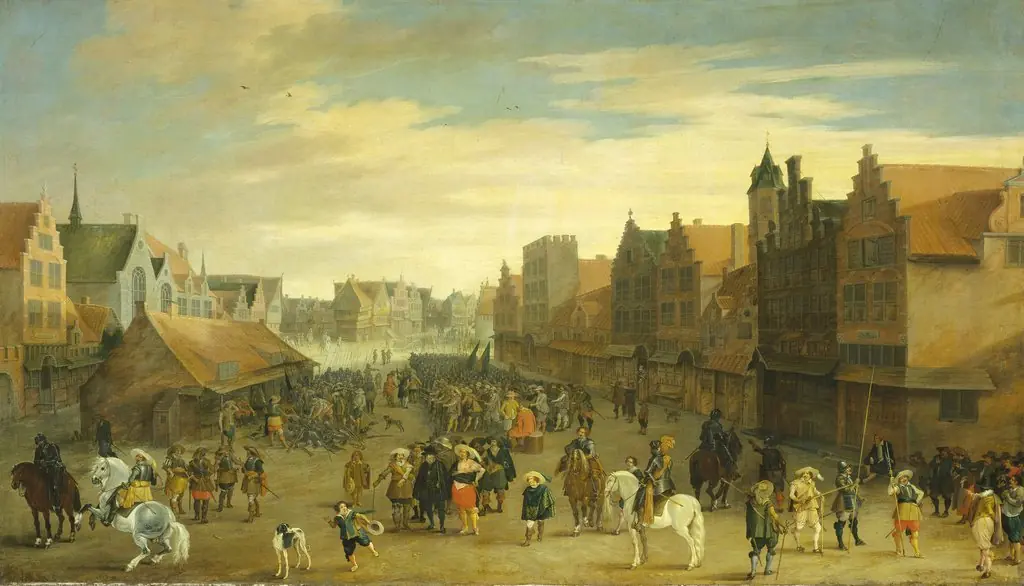 The disbanding of the 'waardgelders' (mercenaries in the pay of the town government) by Prince Maurits on the Neude, Utrecht, 31 July 1618
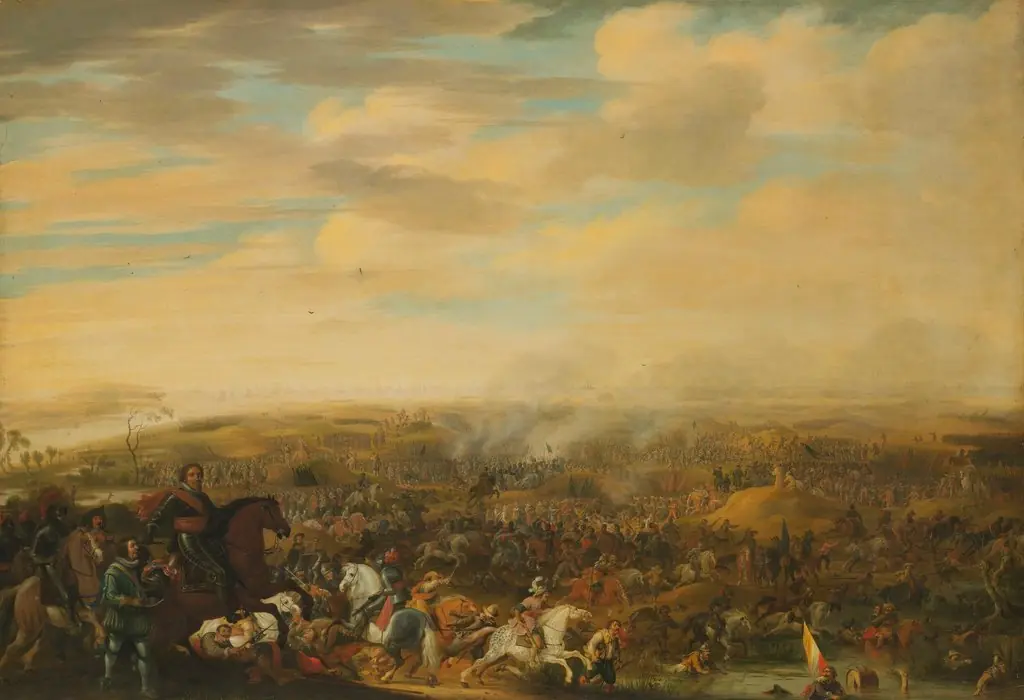 Prince Maurits at the Battle of Nieuwpoort, 2 July 1600
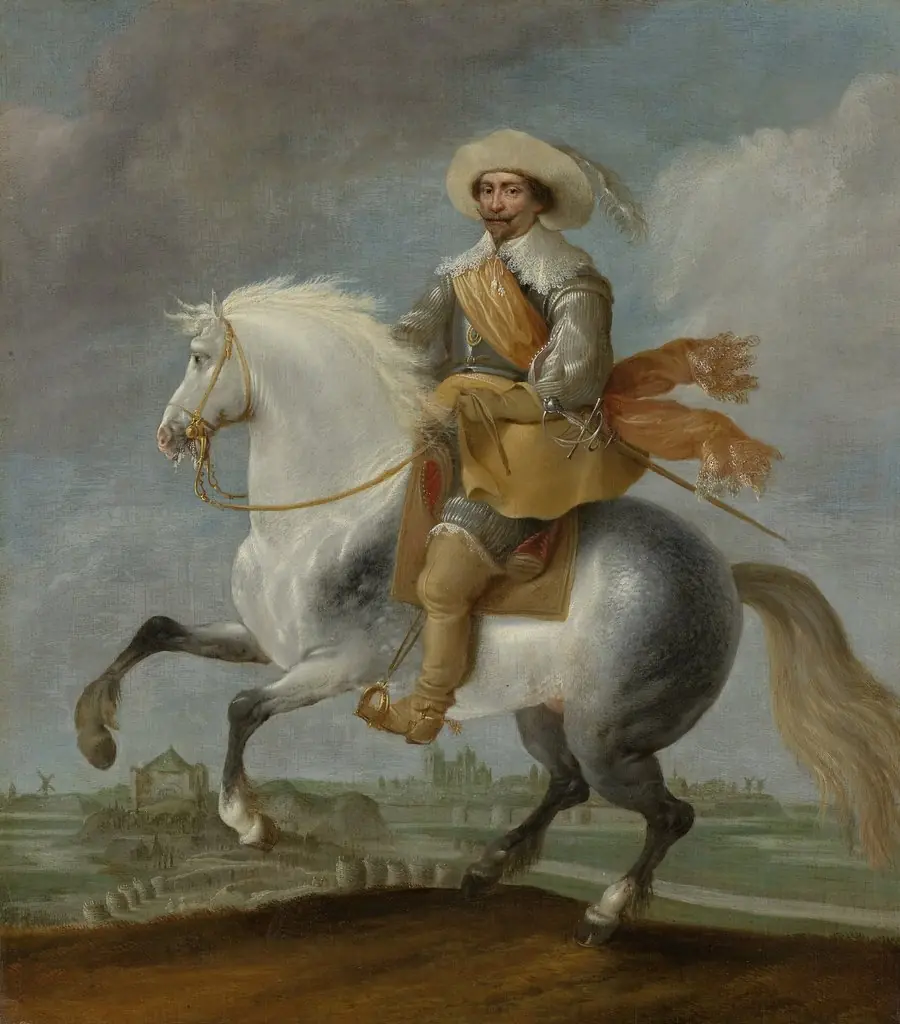 Prince Frederik Hendrik on horseback outside the fortifications of 's-Hertogenbosch, 1629
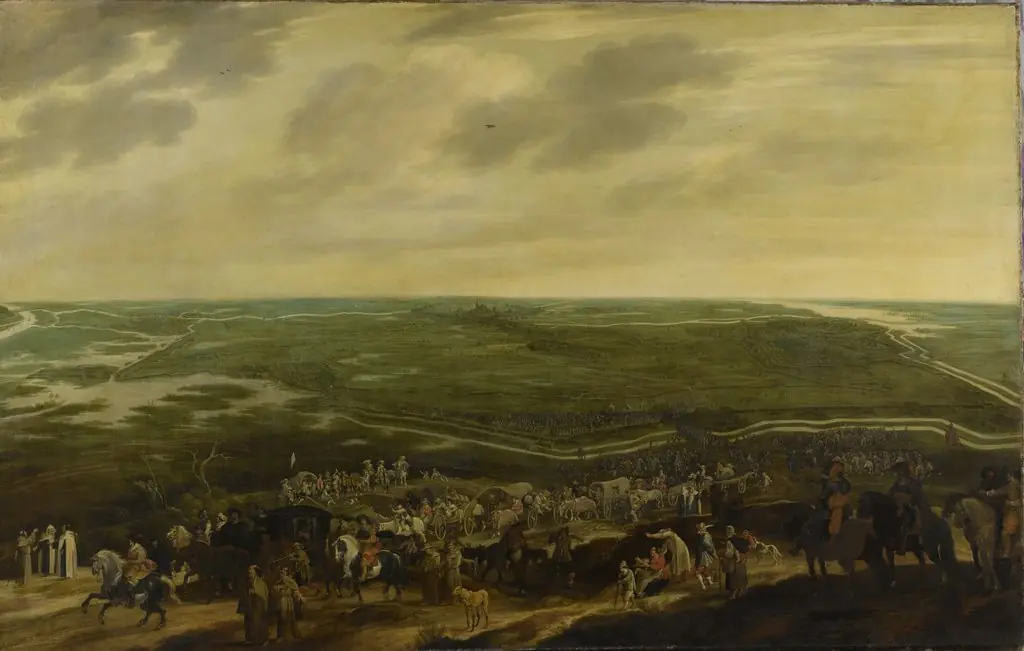 The defeated Spanish garrison leaving 's-Hertogenbosch, 17 September 1629
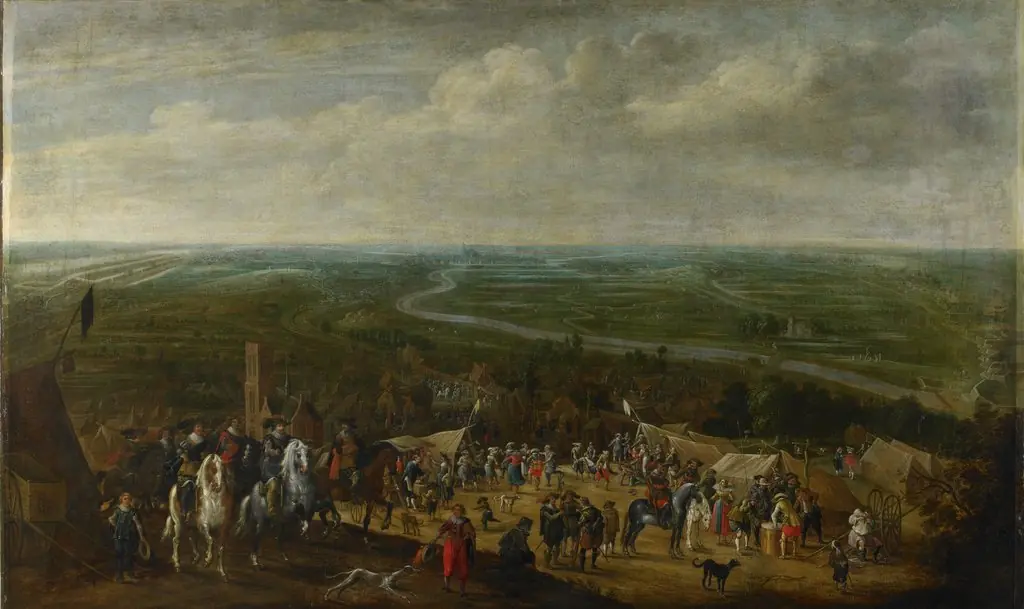 Prince Frederik Hendrik at the siege of 's-Hertogenbosch, 1629