Artwork
Sf. Arhanghel Mihail
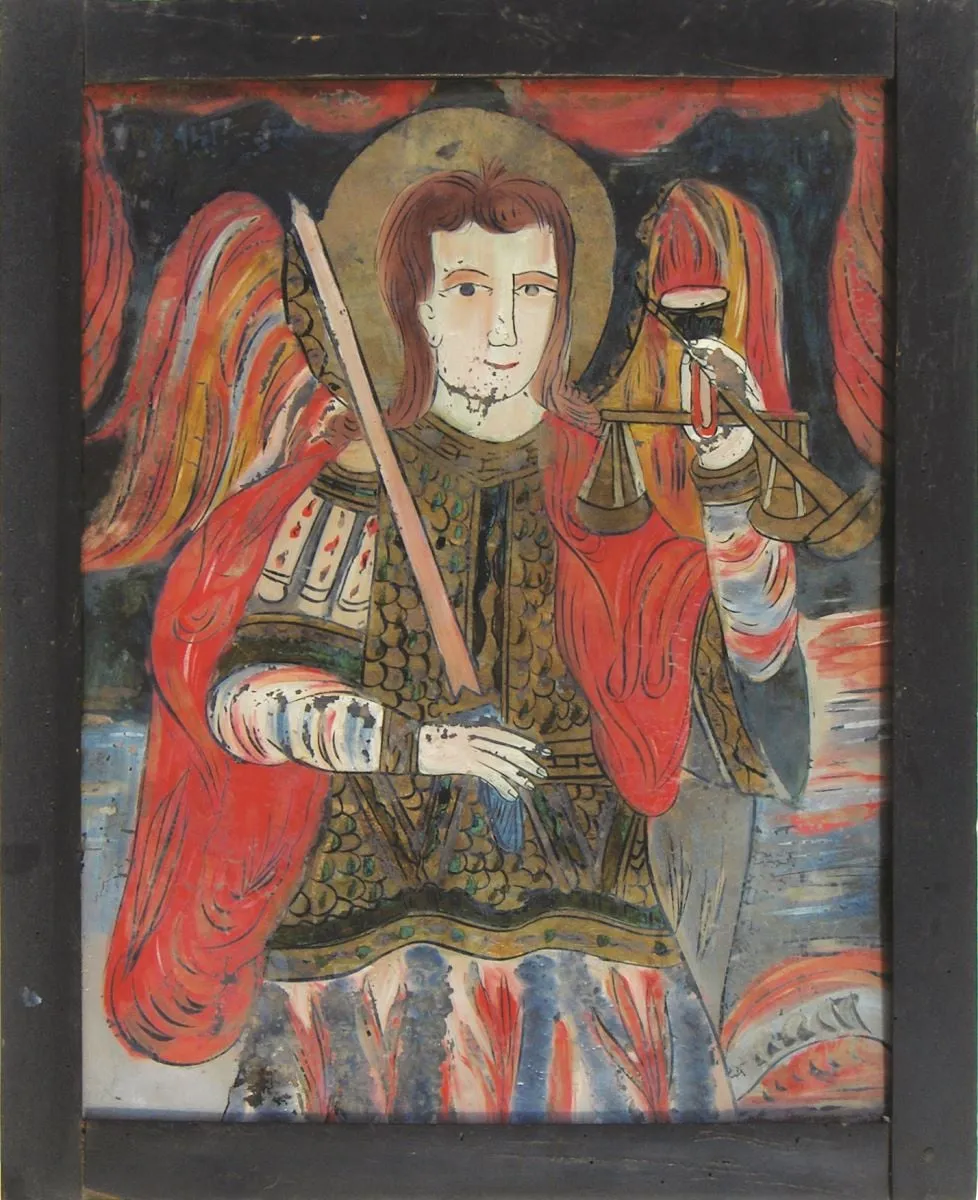
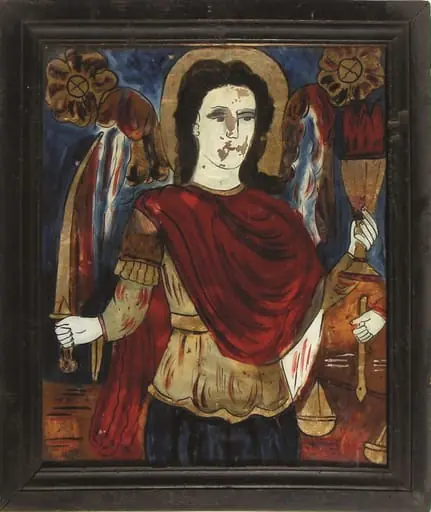
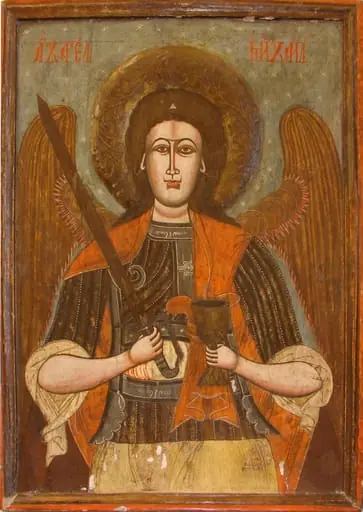
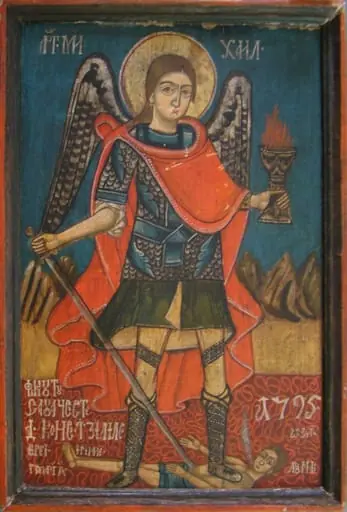
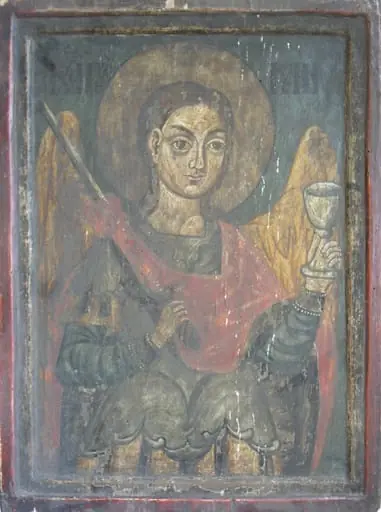
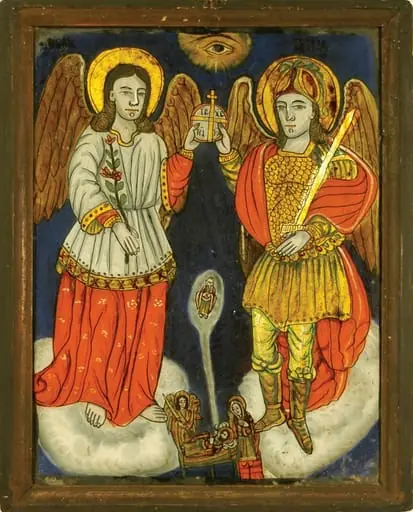
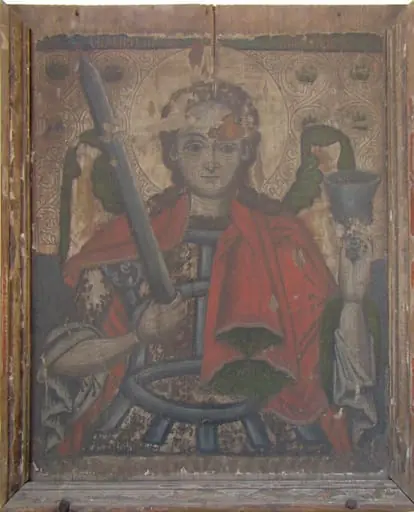
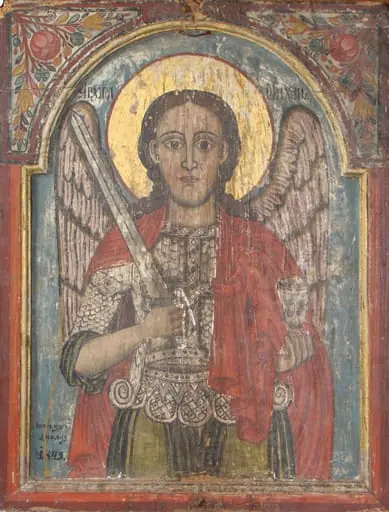
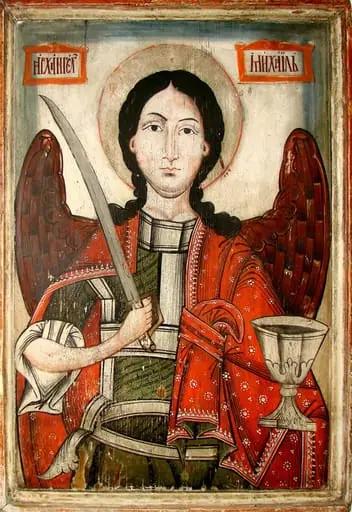
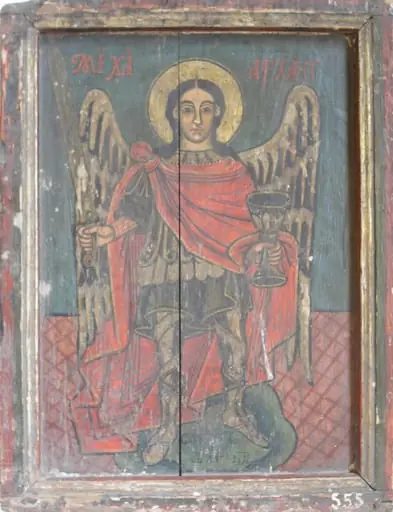
Sf. Arhanghel Mihail is a drawing by Petru Prodan. It is held in the collection of the Alba Iulia Unification National Museum. This painted image portrays the Archangel Michael, a celestial figure associated with divine judgment.
About this work
Overview
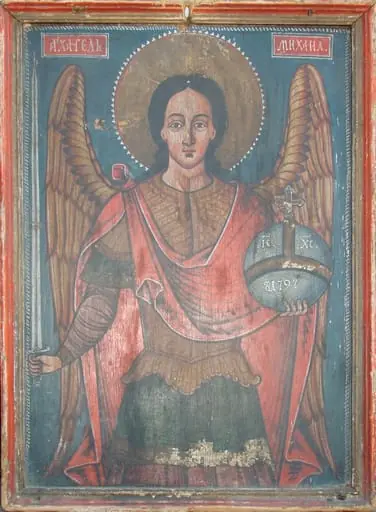
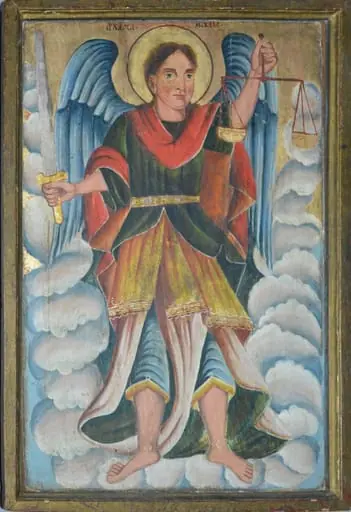
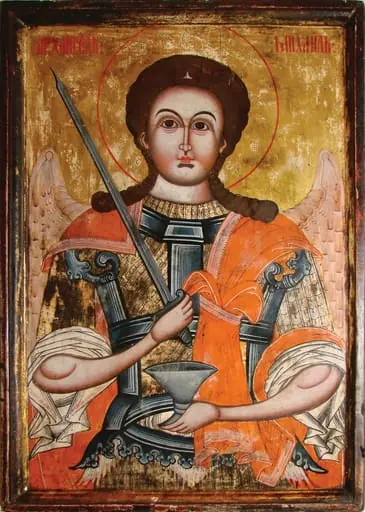
This painted image portrays the Archangel Michael, a celestial figure associated with divine judgment. Rendered in a stylized folk tradition, the figure stands against a stark, dark background accented with deep red and black. The composition emphasizes clarity and symbolic power over naturalism, using strong outlines and saturated hues to convey spiritual authority and moral gravity.
Subject & Meaning
The figure holds a sword, symbolizing divine justice, and a scale, representing the weighing of souls.
The figure holds a sword, symbolizing divine justice, and a scale, representing the weighing of souls. These attributes align with Christian iconography of Michael as the arbiter of the Last Judgment. The long hair and flowing red robe reinforce his otherworldly status, while the absence of ornate detail focuses attention on the act of judgment itself, stripping the scene to its essential moral symbolism.
Technique & Style
The painting employs bold, unmodulated lines and flat areas of vivid color, characteristic of regional folk traditions. There is no attempt at perspective or shading; instead, form is defined by contour and contrast. The use of red and black against a dark ground creates visual tension, enhancing the scene’s solemnity. The style reflects a hand-painted, non-academic approach rooted in local devotional practices.
History & Provenance
The work likely originated in a rural Eastern European community, where such images were produced for home altars or church decoration. Exact origins are undocumented, but similar depictions of Archangel Michael appear in 18th- and 19th-century Orthodox folk art from regions including Romania and Moldova. These pieces were typically made by itinerant or local artisans without formal training.
Context
In Orthodox Christian communities, images of Archangel Michael served as reminders of divine justice and the soul’s fate after death. Such paintings were not merely decorative but functioned as objects of prayer and moral reflection. Their simplified forms made them accessible to congregations with limited literacy, reinforcing doctrinal themes through visual clarity rather than textual detail.
Legacy
This type of folk depiction preserves a vernacular interpretation of sacred figures, distinct from formal ecclesiastical art. While largely overlooked by academic circles during the 19th and early 20th centuries, such works are now recognized for their cultural and spiritual significance. They offer insight into how religious belief was expressed beyond institutional channels, through local aesthetics and communal memory.
Artist & collection
Artist
Petru Prodan painted religious scenes in the icon tradition. His works include *Sf. Nicolae* and *Prohodul lui Iisus*, showing saints and biblical figures in gold-leaf settings. The figures are stiff and frontal,…
Museum
Alba Iulia Unification National Museum
Continue through works from the same source collection.