Artwork
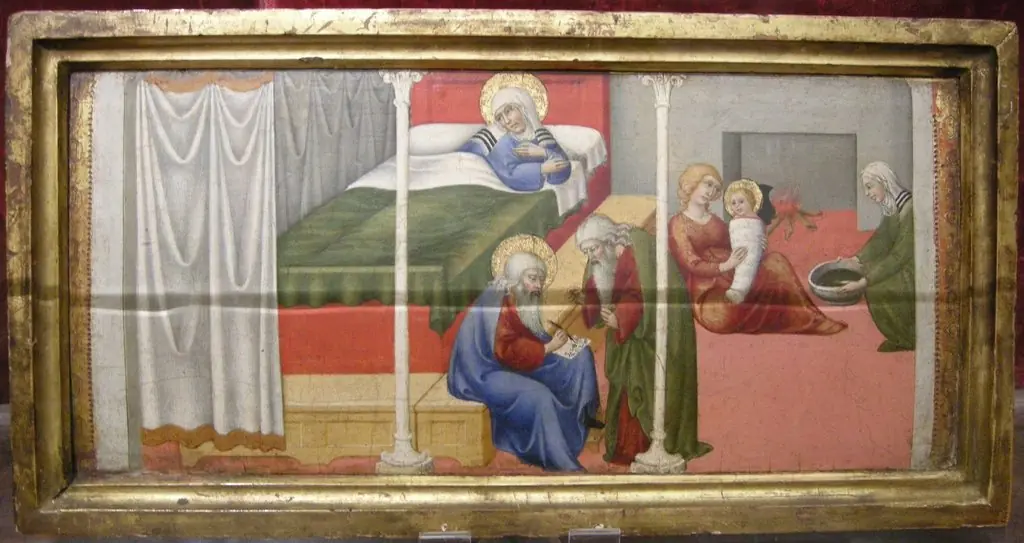
The Birth of John the Baptist
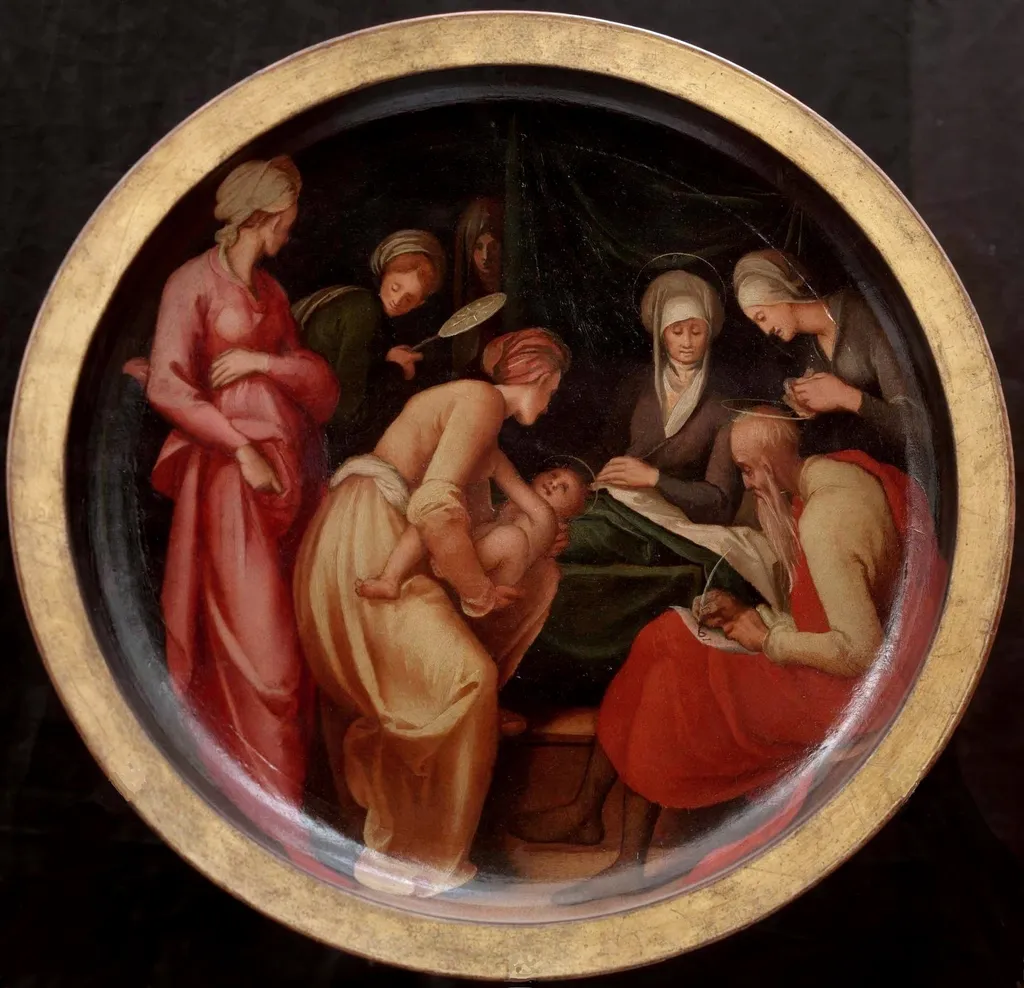
The Birth of John the Baptist is an oil painting by the Mannerist artist Pontormo. It dates from 1526 and is held in the collection of the Uffizi Gallery.
About this work
Overview
Attributed to Pontormo, it has resided in the Uffizi Gallery since at least the early 18th century.
Painted in 1526, this oil-on-panel work depicts the Nativity of Saint John the Baptist and was created as a desco da parto—a birth tray commissioned to celebrate a child’s arrival. Attributed to Pontormo, it has resided in the Uffizi Gallery since at least the early 18th century. Though briefly questioned by one scholar, its authorship is widely accepted. A family coat of arms on the reverse confirms its ceremonial purpose.
Subject & Meaning
The scene portrays the birth of John the Baptist, a biblical figure foretold as the forerunner to Christ. The composition centers on the newborn surrounded by attendants, emphasizing familial joy and divine significance. As a desco da parto, the painting served both as a decorative object and a symbolic affirmation of lineage, fertility, and religious blessing in Renaissance Florence.
Technique & Style
Pontormo employs a refined oil technique on panel, with soft modeling of forms and a muted, atmospheric palette. Figures are arranged in a quiet, intimate grouping, their gestures restrained yet emotionally resonant. The spatial depth is subtly suggested, avoiding overt perspective in favor of a flattened, contemplative plane characteristic of early Mannerist tendencies.
History & Provenance
The painting was commissioned to honor Aldighieri della Casa, born January 15, 1527, son of Girolamo della Casa and Lisabetta Tornaquinci. Its reverse bears the family’s heraldic emblem, confirming its role in a private celebration. It entered the Uffizi collection by 1704 and has remained there since. A contemporary copy exists in the Fogg Art Museum.
Context
Deschi da parto were customary in affluent Florentine households, often gifted to new mothers. These objects blended secular celebration with religious imagery, reflecting the era’s fusion of domestic life and Christian devotion. Pontormo’s treatment of the subject aligns with the humanist values of the time, emphasizing tenderness and personal piety over grandeur.
Legacy
Though not among Pontormo’s most celebrated works, this painting offers insight into his early development and the cultural role of domestic art in Renaissance Florence. Its attribution has contributed to scholarly discussions on authorship and workshop practices. As a rare surviving example of a desco da parto by a major artist, it remains a valuable document of civic and familial ritual.
Artist & collection

Artist
Jacopo Carucci or Carrucci (IPA: ; May 24, 1494 – January 2, 1557), usually known as Jacopo (da) Pontormo or simply Pontormo (IPA: ), was an Italian Mannerist painter and portraitist from the Florentine School.

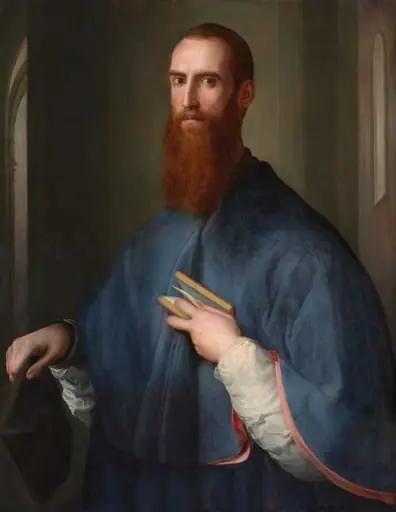
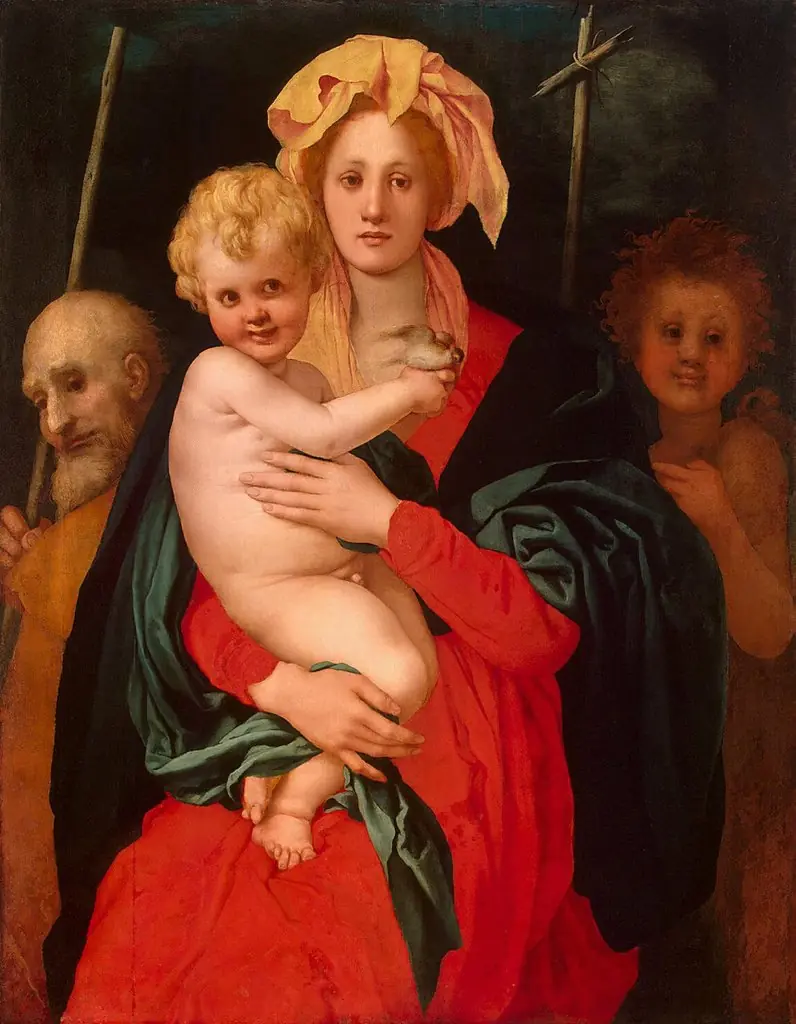
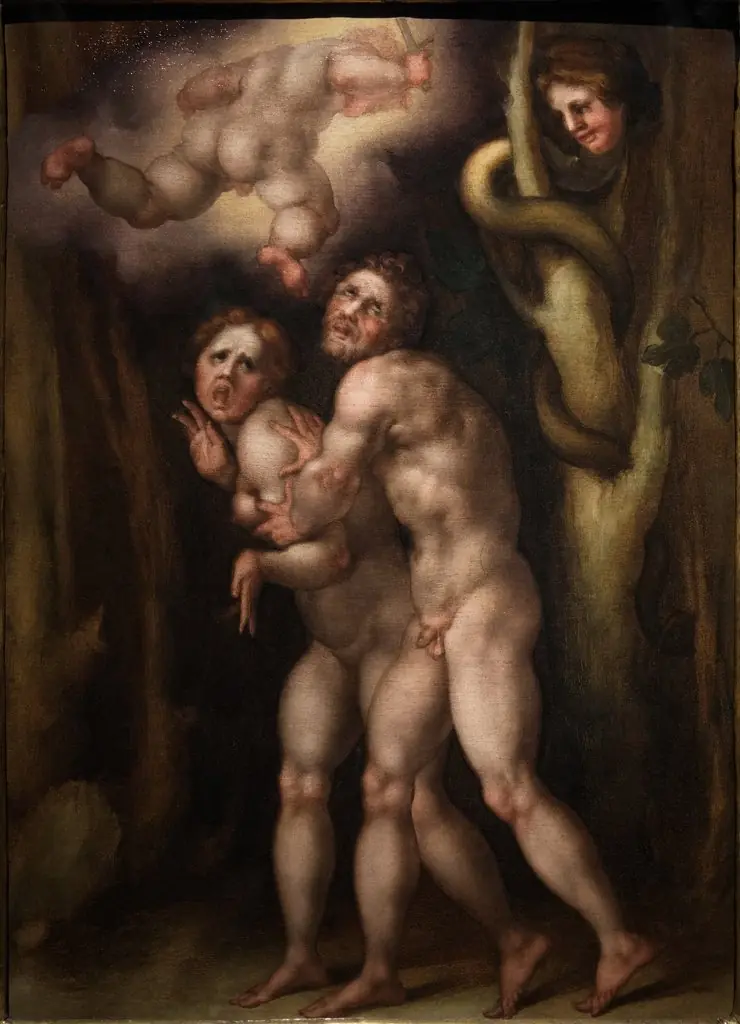
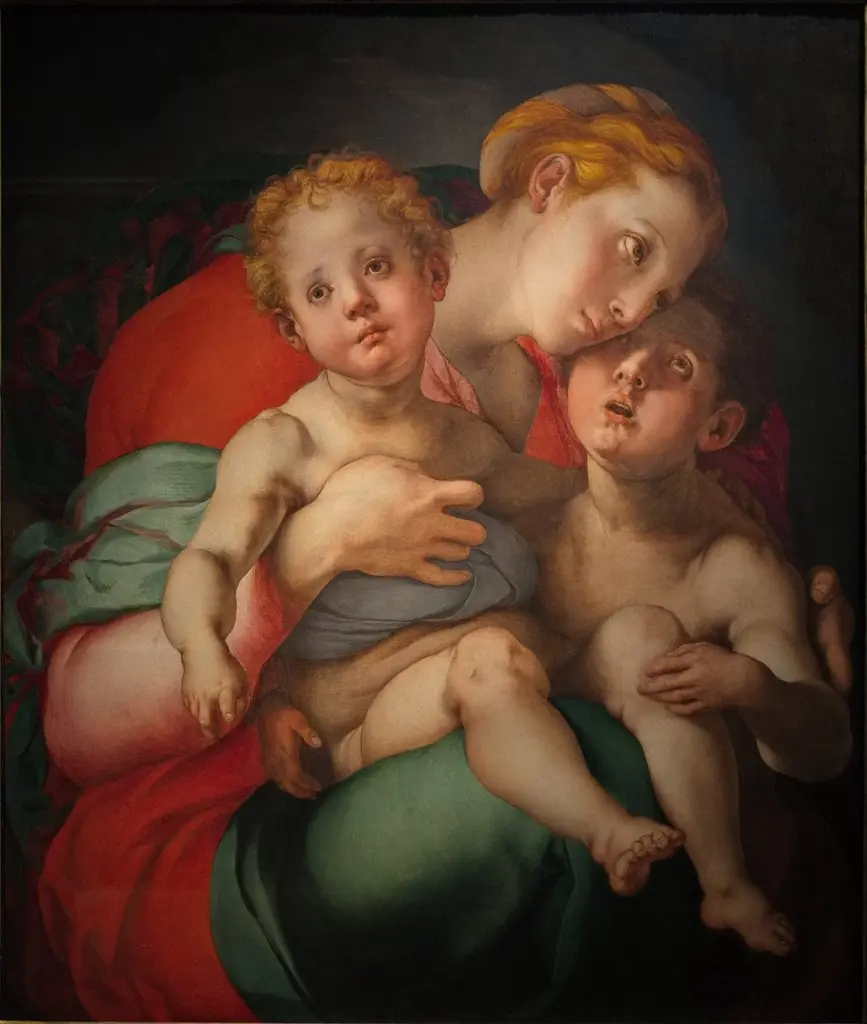
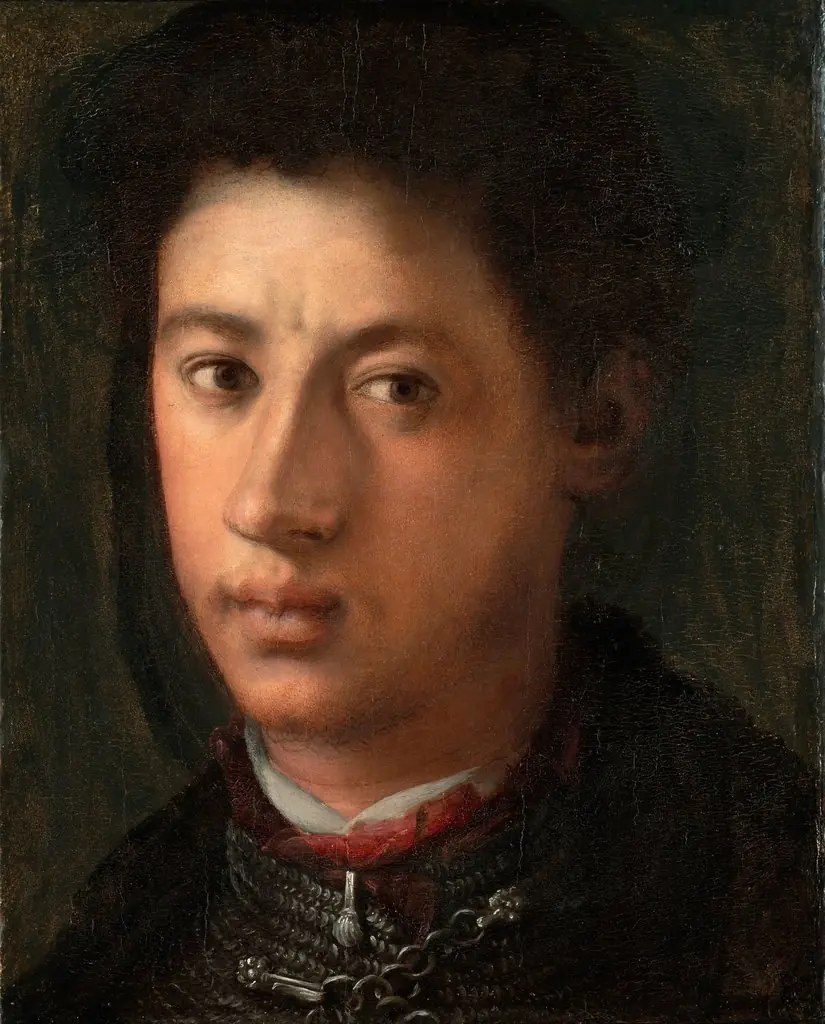
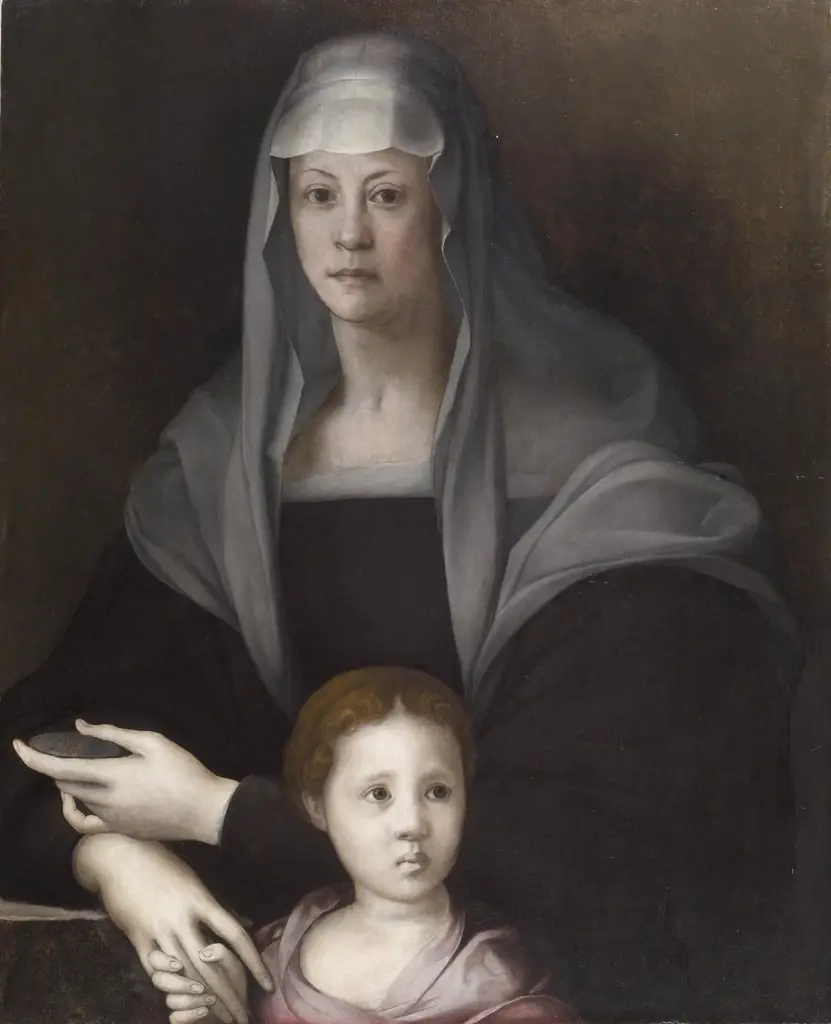
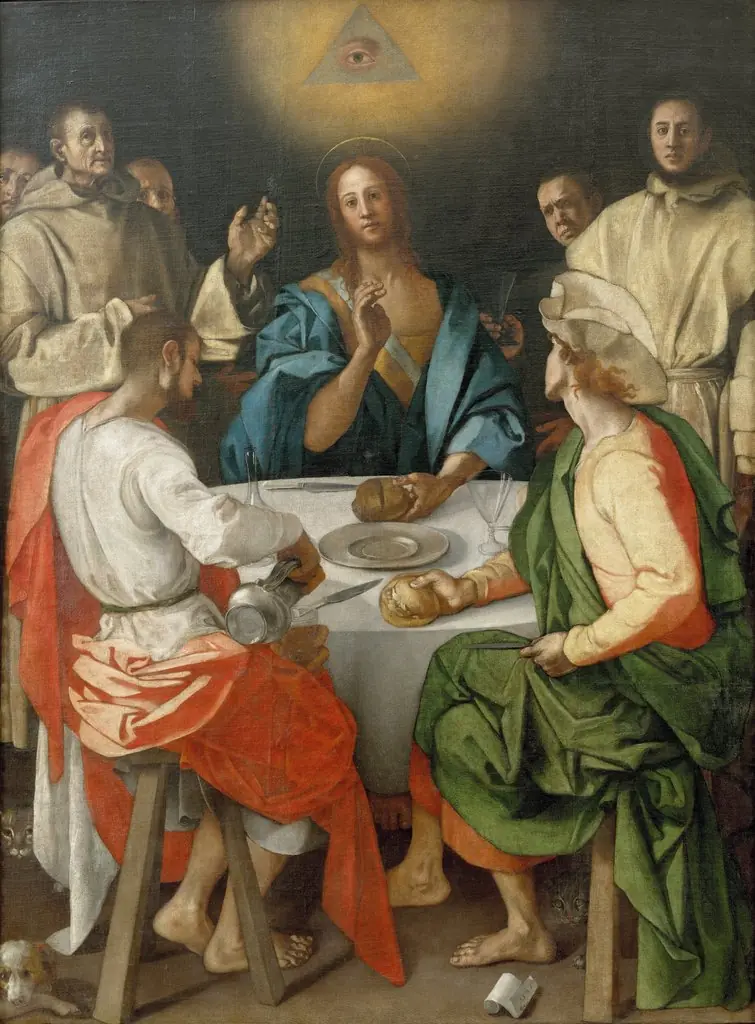
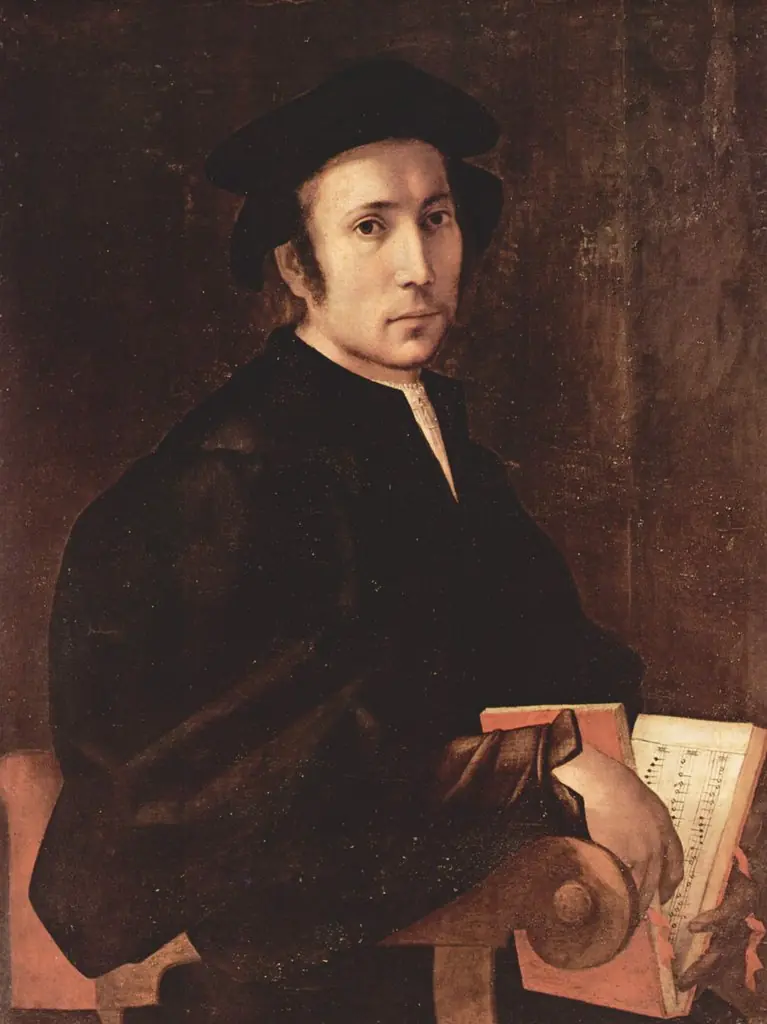
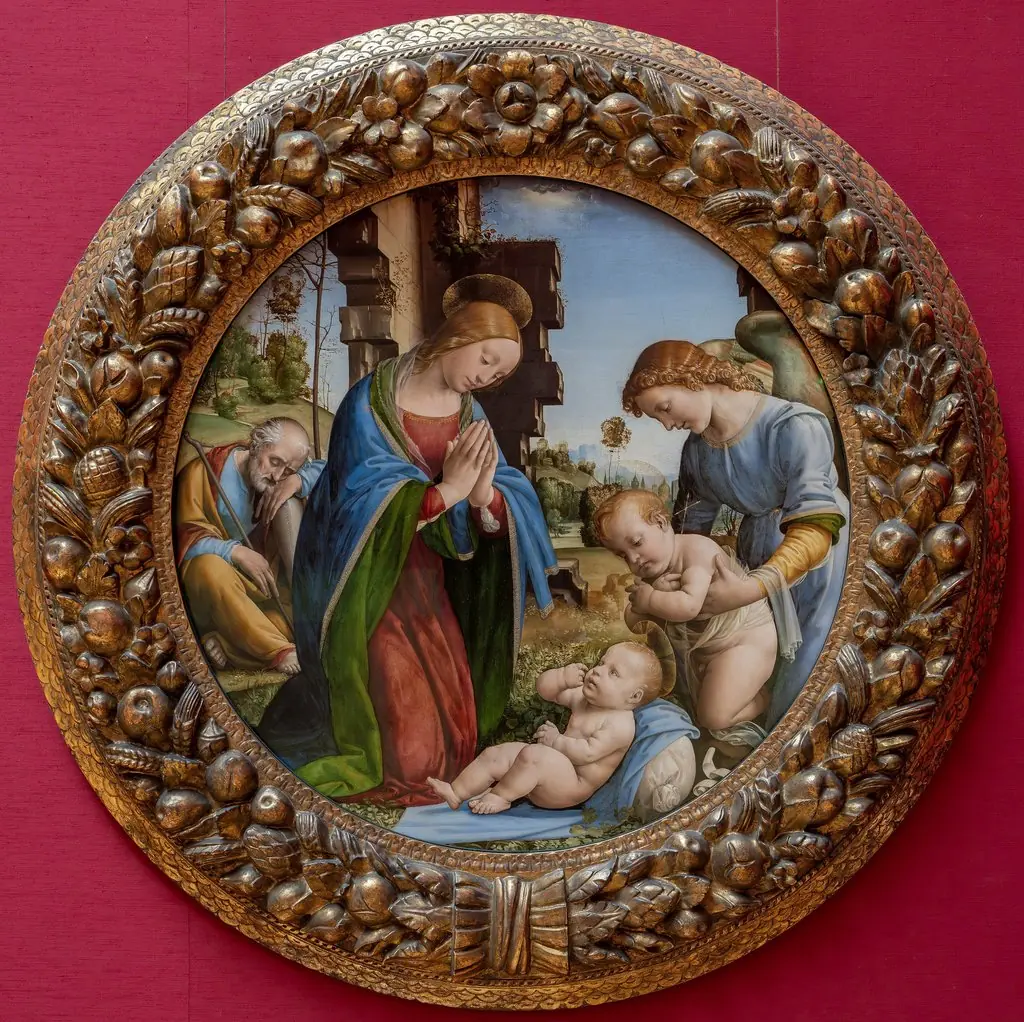 Adoration of the Child - Holy Family with child St. John
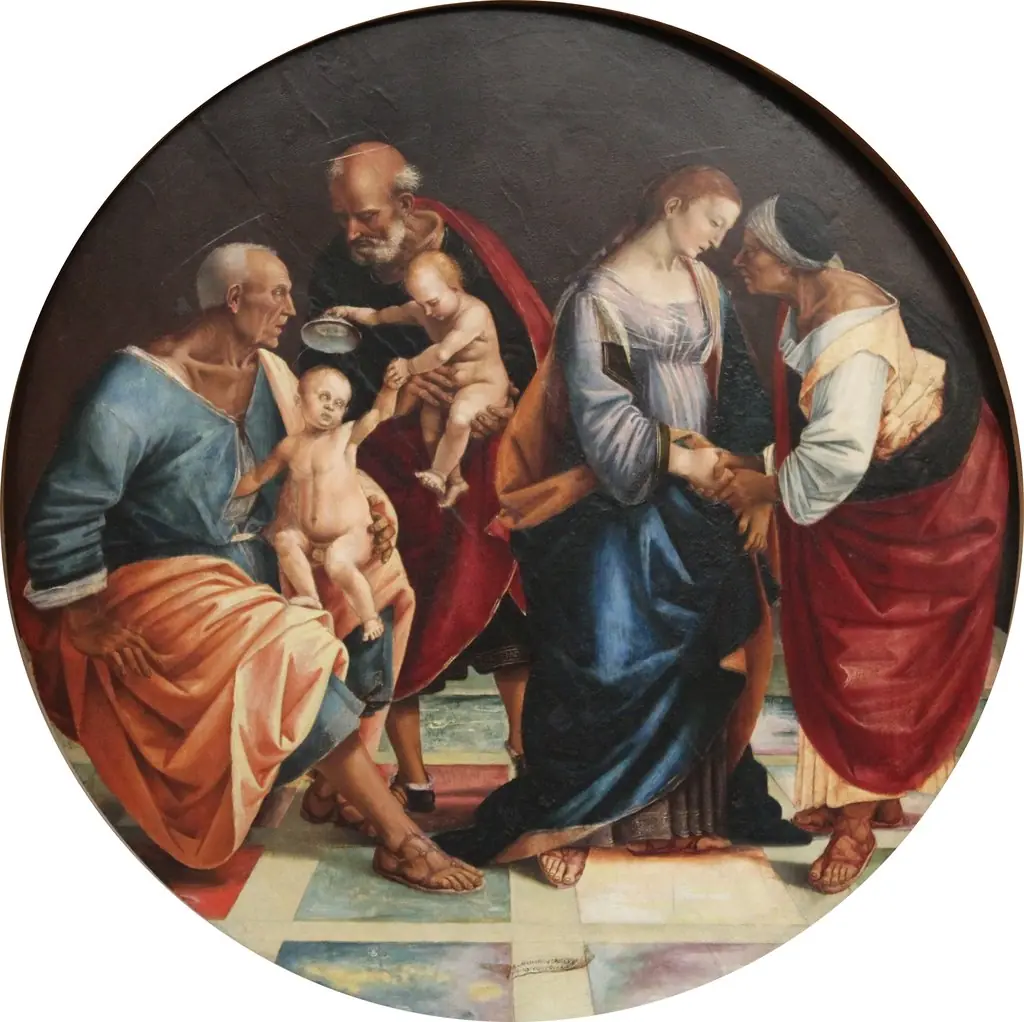 Holy family with saints Zachary, Elizabeth and little John
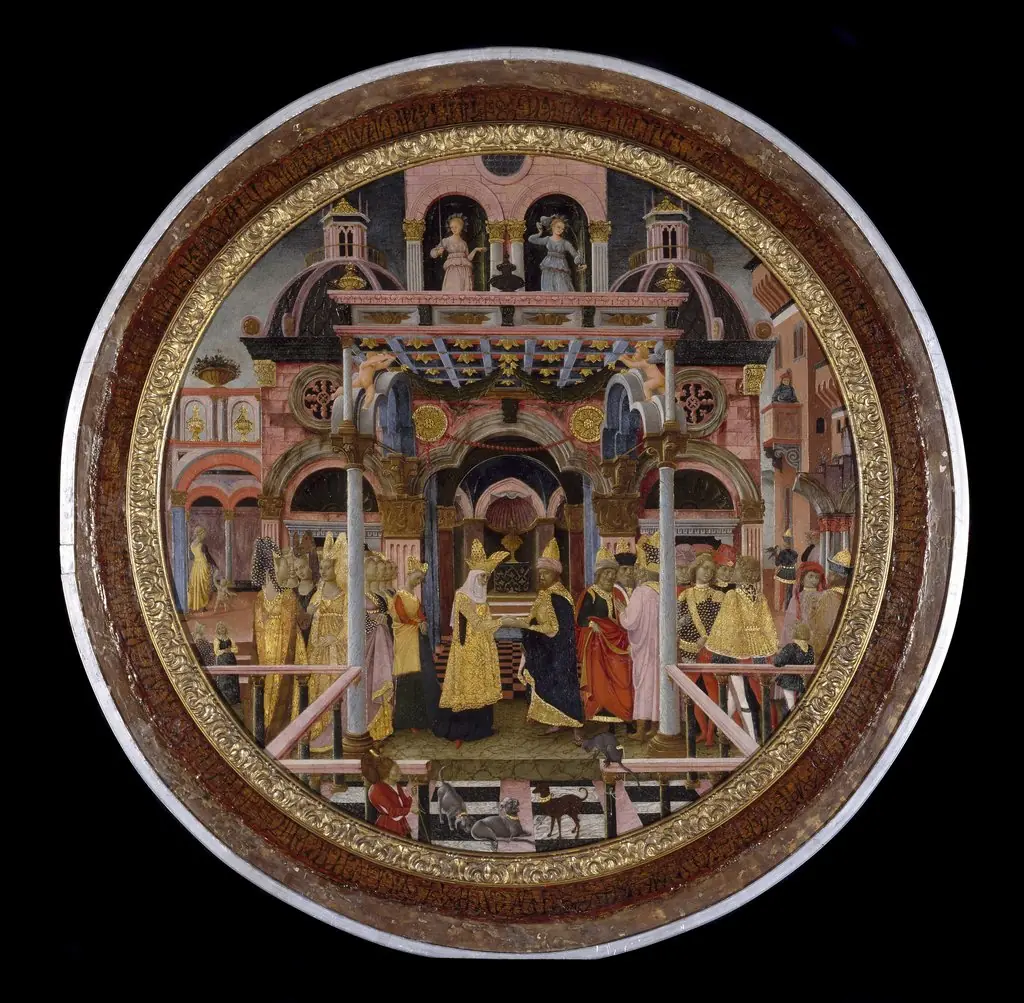 The Meeting of Solomon and the Queen of Sheba
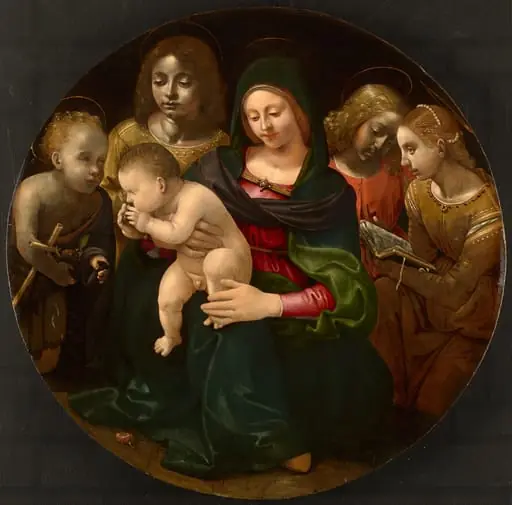 Virgin and Child with the Young Saint John the Baptist, Saint Cecilia, and Angels
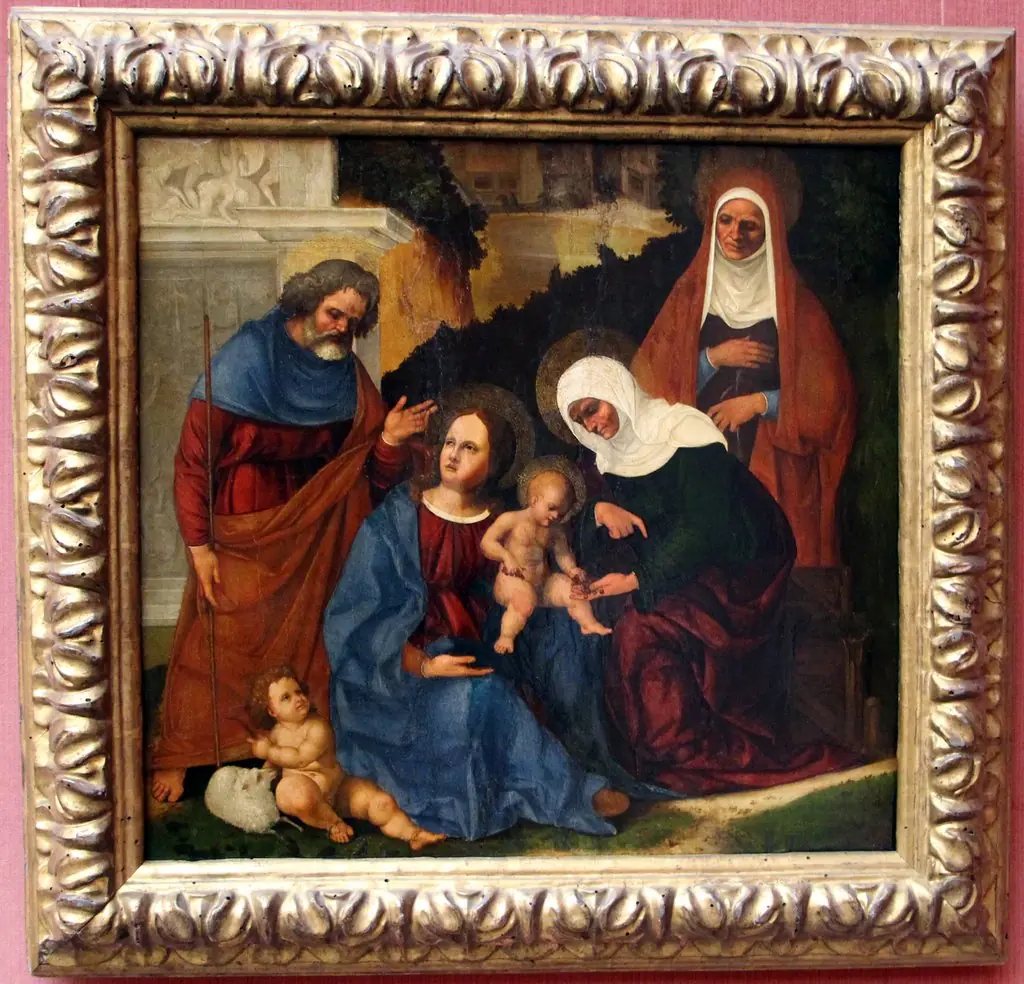 Die Heilige Familie mit Elisabeth, Anna und dem Johannesknaben
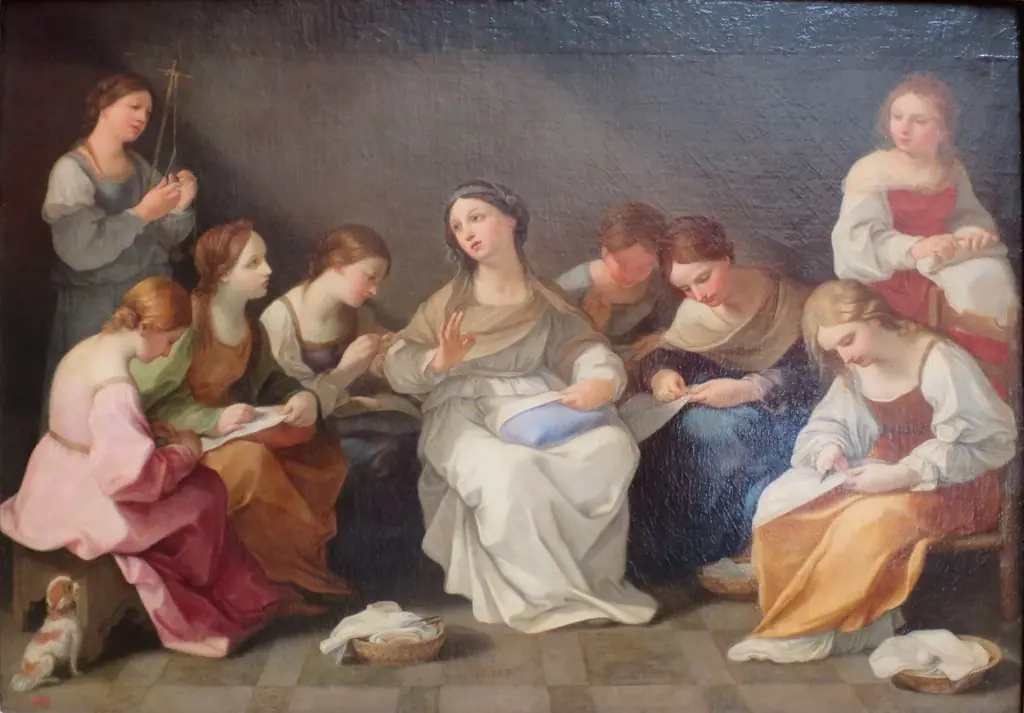 Education of the Virgin Mary
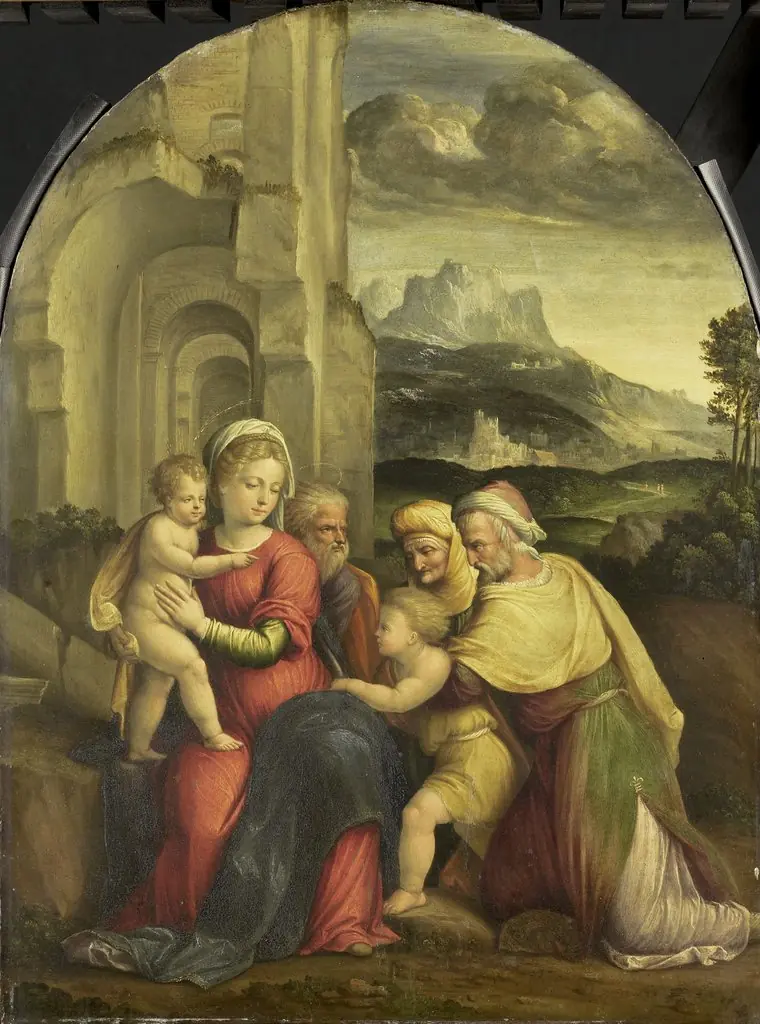 Holy Family
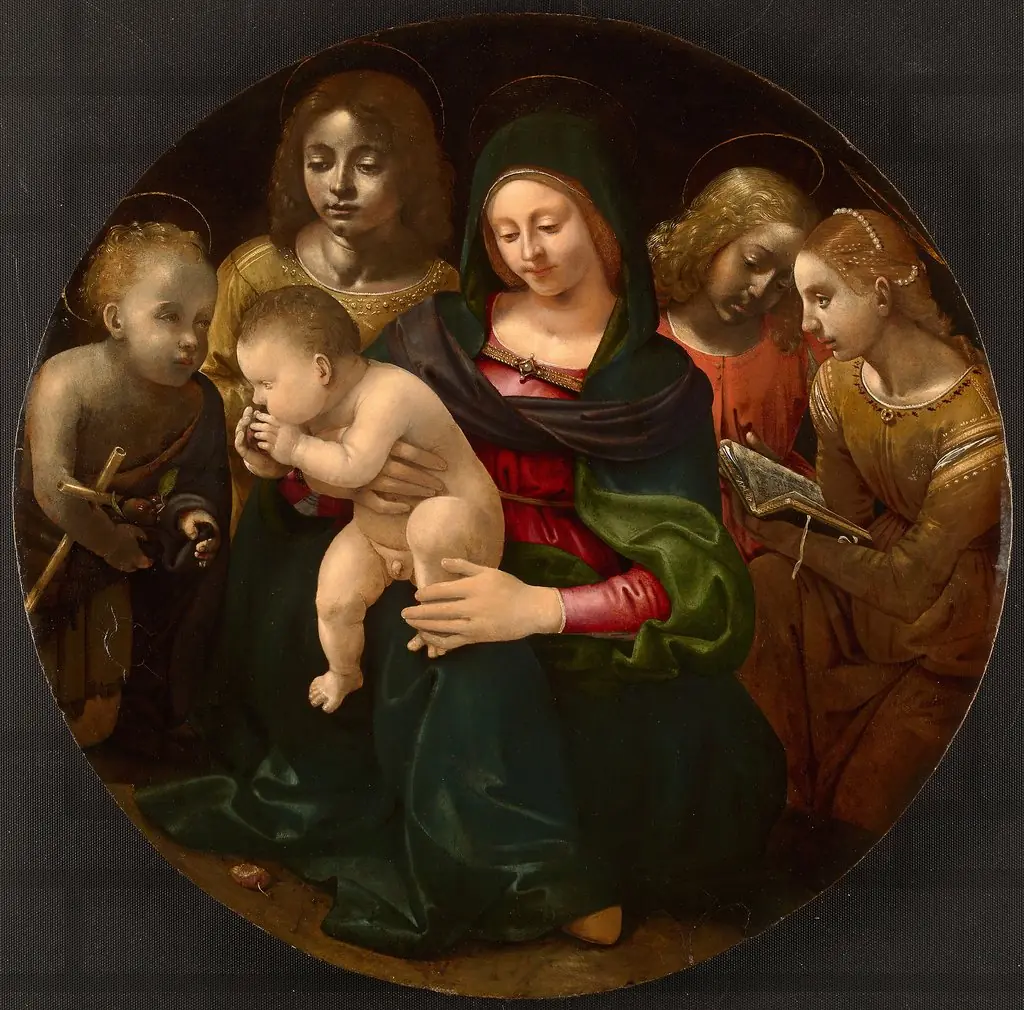 Virgin and Child with the Young Saint John the Baptist, Saint Cecilia, and Angels
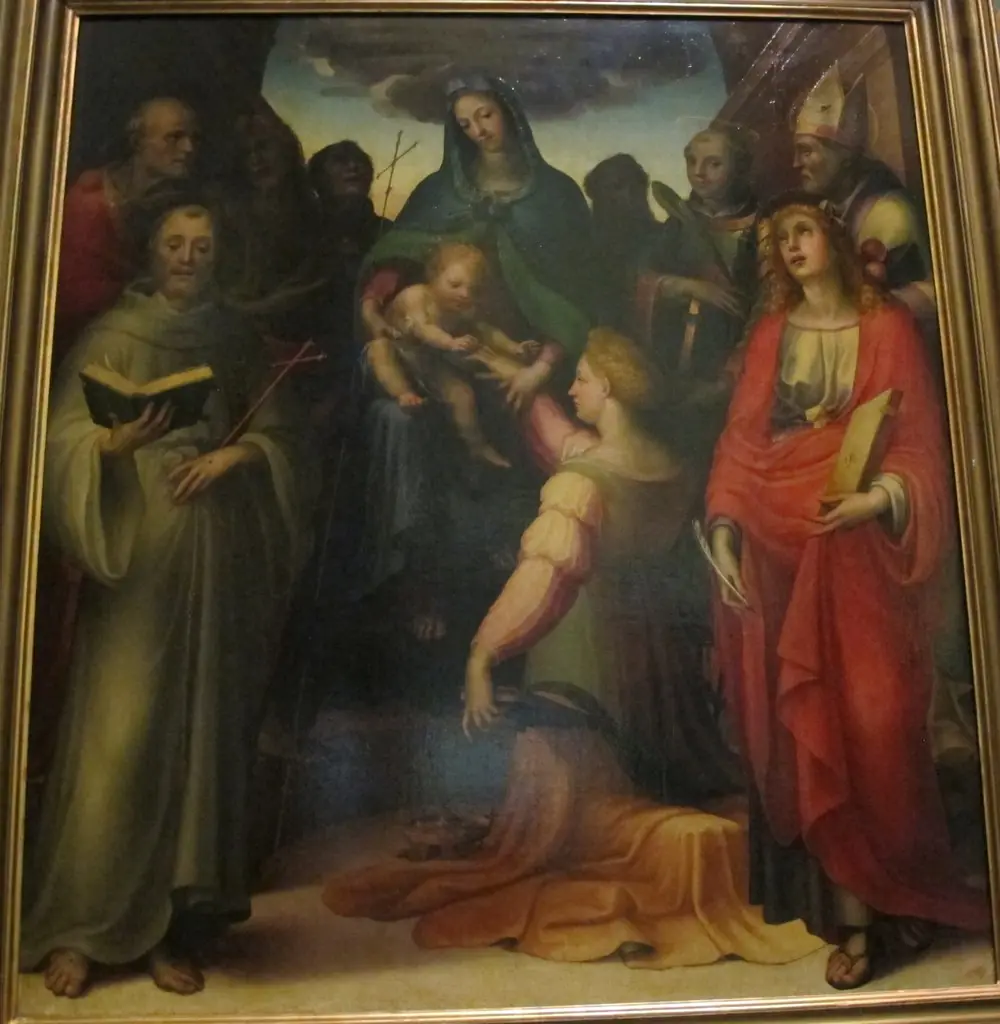 Matrimonio mistico di santa caterina
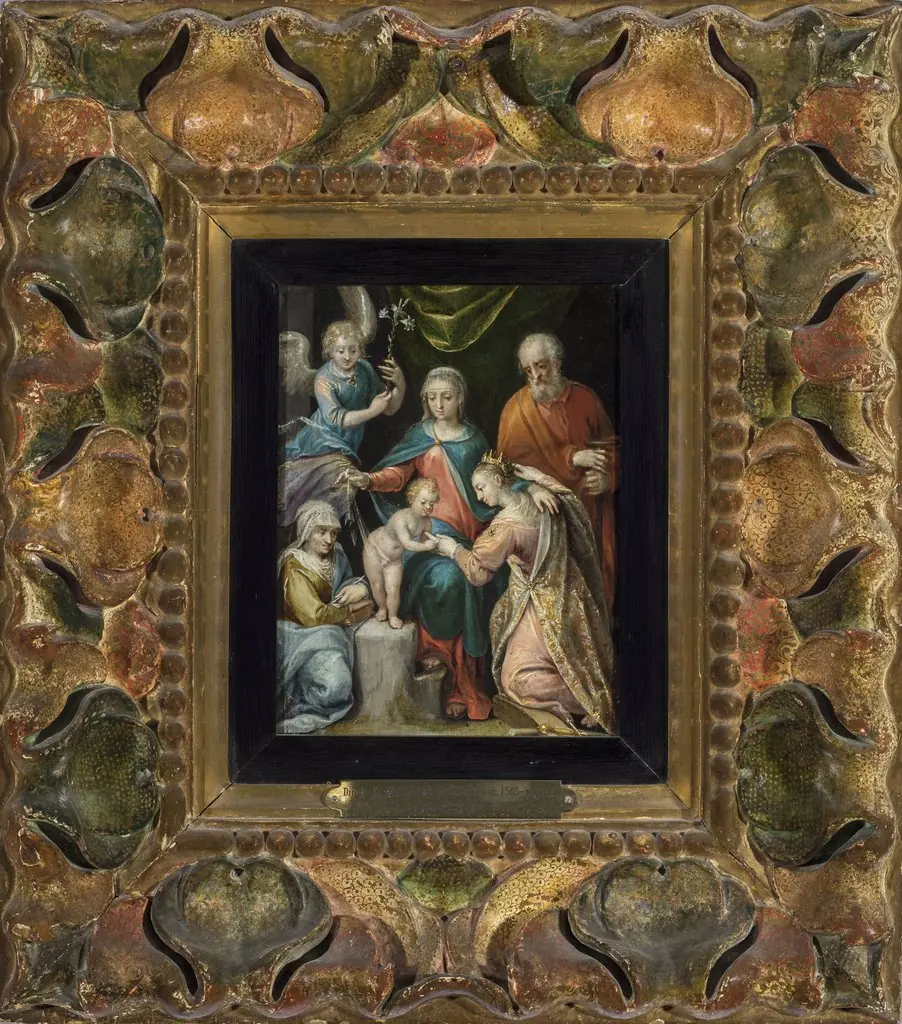 Mystical marriage of St. Catherine
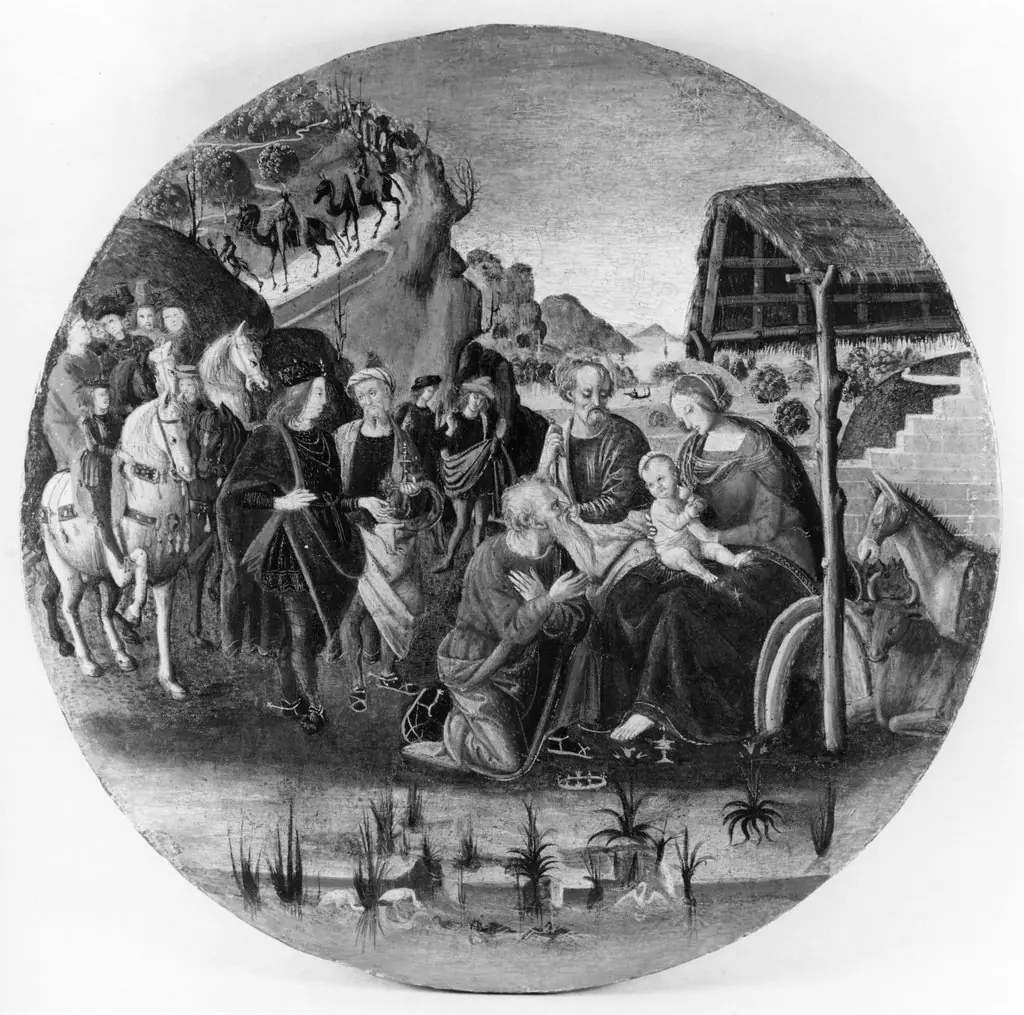 The Adoration of the Magi
 The Birth and Naming of Saint John the Baptist