Artwork
The Cemetery of Crimean Heroes, Scutari
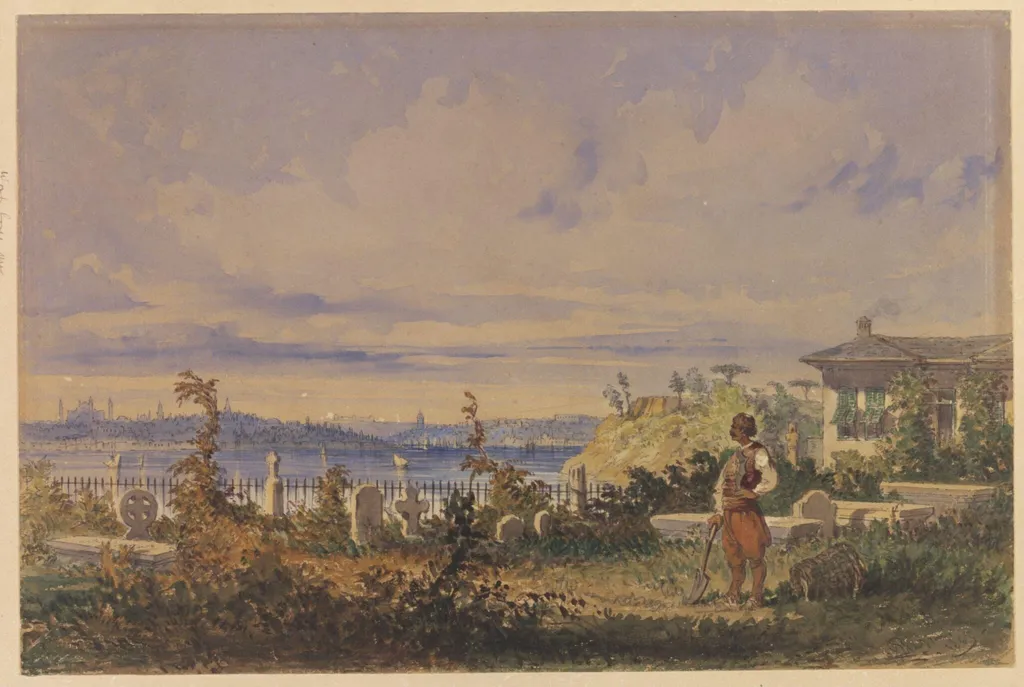
The Cemetery of Crimean Heroes, Scutari is a watercolor work on paper by the Impressionist artist Aloysius Rosarius Amadeus Raymondus Andreas Preziosi. It dates from 1865 and is held in the collection of the Victoria and Albert Museum.
About this work
Overview
The work depicts the burial ground at Scutari where British troops who perished during the Crimean conflict were interred, alongside several nurses associated with Florence Nightingale. Rendered in watercolor, the scene presents the graves foregrounded against a distant view of Constantinople’s skyline, including the Golden Horn and its most recognizable monuments.
Subject & Meaning
Beyond a simple landscape, the painting records a poignant wartime site, linking the somber reality of military loss with the humanitarian presence of nursing staff. The juxtaposition of the quiet cemetery against the bustling imperial city underscores the contrast between death and the continuity of urban life.
Technique & Style
Executed in watercolor, the artist combines the fleeting brushwork and atmospheric color of Impressionism with the precise detailing characteristic of Realism, a synthesis that was emerging in the 1860s. This blend allows the delicate rendering of sky and water while preserving the identifiable forms of the distant architecture.
Context
The graves belong to soldiers who died at the nearby Selimiye Barracks, a key medical facility during the Crimean War (1853‑1856). The presence of Nightingale’s nurses reflects the pioneering role of organized nursing in that conflict, marking the site as a focal point of military and medical history.
Legacy
Now part of the Victoria and Albert Museum’s collection, the watercolor serves as both a visual document of a specific wartime locale and an example of mid‑nineteenth‑century artistic experimentation with hybrid styles. It continues to inform viewers about the human dimensions of the Crimean War and the evolving practices of watercolor painting.
Artist & collection
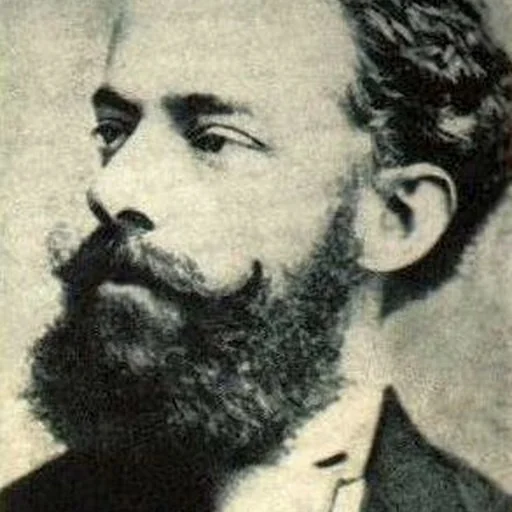
Artist
Aloysius Rosarius Amadeus Raymondus Andreas Preziosi
Amedeo Preziosi (2 December 1816 – 27 September 1882) was a Maltese painter and traveler known for his watercolours and prints of Constantinople, the Balkans, Ottoman Empire, and Romania.

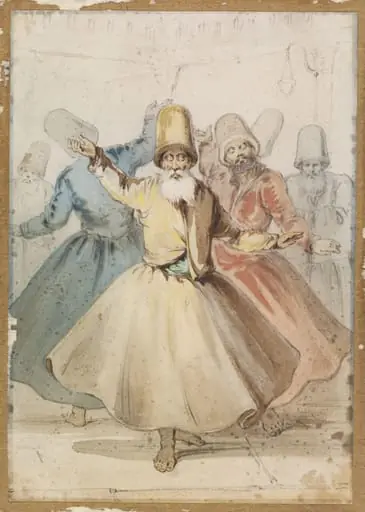
![Portrait of Trehem[?]Walid 'Abdullah, an Arab from Iraq, by Aloysius Rosarius Amadeus Raymondus Andreas Preziosi](https://artifactworldgallery.com/img/aloysius-rosarius-amadeus-raymondus-andreas-preziosi--portrait-of-trehem-walid-abdullah-an-arab-from-iraq--2476a3692d0929a5-w320.webp)
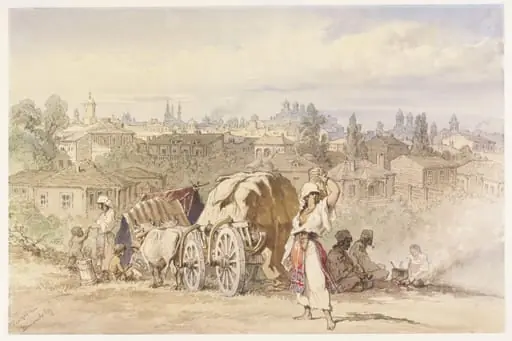
![A Seller of Milk-puddings [Mahallebi], by Aloysius Rosarius Amadeus Raymondus Andreas Preziosi](https://artifactworldgallery.com/img/aloysius-rosarius-amadeus-raymondus-andreas-preziosi--a-seller-of-milk-puddings-mahallebi--3da9fd2db017402d-w320.webp)
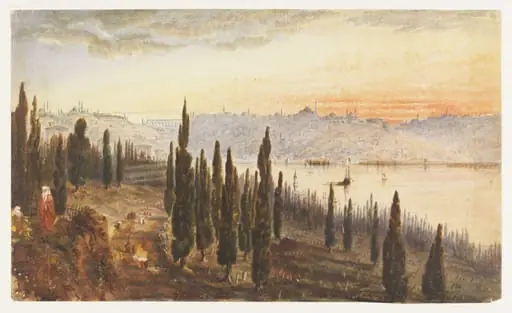 View of Constantinople from the cemetery at Pera
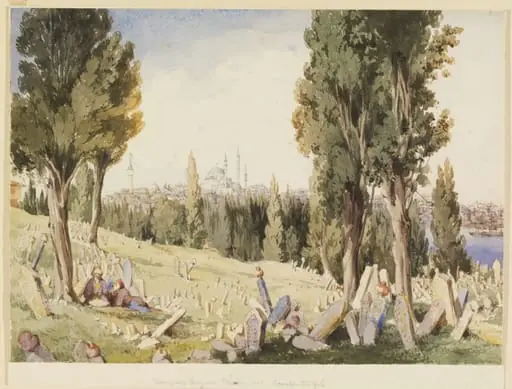 Stamboul from the Cemetery of Pera. Constantinople
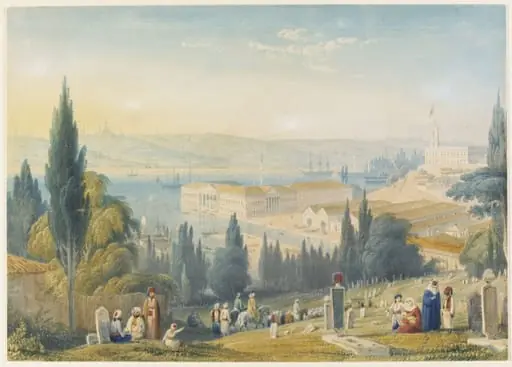 A view of the new Turkish Naval Buildings and Dockyards on the Golden Horn: Constantinople in the background
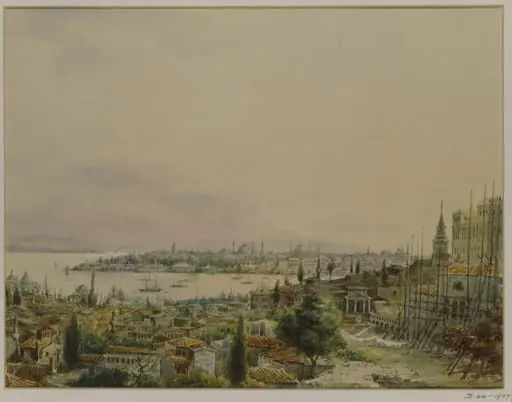 View of Constantinople from Pera
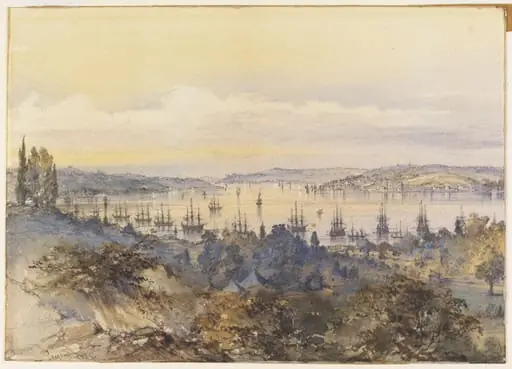 The Bosphorus with the Allied Fleets at Anchor
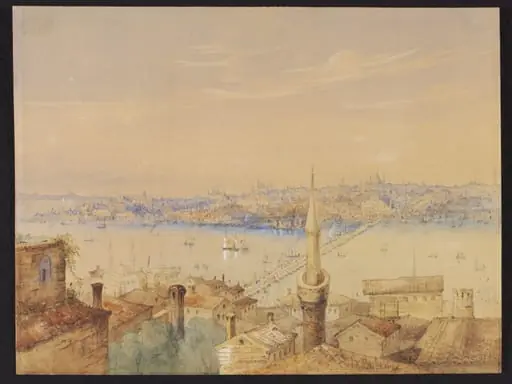 View of Constantinople from Pera across the Golden Horn
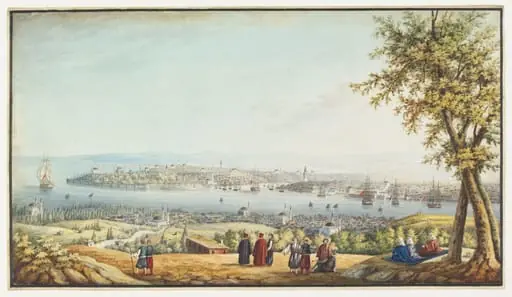 Constantinople and the Bosphorus from above Scutari
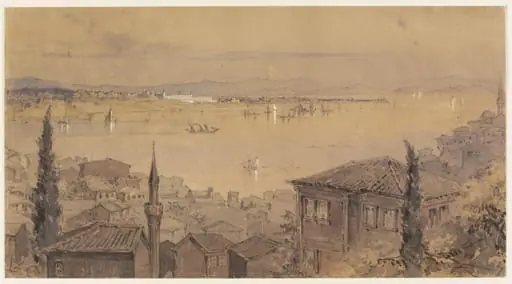 The Bosphorus, from Pera, looking towards Scutari