Artwork
View of the Sultan's Barge in front of the Nusretiye Camii
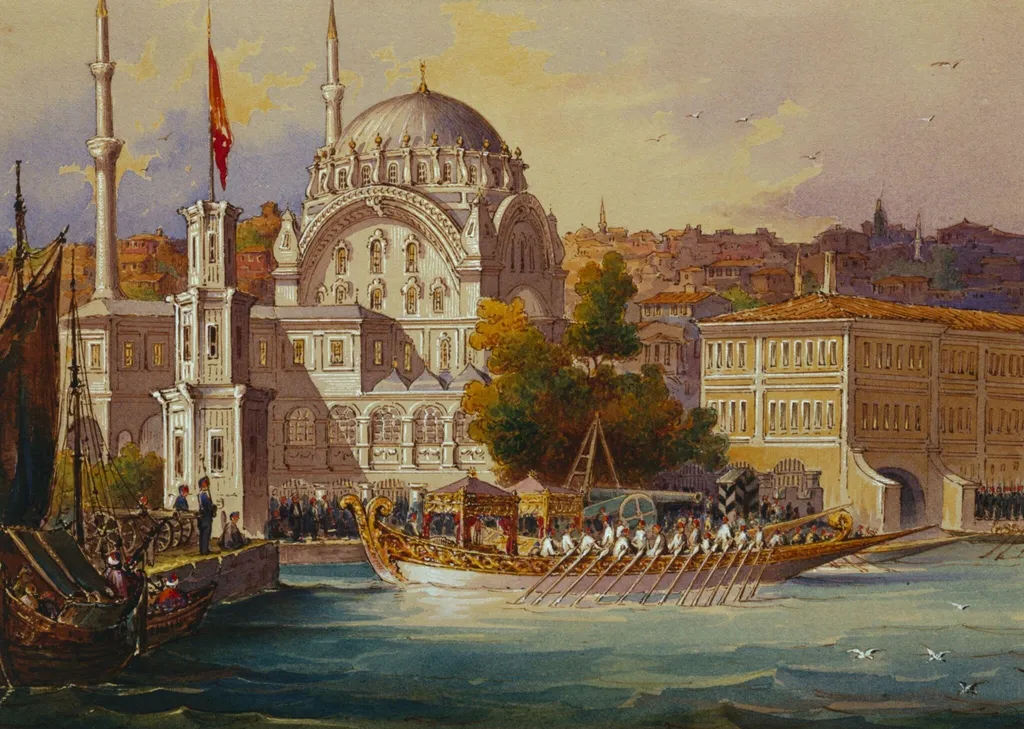
View of the Sultan's Barge in front of the Nusretiye Camii is a watercolor work on paper by the Orientalist artist Aloysius Rosarius Amadeus Raymondus Andreas Preziosi. It dates from 1846 and is held in the collection of the Victoria and Albert Museum. This watercolour depicts the Sultan’s ceremonial barge moored before the Nusretiye Mosque, constructed between 1822 and 1826.
About this work
It was named to celebrate the sultan's recent abolition of the rebellious janissary troops.
This watercolour is titled View of the Sultan's Barge in front of the Nusretiye Camii. It's a work from the Romanticism movement.
The Nusretiye Camii was built between 1822 and 1826 by Sultan Mahmud II. It was named to celebrate the sultan's recent abolition of the rebellious janissary troops.
The artist who created this work is part of a larger art historical context. To learn more, look up the movement: Romanticism.
Overview
This watercolour depicts the Sultan’s ceremonial barge moored before the Nusretiye Mosque, constructed between 1822 and 1826. The scene captures a moment of imperial presence in Istanbul’s urban landscape, framed by the mosque’s distinctive Baroque-inspired architecture. Created during the Romantic era, the work reflects a growing interest in documenting Ottoman life through detailed, atmospheric renderings, often aimed at European audiences curious about the East.
Subject & Meaning
The Sultan’s barge, adorned with gilded ornamentation, symbolizes imperial authority and ritual. Positioned before the Nusretiye Mosque—a structure erected to commemorate the dissolution of the Janissary corps—it visually links the Sultan’s military reform with his public visibility. The barge, rarely seen by outsiders, becomes a conduit between the secluded palace and the city, transforming a private vessel into a public emblem of sovereignty.
Technique & Style
Executed in watercolour, the piece employs delicate washes and precise linear detail to render the mosque’s domes, minarets, and the barge’s ornate woodwork. The lighting suggests a soft, diffused atmosphere, typical of Romantic sensibilities that favored mood over strict topographical accuracy. The composition draws the eye along the water’s surface, emphasizing the barge’s centrality while framing the mosque as a static, monumental backdrop.
History & Provenance
The Nusretiye Mosque was commissioned by Sultan Mahmud II to mark the 1826 abolition of the Janissaries, a pivotal moment in Ottoman modernization. The building, designed by the Armenian architect Kirkor Balyan, reflects European architectural influences acquired through his training in Paris. This watercolour likely originated from a European artist or traveler documenting Istanbul’s transformation, possibly as part of a broader collection of Orientalist works circulating in 19th-century Europe.
Context
The work emerges within the Romantic movement’s fascination with the exotic and the sublime, particularly in depictions of the Ottoman Empire. While European artists often portrayed the East as mysterious or decaying, this image presents a moment of controlled grandeur—linking imperial power, architectural innovation, and ceremonial spectacle. It aligns with a trend of visual documentation that sought to capture the Ottoman state’s evolving identity during a period of reform.
Legacy
As a record of Istanbul’s urban and political transformation, the watercolour contributes to a visual archive of Ottoman modernization. It preserves the aesthetic and symbolic language of Mahmud II’s reign, where architecture and ceremony were deployed to assert authority. Though not widely known today, such works helped shape European perceptions of the Ottoman Empire and remain valuable for understanding cross-cultural visual exchange in the 19th century.
Artist & collection
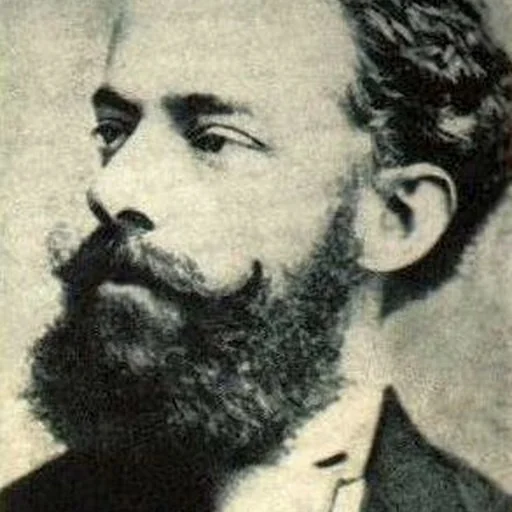
Artist
Aloysius Rosarius Amadeus Raymondus Andreas Preziosi
Amedeo Preziosi (2 December 1816 – 27 September 1882) was a Maltese painter and traveler known for his watercolours and prints of Constantinople, the Balkans, Ottoman Empire, and Romania.

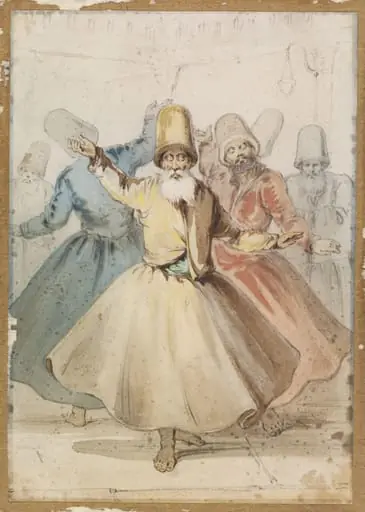
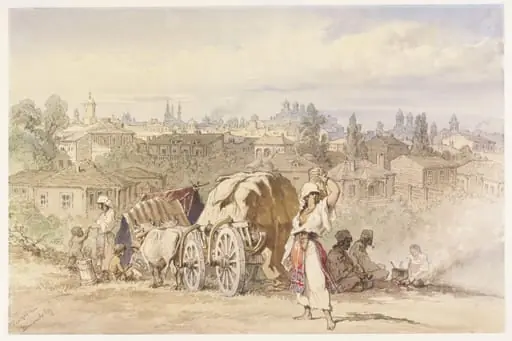
![Portrait of Trehem[?]Walid 'Abdullah, an Arab from Iraq, by Aloysius Rosarius Amadeus Raymondus Andreas Preziosi](https://artifactworldgallery.com/img/aloysius-rosarius-amadeus-raymondus-andreas-preziosi--portrait-of-trehem-walid-abdullah-an-arab-from-iraq--2476a3692d0929a5-w320.webp)
![A Seller of Milk-puddings [Mahallebi], by Aloysius Rosarius Amadeus Raymondus Andreas Preziosi](https://artifactworldgallery.com/img/aloysius-rosarius-amadeus-raymondus-andreas-preziosi--a-seller-of-milk-puddings-mahallebi--3da9fd2db017402d-w320.webp)
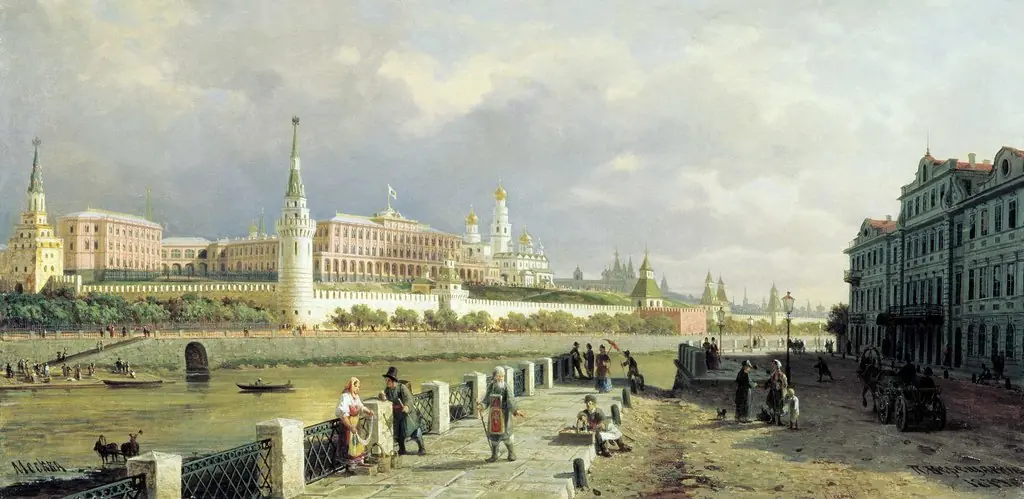 View of the Moscow Kremlin
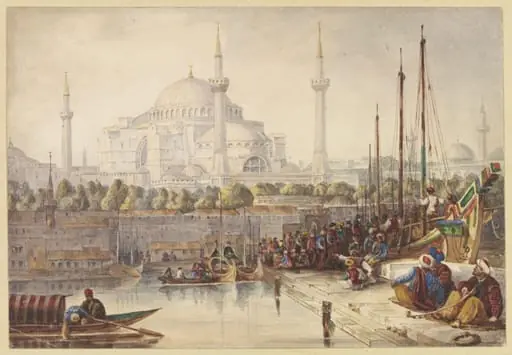 St.Sophia, from the Bosphorus
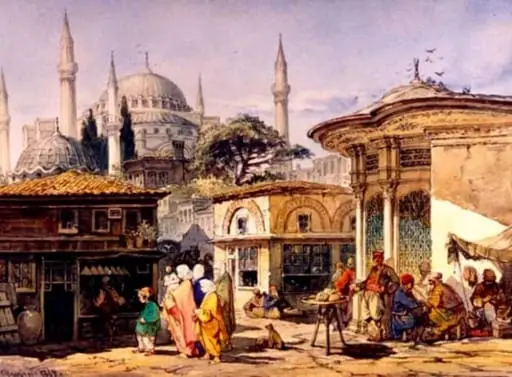 Stradă din Constantinopol
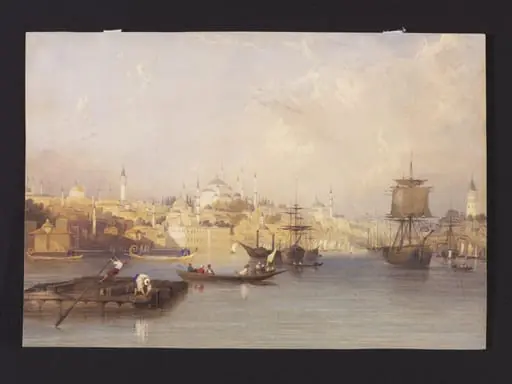 Constantinople. From the Entrance to the Golden Horn
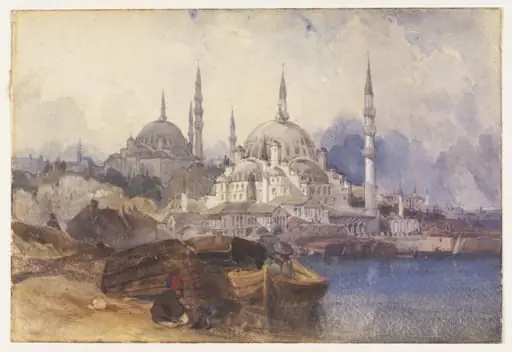 The Yeni Valide Camii and the Süleymaniye Mosque, with the Golden Horn in the forground
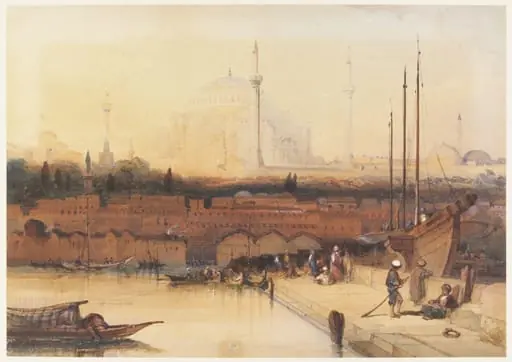 St. Sophia, Constantinople
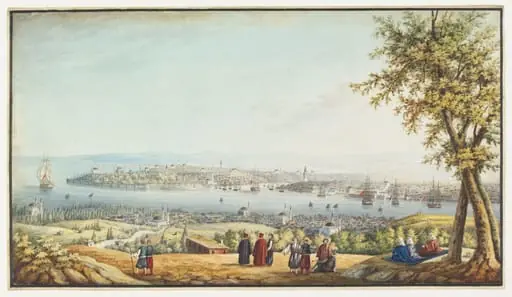 Constantinople and the Bosphorus from above Scutari
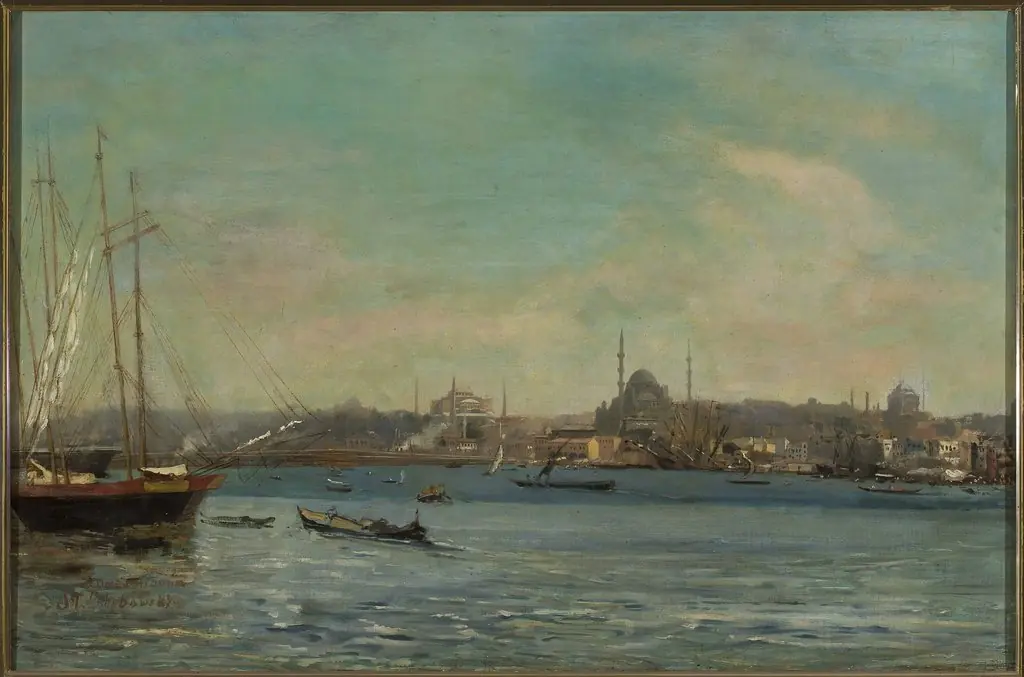 Panorama of Istanbul
 Vue des Turbé, ou Tombes Impériales