Artwork
Perseus and Andromeda
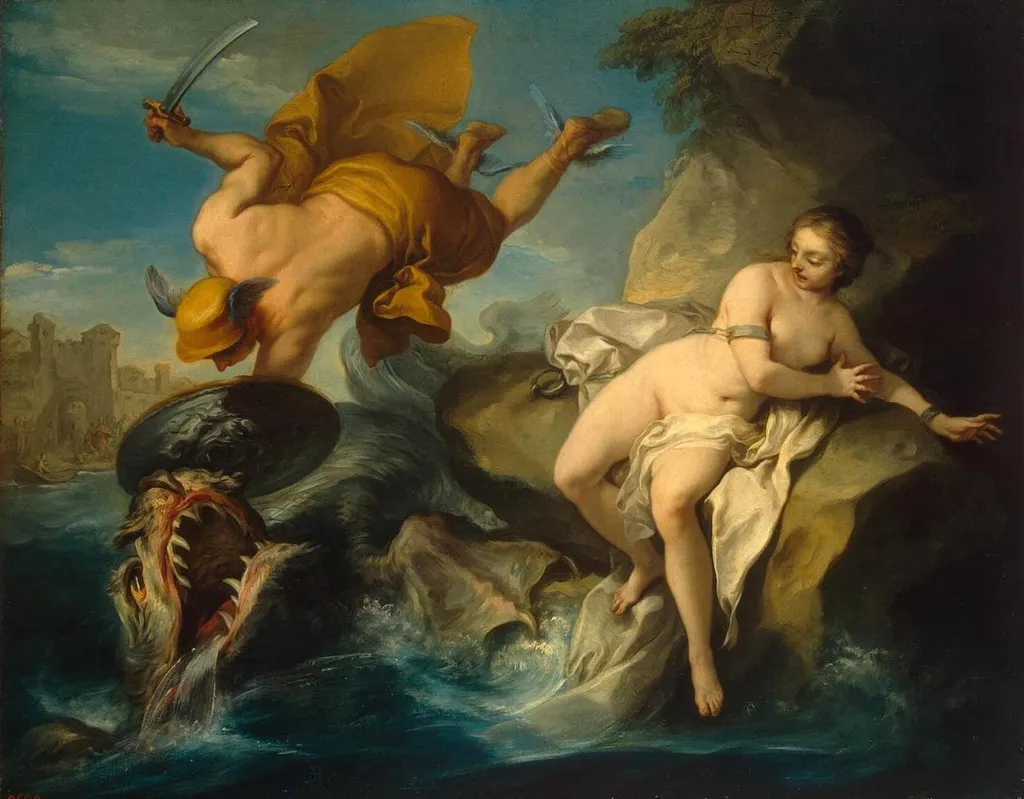
Perseus and Andromeda is an oil painting by Charles André van Loo. It dates from 1737 and is held in the collection of the Hermitage Museum.
About this work
Overview
Van Loo employs a Baroque-inspired dynamism, utilizing diagonal lines and dramatic chiaroscuro to heighten the tension of the rescue.
Charles André van Loo's 'Perseus and Andromeda,' executed in 1737, depicts the climactic moment from Ovid's Metamorphoses where the hero rescues the chained princess from a sea monster. The composition centers on Perseus, who stands dynamically atop the creature's back, his body twisted to strike with a sword in his right hand while his left leg extends for balance. He wears a distinctive yellow hat and a matching sash, contrasting with the dark, churning waters and the pale, vulnerable figure of Andromeda bound to the rock on the left. Van Loo employs a Baroque-inspired dynamism, utilizing diagonal lines and dramatic chiaroscuro to heighten the tension of the rescue. Created during the artist's early maturity, shortly after his return from Rome, this work demonstrates his mastery of the French academic tradition while embracing the theatricality favored by the Rococo sensibility. The painting establishes van Loo's reputation for handling complex mythological narratives with both anatomical precision and emotional intensity, foreshadowing his later success as a leading history painter at the French court.
Subject & Meaning
At the centre, Perseus stands atop the writhing creature, sword raised, his attire highlighted by a yellow hat and a matching sash. To his right, Andromeda sits upon a rocky outcrop, clothed in a simple white drape and a delicate bracelet, her gaze fixed on the saviour. The scene captures the rescue and the transition from peril to salvation.
Technique & Style
Van Loo employs a luminous palette, contrasting the warm yellows of the hero’s garments with the cool blues of sky and sea. The dynamic pose—left knee bent, right leg extended—creates a sense of movement, while the smooth rendering of flesh and the detailed rendering of the monster’s scales reflect the Rococo’s refined brushwork.
History & Provenance
Painted in the mid‑18th century, the work entered the Russian imperial collection and has remained in the State Hermitage Museum since. Its presence in the museum underscores the 18th‑century French interest in classical mythology and the cross‑cultural exchange between France and Russia during that period.
Artist & collection
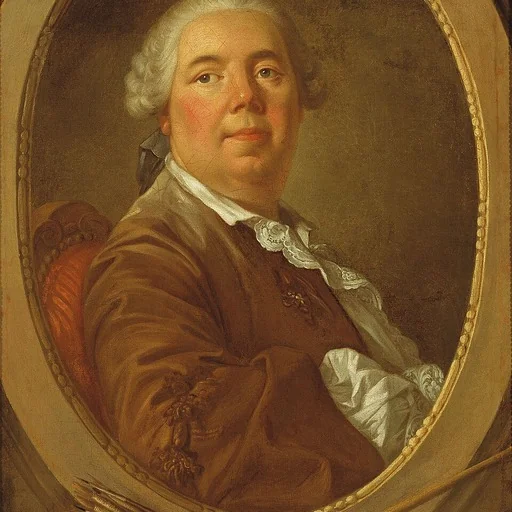
Artist
Carle or Charles-André van Loo (French pronunciation: ; 15 February 1705 – 15 July 1765) was a French painter, son of the painter Louis-Abraham van Loo, a younger brother of Jean-Baptiste van Loo and grandson of Jacob van Loo.