Artwork
Souhaits Souhaits au Gui Le Siecle Neuf (Best Wishes for the New Century)
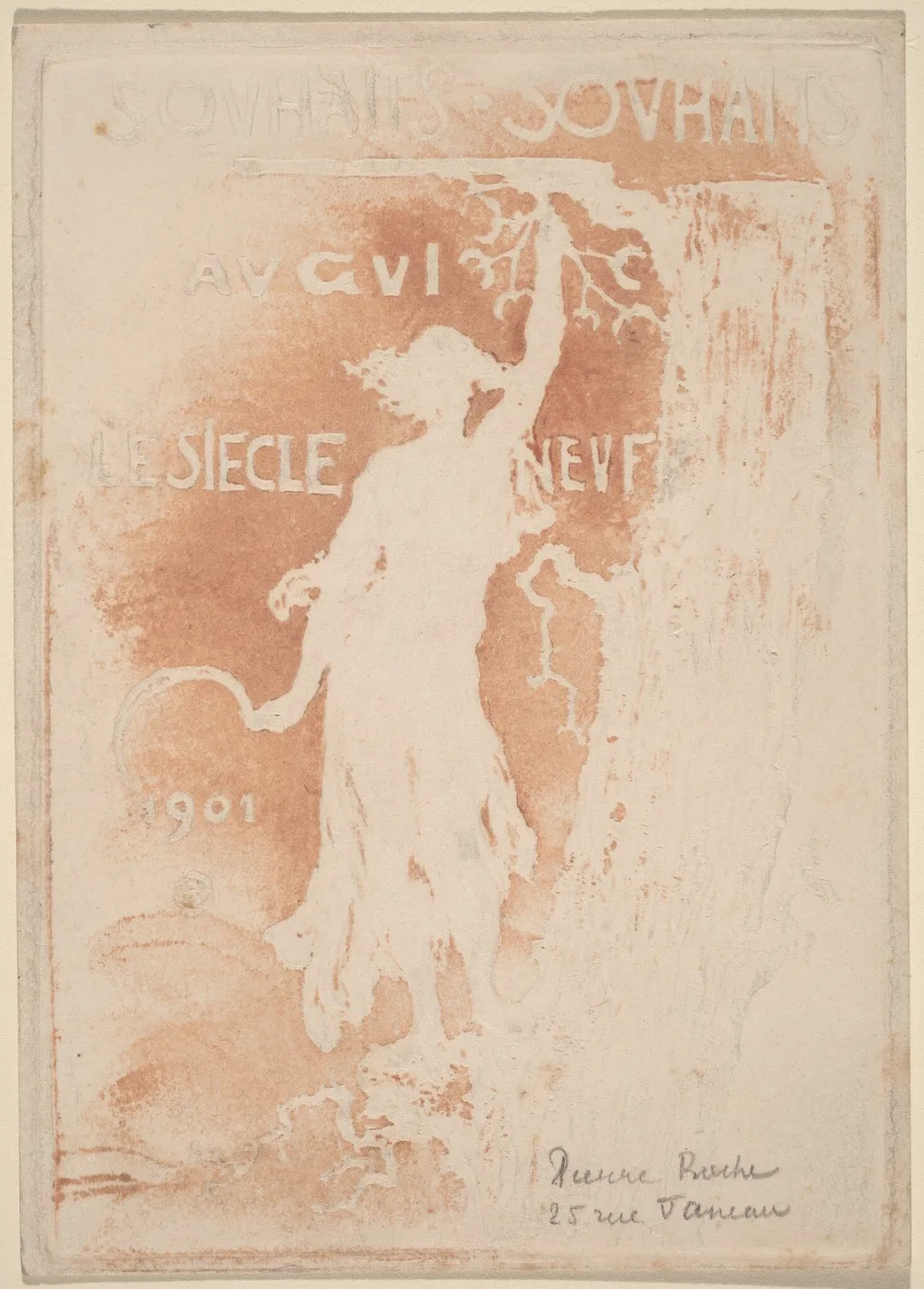
Souhaits Souhaits au Gui Le Siecle Neuf (Best Wishes for the New Century) is a print by Pierre Roche. It dates from 1901 and is held in the collection of the National Gallery of Art.
About this work
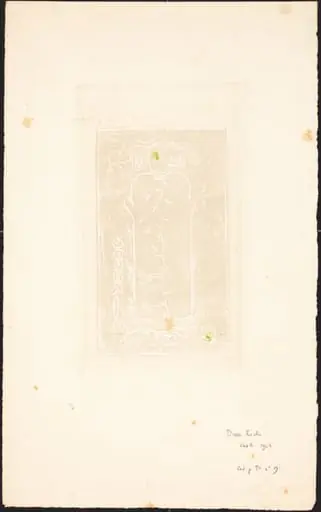
At the top, the words *"Souhaits Souhaits au Gui Le Siecle Neuf"* are printed in uneven letters, and the year "1901" appears in the corner.
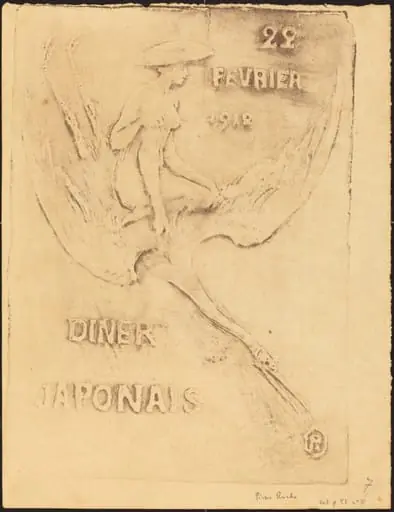
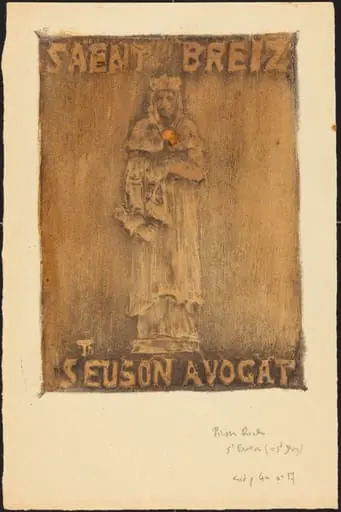
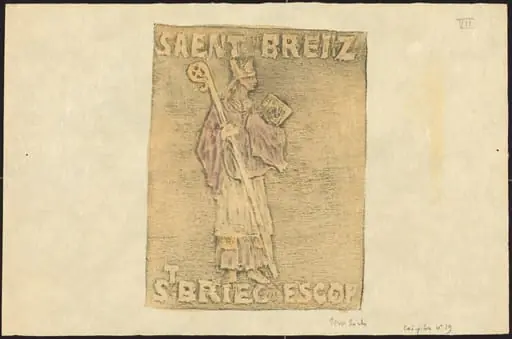
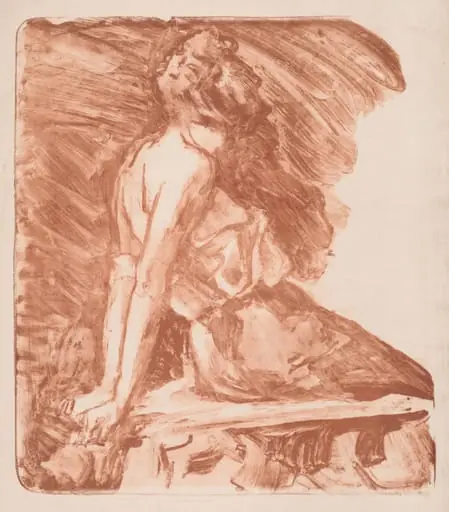
This print shows a faint red outline of a person standing with arms raised, like they’re holding something or reaching up. The background is mostly blank paper, but the figure is slightly blurred, as if drawn in a hurry. At the top, the words *"Souhaits Souhaits au Gui Le Siecle Neuf"* are printed in uneven letters, and the year "1901" appears in the corner.
The red color looks like it was rubbed into the paper—almost like a sketch left behind. This kind of printing, called gypsograph, was a cheap way to make copies back then.
If you like this style, check out the technique: chiaroscuro next to see how artists used light and shadow for drama.
Overview
Pierre Roche’s 1901 print *Souhaits Souhaits au Gui Le Siecle Neuf* is executed with a red gypsograph on wove paper. The image consists of a loosely rendered human figure with arms raised, its outline faint and slightly blurred, set against an otherwise empty sheet. The title and the date appear in uneven lettering at the top and corner, emphasizing the work’s informal, quickly produced character.
Subject & Meaning
The central figure, rendered in a single red line, suggests a gesture of offering or aspiration, resonating with the title’s wish for a new century. The minimal composition leaves the gesture open to interpretation, inviting viewers to contemplate personal or collective hopes associated with the turn of the twentieth century.
Technique & Style
Roche employed gypsography, a low‑cost printing method that transfers pigment by rubbing it into the paper surface. This technique yields a sketch‑like quality, evident in the uneven, hand‑drawn appearance of the figure and the irregular lettering. The use of a single red hue creates a stark visual contrast against the white paper, reinforcing the immediacy of the gesture.
History & Provenance
Born Pierre Henry Ferdinand Massignon in Paris, Roche trained under Alfred Roll at the Académie Julian (1873‑78) before exhibiting at the Paris Salon (1884‑89). Though primarily known as a sculptor, painter, ceramist, and medallist, his print work reflects the breadth of his artistic practice during a period of rapid change in French art at the turn of the century.
Context
The print emerges from the late‑19th and early‑20th‑century French milieu, a time when artists explored new media and affordable reproduction methods. Gypsography allowed creators like Roche to disseminate ideas quickly, aligning with broader trends toward democratizing art and responding to the cultural optimism surrounding the new century.
Artist & collection

Artist
Pierre Roche (Paris, 2 August 1855 – Paris, 18 January 1922), pseudonym of Pierre Henry Ferdinand Massignon, was a French sculptor, painter, ceramist and medallist.