Artwork
Venus and Vulcan
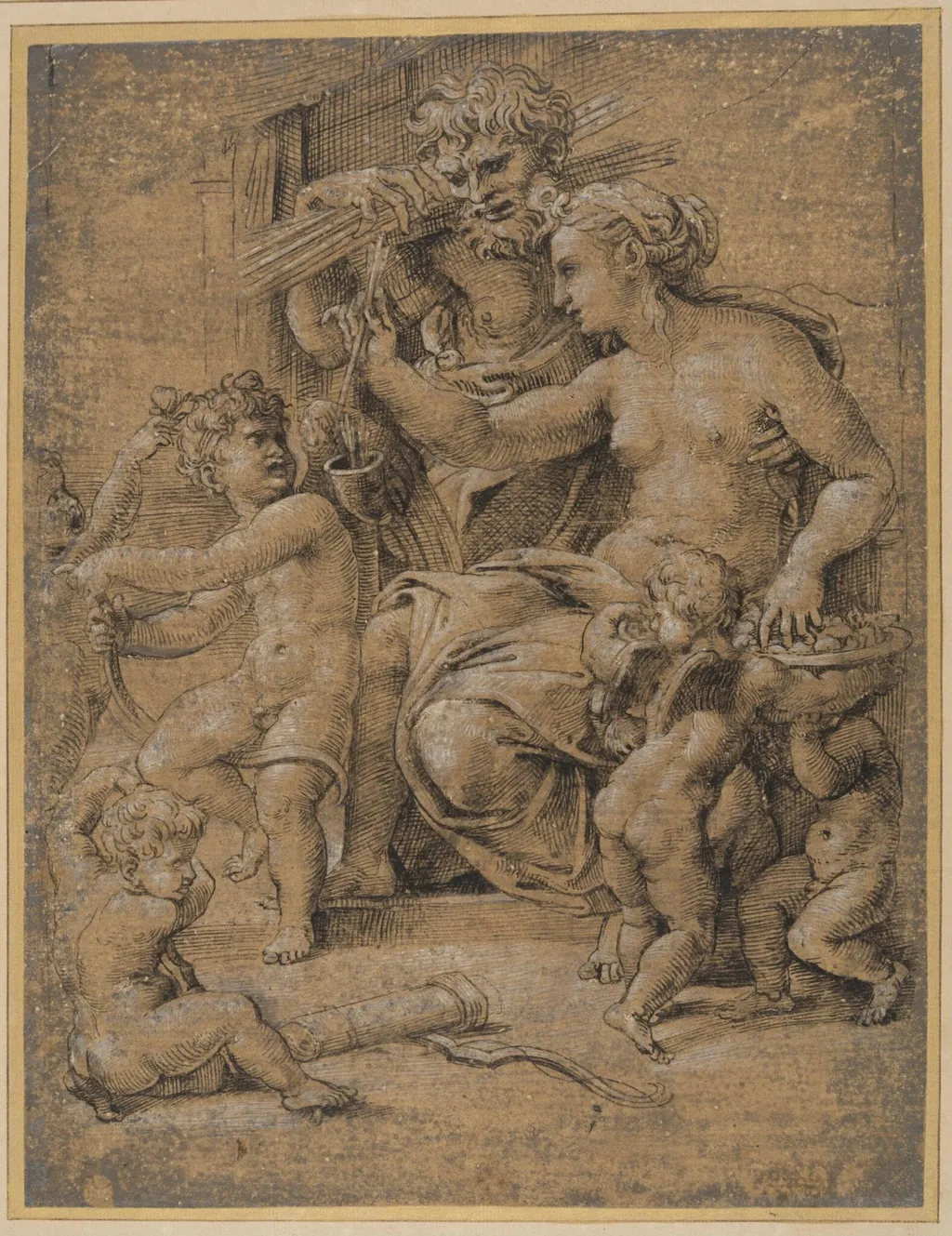
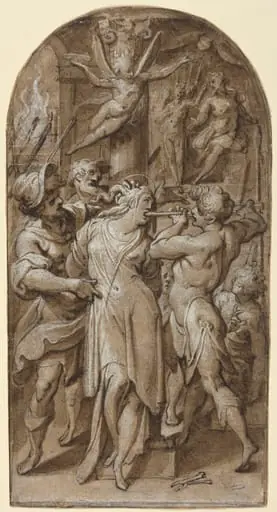
Venus and Vulcan is a drawing by Giulio Romano. It is held in the collection of the Victoria and Albert Museum.
About this work
Overview
The composition centers on two primary figures surrounded by playful putti, arranged in a balanced, hieratic manner typical of Mannerist sensibilities.
This ink and wash drawing by Giulio Romano, dated around 1550, portrays a mythological encounter between Venus and Vulcan. Executed with precise linework and subtle tonal gradations, it reflects the artist’s mastery of draftsmanship. The composition centers on two primary figures surrounded by playful putti, arranged in a balanced, hieratic manner typical of Mannerist sensibilities. The work belongs to a tradition of mythological studies favored in Renaissance court circles.
Subject & Meaning
The scene illustrates Venus, goddess of love, seated in regal repose while Vulcan, her husband and god of fire, stands behind her in quiet observation. The presence of putti suggests themes of domestic harmony or the interplay of desire and craftsmanship. Though the specific narrative is not drawn from a known literary source, the pairing evokes classical associations between beauty and labor, softened by the children’s innocent activity.
Technique & Style
Romano employed fine pen lines and layered washes to model form and texture with remarkable delicacy. The flowing drapery of Venus contrasts with Vulcan’s more rigid attire, enhancing their symbolic roles. Putti are rendered with lively, varied gestures, adding movement to the static composition. The drawing’s precision and attention to anatomical detail reflect Romano’s training under Raphael and his later Mannerist tendencies toward expressive refinement.
History & Provenance
The drawing entered the collection of J. Richardson Sr. in the 18th century and remained in the family through his son, J. Richardson Jr. It was acquired by the British Museum in 1886 from the latter’s estate. Its continuous private ownership until then suggests it was valued as a refined study rather than a public display piece, likely kept within elite artistic circles for its technical excellence.
Context
Created during Romano’s later years in Mantua, the drawing aligns with his role as court artist to the Gonzaga family, where mythological themes were favored for their intellectual and aesthetic appeal. Such studies often served as preparatory works for frescoes or tapestries. The emphasis on elegant figures and controlled emotion reflects the Mannerist shift away from High Renaissance harmony toward more stylized, introspective compositions.
Legacy
Though not widely exhibited, the drawing remains a significant example of Romano’s graphic output. Its preservation in a major public collection underscores its importance as a document of 16th-century draftsmanship. It contributes to scholarly understanding of how mythological subjects were interpreted in private, non-monumental formats during the Mannerist period.
Artist & collection
Artist
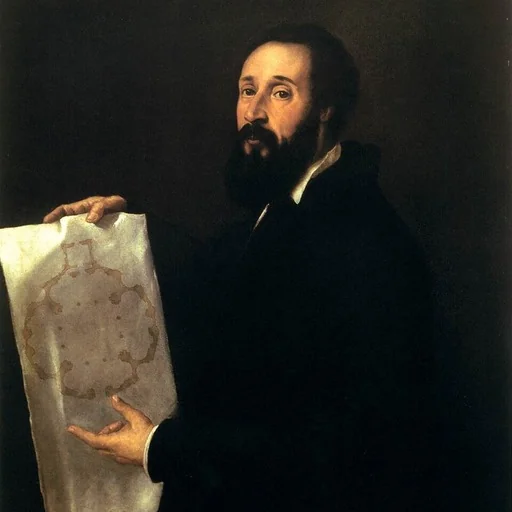
Giulio Pippi (c. 1499 – 1 November 1546), known as Giulio Romano (US: JOOL-yoh rə-MAH-noh( Italian: ) and sometimes known in French as Jules Romain, was an Italian painter and architect. He was a pupil of Raphael, and…

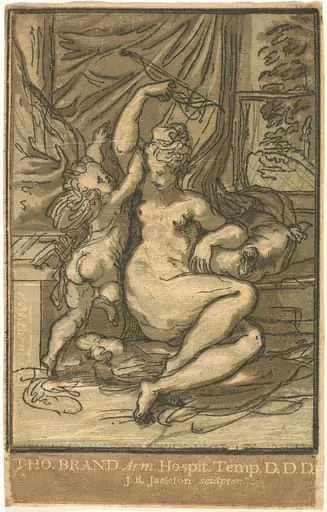 Venus and Cupid with a Bow
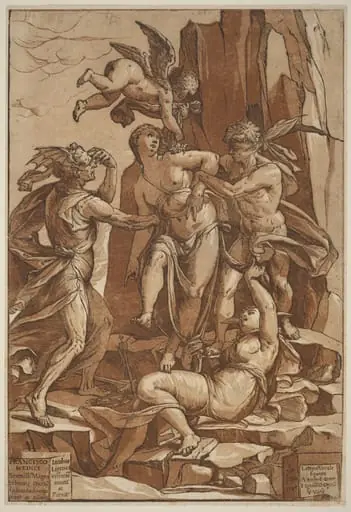 Allegory of Virtue
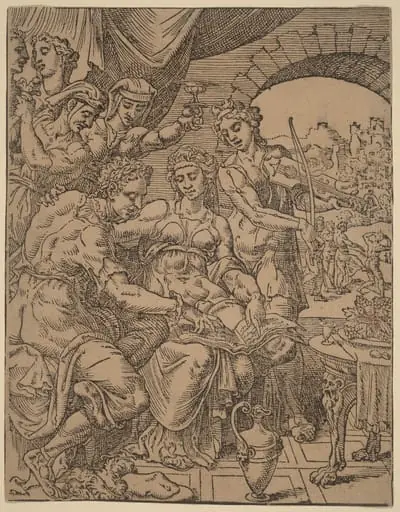 The Prodigal Son Squandering His Inheritance on Harlots
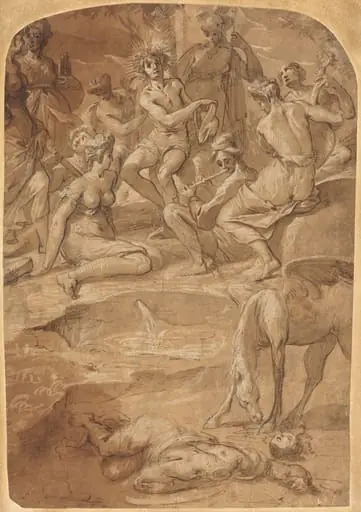 Apollo and the Muses on Mount Parnassus
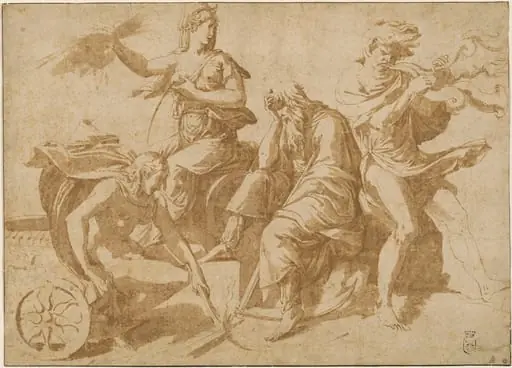 The Four Elements
![Temporalis Aeternitas [Second Version], by Giovanni Benedetto Castiglione](https://artifactworldgallery.com/img/giovanni-benedetto-castiglione--temporalis-aeternitas-second-version--d9ecb26010022a5a-w320.webp) Temporalis Aeternitas [Second Version]
Temporalis Aeternitas [Second Version]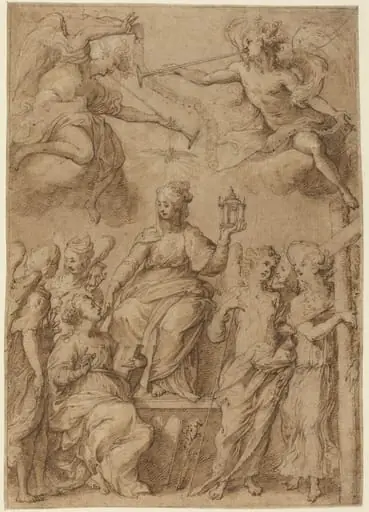 Ecclesia Surrounded by Angels Holding the Instruments of the Passion
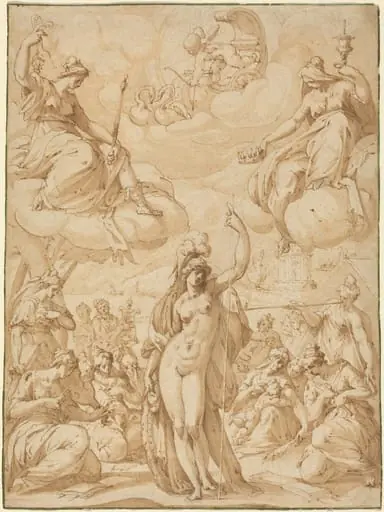 Allegory of Minerva as the Head of the Muses
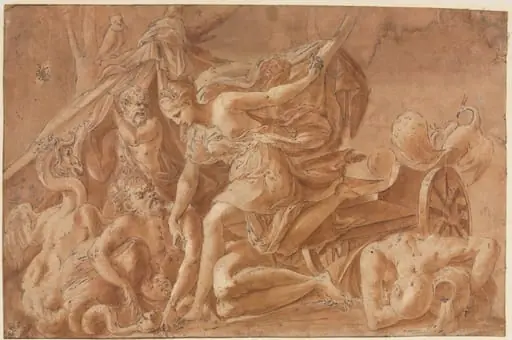 Copy after Primaticcio's Juno Awakening Sleep
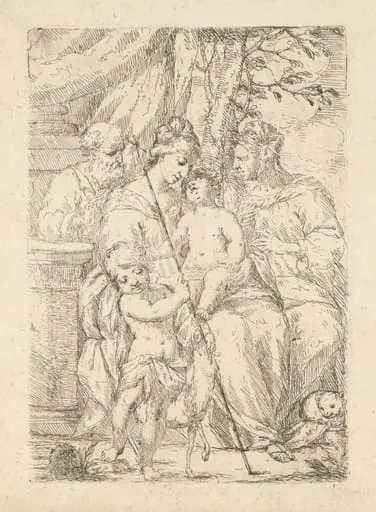 Holy Family with Saint Elizabeth
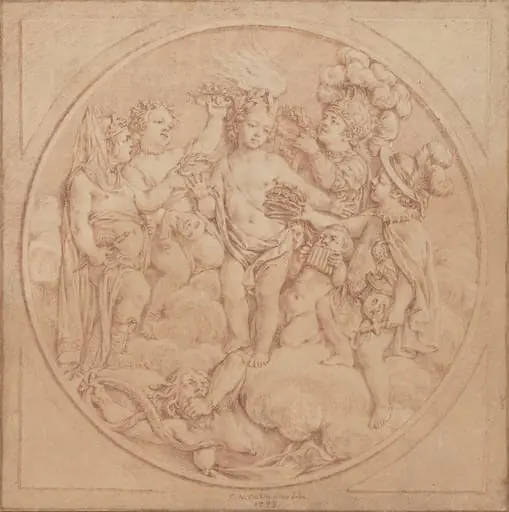 Allegory of Fame
 The Martyrdom of Saint Apollonia