Artwork
The Crescent, Buxton
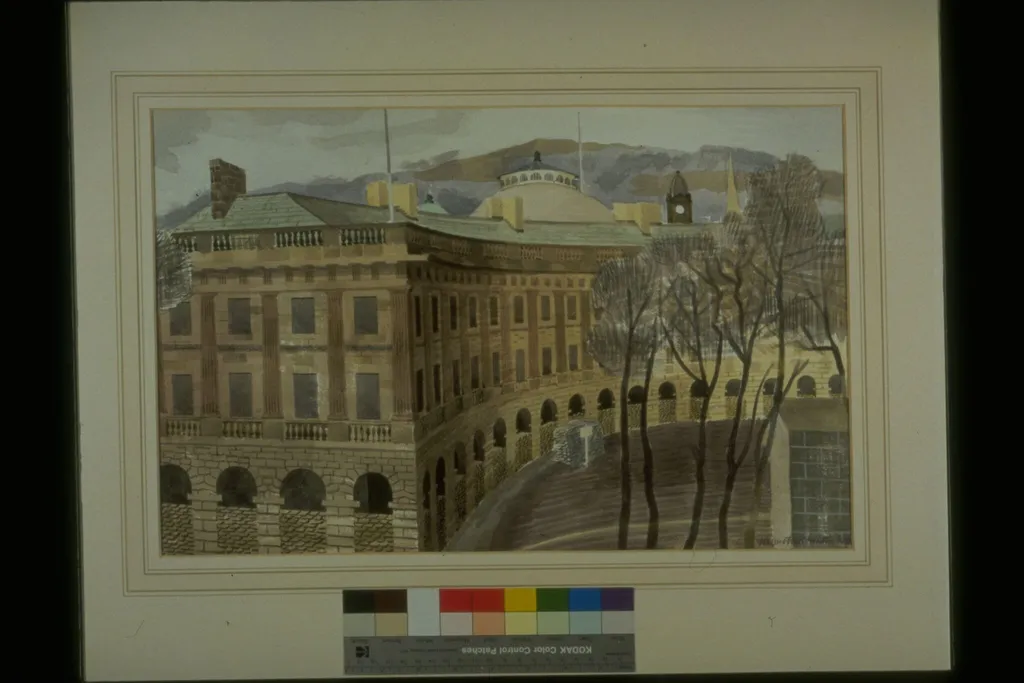
The Crescent, Buxton is a watercolor work on paper by Kenneth Rowntree. It dates from 1940 and is held in the collection of the Victoria and Albert Museum.
About this work
Overview
Kenneth Rowntree’s watercolour captures The Crescent in Buxton from a high, wooded viewpoint, framing the building within a natural landscape.
Kenneth Rowntree’s watercolour captures The Crescent in Buxton from a high, wooded viewpoint, framing the building within a natural landscape. The composition emphasizes the structure’s imposing form against rolling hills and dense trees. Rendered in delicate washes, the work reflects the quiet urgency of wartime documentation, preserving a moment when the building’s function had shifted from leisure to defense.
Subject & Meaning
The Crescent, originally a Georgian spa building, is shown with sandbags blocking its ground-floor arcades, indicating its repurposing during the Second World War. This detail transforms the architecture from a symbol of genteel retreat into one of practical adaptation. The painting quietly conveys how civilian spaces were absorbed into the war effort, reflecting broader societal shifts without overt commentary.
Technique & Style
Rowntree employs transparent watercolour washes to suggest texture and depth, with precise lines defining the building’s columns and dome. The foreground trees are loosely sketched, their forms suggested rather than detailed, allowing the architecture to dominate. Light falls softly across the roof’s green patina and stone walls, enhancing the structure’s solidity while the distant hills fade into muted tones.
History & Provenance
Created in 1940 as part of the 'Recording Britain' project, this work was commissioned to preserve visual records of the British landscape amid wartime disruption. The initiative, led by the Victoria and Albert Museum, enlisted artists to document buildings and scenes at risk of destruction or change. Rowntree’s watercolour entered the museum’s collection as part of this systematic effort to archive national heritage.
Context
During the Second World War, many historic buildings in Britain were requisitioned for military or civil defense use. The Crescent’s sandbagged arcades reflect this common practice, turning elegant public spaces into functional strongholds. Rowntree’s choice to depict the site from above underscores the tension between natural terrain and human architecture, a theme central to the 'Recording Britain' project’s mission.
Legacy
The painting remains a key example of the 'Recording Britain' collection, valued for its unembellished observation of wartime transformation. It contributes to a broader visual archive that documents how ordinary places adapted under extraordinary circumstances. Today, it is studied not for aesthetic grandeur but for its historical testimony to resilience and change.
Artist & collection
Artist
Kenneth Rowntree painted quiet British places in watercolour around 1940, from barn-stacked Essex fields to the carved oak pews of Caernarvonshire chapels.

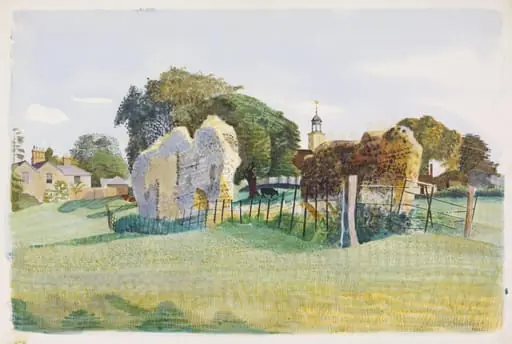 View of the Ruins of the Cloister, the Belfry of St. Mary's Church, and the Vicarage, Tilty
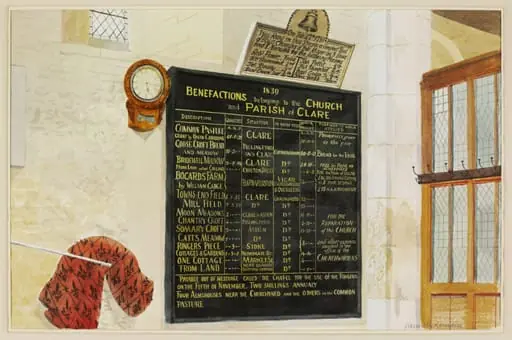 The Bellringer's Chamber, SS. Peter and Paul Church, Clare
 Detail of Ceiling at Gwydir Uchar Chapel, Llanrwst, Caernarvonshire
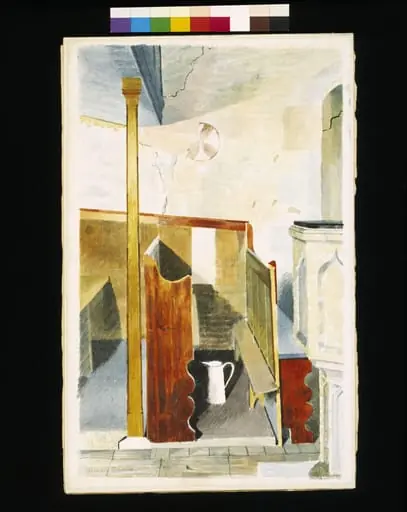 Interior of SS Peter and Paul, Little Saling, Essex
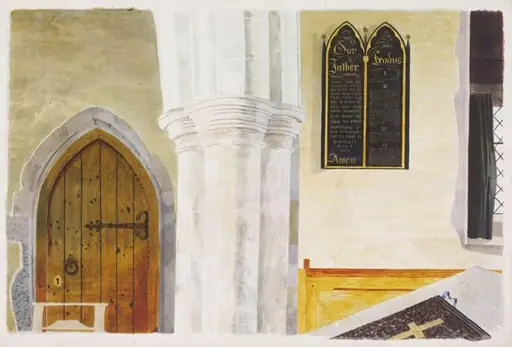 Interior of the Church of St. Mary the Virgin, Lindsell
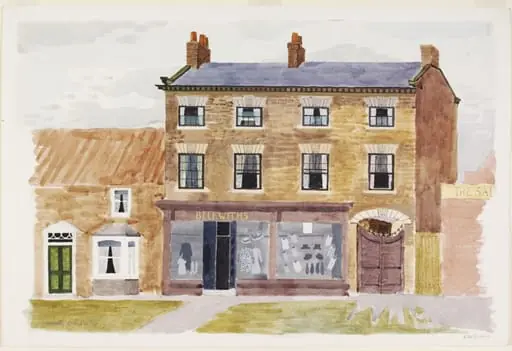 House at Easingwold
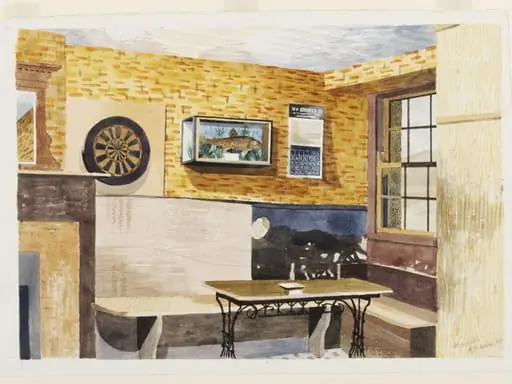 The Smoke Room, Ashopton Inn
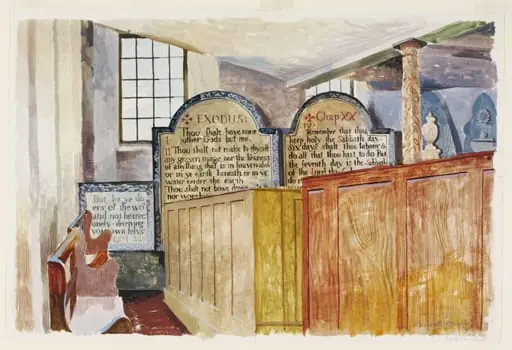 Pews in St Mary's Church, Whitby
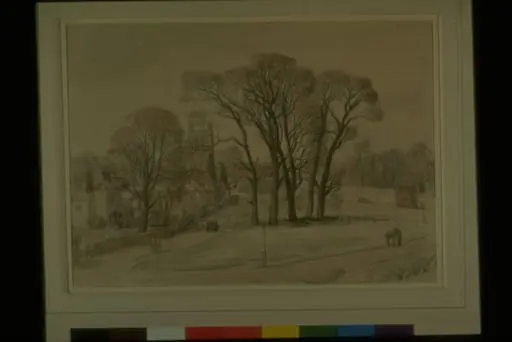 Long Melford Green on a Frosty Morning, Suffolk
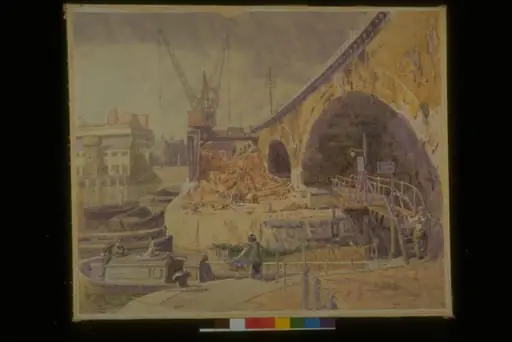 Regent's Canal Docks, Stepney, London
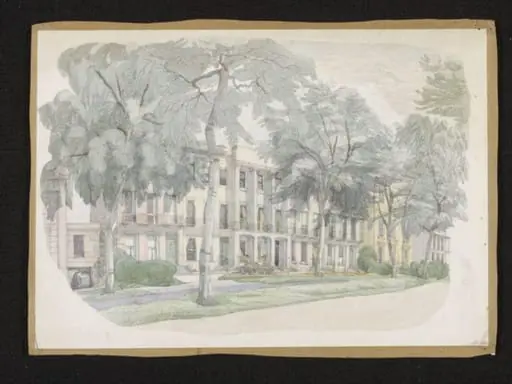 View of Regency terrace with large trees in front
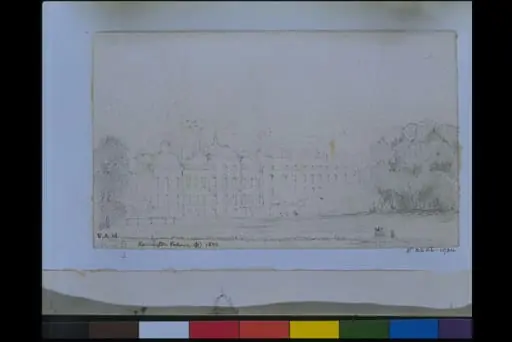 Kensington Palace
![North Gate [by Thomas Harrison], Chester, by Causer](https://artifactworldgallery.com/img/causer--north-gate-by-thomas-harrison-chester--aa1b0a0e4cef52c8-w320.webp) North Gate [by Thomas Harrison], Chester
North Gate [by Thomas Harrison], Chester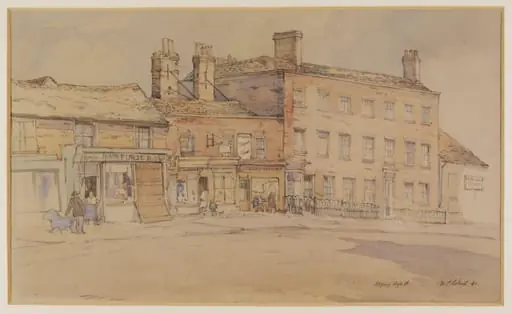 Epping High Street
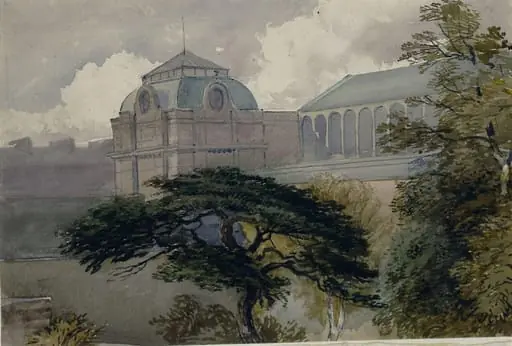 View of the exhibition buildings of 1862
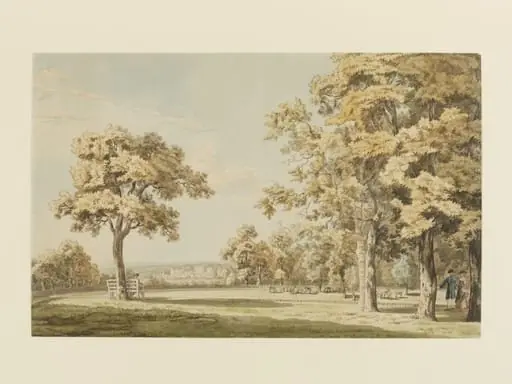 Windsor Castle from the Great Park, near the End of the Long Walk
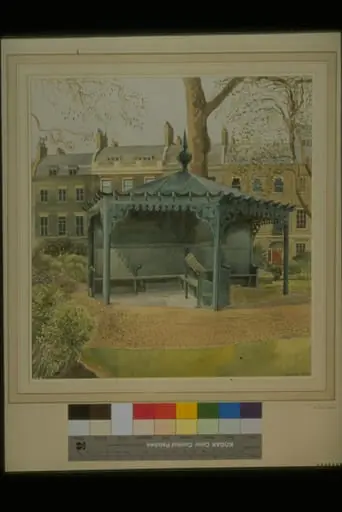 The Shelter, Bedford Square, London, WC1
 The Stour at Blandford
 Burley-on-the-Hill
 The Martello Tower, Folkestone, Kent