Artwork
The Standard Bearer
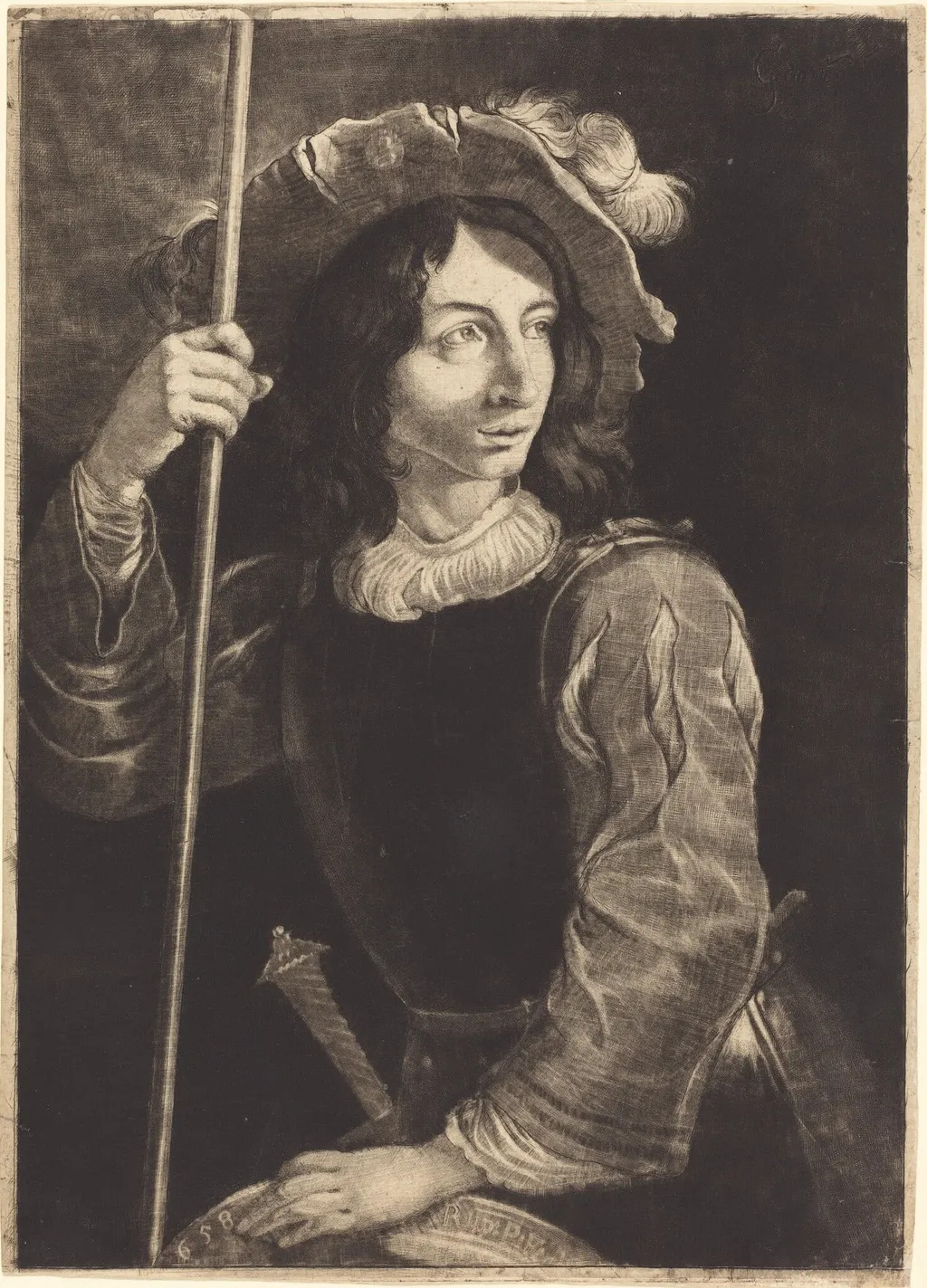
The Standard Bearer is an ink print by the Baroque artist Prince Rupert of the Pfalz. It dates from 1658 and is held in the collection of the National Gallery of Art.
About this work
Overview
The Standard Bearer is a mezzotint print created by Rupert of the Pfalz, Prince, in 1658. The work depicts a youthful figure holding a staff, characterized by a somber expression and meticulously rendered lighting effects.
Subject & Meaning
The subject, dressed in a ruffled shirt and loose coat, exudes a sense of gravity, underscored by their serious expression and poised demeanor. The staff they hold implies a position of responsibility or honor, though the specific context or identity of the figure remains ambiguous.
Technique & Style
Executed in mezzotint, the print showcases deep shadows and smooth shading, techniques hallmark of the medium. The pronounced chiaroscuro enhances the figure's facial features, a stylistic choice common in 17th-century prints, drawing focal attention to the subject's countenance.
History & Provenance
Created in 1658 by Rupert of the Pfalz, Prince, the print's historical context and subsequent ownership history are not detailed in available information.
Context
The Standard Bearer reflects the artistic preferences of its time, particularly in its use of chiaroscuro, a lighting technique that was widely employed in Baroque art to create dramatic effects.
Legacy
While specific influences or impacts of The Standard Bearer on later art are not readily documented, it remains a representative example of 17th-century mezzotint technique and the enduring appeal of chiaroscuro in printmaking.
Artist & collection