Artwork
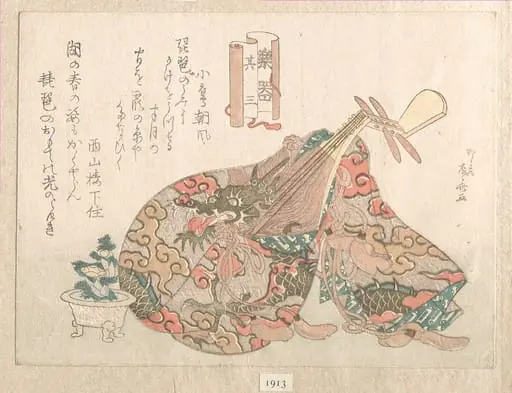
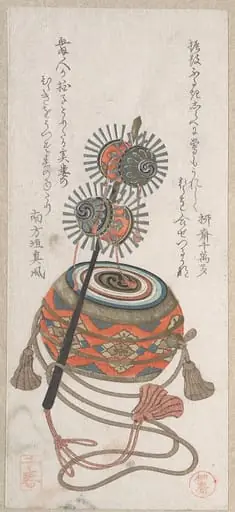
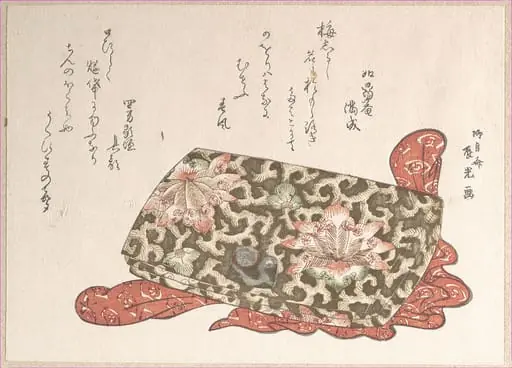
「牛和歌十二段矢矧長者」|Dance Robe and Koto (Zither) Representing the Wealthy Man of Yahagi from the Jōruri Play Ushiwaka (Minamoto no Yoshitsune)
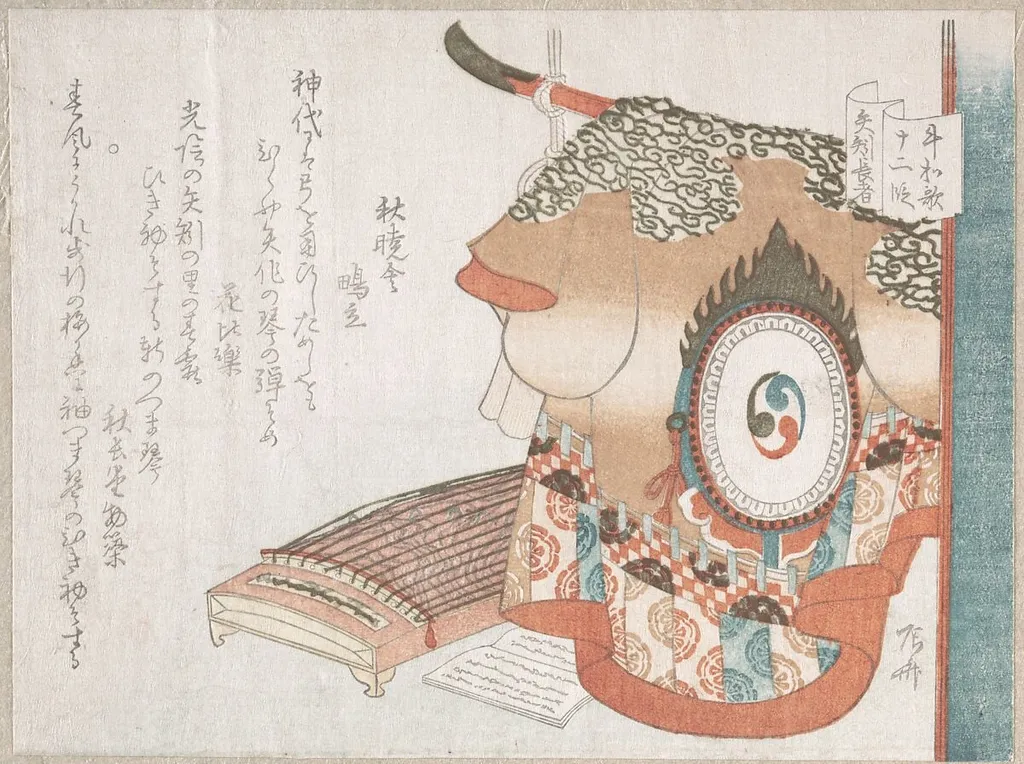
「牛和歌十二段矢矧長者」|Dance Robe and Koto (Zither) Representing the Wealthy Man of Yahagi from the Jōruri Play Ushiwaka (Minamoto no Yoshitsune) is an ink print by the Romanticist artist Ryūryūkyo Shinsai. It dates from 1810 and is held in the collection of the Metropolitan Museum of Art.
About this work
The print is a beautiful example of Japanese art from the early 19th century, and it would be interesting to learn more about the artist, Ryūryūkyo Shinsai.
This image is a woodblock print depicting a man in a colorful robe, adorned with a pattern of circles and a large, round design on his back. He is shown in profile, facing left, with a koto (zither) placed in front of him. The man's hair is styled in a distinctive manner, and he wears a horn-like object on his head.
The print features a range of colors, including red, blue, and brown, which are used to create a sense of depth and texture. The overall effect is one of elegance and refinement, suggesting that the man is a member of the wealthy or aristocratic class.
The print is a beautiful example of Japanese art from the early 19th century, and it would be interesting to learn more about the artist, Ryūryūkyo Shinsai.
Overview
This woodblock print, created around 1810 by Ryūryūkyo Shinsai, is one of a series of surimono—luxury prints commissioned for special occasions. It depicts a figure from the jōruri play Ushiwaka, associated with the wealthy man of Yahagi. Rendered in ink and color on paper, the piece belongs to a small album, reflecting its intimate, refined purpose rather than mass circulation.
Subject & Meaning
The figure represents a wealthy patron from the Ushiwaka narrative, identified by his distinctive headpiece and elaborate robe. The koto before him signals his cultural refinement and connection to courtly arts. The circular motifs on his garment may allude to wealth or cosmic order, while his profile stance and poised posture convey dignity and quiet authority, aligning with the idealized aristocratic persona in late Edo-period theater.
Technique & Style
The print employs fine linework and layered color washes to suggest texture and depth, typical of surimono craftsmanship. Subtle gradients in red, blue, and brown enhance the robe’s richness without overwhelming detail. The composition is restrained, focusing attention on the figure and instrument, with negative space reinforcing stillness. The precision of the carving and printing reflects the high standards of private commissions for connoisseurs.
History & Provenance
Created in the early 19th century, the print was likely produced for a small circle of theater enthusiasts or wealthy patrons. It entered the collection of The Metropolitan Museum of Art as part of a larger group of surimono, preserving its original context as a collectible object. Its survival in good condition suggests careful handling and appreciation by successive owners over two centuries.
Context
Surimono emerged as a niche art form among literati and kabuki patrons, blending poetry, performance, and visual design. This print reflects the popularity of jōruri narratives in Edo-period culture, where wealthy figures were idealized as patrons of the arts. Unlike commercial prints, surimono emphasized artistic experimentation and personal symbolism, often tied to seasonal or theatrical themes.
Legacy
As a representative of surimono, this print exemplifies the convergence of literary, musical, and visual culture in early 19th-century Japan. Though not widely known outside specialist circles, it contributes to understanding how elite audiences engaged with theater through intimate, finely crafted objects. Its preservation allows continued study of Edo-period aesthetics beyond mainstream ukiyo-e.
Artist & collection

 Untitled
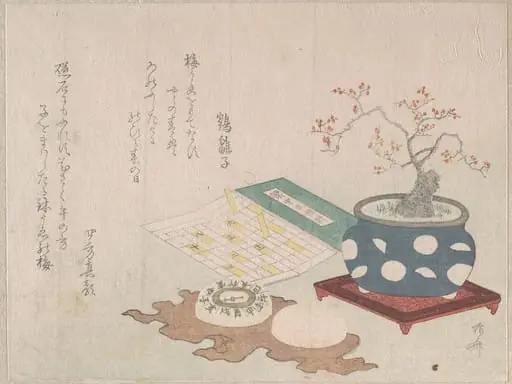 鉢梅、懐中日時計、羅針盤|Bonsai Plum, Compass, and Pocket Sundial with Design of Calendar, from Spring Rain Surimono Album (Harusame surimono-jō, vol. 3)
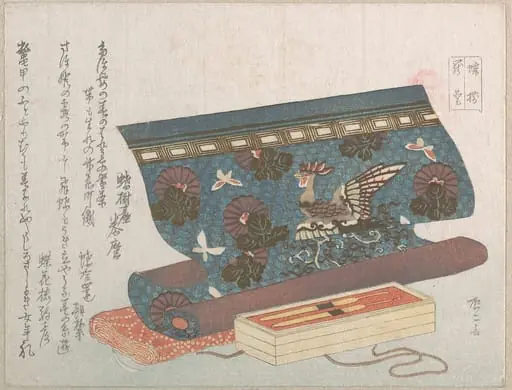 『蝶揃・寵愛』帯と簪|Roll of Cloth for an Obi and Tortoise-shell Hair Ornaments (“Presents for One’s Beloved”), from the Butterfly Series, from Spring Rain Surimono Album (Harusame surimono-jō, vol. 3)
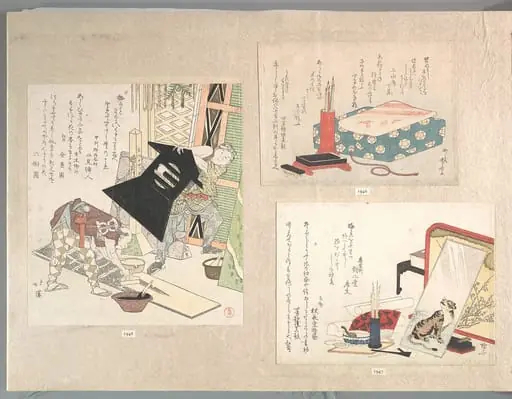 衝立、虎図、文具一式|Desk Screen, Writing Set, Painting of Tiger, and Mounting Paraphernalia, from Spring Rain Surimono Album (Harusame surimono-jō, vol. 1)
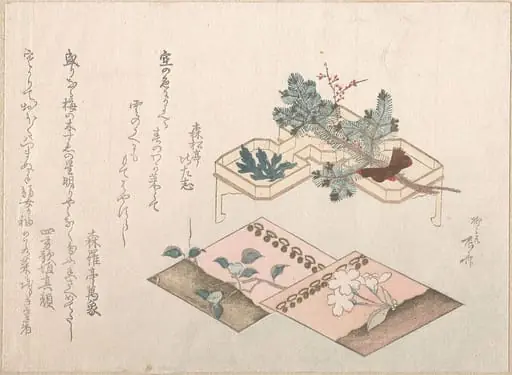 『春雨集』 摺物帖柳々居辰斎画 若松|Spring Rain Collection (Harusame shū), vol. 2: Pine Shoots and Accoutrements for New Year’s Celebrations
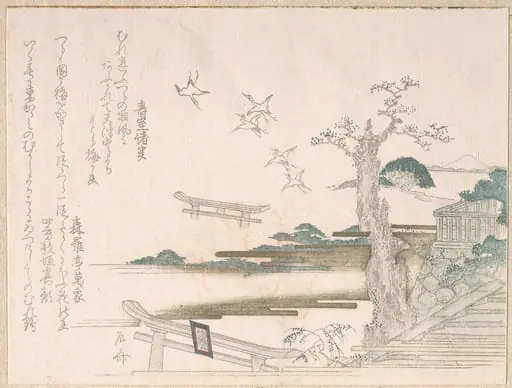 『春雨集』 摺物帖柳々居辰斎画 鎌倉の鶴岡八幡宮に鶴|Spring Rain Collection (Harusame shū), vol. 2: Cranes at Tsurugaoka Hachimangō Shrine in Kamakura
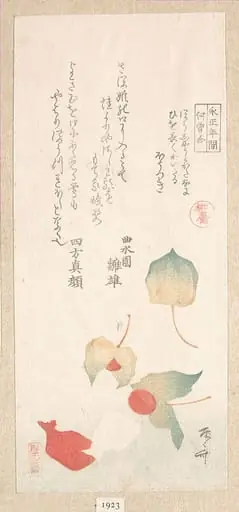 Untitled
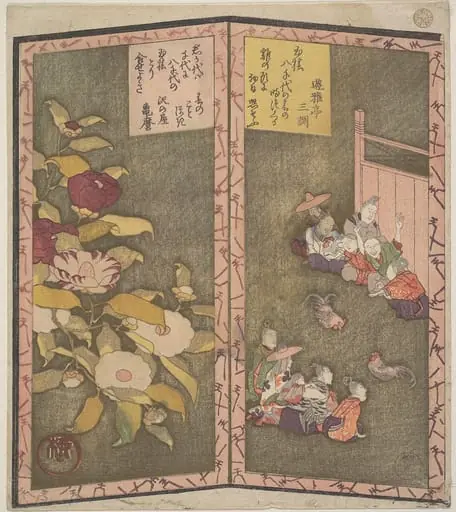 Untitled