Artwork
柳々居辰斎画 子春 嫁入の具『春雨集』 摺物帖|Accoutrements for a Bride, from the Spring Rain Collection (Harusame shū), vol. 1
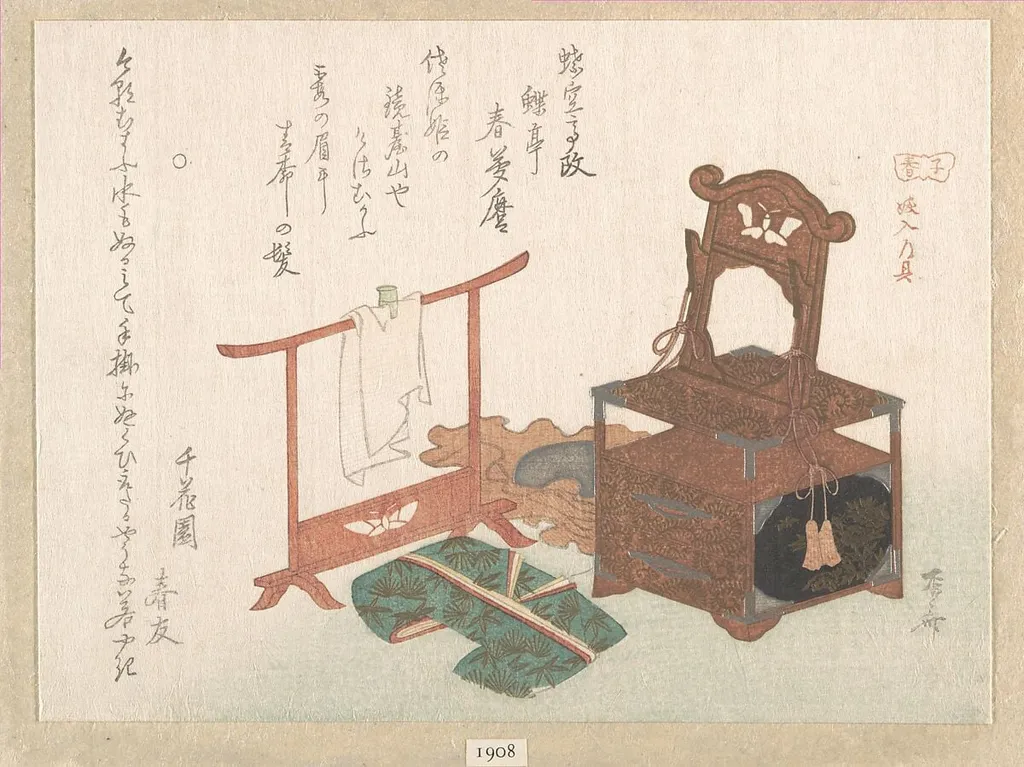
柳々居辰斎画 子春 嫁入の具『春雨集』 摺物帖|Accoutrements for a Bride, from the Spring Rain Collection (Harusame shū), vol. 1 is an ink print by the Romanticist artist Ryūryūkyo Shinsai. It dates from 1816 and is held in the collection of the Metropolitan Museum of Art. Accoutrements for a Bride, from the Spring Rain Collection (Harusame shū), vol.
About this work
Overview
Accoutrements for a Bride, from the Spring Rain Collection (Harusame shū), vol. 1, is a woodblock print (surimono) by Ryūryūkyo Shinsai, dated circa 1816. The work is part of The Metropolitan Museum of Art's collection.
Subject & Meaning
The print depicts a serene, traditionally furnished Japanese room preparing for a bride's arrival. Elements include a high-backed wooden chair, a low table with drawer, a stand with draped white cloth, and a green leaf-patterned kimono on the floor. Japanese writing adorns the wall, evoking an atmosphere of understated elegance and readiness for the bride's new life.
Technique & Style
Executed as a surimono woodblock print, the piece showcases the artist's use of ink and color on paper. The composition's simplicity and the selective use of pattern (notably the kimono) reflect the restrained aesthetic often associated with Japanese domestic scenes of the period.
History & Provenance
Created around 1816 by Ryūryūkyo Shinsai, the print is now housed at The Metropolitan Museum of Art, though the full provenance history prior to its acquisition is not detailed here.
Context
This work belongs to the broader context of early 19th-century Japanese woodblock printing, specifically the surimono genre, which often featured intricate designs and was typically used for special occasions or as gifts.
Legacy
While specific influence or notable exhibitions of this piece are not highlighted, it contributes to the broader understanding and appreciation of Ryūryūkyo Shinsai's oeuvre and the surimono print tradition within Japanese art history.
Artist & collection

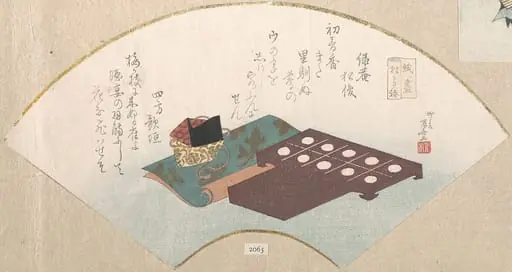 Untitled
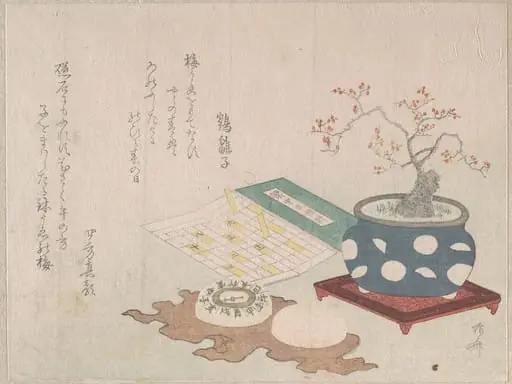 鉢梅、懐中日時計、羅針盤|Bonsai Plum, Compass, and Pocket Sundial with Design of Calendar, from Spring Rain Surimono Album (Harusame surimono-jō, vol. 3)
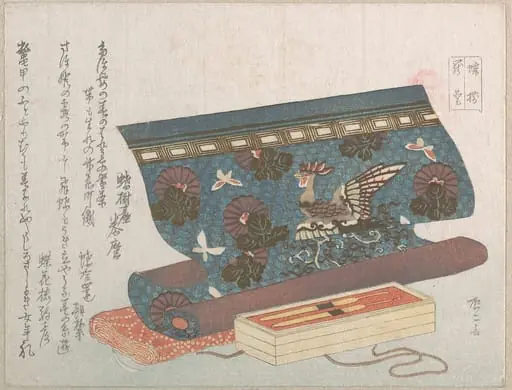 『蝶揃・寵愛』帯と簪|Roll of Cloth for an Obi and Tortoise-shell Hair Ornaments (“Presents for One’s Beloved”), from the Butterfly Series, from Spring Rain Surimono Album (Harusame surimono-jō, vol. 3)
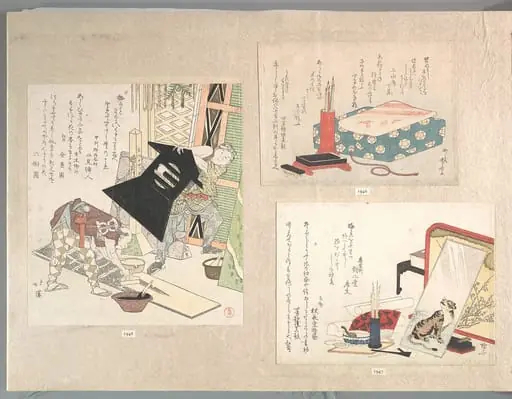 衝立、虎図、文具一式|Desk Screen, Writing Set, Painting of Tiger, and Mounting Paraphernalia, from Spring Rain Surimono Album (Harusame surimono-jō, vol. 1)
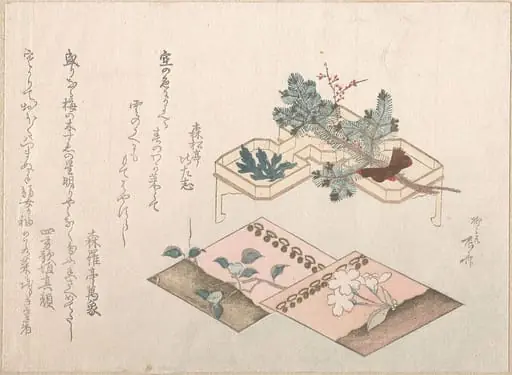 『春雨集』 摺物帖柳々居辰斎画 若松|Spring Rain Collection (Harusame shū), vol. 2: Pine Shoots and Accoutrements for New Year’s Celebrations
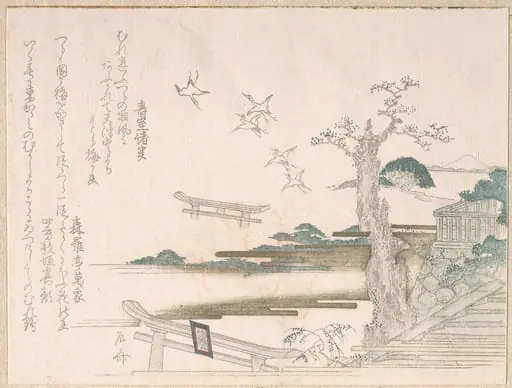 『春雨集』 摺物帖柳々居辰斎画 鎌倉の鶴岡八幡宮に鶴|Spring Rain Collection (Harusame shū), vol. 2: Cranes at Tsurugaoka Hachimangō Shrine in Kamakura
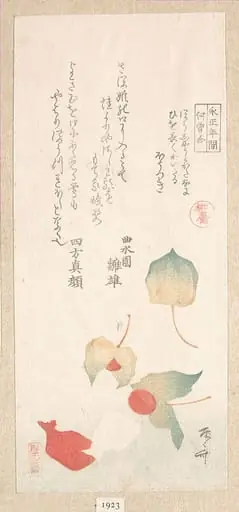 Untitled
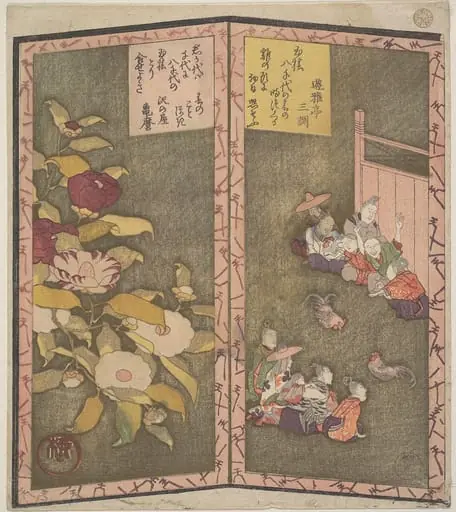 Untitled
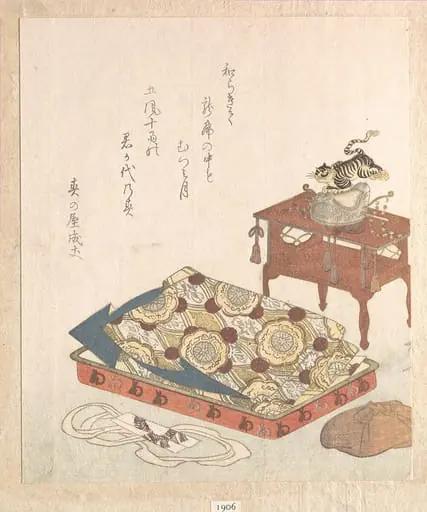 舞楽衣装『春雨集』 摺物帖|Costume for Bugaku Court DanceFrom the Spring Rain Collection (Harusame shū), vol. 1
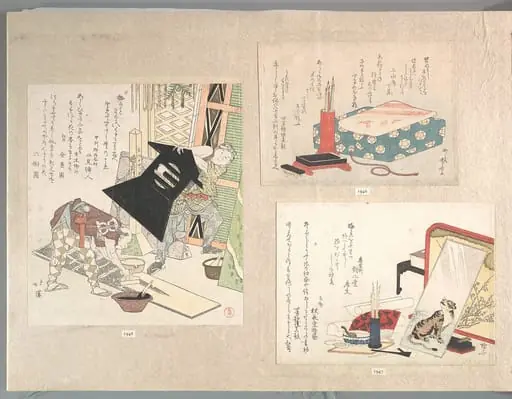 文具一式|Writing Set and Poem Card Box (Shikishi-bako), from Spring Rain Surimono Album (Harusame surimono-jō), vol. 1
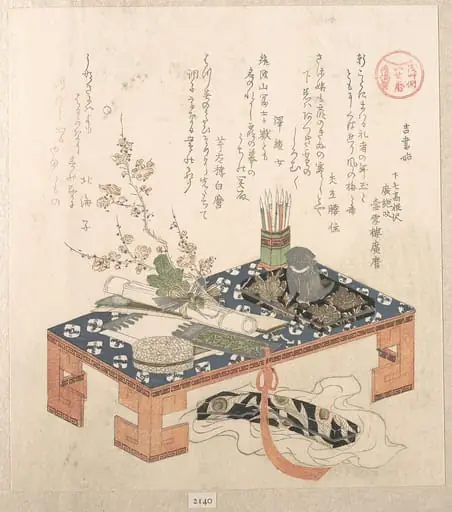 『浅草側いせ暦』 文房具と梅熨斗『春雨集』 摺物帖 |“Desk with Writing Set and Plum Flowers,” from the series Ise Calendars for the Asakusa Group (Asakusa-gawa Ise goyomi)From the Spring Rain Collection (Harusame shū), vol. 2
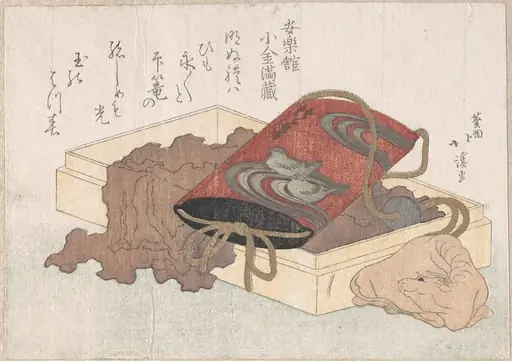 印籠と牛根付『春雨集』 摺物帖|Lacquer Inrō with Waterbirds and Ox-shaped Netsuke in a BoxFrom the Spring Rain Collection (Harusame shū), vol. 3
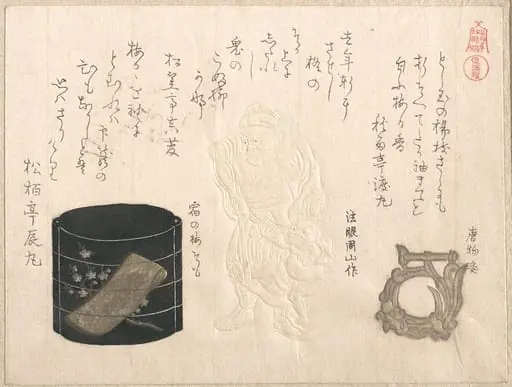 『名物革仝印籠仝根付』 印籠根付『春雨集』 摺物帖|“Inrō and Netsuke,” from the series Famous Leathers, Inrō, and Netsuke (Meibutsu kawa, inrō, netsuke)From the Spring Rain Collection (Harusame shū), vol. 2
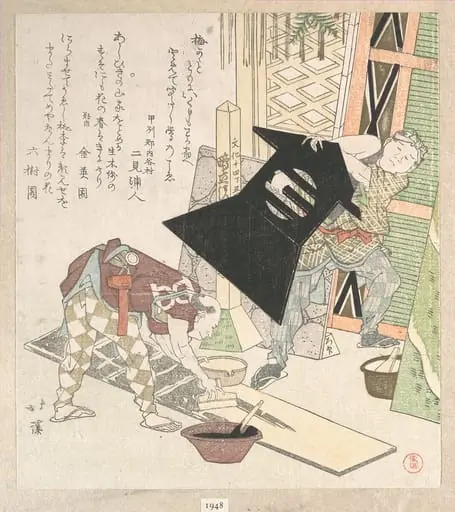 元日仕度|Preparations for the New Year, from Spring Rain Surimono Album (Harusame surimono-jō, vol. 1)
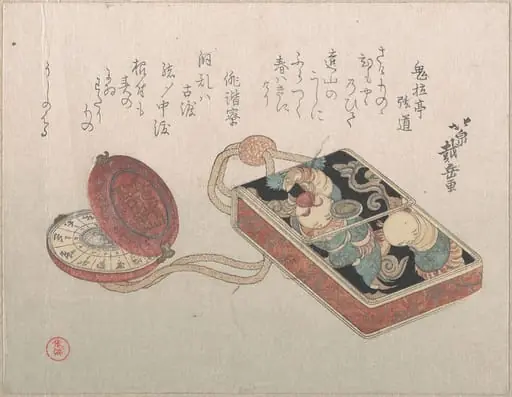 胴乱印籠と懐中時計根付『春雨集』 摺物帖|Dōran (Square Leather Box Used as an Inrō) with a Watch as a NetsukeFrom the Spring Rain Collection (Harusame shū), vol. 3