Artwork
Marie-Thérèse-Charlotte, Duchess of Angoulême
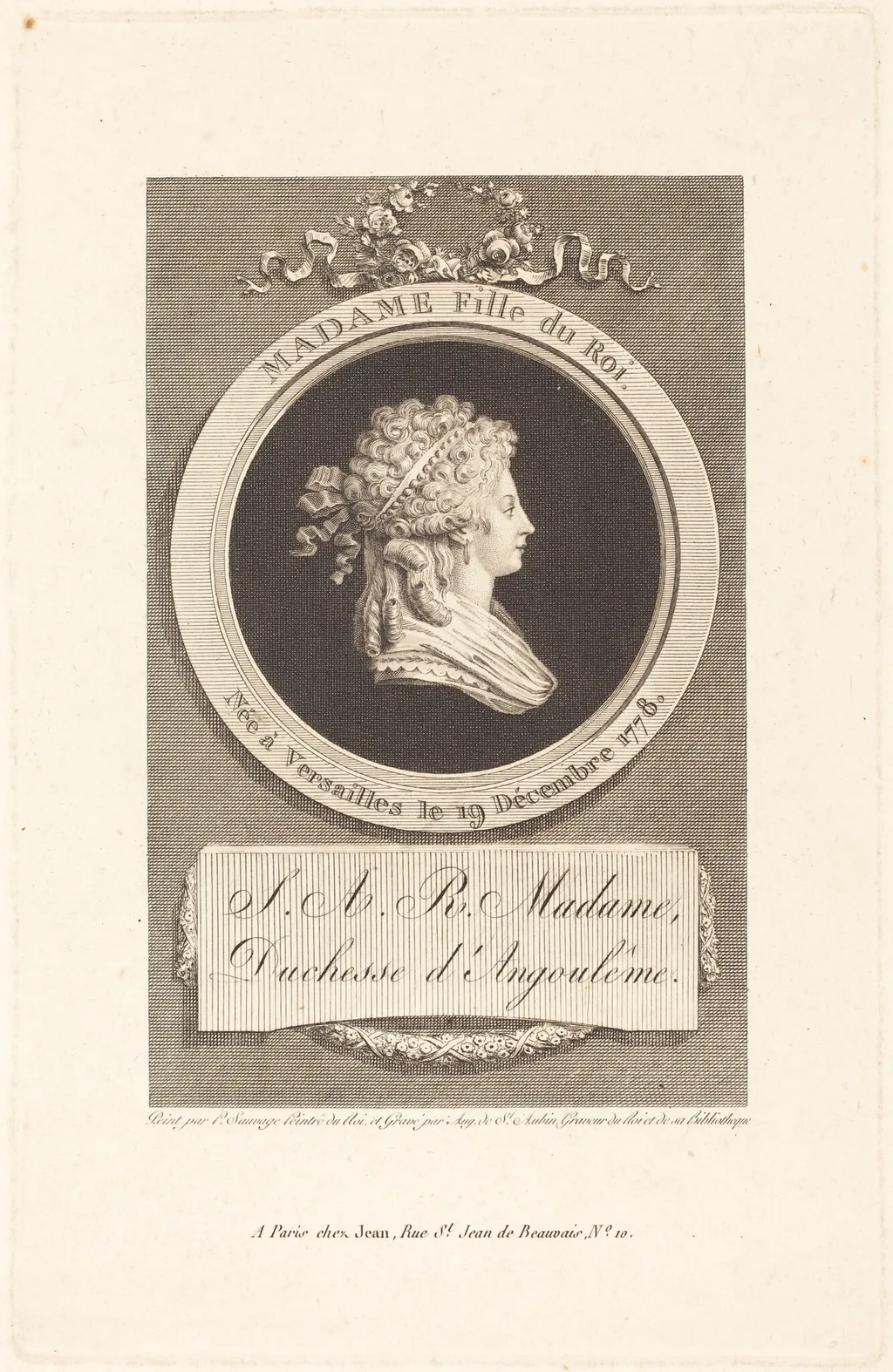
Marie-Thérèse-Charlotte, Duchess of Angoulême is an ink print by the Romanticist artist Augustin de Saint-Aubin. It dates from 1791 and is held in the collection of the National Gallery of Art. This 1791 engraving on wove paper presents a portrait of Marie‑Thérèse‑Charlotte, Duchess of Angoulême.
About this work
The woman has curly hair pulled back, a white neckline, and a calm face turned slightly to the side.
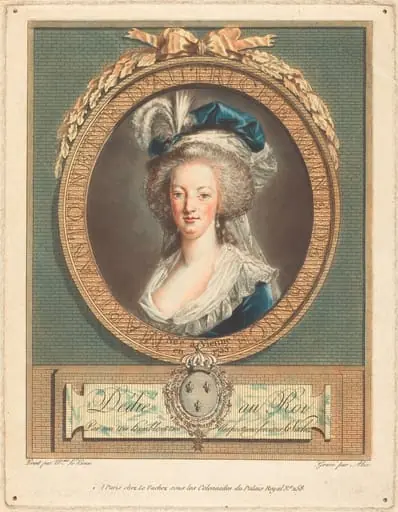
This is a black-and-white portrait inside a circular frame. The woman has curly hair pulled back, a white neckline, and a calm face turned slightly to the side. Above her head, a crown and flowers sit like a decorative border.
The text around the frame calls her "Madame Fille du Roi," which means she was linked to royalty. The date "19 Décembre 1788" is also written near her portrait.
Check out how this was made using the technique: engraving.
Overview
This 1791 engraving on wove paper presents a portrait of Marie‑Thérèse‑Charlotte, Duchess of Angoulême. Rendered in black and white within a circular ornamental frame, the figure is shown with her hair gathered in curls, a modest white neckline, and a composed expression turned slightly away from the viewer. A crown and floral motifs crown the composition, while an inscription identifies her as "Madame Fille du Roi" and notes the date 19 December 1788.
Subject & Meaning
The sitter, Marie‑Thérèse‑Charlotte, was a member of the French royal family, daughter of King Louis XV and later Duchess of Angoulême through marriage. The inscription emphasizes her royal lineage, linking her identity to the king. The calm demeanor and regal accessories convey the dignity and status expected of a high‑born woman during the waning years of the Ancien Régime, reflecting both personal portraiture and a broader assertion of aristocratic presence.
Technique & Style
Executed by the hand of Augustin de Saint‑Aubin, the image employs traditional copper‑plate engraving. Fine, parallel lines create tonal gradations that model the facial features and fabric, while cross‑hatching suggests depth in the background and decorative border. The circular frame and integrated crown‑and‑flower motif illustrate the neoclassical taste for orderly composition and symbolic ornamentation prevalent in late‑eighteenth‑century French prints.
History & Provenance
Augustin de Saint‑Aubin (1736–1807) belonged to a distinguished family of French designers and engravers. He produced this work amid the turbulent years preceding the French Revolution, a period when royal portraiture remained a means of affirming monarchical legitimacy. The print’s date, 19 December 1788, places it just months before the storming of the Bastille, marking it as a document of the final phase of royal patronage before the radical political transformations that followed.
Artist & collection
Artist
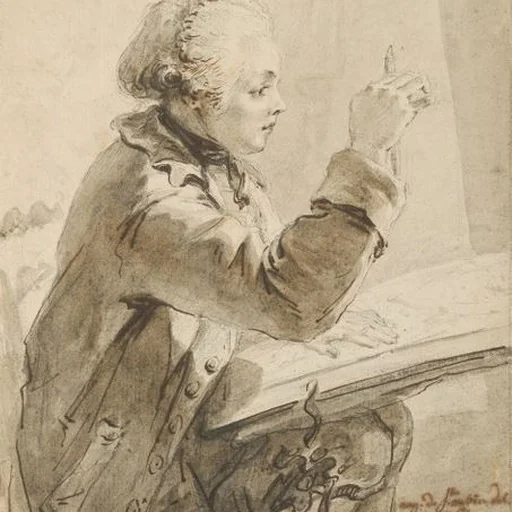
Augustin de Saint-Aubin sometimes styled Auguste de Saint-Aubin (3 January 1736 – 9 November 1807), belongs to an important dynasty of French designers and engravers.

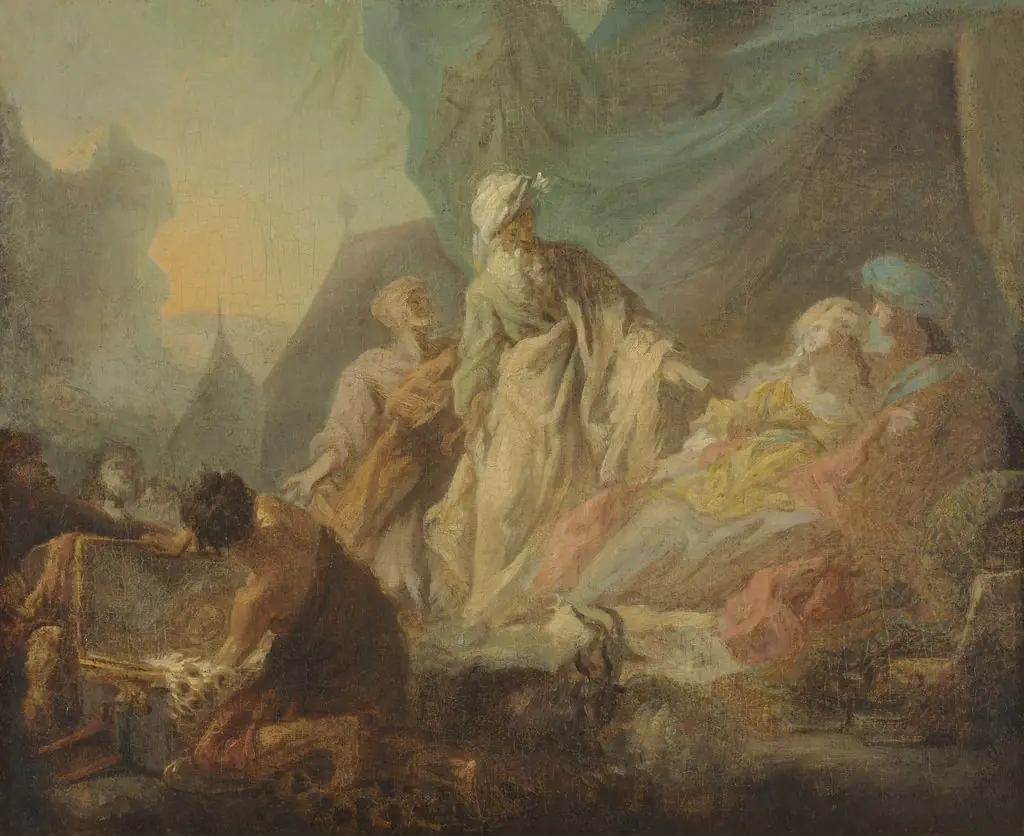 Laban Searching for His Stolen Gods
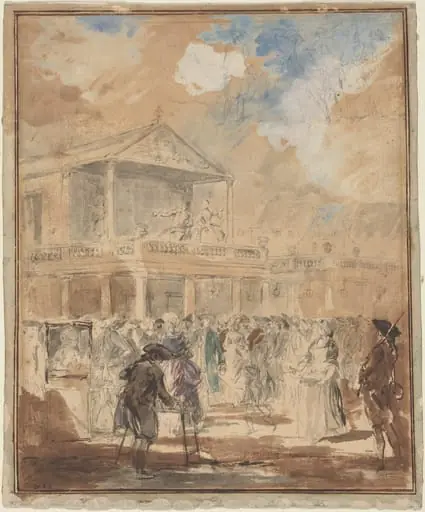 Parade (A Theatrical Procession in Paris)
 Le baiser envoyé
 Pierre Jeliote
 Le lever de la mariée russe (Custom of the Russians after the Marriage Ceremony and before the Wedding Feast)
 J.J. Rousseau
 Le duc de Chartres, son epouse et ses enfants
 Simon-Nicolas-Henri Linguet