Artwork
Vedere din Paris
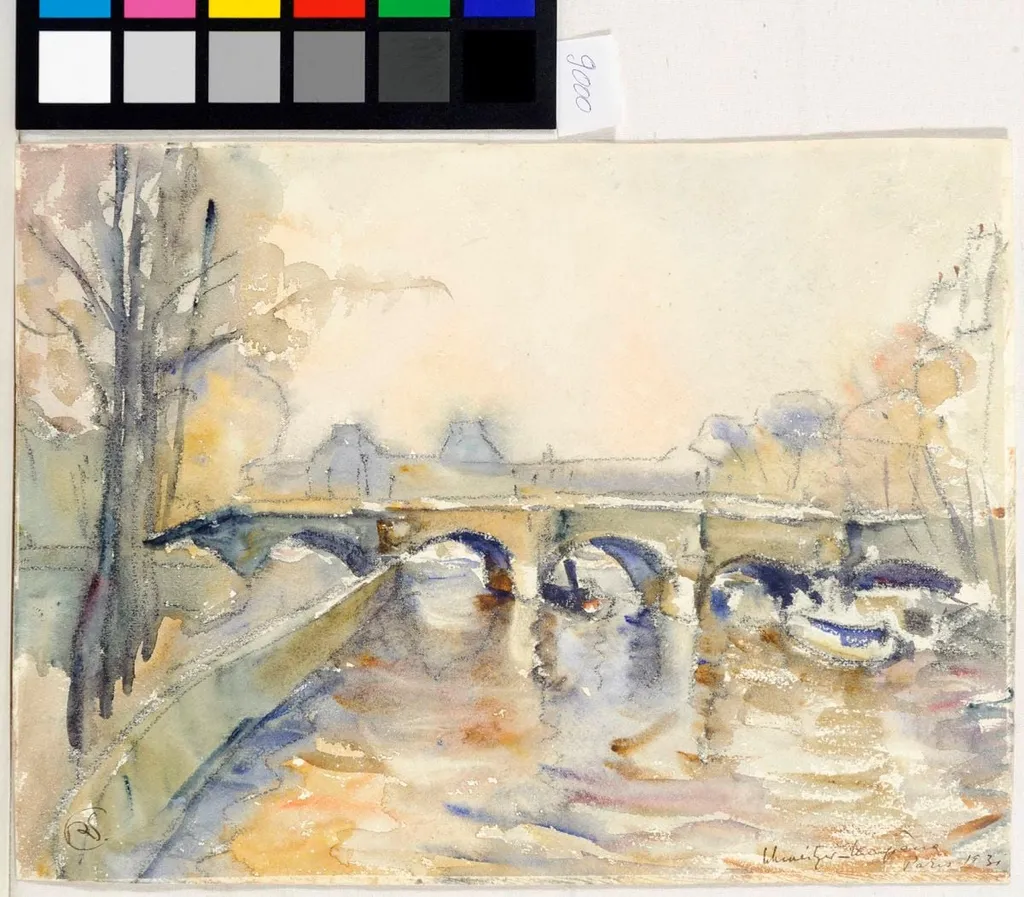
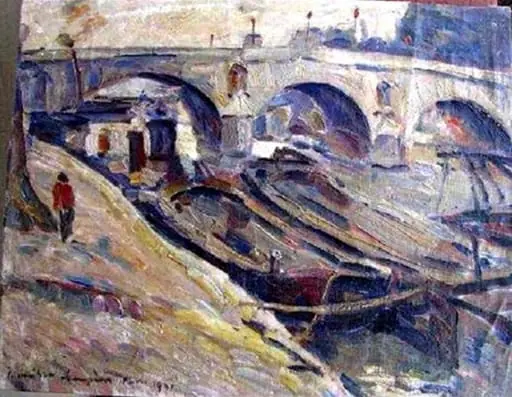
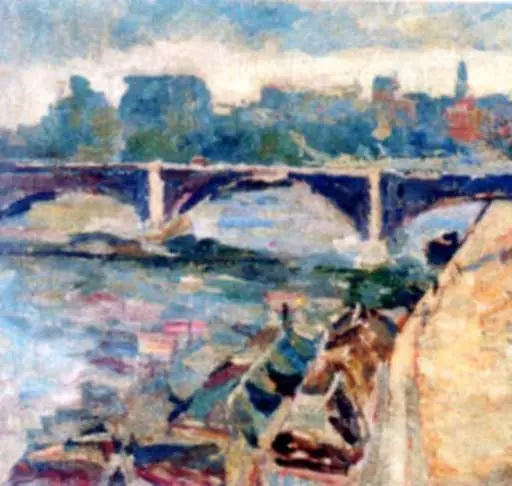
Vedere din Paris is an unspecified painting by Rudolf Schweitzer-Cumpăna. It dates from 1931 and is held in the collection of the National Museum of Art of Romania.
About this work
Overview
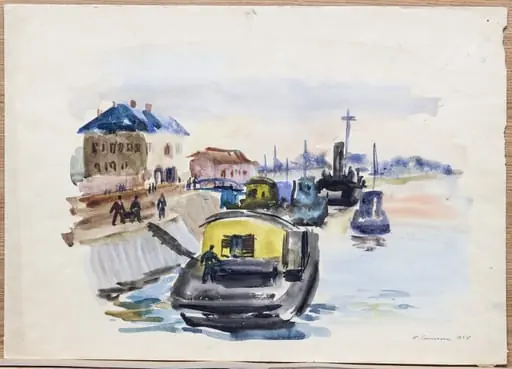
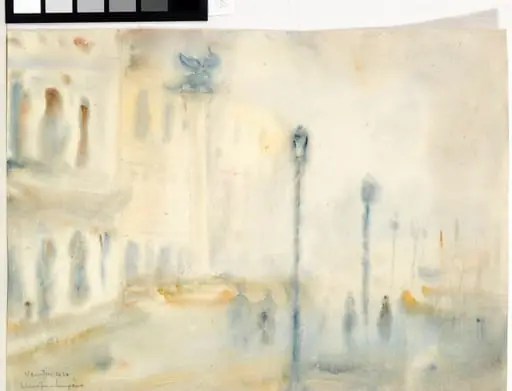
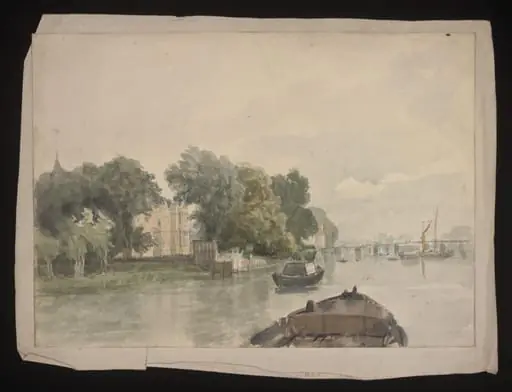
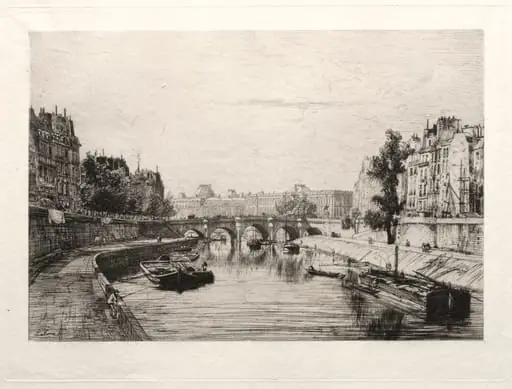
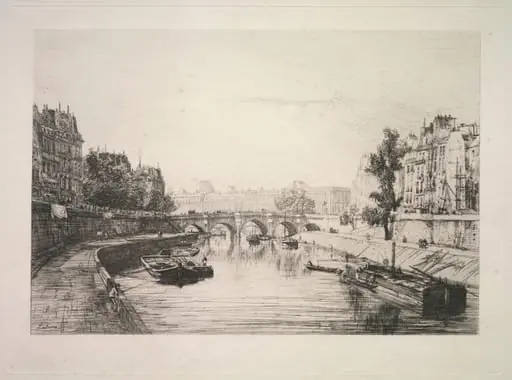
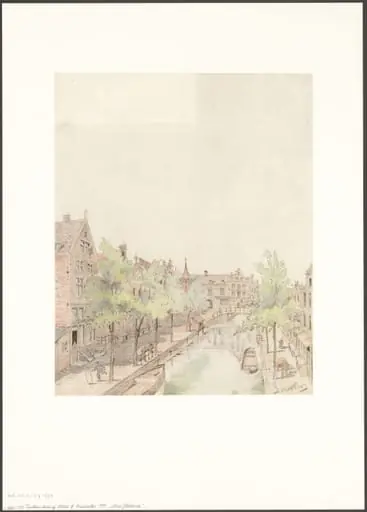
Rudolf Schweitzer-Cumpăna painted Vedere din Paris in 1931, capturing a fleeting impression of a Parisian riverside. The work is executed with minimal detail, emphasizing atmosphere over precision. Its aqueous tones and fragmented brushwork suggest a momentary glance rather than a finished composition, aligning with early 20th-century tendencies toward expressive spontaneity.
Subject & Meaning
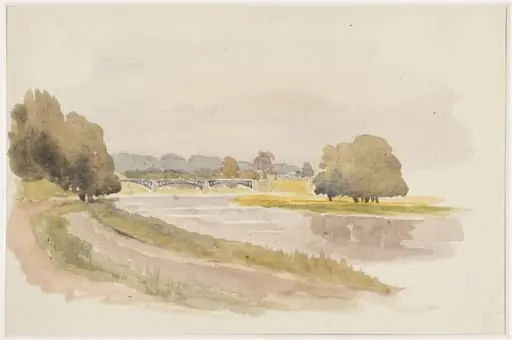
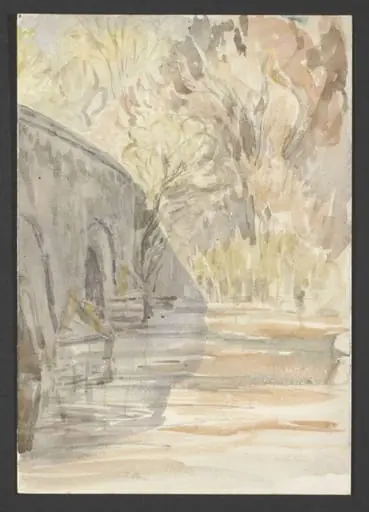
The scene depicts a slender bridge arching over water, flanked by loosely rendered trees on the left. No figures or landmarks identify the location, and the absence of architectural specificity invites a universal reading. The painting conveys quiet solitude, its ambiguity reinforcing a meditative mood rather than documenting a particular place or event.
Technique & Style
Schweitzer-Cumpăna employed thin, uneven brushstrokes that mimic the fluidity of watercolor, though the medium is oil. Colors—pale blues, muted yellows, and soft browns—are applied with restraint, allowing the canvas to show through in places. The sketchlike quality and deliberate incompleteness reflect an interest in perception over representation.
History & Provenance
The painting’s early history is undocumented beyond its creation date and artist’s signature, faintly placed in one corner. It remained in private hands for decades, with no public exhibition record until the late 20th century. Its modest scale and unassuming character likely contributed to its limited visibility in broader art historical narratives.
Context
Created during a period when European artists were moving away from academic realism, Vedere din Paris reflects influences from Impressionism and early modernist experimentation. Schweitzer-Cumpăna, though not widely known, shared with contemporaries a desire to capture transient light and emotional resonance, prioritizing personal expression over conventional finish.
Legacy
The work stands as a quiet example of interwar Romanian modernism, illustrating how artists outside major centers engaged with international trends. Its understated approach has gained renewed attention in recent scholarship for its sensitivity to light and mood, offering a subtle counterpoint to more dramatic avant-garde works of the era.
Artist & collection
Artist
Rudolf Schweitzer-Cumpăna was a Romanian painter. Born in Pitești into an ethnic German family, he finished high school in his native town before attending the Royal Academy of Arts at Berlin from 1904 to 1909, studying…