Artwork
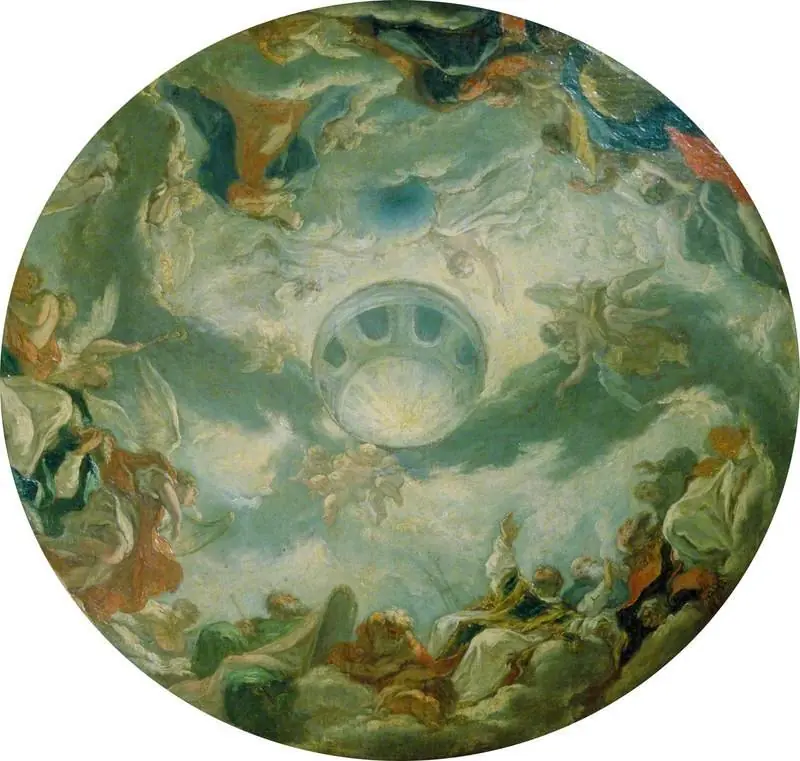
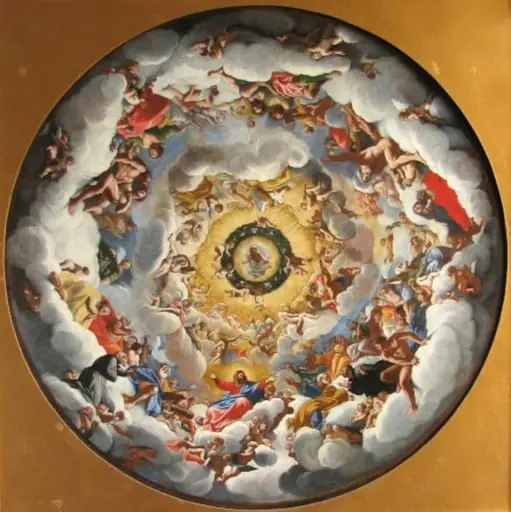
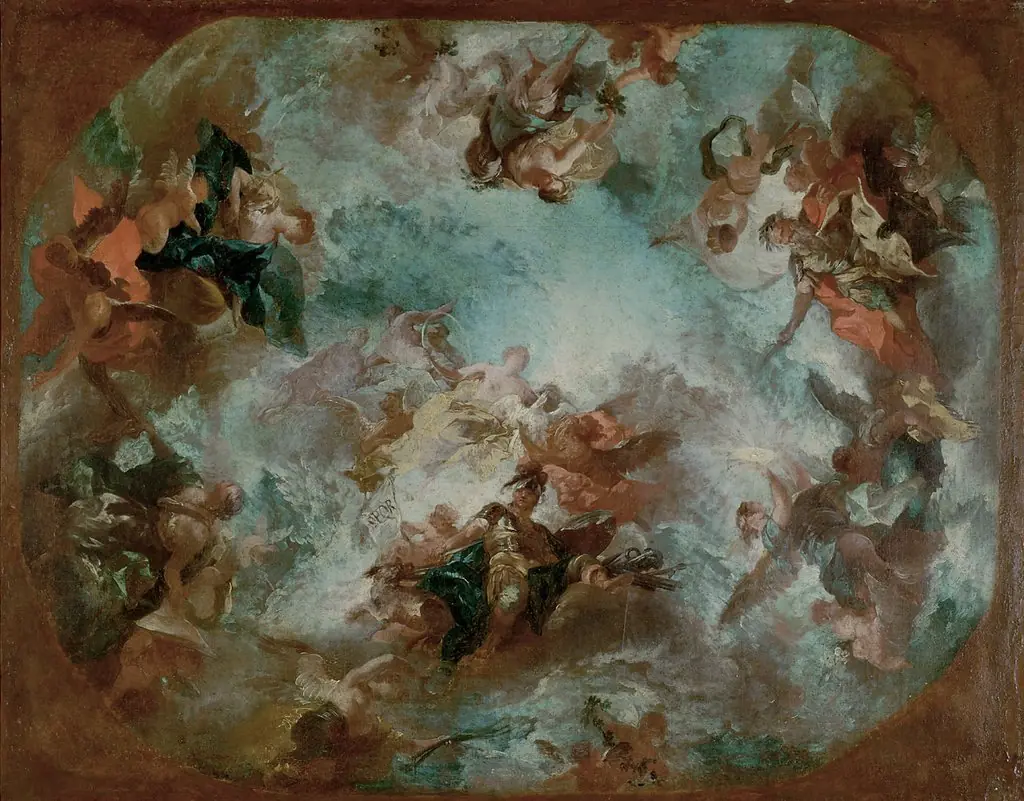
Paradise (sketch model for a painted cupola)
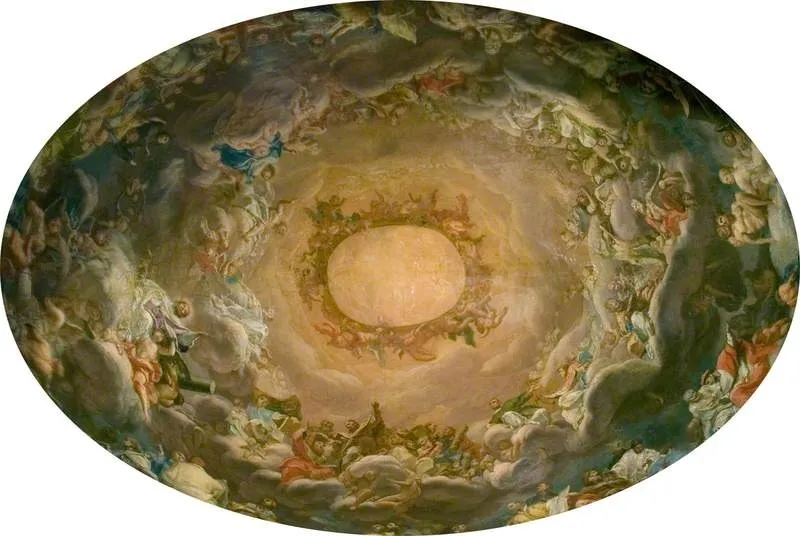
Paradise (sketch model for a painted cupola) is an unspecified painting by Sebastiano Conca. It dates from 1730 and is held in the collection of the Victoria and Albert Museum.
About this work
Overview
Created around 1730 by Sebastiano Conca, this oil painting functions as a preparatory model for a ceiling fresco. Designed to be viewed from below, it served as a scaled reference for the final decorative scheme in a religious or civic building. The work is now held in the collection of the Victoria and Albert Museum, where it represents the practical side of 18th-century mural production.
Subject & Meaning
Titled Paradise, the painting depicts an idealized heavenly realm populated by angels, saints, and possibly the divine figure. Its composition follows traditional iconography meant to inspire awe and devotion in viewers below. As a ceiling model, its imagery was intended to elevate the spiritual experience of those beneath it, reinforcing theological narratives through celestial imagery.
Technique & Style
Executed in oil on canvas, the work displays Conca’s fluid brushwork and luminous color palette, characteristic of late Baroque Italian painting. The figures are rendered with soft modeling and dynamic poses, optimized for foreshortening when viewed from a distance. Its scale and detail suggest it was made to guide assistants in translating the design onto a curved architectural surface.
History & Provenance
The painting was likely commissioned for a specific architectural project, though the exact location of the final fresco remains unconfirmed. It passed into the V&A’s collection through established 19th-century acquisitions of Italian artistic studies. Its survival as a standalone piece is unusual, as such models were often discarded after use.
Context
In early 18th-century Italy, large-scale ceiling decorations were central to ecclesiastical and aristocratic interiors. Artists like Conca produced detailed models to secure commissions and coordinate teams of painters. This practice bridged the gap between design and execution, reflecting the collaborative nature of decorative projects in the Baroque tradition.
Legacy
This sketch model preserves the planning process behind monumental ceiling paintings, offering insight into the technical and aesthetic priorities of the time. While the original fresco may no longer exist, the model endures as evidence of how grand illusions were constructed, informing modern understanding of Baroque decorative practices.
Artist & collection

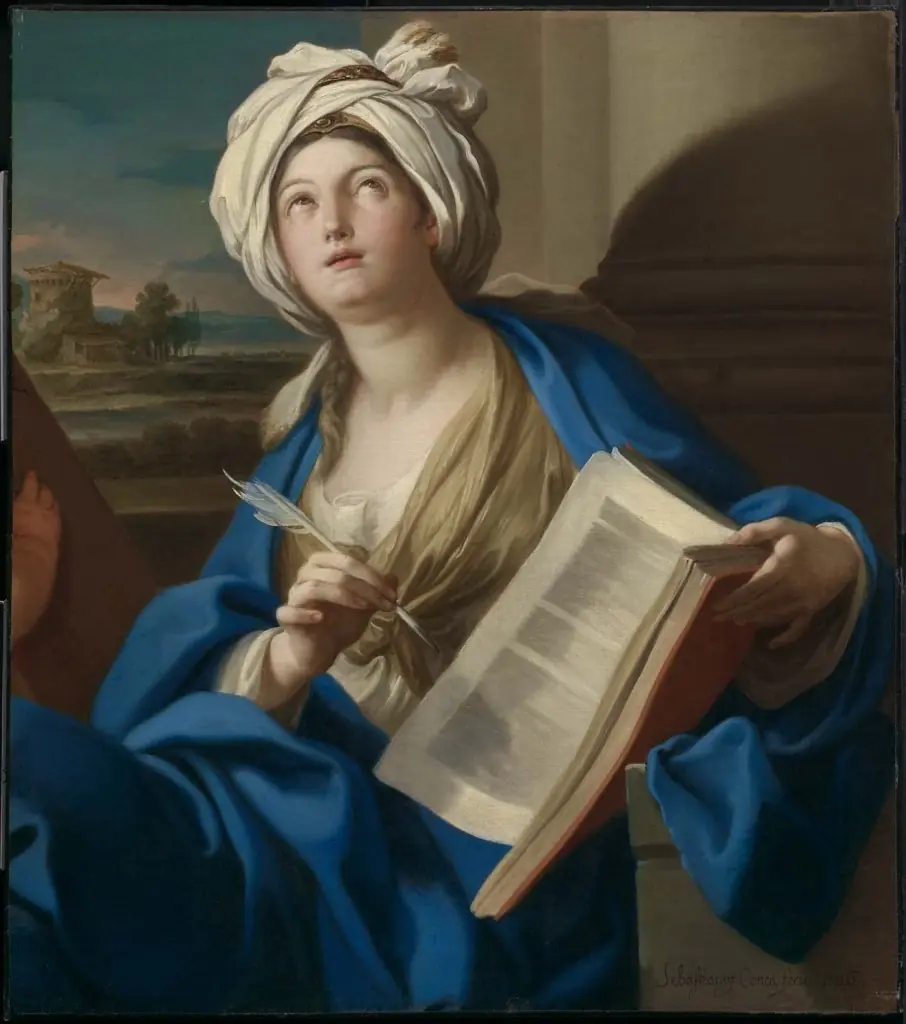
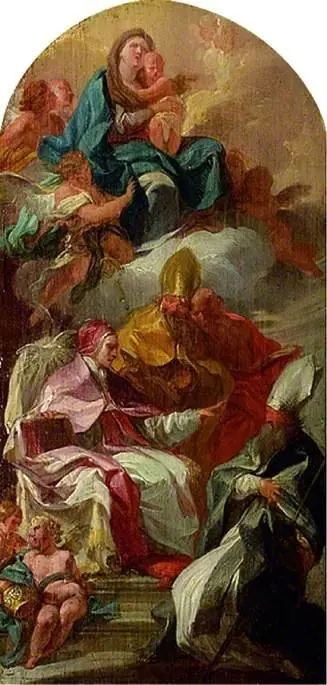
 The Adoration of the Trinity (design for the decoration of a dome)
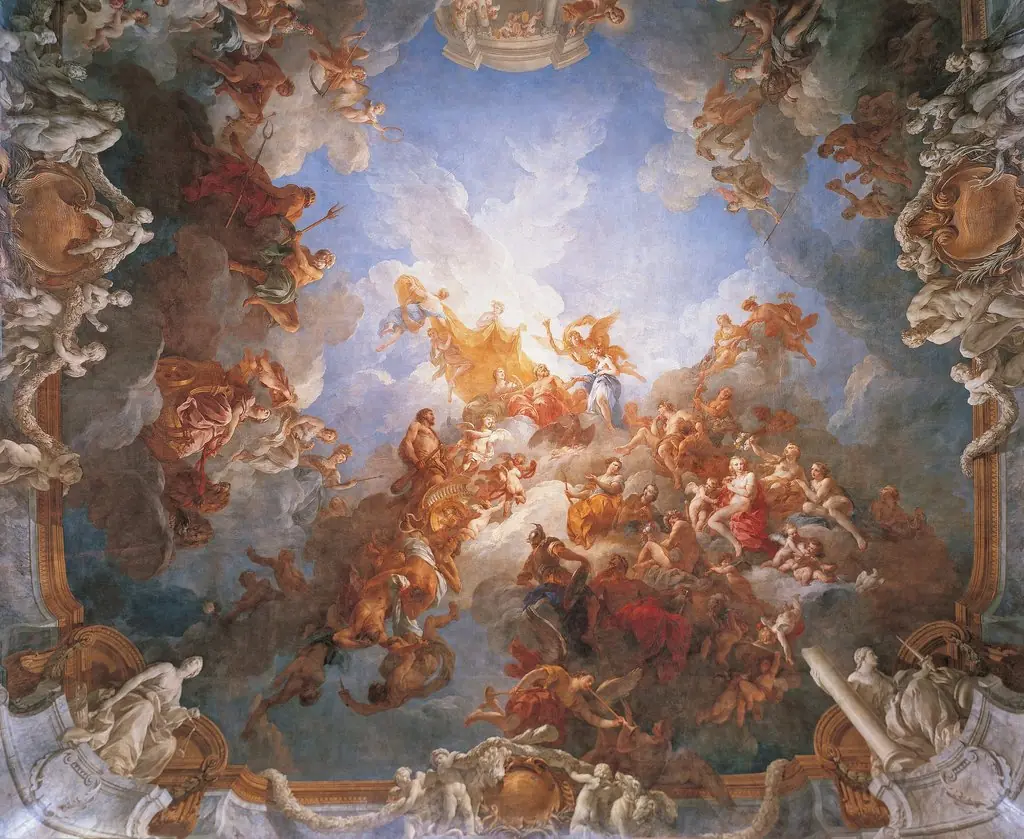 The Apotheosis of Hercules
 Cristos în glorie
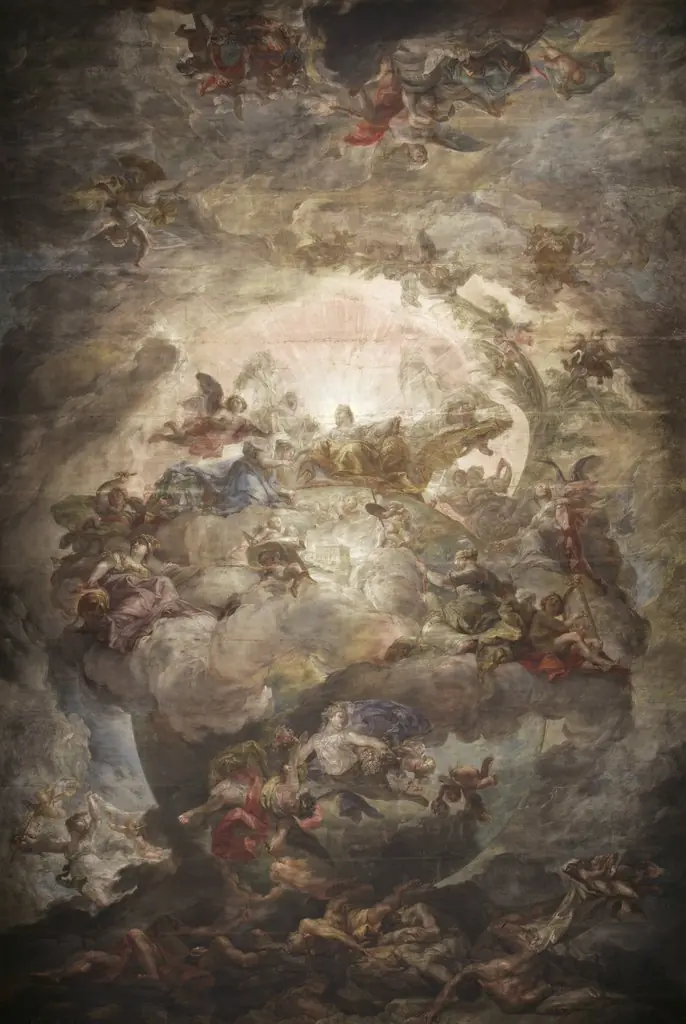 Allegory of the donation of the Casino to Queen María Isabel de Braganza by the Municipality of Madrid
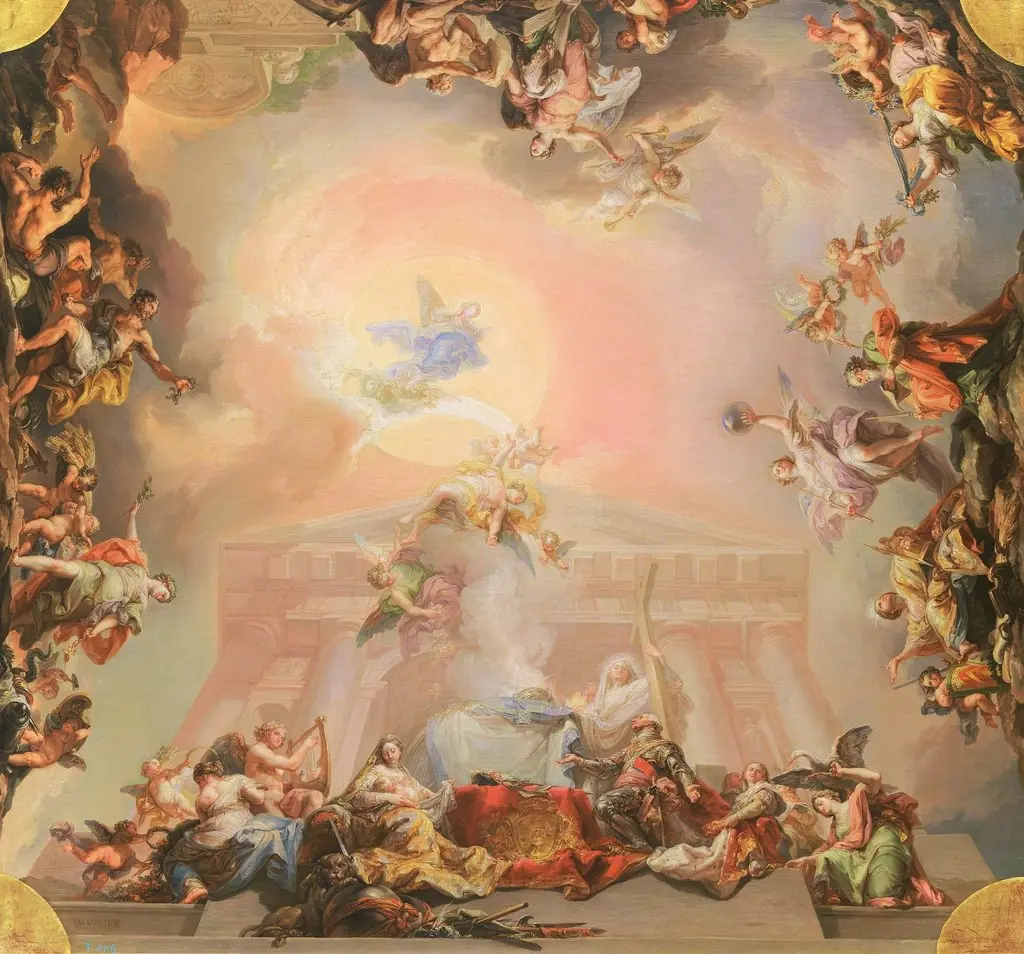 Sketch for Allegory of the Institution of the Order of Charles III
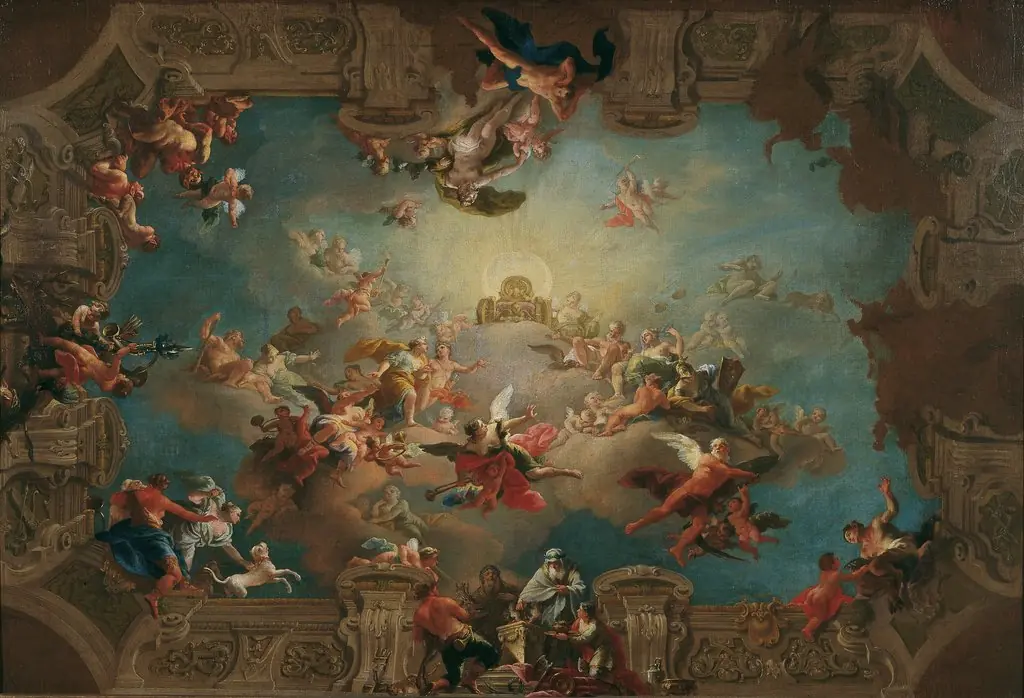 Diana's Admission to Olympus
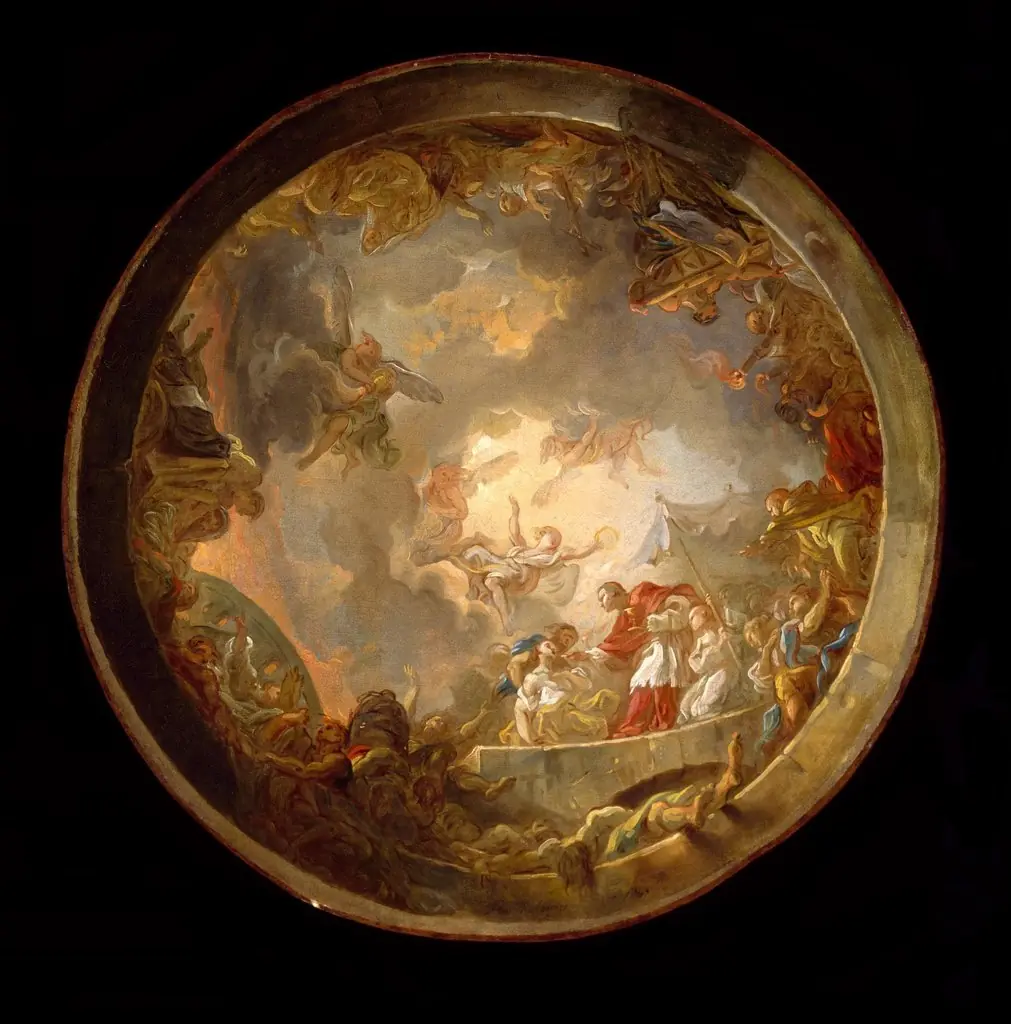 Saint Carlo Borromeo Attending to the Plague Victims
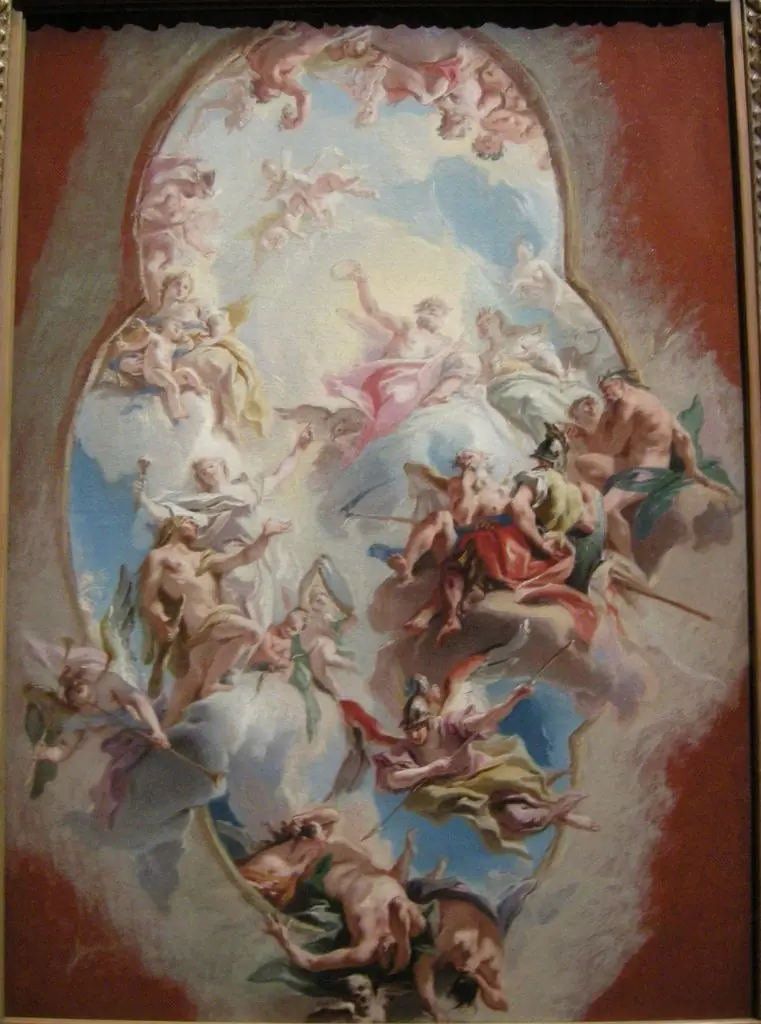 Hercules led by knowledge to immortality
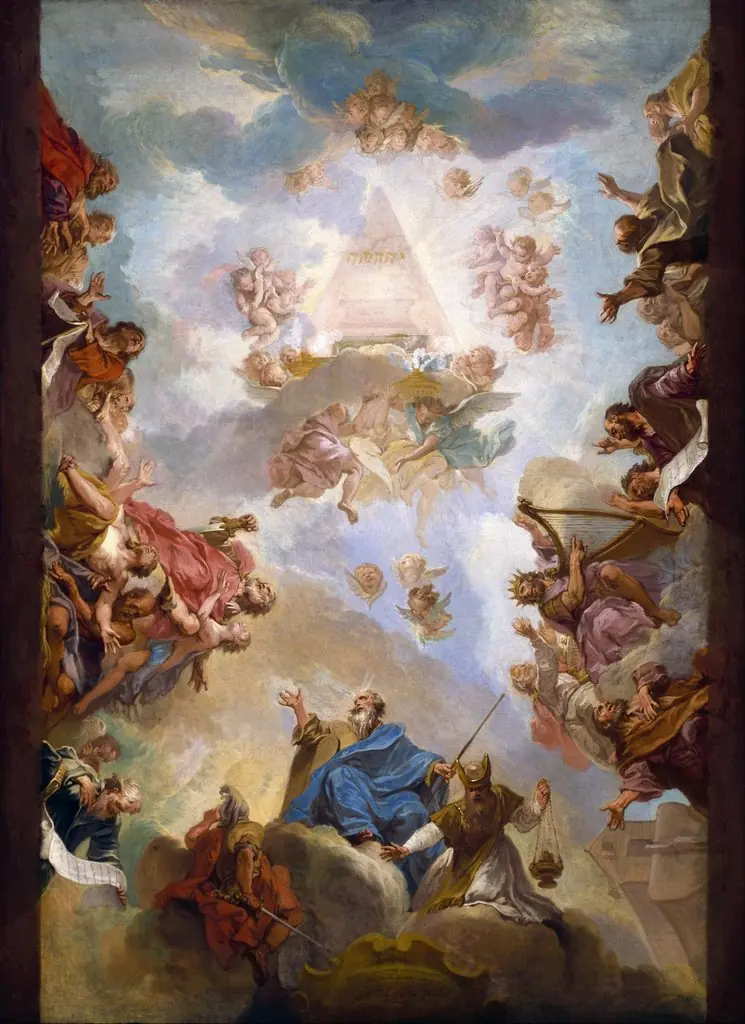 Prophets and Kings of the Old Testament Adoring the Name of Jehovah
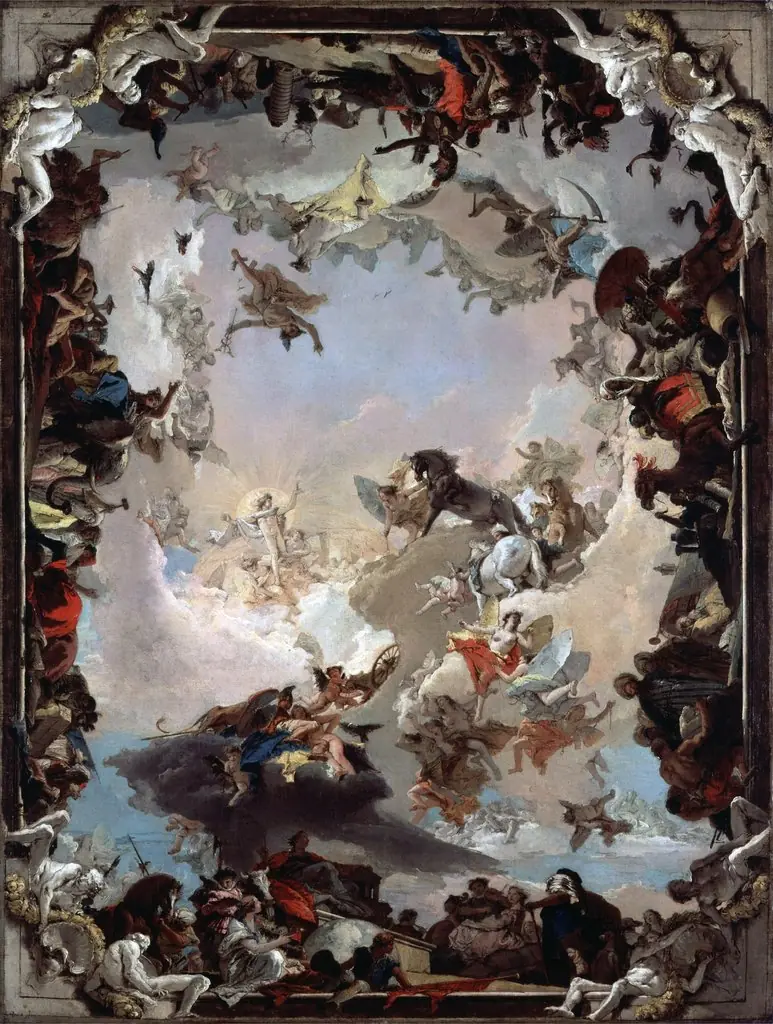 Allegory of the Planets and Continents
 Verherrlichung des Hauses Österreich
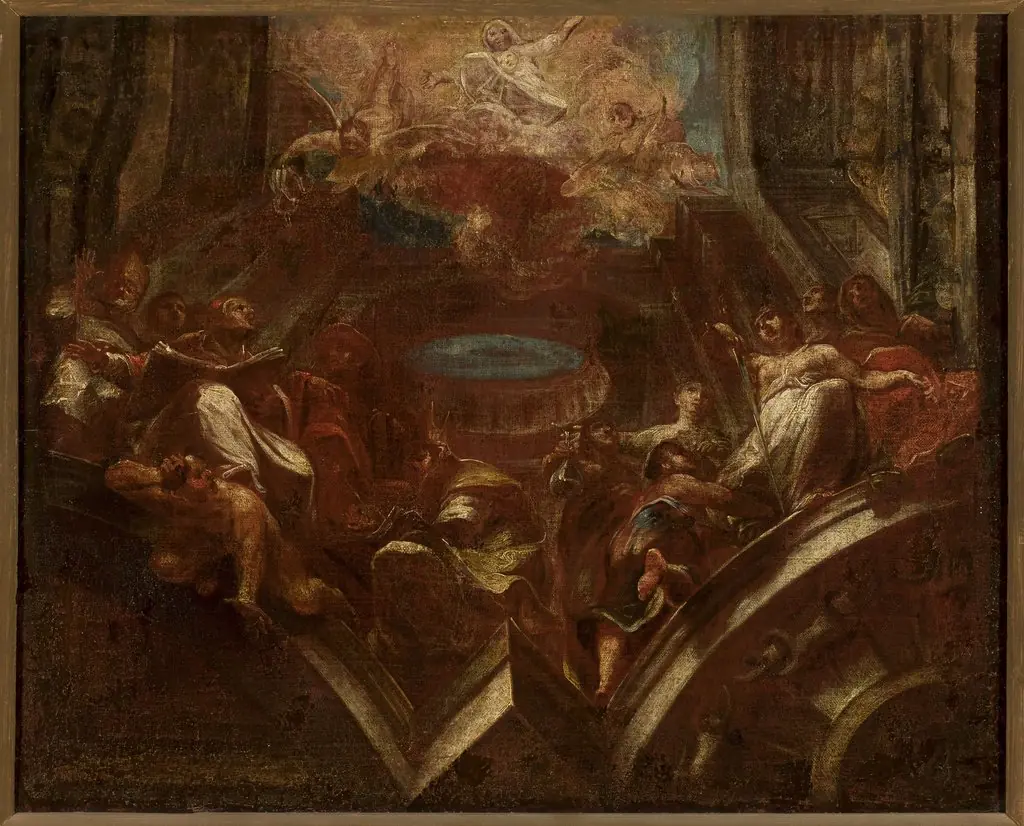 Sketch for the plafond Adoration of Madonna