Artwork
William Sermon, M.D.
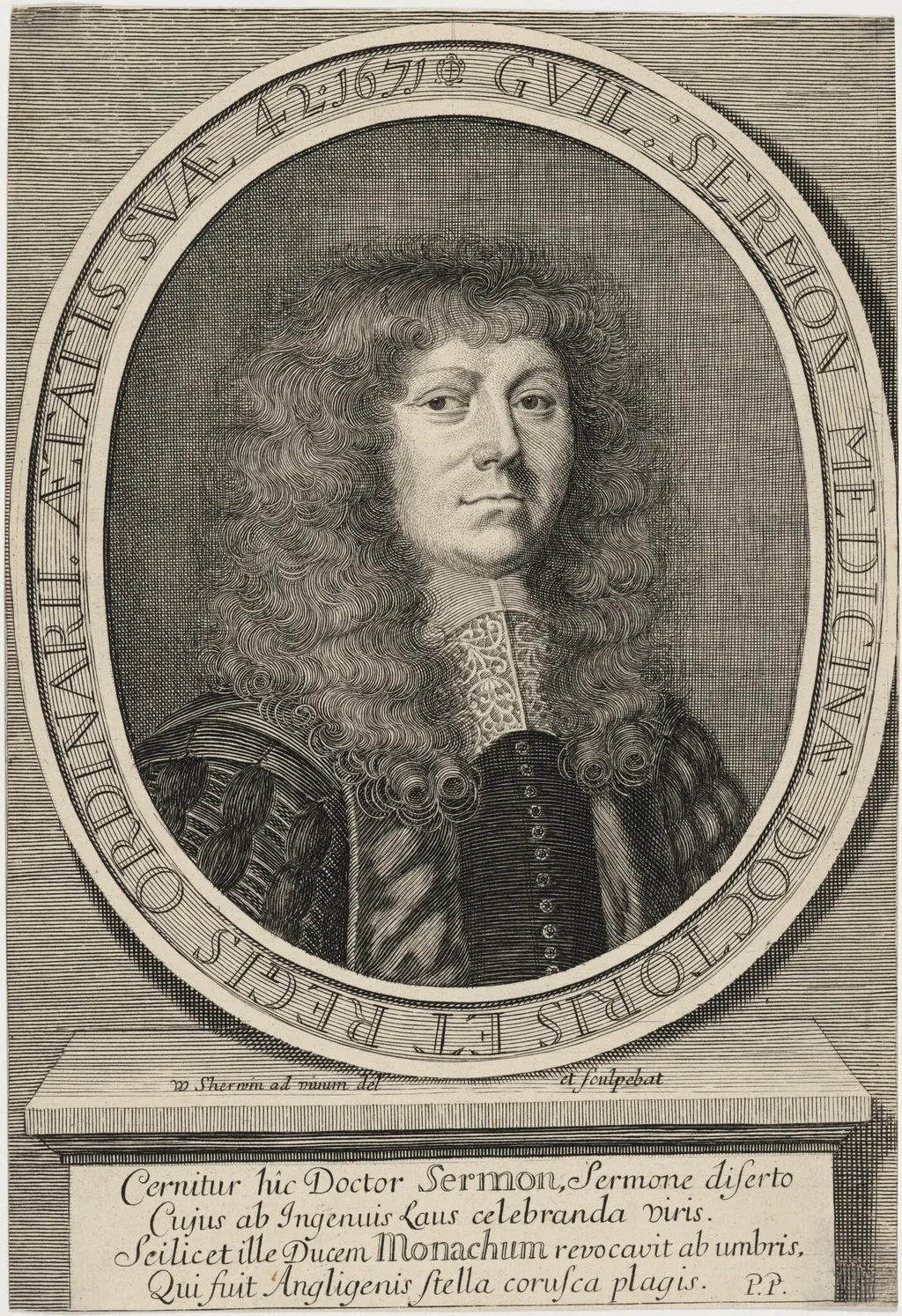
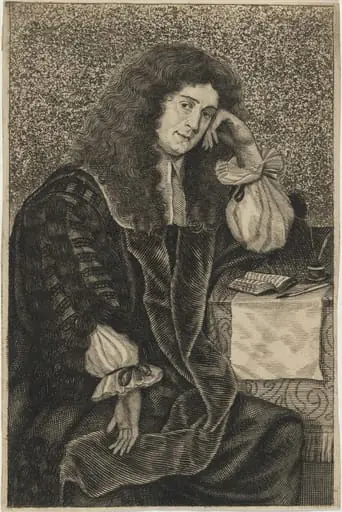
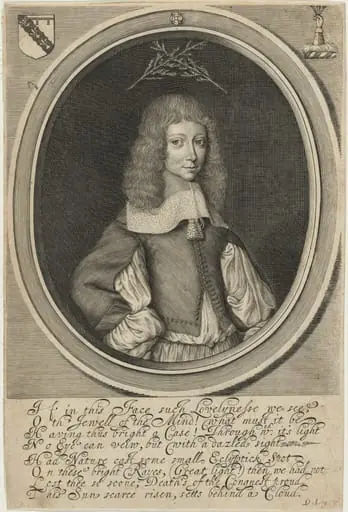
William Sermon, M.D. is an ink print by the Baroque artist William Sherwin. It dates from 1671 and is held in the collection of the National Gallery of Art.
About this work
Overview
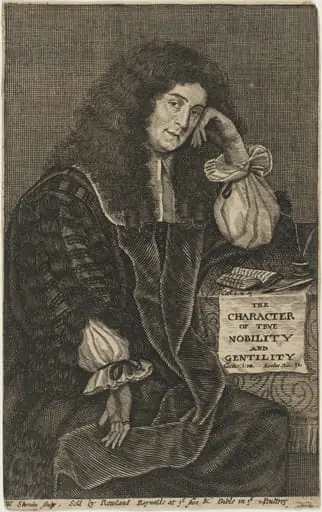
An engraving by William Sherwin, dated 1671, depicts William Sermon, a practicing physician of the period. Rendered in fine linear detail, the portrait captures Sermon in a modest interior setting, dressed in dark formal attire with a crisp white ruff. The composition emphasizes stillness and intellectual presence, typical of professional portraiture in late 17th-century England.
Subject & Meaning
William Sermon is portrayed not as a nobleman but as a learned professional, his identity anchored in his medical role. The book in his hand and the desk beneath it suggest scholarship and daily practice. His composed posture and direct gaze convey authority grounded in knowledge rather than status, reflecting the rising esteem of medical practitioners in Restoration England.
Technique & Style
Sherwin employed cross-hatching—layered sets of fine, intersecting lines—to model form and depth. This method carefully rendered the textures of fabric, skin, and wood, giving the image a tactile realism. The lighting, emanating from a single unseen window, casts subtle gradients across the figure, enhancing the three-dimensionality typical of engraved portraiture of the era.
History & Provenance
Created in 1671, the engraving likely served as a portrait for professional circulation or personal commemoration. Sherwin, a known engraver of the time, produced similar images of physicians and scholars. No definitive record of its original commission survives, but its survival in institutional collections indicates early recognition of its documentary value.
Context
In the 1670s, England saw growing institutionalization of medicine, with physicians increasingly distinguishing themselves from apothecaries and surgeons. Portraits like this one reinforced the image of the doctor as an educated, sober professional. Engravings were a primary medium for disseminating such images, especially among those who could not afford painted likenesses.
Legacy
The engraving remains a representative example of how medical identity was visually constructed in the late 17th century. Though Sherwin was not a major artistic figure, his work contributed to a broader visual culture that documented the emerging professional class. This piece continues to be referenced in studies of medical history and print culture.
Artist & collection