Artwork
Flour mill
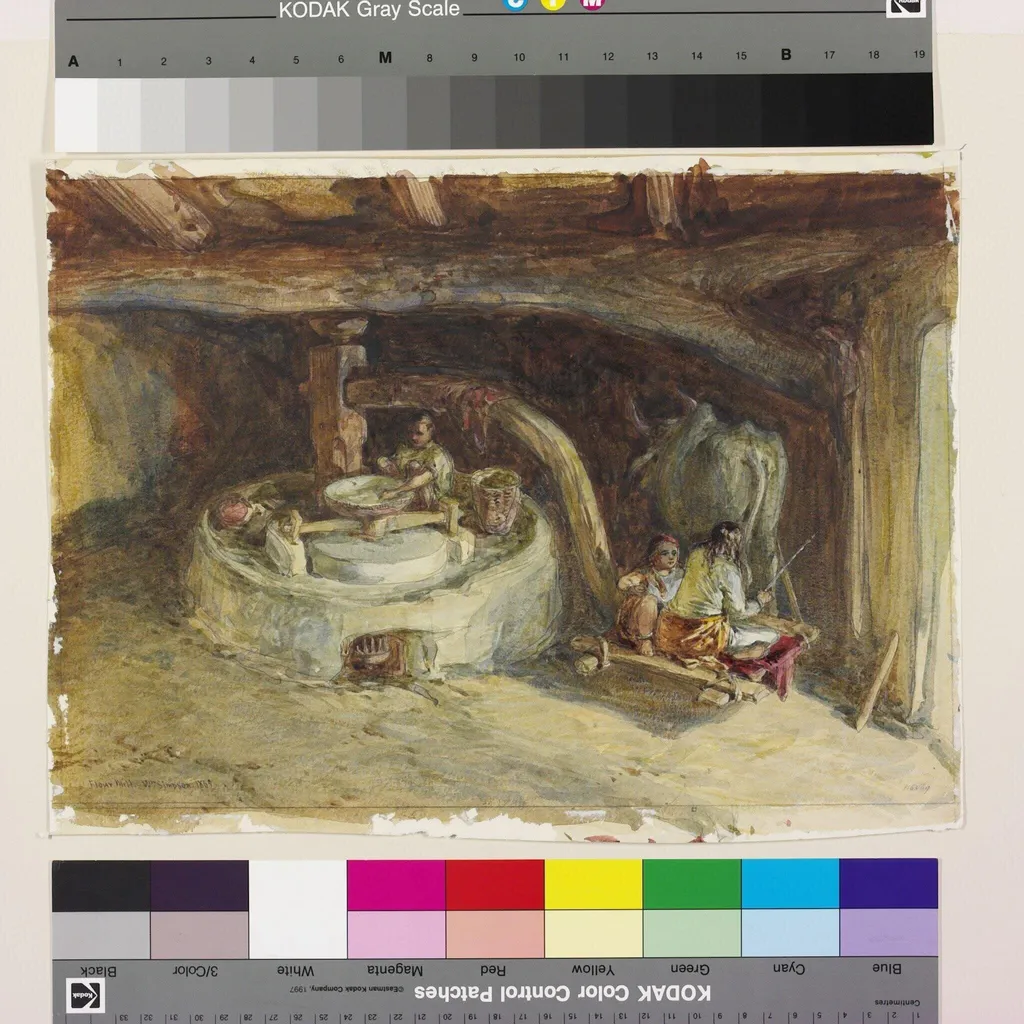
Flour mill is a paint painting by the Impressionist artist William Simpson. It dates from 1865 and is held in the collection of the Victoria and Albert Museum.
About this work
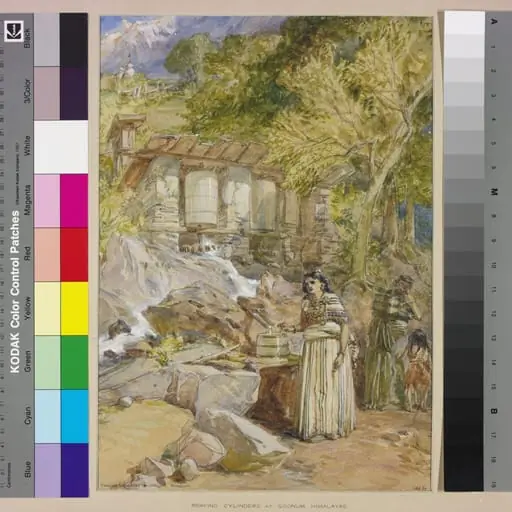
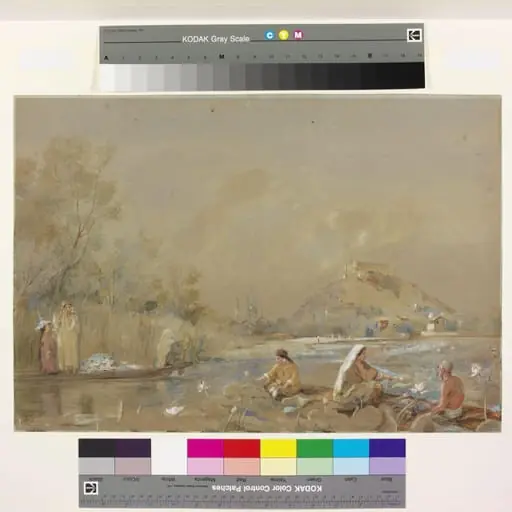
This painting shows a tall flour mill beside a river. Dark clouds loom over its wooden wheels. Light picks out the mill’s rough texture against the water.
Simpson painted this in 1865 during a trip through India. He often worked quickly to catch fleeting weather and light. The mill’s motion feels almost alive in the brushwork.
Look for Simpson’s pencil sketches at the Victoria and Albert Museum.
Overview
William Simpson created this watercolour in 1865, following his travels across India between 1859 and 1862.
William Simpson created this watercolour in 1865, following his travels across India between 1859 and 1862. Commissioned by Day and Sons, his work documented sites tied to the 1857 uprising. Though painted in London, the scene reflects observations made on-site. The flour mill, powered by oxen, appears as one of many industrial and rural structures he recorded during his journey, capturing everyday life amid shifting political landscapes.
Subject & Meaning
The painting depicts a traditional flour mill operating beside a river, driven by oxen turning a wooden wheel. It represents a quiet, enduring form of rural industry, untouched by the upheavals of recent conflict. The looming clouds and dappled light suggest transience, contrasting the mill’s steady motion. Simpson’s focus on such a humble structure reflects an interest in the resilience of local life, rather than monuments of power or destruction.
Technique & Style
Simpson employed rapid pencil sketches in India, later refining them into watercolours in London. This piece shows careful attention to texture—the rough wood of the mill, the reflective surface of water, the weight of clouds. His brushwork conveys movement, animating the wheel and rippling water. The palette is subdued yet vivid, with light breaking through dark skies to highlight architectural detail, balancing realism with atmospheric mood.
History & Provenance
Simpson arrived in India in 1859, commissioned to record locations connected to the 1857 Revolt. He produced hundreds of sketches during his travels, later using them as references for finished works. The flour mill painting was completed in London in 1865, part of a series derived from these field studies. Original pencil studies from this period are held in the Victoria and Albert Museum, confirming the work’s basis in direct observation.
Context
Painted during a period of British imperial consolidation, the scene offers a quiet counterpoint to narratives of conflict. While many artists focused on battle sites or ruins, Simpson turned to ordinary machinery and landscapes, suggesting continuity amid change. His work reflects a Victorian fascination with documenting foreign cultures, yet avoids overt political commentary, instead emphasizing the rhythms of daily existence.
Legacy
Simpson’s Indian watercolours remain valuable records of mid-19th-century architecture and rural life. Though romanticized, they preserve details of technology and environment that might otherwise have been lost. His sketches and finished works contributed to public understanding of India in Britain, influencing later ethnographic illustration. The flour mill painting endures as a quiet testament to overlooked labor and mechanical ingenuity.
Artist & collection