Artwork
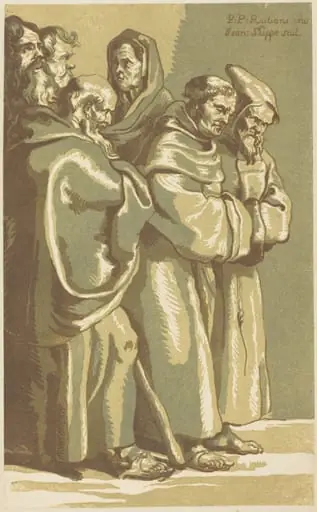
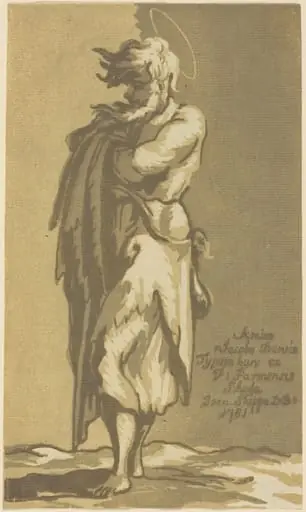
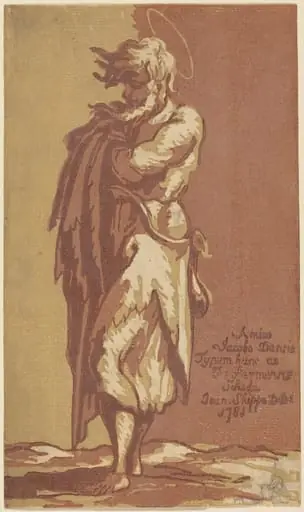
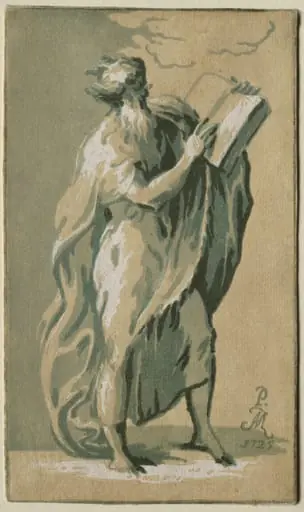
Male Saint Standing with Folded Arms, Facing to the Right
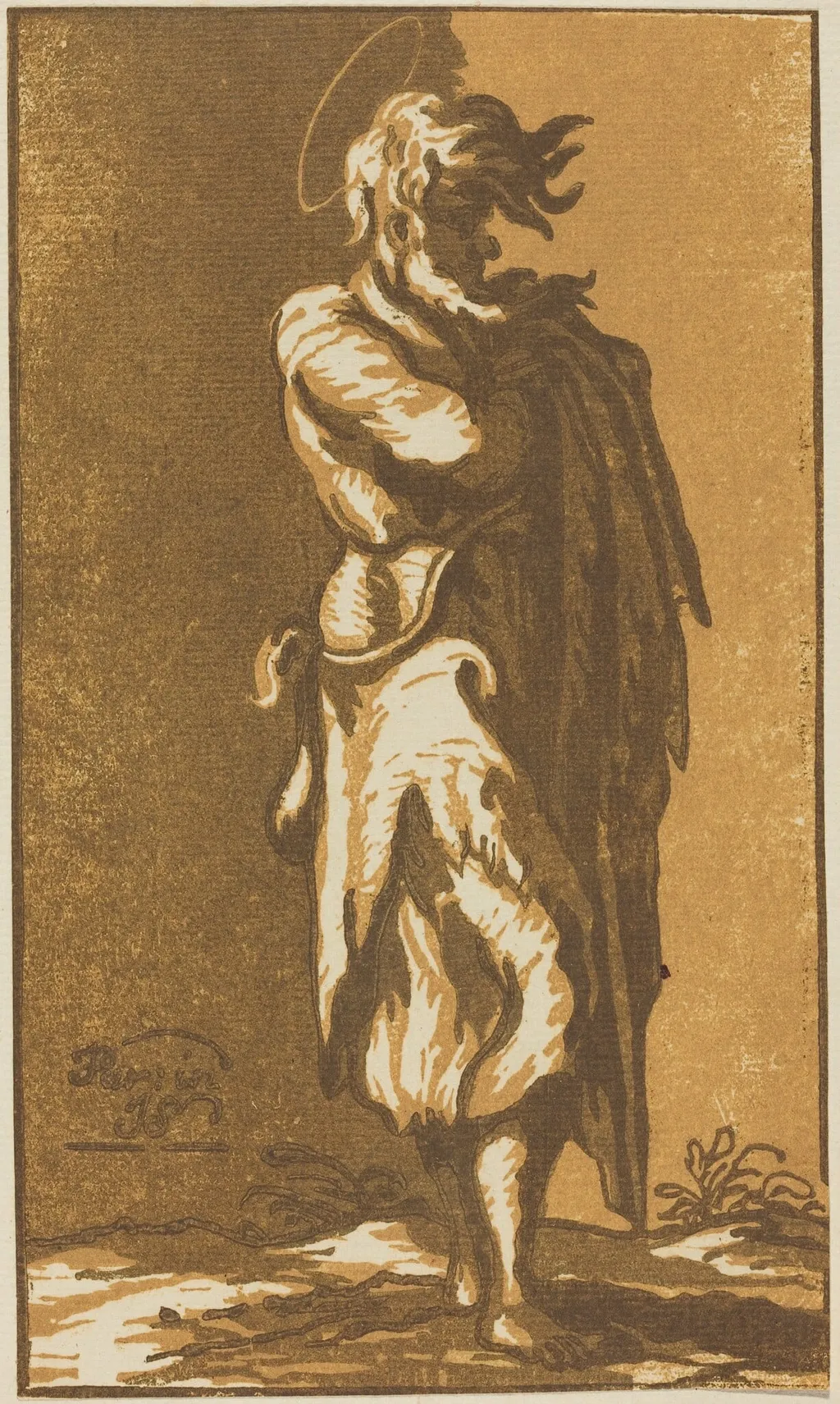
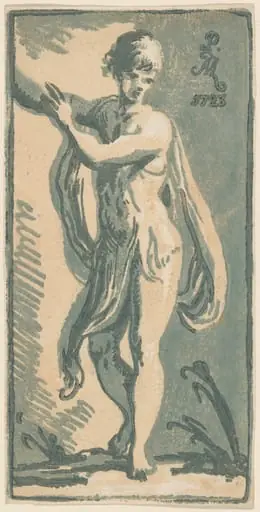
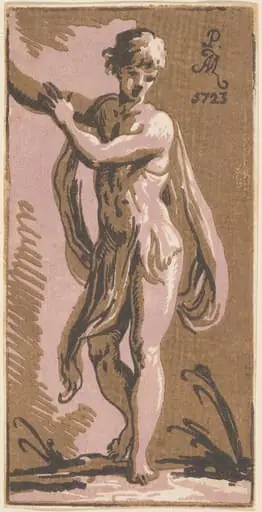
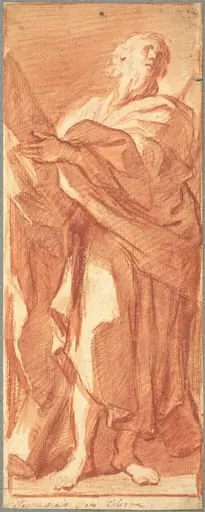
Male Saint Standing with Folded Arms, Facing to the Right is an ink print by the Romanticist artist John Skippe. It dates from 1781 and is held in the collection of the National Gallery of Art.
About this work
Overview
John Skippe’s 1781 woodcut, titled Male Saint Standing with Folded Arms, Facing to the Right, presents a solitary, muscular figure rendered in chiaroscuro. Executed in orange‑brown, medium, and dark brown tones, the print emphasizes the saint’s solemn posture through stark light‑and‑shadow contrasts, creating a dramatic visual presence on a textured, rocky ground.
Subject & Meaning
The central figure is a male saint, identifiable by his loose cloak draped over one shoulder and a wide‑brimmed hat, both typical of 18th‑century religious iconography. His arms are crossed, a gesture that can suggest contemplation, resolve, or a defensive stance, while the half‑lit face and subtle plant element introduce a quiet, introspective atmosphere.
Technique & Style
Skippe employed the chiaroscuro woodcut method, carving separate blocks for each tonal layer—light, medium, and dark—then printing them in succession. This layered approach produces deep shadows and luminous highlights, allowing the figure to emerge from the background with a three‑dimensional quality uncommon in single‑block woodcuts of the period.
History & Provenance
Created in 1781, the print belongs to a late‑18th‑century revival of chiaroscuro woodcutting in England, a technique originally popularized in Italy. While specific ownership records are scarce, the work is catalogued among Skippe’s religious series, reflecting the artist’s engagement with devotional subjects during a time of renewed interest in print media for ecclesiastical audiences.
Artist & collection