Artwork
A Bit on Marblehead Neck
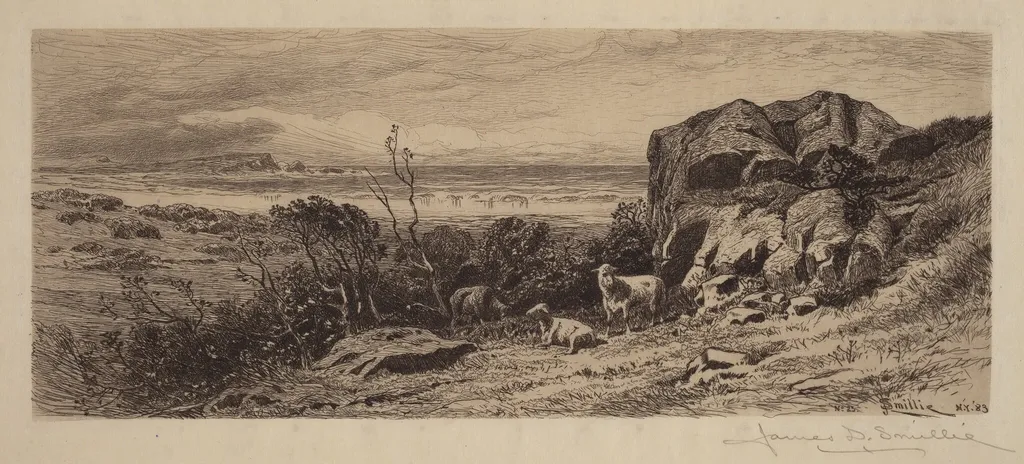
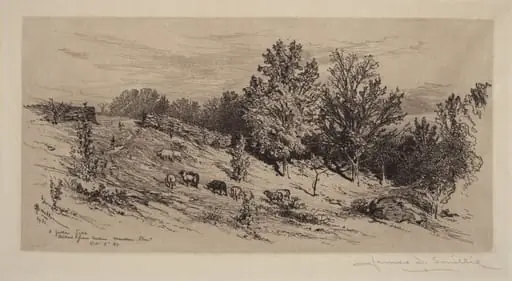
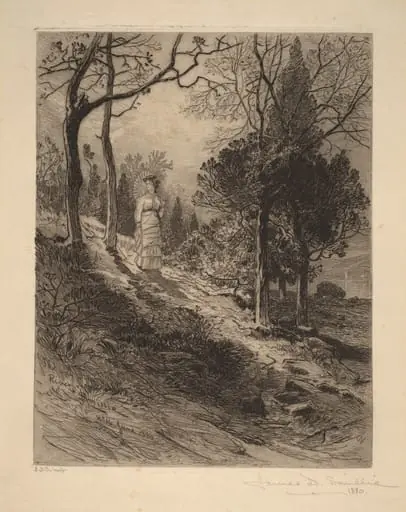
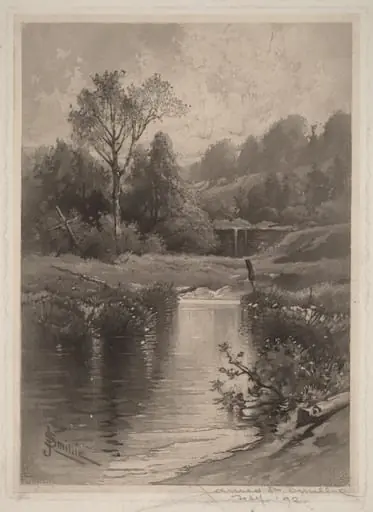
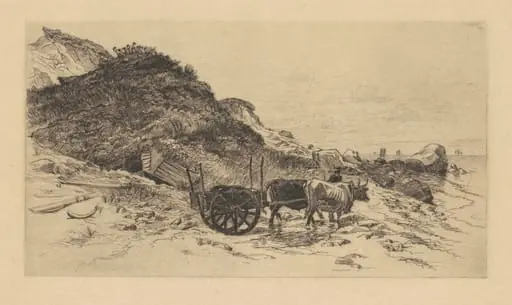
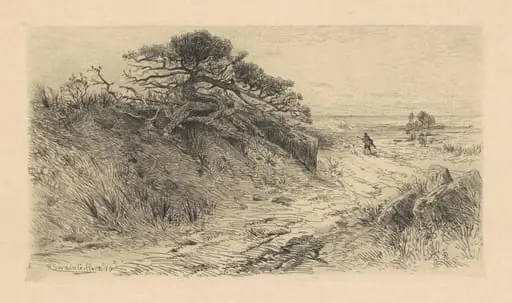
A Bit on Marblehead Neck is an ink print by the Impressionist artist James David Smillie. It dates from 1883 and is held in the collection of the National Gallery of Art.
About this work
Overview
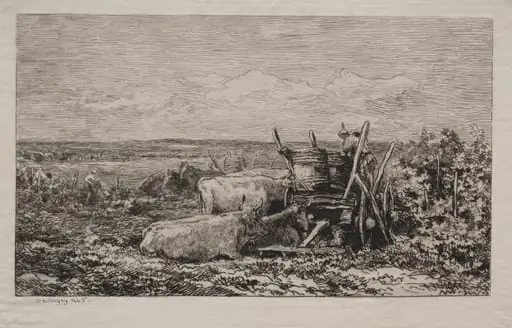
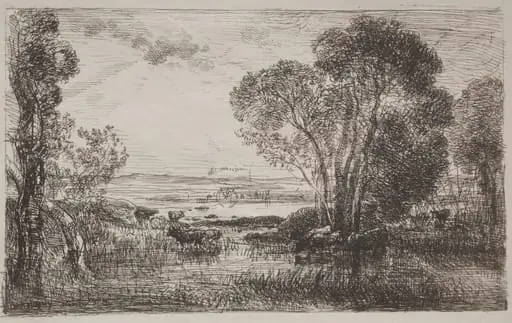
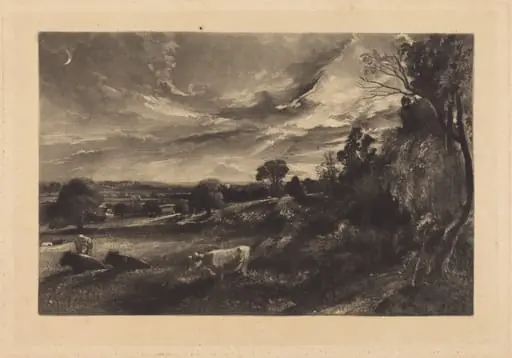
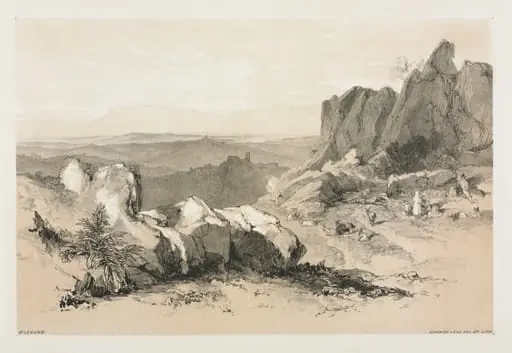
A Bit on Marblehead Neck is an 1883 etching by James David Smillie, rendered in black ink on wove paper. The work captures a tranquil coastal landscape in monochrome, emphasizing subtle tonal variations rather than color. Its quiet composition reflects the artist’s interest in American natural scenery and the quiet rhythms of rural coastal life.
Subject & Meaning
The scene depicts a rocky shoreline along Marblehead Neck, Massachusetts, with grazing sheep near the water’s edge, scattered shrubs, and a solitary tree. Distant hills recede into a soft horizon, suggesting stillness and isolation. The absence of human figures amplifies the sense of solitude, inviting contemplation of nature’s quiet persistence.
Technique & Style
Smillie employed fine, controlled etching lines to render textures—rough stone, fine grass, and distant atmospheric haze. The ink’s density varies to suggest light and shadow, with minimal cross-hatching to preserve a sense of openness. The technique favors precision over drama, aligning with 19th-century American topographical print traditions.
History & Provenance
Created in 1883, the print emerged during Smillie’s active period as a landscape etcher, following his training under his father, James Smillie, and exposure to European printmaking. It was likely produced for private collectors or art societies, as was common among American etchers of the time, though its early ownership records remain undocumented.
Context
In the late 19th century, American artists increasingly turned to local landscapes as subjects, moving away from European models. Etching experienced a revival as a fine art medium, with artists like Smillie using it to convey intimate, observational views of the American coast. Marblehead Neck, a known artistic locale, attracted several printmakers for its rugged, unspoiled character.
Legacy
The work contributes to a body of American etchings that documented regional scenery with quiet fidelity. While not widely exhibited today, it remains a representative example of Smillie’s contribution to the American etching revival, valued for its technical restraint and sensitivity to natural detail.
Artist & collection

Artist
James David Smillie was an American artist, cofounder of the American Watercolor Society and New York Etching Club. His brother was painter George Henry Smillie.