Artwork
Pansies
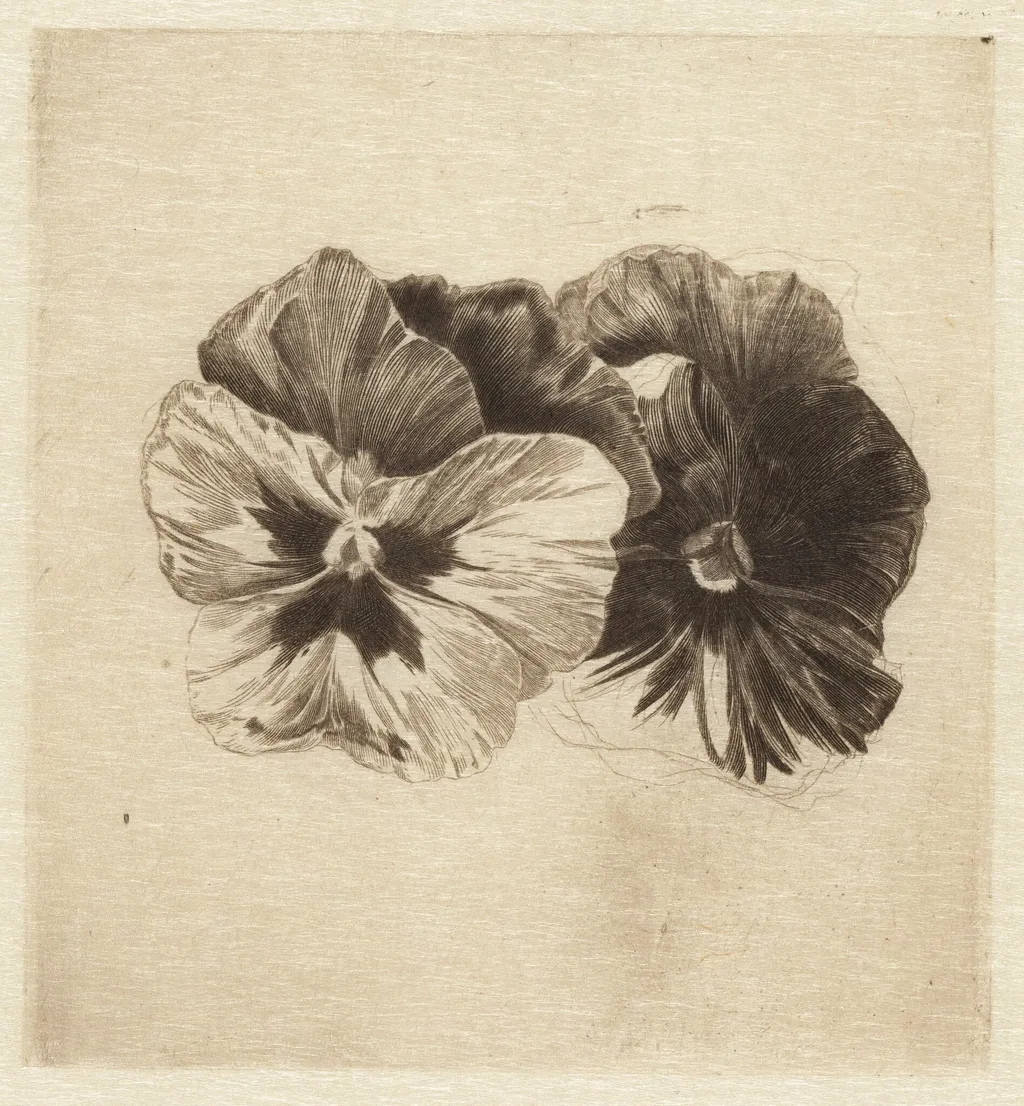
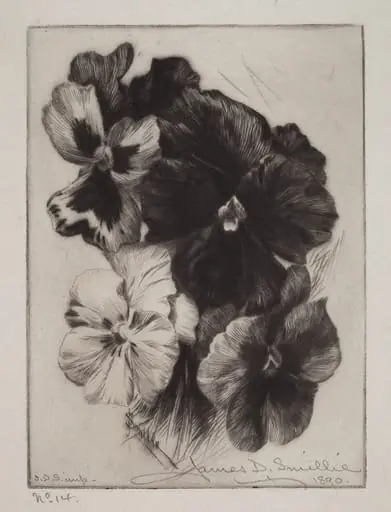
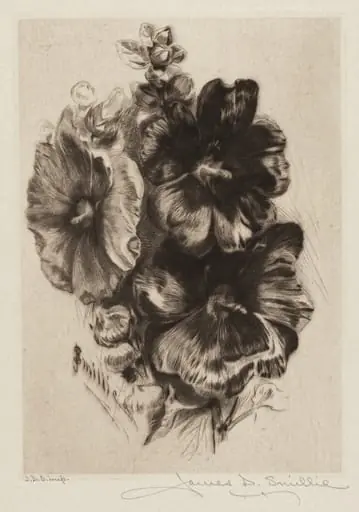
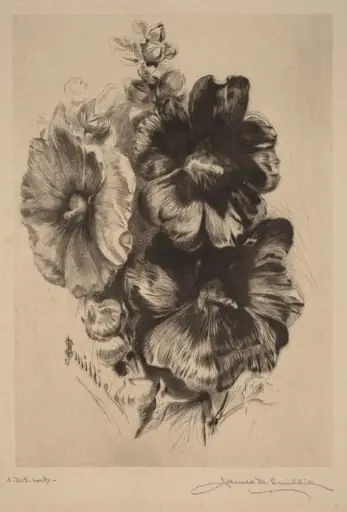
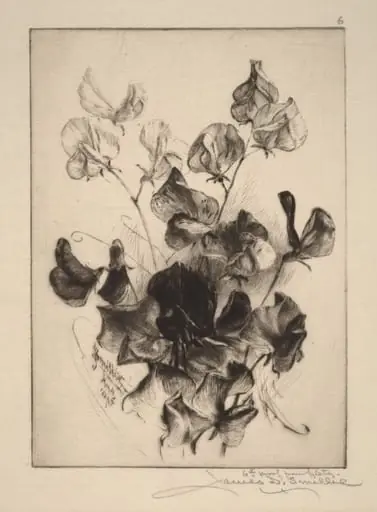
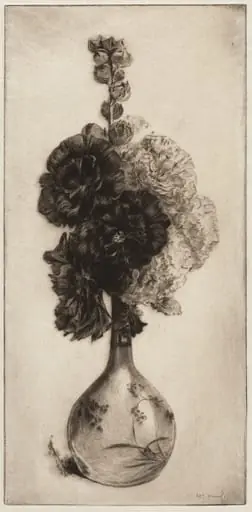
Pansies is an ink print by James David Smillie. It is held in the collection of the National Gallery of Art.
About this work
Overview
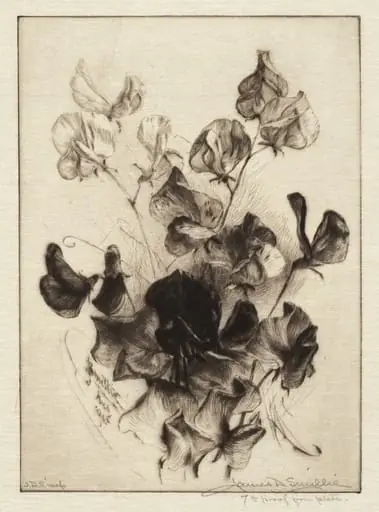
James David Smill’s 1910 print titled *Pansies* is an etching executed in black on wove paper. The work presents a modest botanical study, depicting two pansy blossoms positioned closely together, one slightly receding behind the other, rendered in fine linear detail that suggests volume against the light background.
Subject & Meaning
The composition isolates the two flowers, focusing attention on their form and texture rather than a broader setting. By arranging the blossoms in overlapping proximity, the image invites contemplation of natural variation and the delicate structure of the petals, emphasizing the quiet observation of everyday flora.
Technique & Style
Smill employed traditional etching methods, incising lines into a metal plate with a sharp point to create the delicate strokes that define the petals. Ink was applied to the recessed lines and transferred to the wove paper, producing a stark monochrome image where fine cross-hatching conveys subtle shading and a sense of three-dimensionality.
History & Provenance
Created in the early twentieth century, *Pansies* reflects the period’s interest in printmaking as a means of reproducing detailed studies. The work remains catalogued among Smill’s prints, though specific ownership records beyond its initial exhibition are limited, indicating it has primarily circulated within private collections and institutional holdings.
Artist & collection

Artist
James David Smillie was an American artist, cofounder of the American Watercolor Society and New York Etching Club. His brother was painter George Henry Smillie.