Artwork
Queen Mary
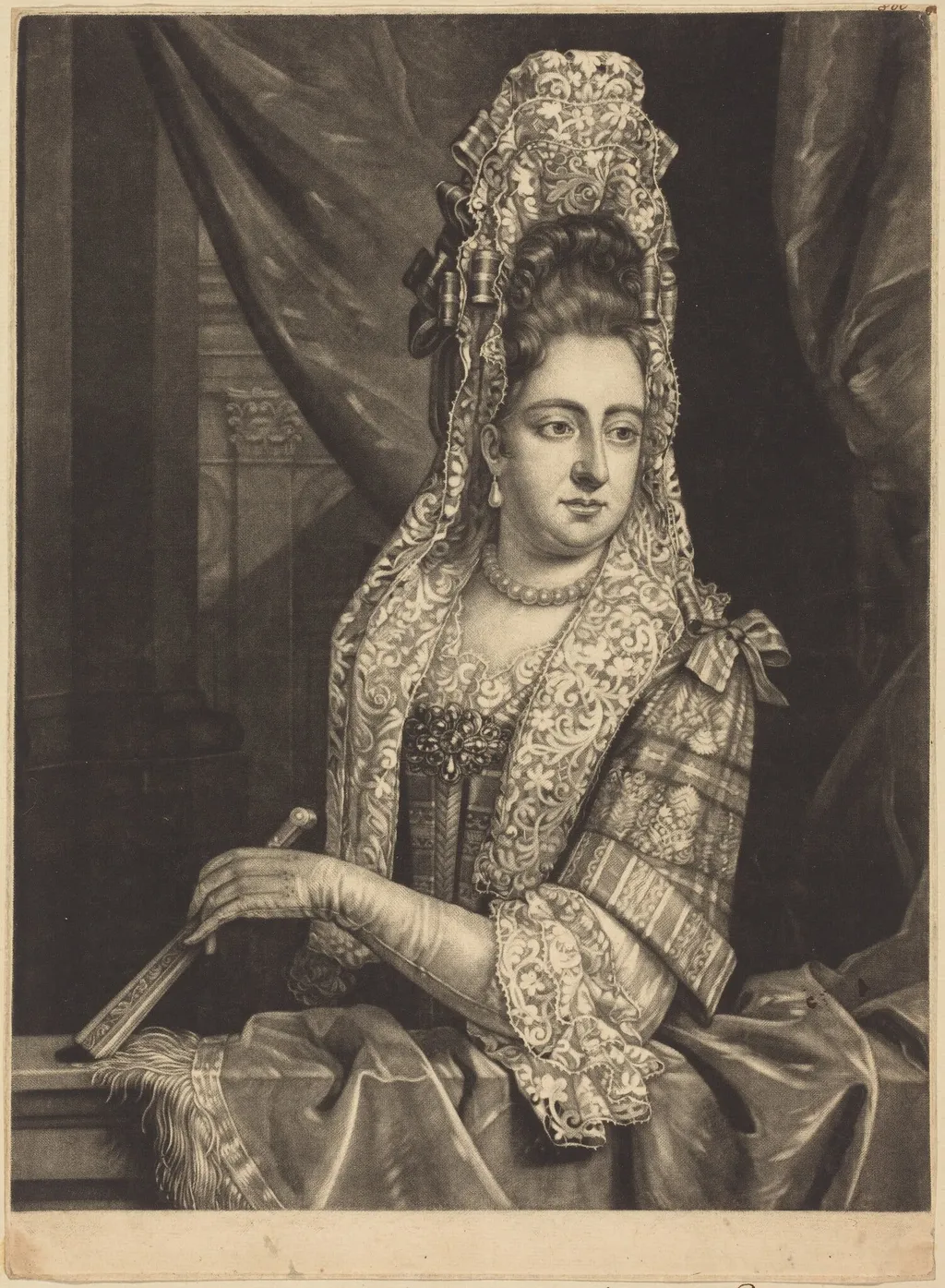
Queen Mary is an ink print by the Baroque artist John Smith. It dates from 1690 and is held in the collection of the National Gallery of Art.
About this work
Overview
The technique emphasizes tonal gradations, producing a rich interplay of light and shadow that defines her figure against a softly blurred background.
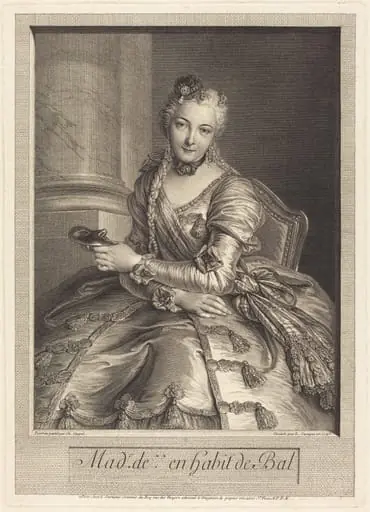
Created in 1690 by English engraver John Smith, this mezzotint depicts Queen Mary II of England. Executed on laid paper, the print captures her in formal court attire, rendered entirely in grayscale. The technique emphasizes tonal gradations, producing a rich interplay of light and shadow that defines her figure against a softly blurred background. Mezzotint, known for its velvety blacks and subtle transitions, was chosen here to convey both dignity and material opulence.
Subject & Meaning
The portrait presents Queen Mary II in the regalia of her royal status, emphasizing her role as co-monarch alongside William III. Her elaborate wig, lace collar, and patterned gown signify aristocratic refinement, while the fan and poised hand suggest composure and authority. The draped curtain behind her evokes theatricality, reinforcing the performative nature of monarchy. The image functions as both likeness and symbol, projecting legitimacy and decorum during a turbulent political era.
Technique & Style
John Smith employed mezzotint, a process involving roughening a copper plate with a rocker to hold ink, then scraping smooth areas for highlights. This allowed for unprecedented tonal depth and soft transitions, ideal for rendering textures like lace, silk, and skin. The Baroque aesthetic is evident in the dramatic chiaroscuro and attention to luxurious detail. Unlike line-based engravings, mezzotint’s atmospheric quality lent itself to lifelike portraiture, aligning with contemporary European tastes for emotional resonance.
History & Provenance
The print was produced shortly after Mary’s ascension to the throne in 1689, likely to meet public demand for royal imagery following the Glorious Revolution. John Smith, one of England’s leading reproductive engravers, specialized in translating portraits into prints for wider circulation. This work was part of a series documenting the new monarchy, intended for distribution among elites and institutions. Its survival in multiple institutional collections attests to its early and sustained significance.
Context
In late 17th-century England, printed portraits served as tools of political communication, especially after the restoration of the monarchy. Mezzotints like this one bridged the gap between painted originals and mass reproduction, making royal figures visible beyond court circles. The style mirrored continental Baroque trends, particularly Dutch and Flemish portraiture, while adapting to English tastes for restrained grandeur. The image reflects a moment when visual culture reinforced constitutional change through symbolic representation.
Legacy
Smith’s mezzotint of Queen Mary became a standard reference for later depictions of the monarch, influencing both printmakers and painters. Its technical precision helped elevate mezzotint from a niche method to a respected medium in British portraiture. Though no longer widely displayed, the print remains in major collections as an example of how printmaking shaped public perception of royalty in the early modern period, preserving the visual language of power for future generations.
Artist & collection

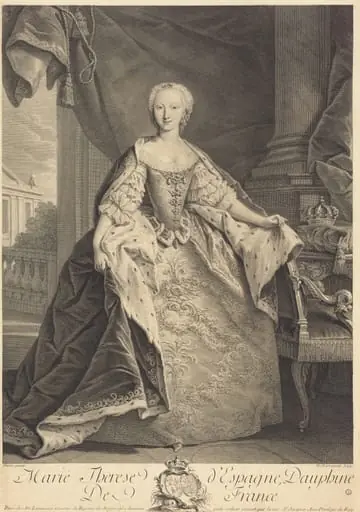 Marie Therese of Spain, Dauphine of France
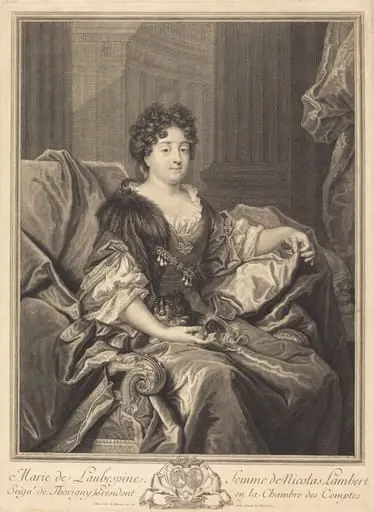 Marie de Laubespine
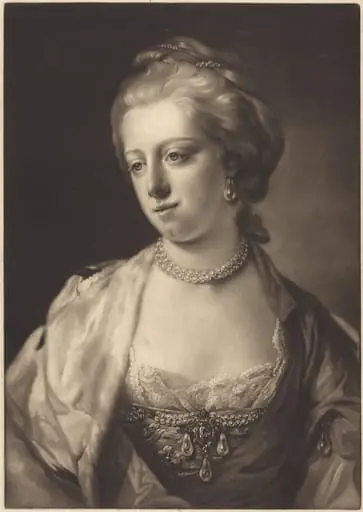 Princess Caroline Matilda, Queen of Denmark
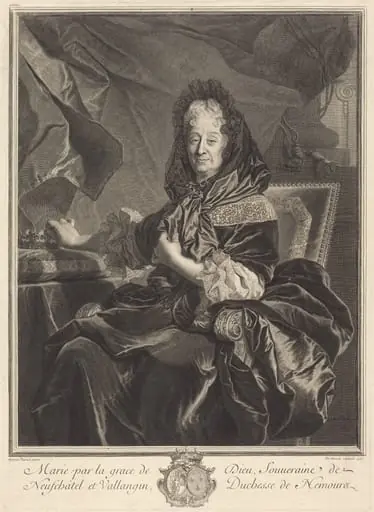 Duchesse de Nemours
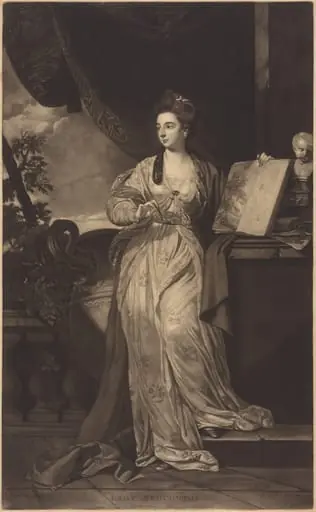 Lady Broughton
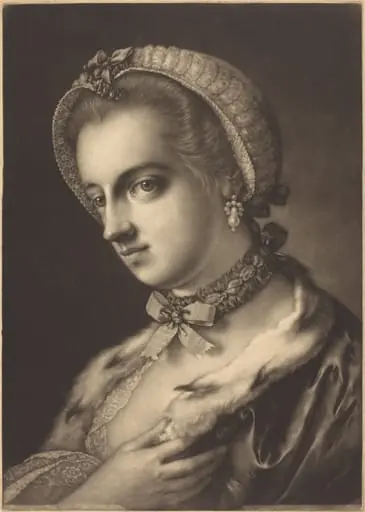 Imaginary Portrait of an English Beauty
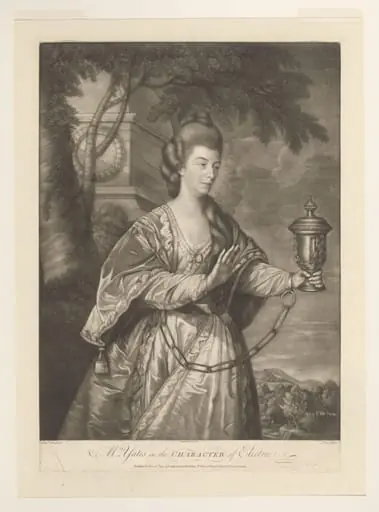 H Beard Print Collection
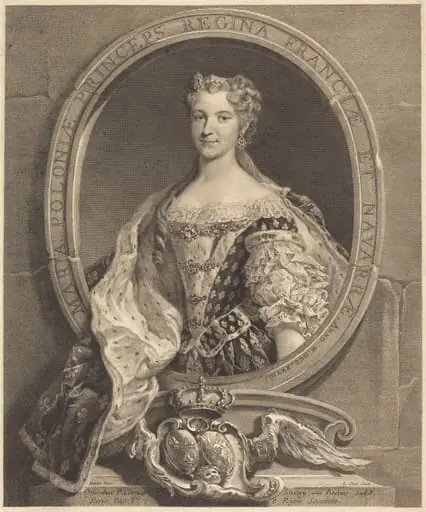 Marie Leszczynska of Poland, Queen of France
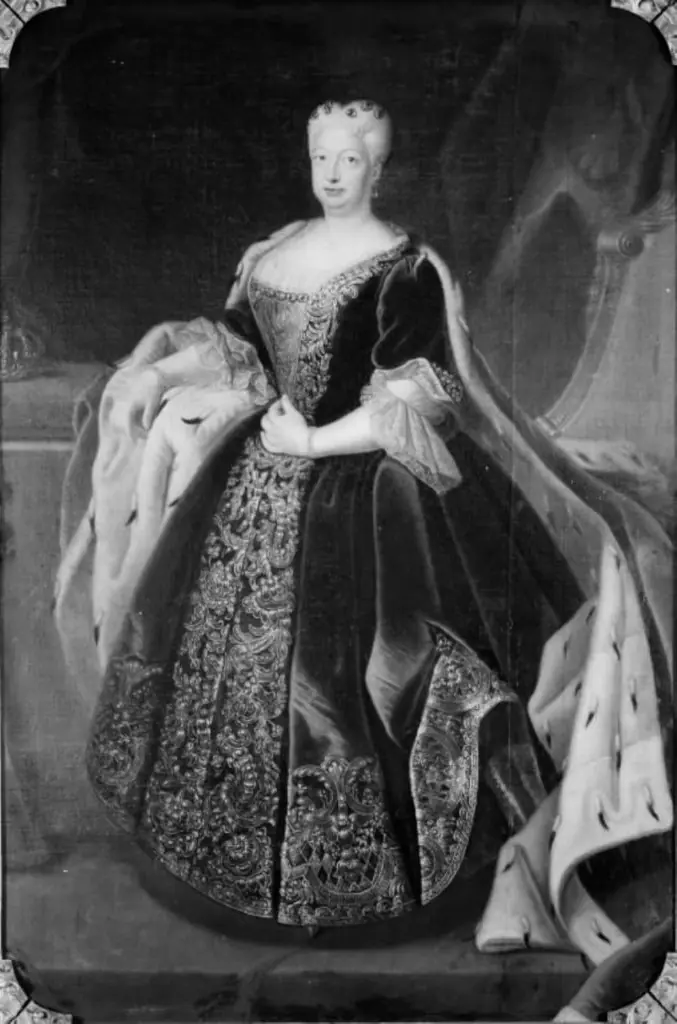 Portrait of Sophie Dorothea of Prussia
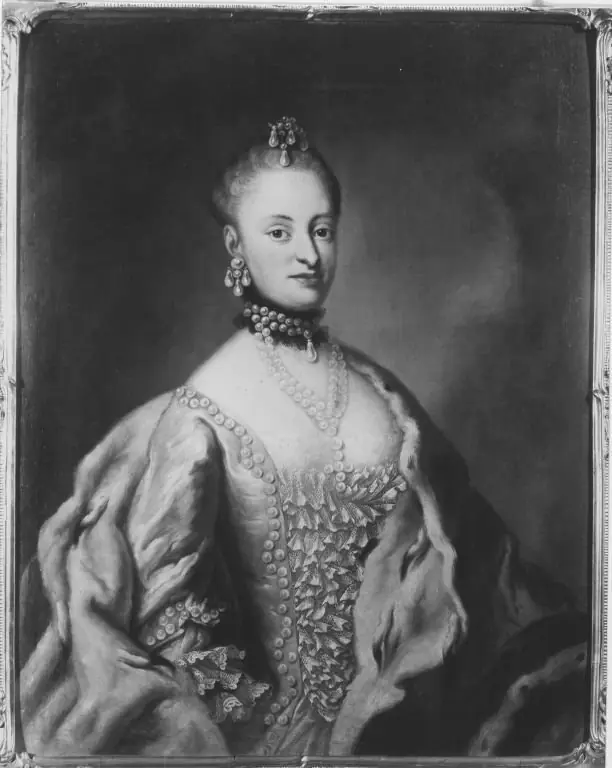 Maria Anna, Gemahlin des Kurfürsten Max III. Joseph von Bayern
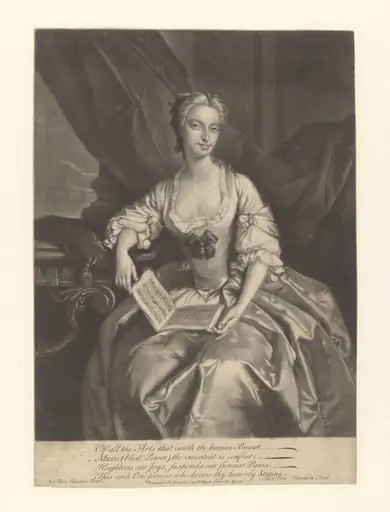 H Beard Print Collection
 Mme. de M ... en habit de bal