Artwork
Legonring on the Ganges
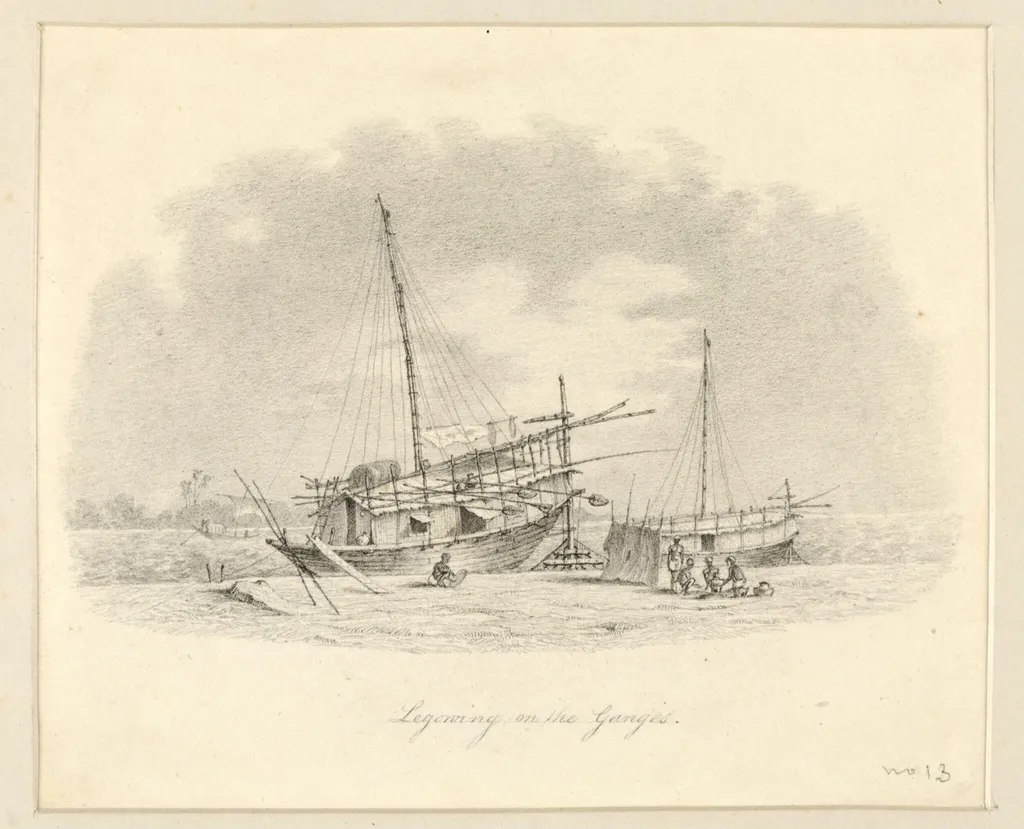
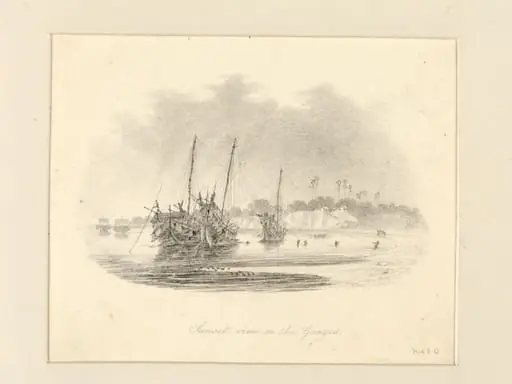
Legonring on the Ganges is a drawing by the Romanticist artist Robert Captain Smith. It dates from 1830 and is held in the collection of the Victoria and Albert Museum.
About this work
Overview
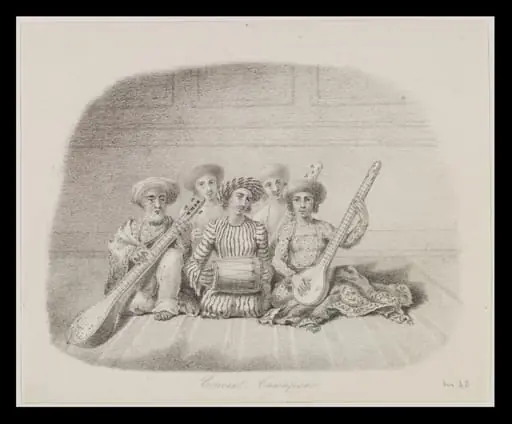
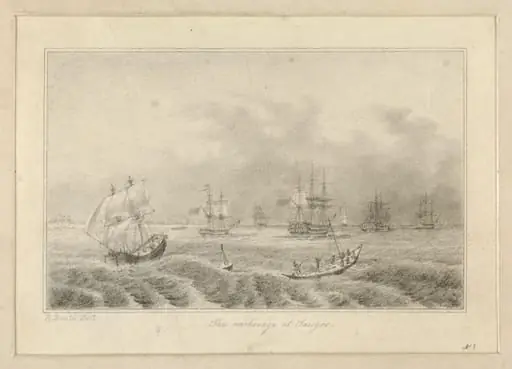
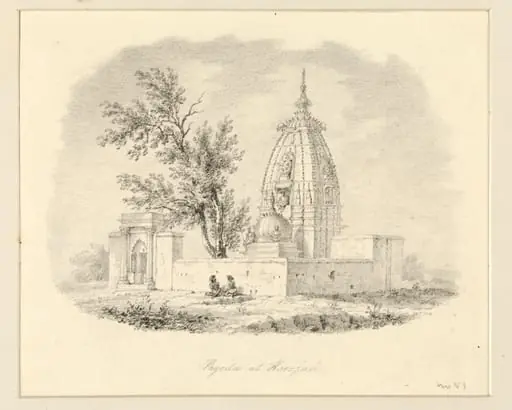
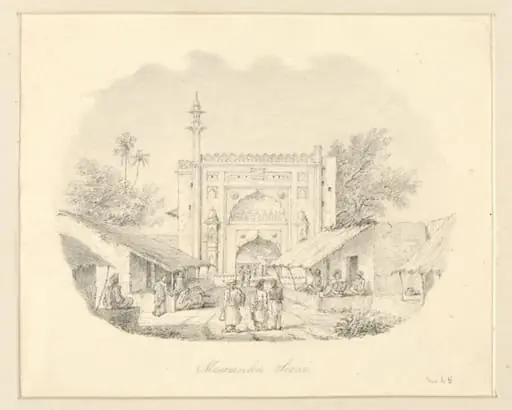
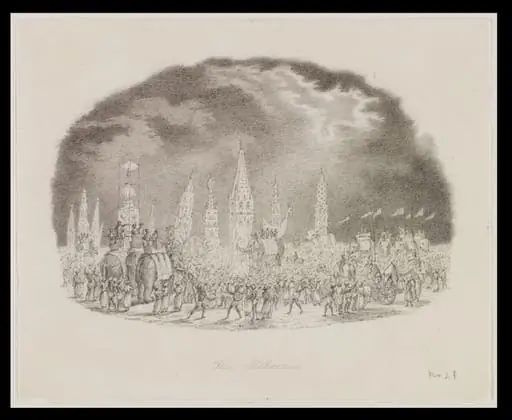
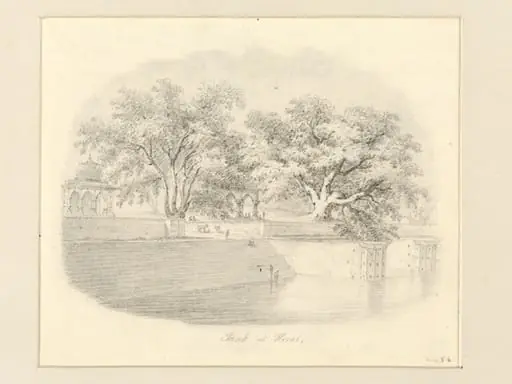
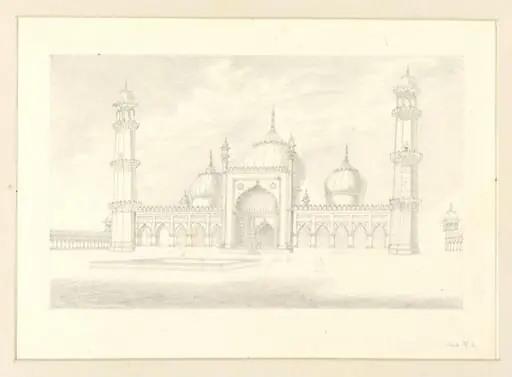
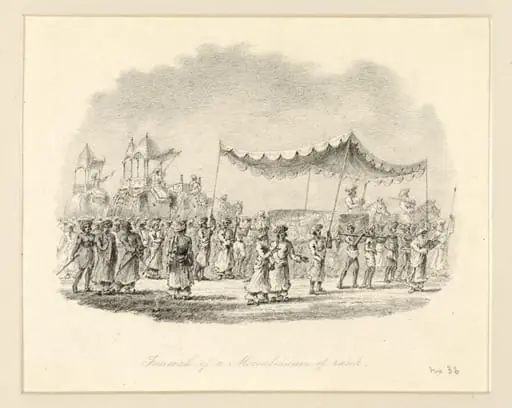
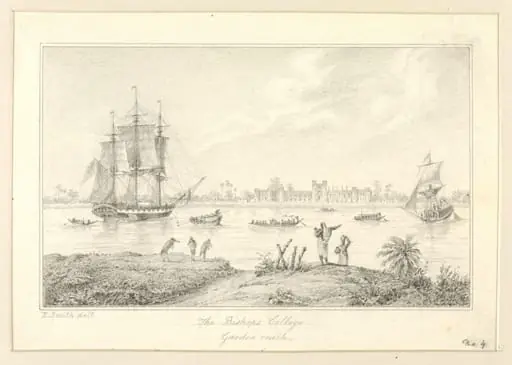
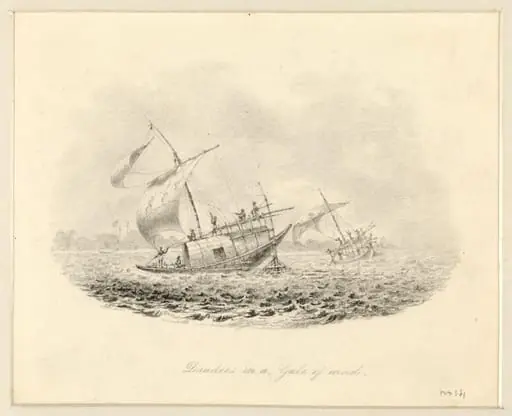
Legonring on the Ganges is a pencil drawing created by Captain Robert Smith in 1830, featuring a circular structure alongside the Ganges River. It forms part of his Pictorial Journal of Travels in Hindustan, a collection of 65 mounted illustrations documenting his Indian voyages.
Subject & Meaning
The drawing captures a serene river scene with two large boats, multiple figures on the shore, and smaller floating objects. The circular structure, central to the composition, is set against the daily activity along the Ganges, reflecting Smith’s observational approach to documenting Indian life and architecture.
Technique & Style
Executed in a detailed style with extensive line work and shading, the drawing showcases Smith’s mastery of cross-hatching. This technique, characteristic of Romantic-era artistic practices, enhances the textures of boats, water, and surroundings, set against a muted gray background that accentuates the subjects.
History & Provenance
Originally part of Captain Smith’s travel journal (1828-1829, with later additions from 1831-32), Legonring on the Ganges was donated to the collection in 1915, becoming part of a broader archival record of 19th-century Indian landscapes and life.
Context
Created during the British colonial era, the drawing reflects the artistic and exploratory interests of European travelers in India. It blends documentary precision with the emotive and detailed rendering typical of Romanticism, capturing a moment in the cultural and geographical encounter between Britain and India.
Legacy
As part of Smith’s Pictorial Journal, Legonring on the Ganges contributes to the visual history of 19th-century India, offering insights into both the country’s architectural and daily life during this period and the artistic practices of traveling European artists.
Artist & collection