Artwork
The Prima Macchina for the Chinea of 1739: Mount Parnassus with Apollo, the Muses, and Pegasus
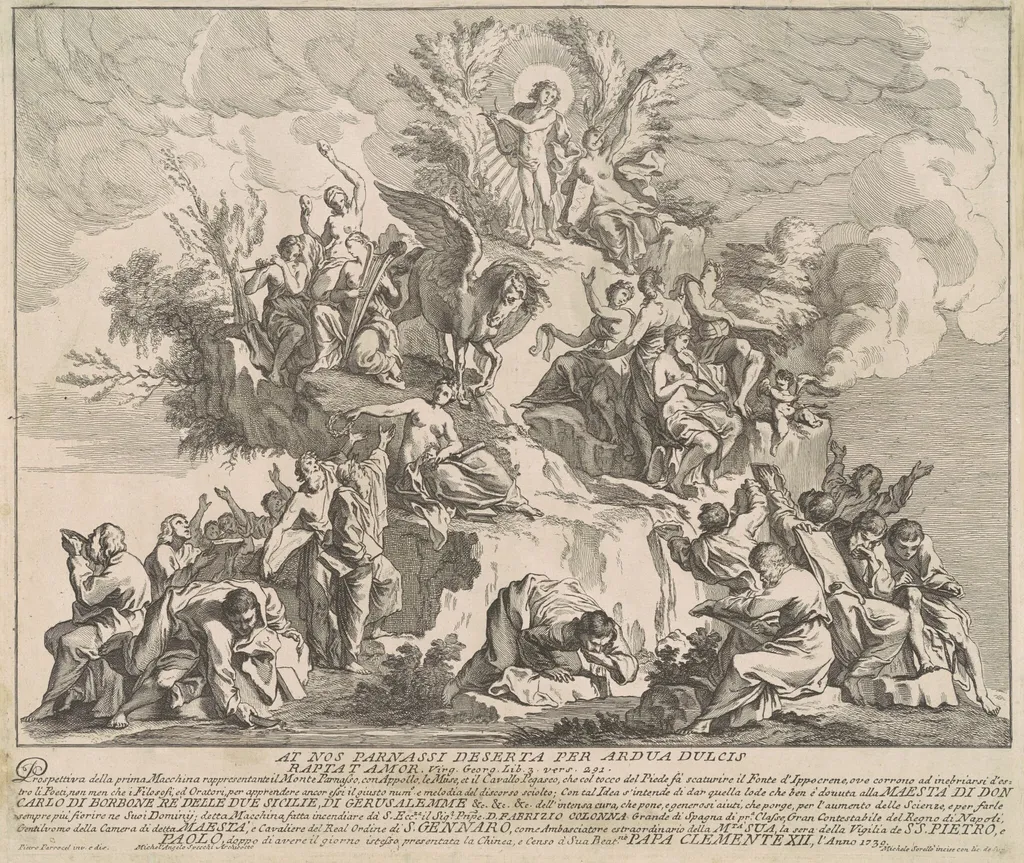
The Prima Macchina for the Chinea of 1739: Mount Parnassus with Apollo, the Muses, and Pegasus is an ink print by the Baroque artist Miguel de Sorellò. It dates from 1739 and is held in the collection of the National Gallery of Art.
About this work
At the center, a winged horse stands near a fountain while a group of people—some playing instruments, others singing—crowd around it.
This image is a busy, black-and-white scene packed with figures. At the center, a winged horse stands near a fountain while a group of people—some playing instruments, others singing—crowd around it. Above them, a man with a lyre floats in the air, surrounded by clouds and leaves. The whole scene looks like a crowded party in a forest, with lots of movement and drama.
The tiny text at the bottom hints this was made for a special event in 1739, likely a performance or celebration. The mix of music, mythical creatures, and nature suggests it’s tied to stories about gods and poets.
If this style of crowded, dramatic scenes interests you, look up Baroque.
Overview
The work entitled *Prima Macchina for the Chinea of 1739: Mount Parnassus with Apollo, the Muses, and Pegasus* is an etching executed in 1739 by the Italian printmaker Miguel de Sorellò. It was produced as a visual component of the Chinea festivities, a ceremonial celebration held that year.
Subject & Meaning
The print depicts the mythic summit of Mount Parnassus, the legendary home of Apollo and his retinue of Muses. Central to the composition is Pegasus, the winged horse, positioned beside a fountain, while Apollo hovers above with his lyre. Musicians and singers populate the scene, evoking the ancient association of the mountain with poetry, music, and artistic inspiration.
Technique & Style
Rendered in dense black‑and‑white line work, the etching employs a crowded, dynamic arrangement typical of late Baroque printmaking. Fine hatching creates texture in clouds, foliage, and drapery, while the multitude of figures generates a sense of movement and theatricality that guides the viewer’s eye across the elaborate tableau.
History & Provenance
Created specifically for the 1739 Chinea, a public pageant that celebrated the annual tribute of the Kingdom of Naples to the Pope, the print functioned as a decorative element of the event’s visual program. Its original purpose was to commemorate the occasion, and it later entered private collections before being acquired by a museum specializing in European prints.
Context
Mount Parnassus served as an emblem of artistic excellence in 18th‑century Italy, and the inclusion of Apollo, the Muses, and Pegasus aligns the Chinea celebration with the ideals of cultural patronage. The work reflects the broader Baroque fascination with mythological allegory and the integration of music, poetry, and visual art in public spectacles.
Legacy
Although not widely reproduced, the etching exemplifies Miguel de Sorellò’s skill in translating complex, multi‑figure compositions into the print medium. It remains a valuable reference for scholars studying the visual culture of ceremonial events and the diffusion of mythological imagery in early modern European art.
Artist & collection


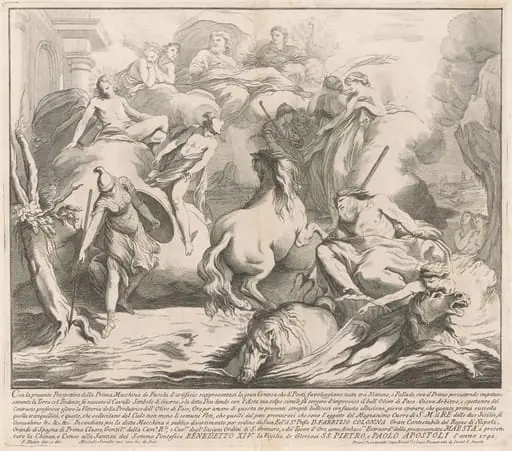 The Prima Macchina for the Chinea of 1742: The Contest of Neptune and Minerva
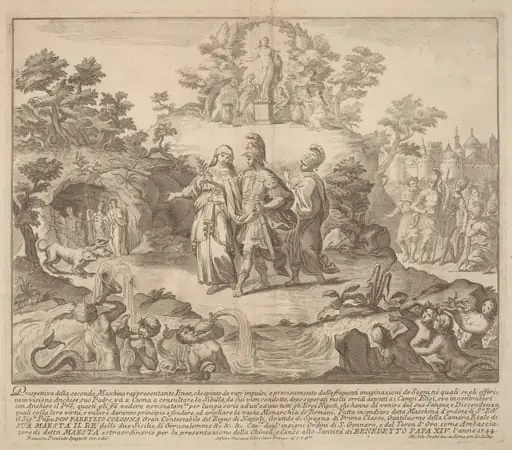 The Seconda Macchina for the Chinea of 1744: Aeneas and Cumaean Sibyl
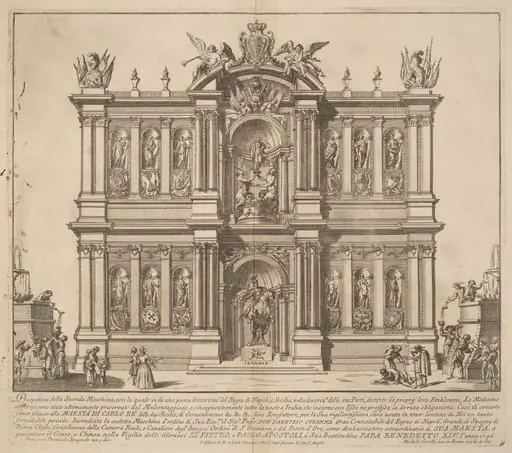 The Seconda Macchina for the Chinea of 1746: The Territories of the Kingdom of Naples
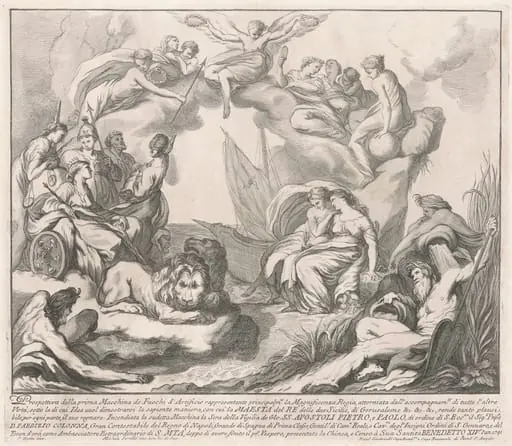 The Prima Macchina for the Chinea of 1741: Allegory of Regal Magnificence
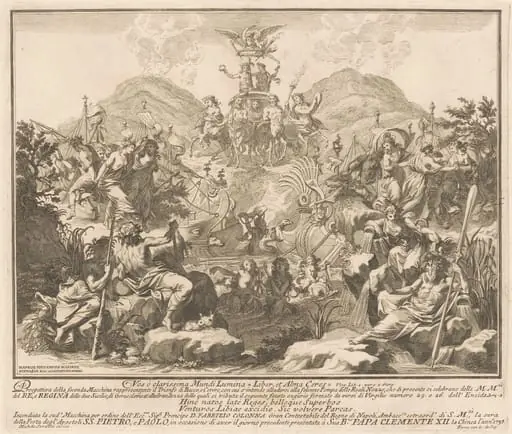 The Seconda Macchina for the Chinea of 1738: The Triumph of Bacchus and Ceres
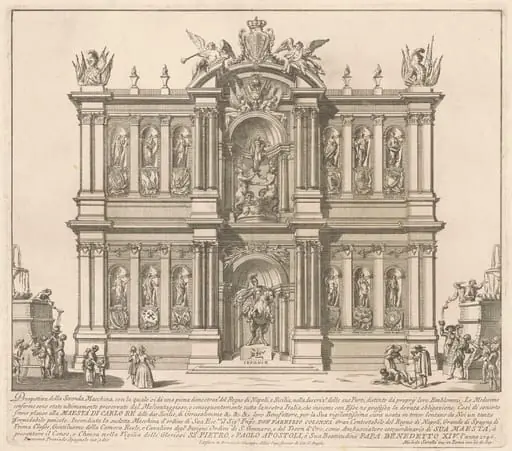 The Seconda Macchina for the Chinea of 1746: The Territories of the Kingdom of Naples
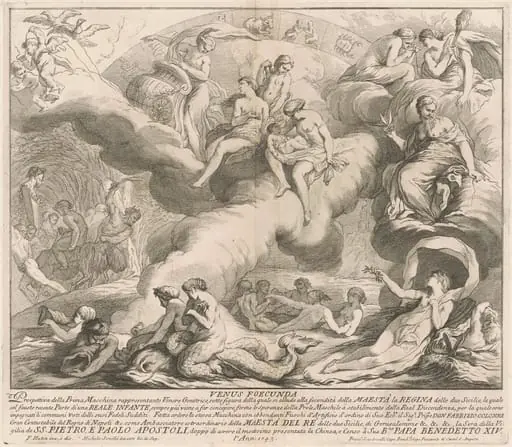 The Prima Macchina for the Chinea of 1743: Venus Genetrix
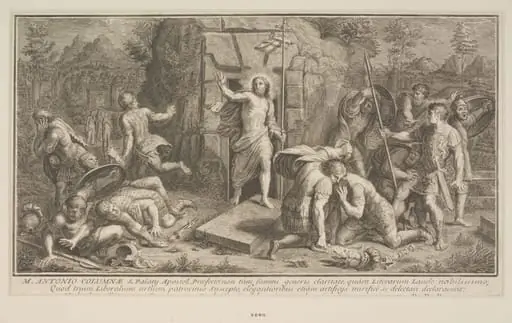 Tapestries in the Vatican, after designs by Raphael