Artwork
The Seconda Macchina for the Chinea of 1738: The Triumph of Bacchus and Ceres
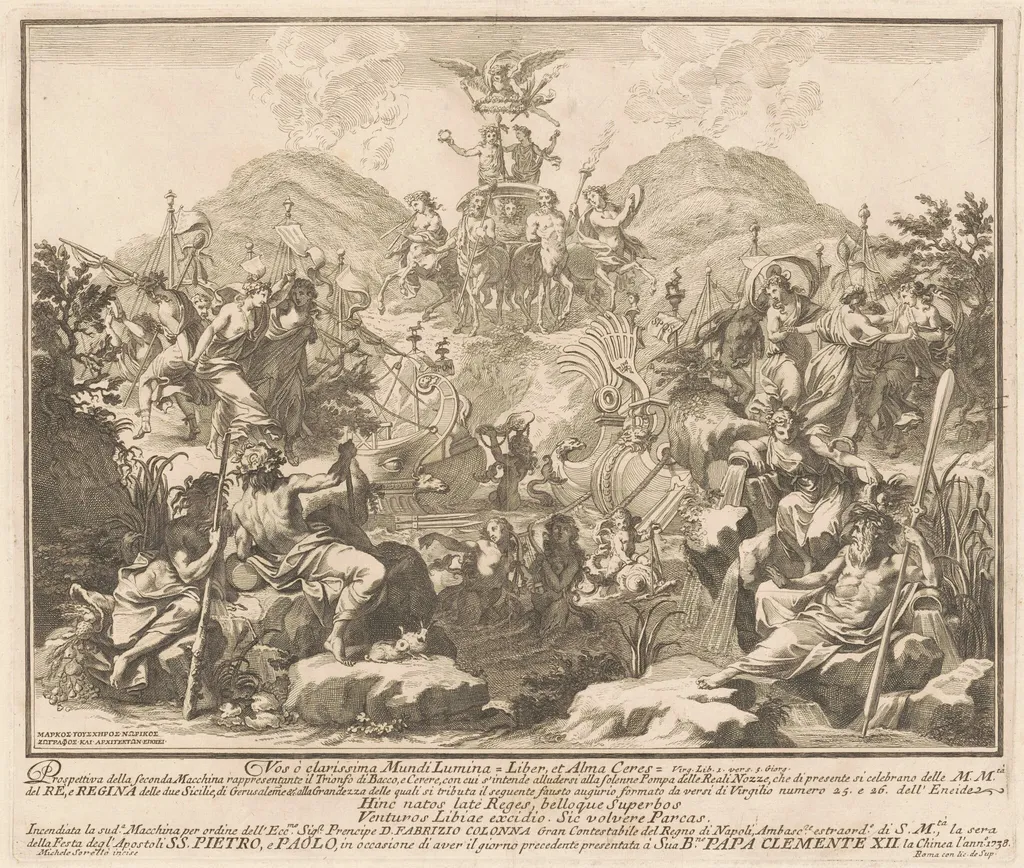
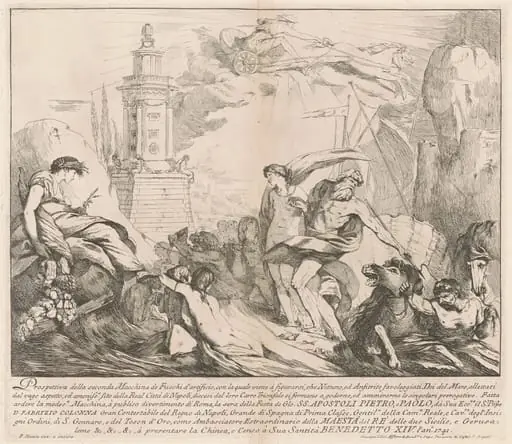
The Seconda Macchina for the Chinea of 1738: The Triumph of Bacchus and Ceres is an ink print by the Baroque artist Miguel de Sorellò. It dates from 1738 and is held in the collection of the National Gallery of Art.
About this work
The tiny text at the bottom explains this was part of a royal celebration in 1738, likely for a wedding.
This engraving is packed with swirling figures, animals, and strange machines. In the center, two large figures—one holding a cornucopia, the other a staff—stand on a rocky base. Around them, people and mythical creatures climb, wave flags, and play instruments. At the top, winged angels hover near a tower with a globe. The scene looks chaotic but planned, like a parade or festival gone wild.
The tiny text at the bottom explains this was part of a royal celebration in 1738, likely for a wedding. The mix of gods, music, and machinery suggests it’s meant to feel grand and magical.
Next, check out how this work uses etching to create such detailed, layered lines.
Overview
The Seconda Macchina for the Chinea of 1738: The Triumph of Bacchus and Ceres is an etching by Miguel de Sorellò, created in 1738.
Subject & Meaning
The etching depicts a fantastical scene with figures, animals, and machines, centered around two large figures on a rocky base, surrounded by a chaotic yet organized procession of people and mythical creatures, suggesting a grand and magical celebration.
Technique & Style
The work showcases the capabilities of etching in creating detailed, layered lines, conveying a complex and dynamic scene with numerous figures and elements.
Context
The etching was part of a royal celebration, likely a wedding, in 1738, as indicated by the text at the bottom of the print.
Artist & collection


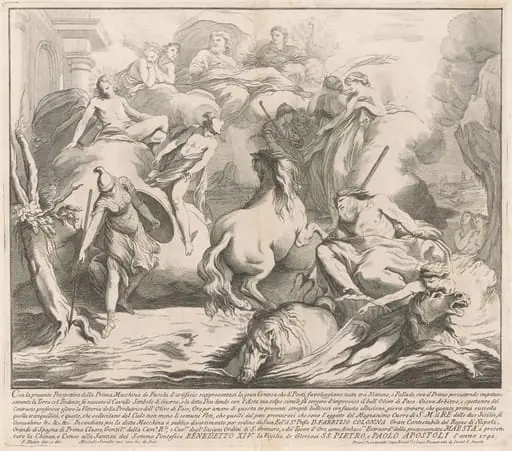 The Prima Macchina for the Chinea of 1742: The Contest of Neptune and Minerva
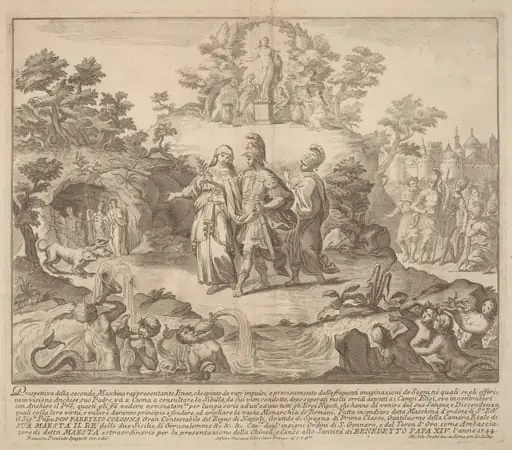 The Seconda Macchina for the Chinea of 1744: Aeneas and Cumaean Sibyl
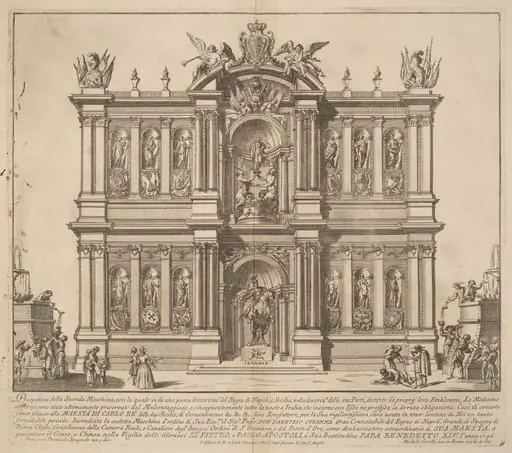 The Seconda Macchina for the Chinea of 1746: The Territories of the Kingdom of Naples
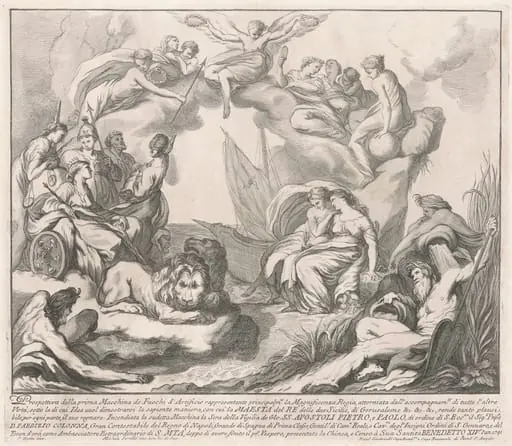 The Prima Macchina for the Chinea of 1741: Allegory of Regal Magnificence
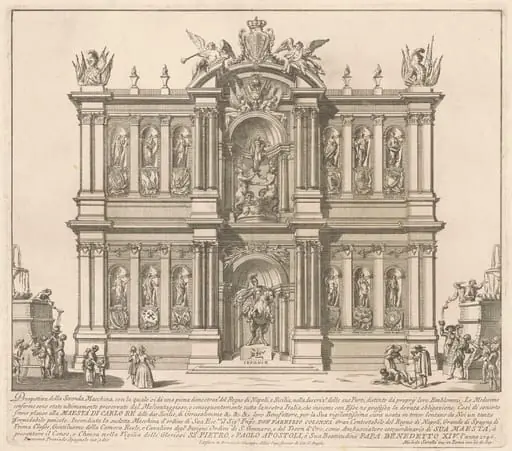 The Seconda Macchina for the Chinea of 1746: The Territories of the Kingdom of Naples
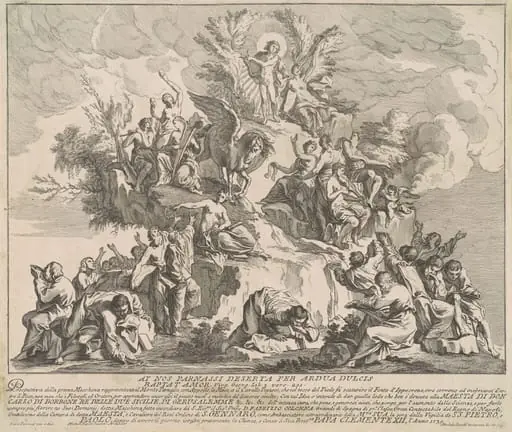 The Prima Macchina for the Chinea of 1739: Mount Parnassus with Apollo, the Muses, and Pegasus
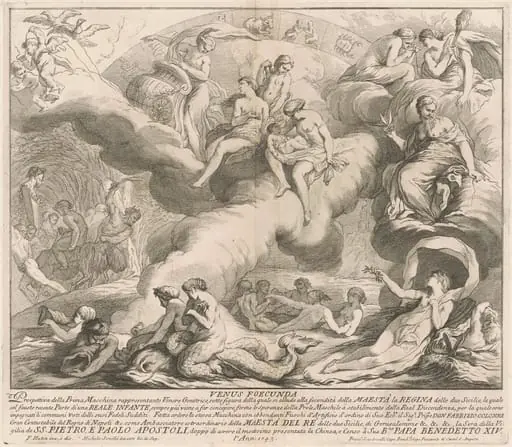 The Prima Macchina for the Chinea of 1743: Venus Genetrix
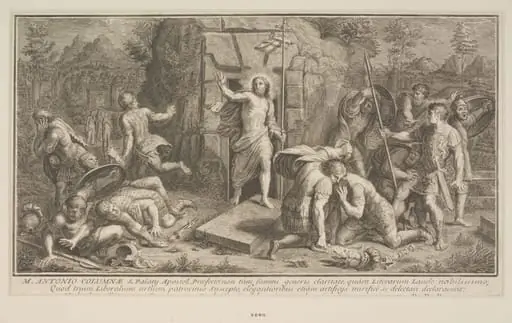 Tapestries in the Vatican, after designs by Raphael