Artwork
Saint Matthias (?)
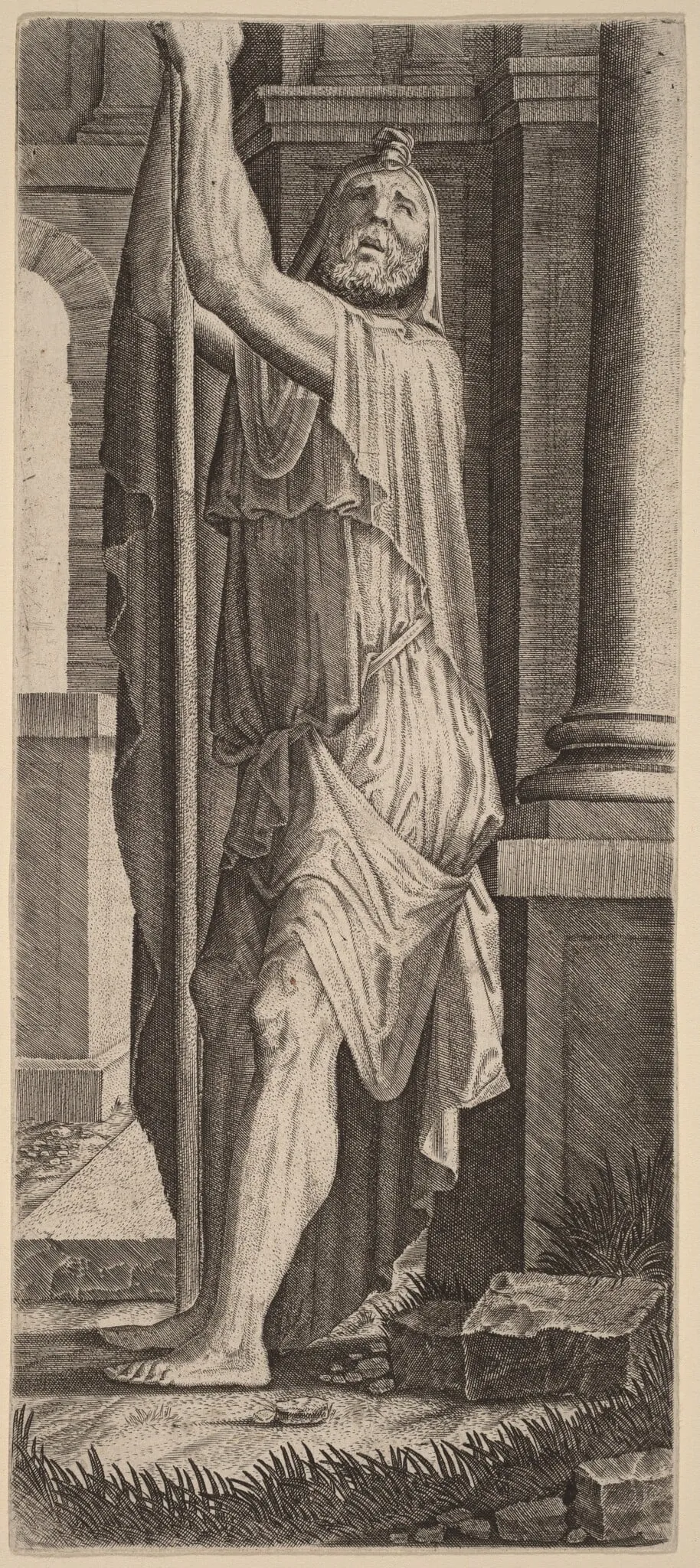
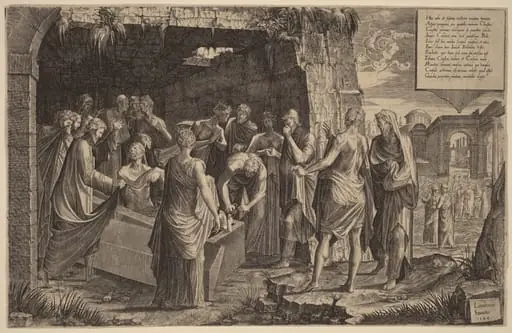
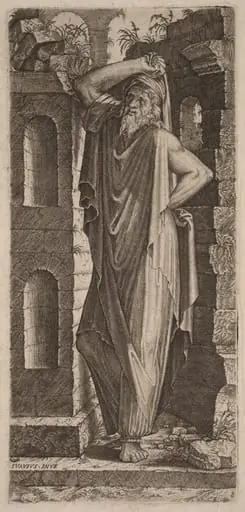
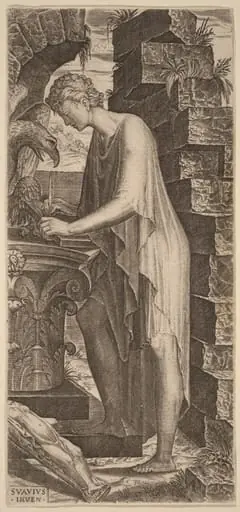
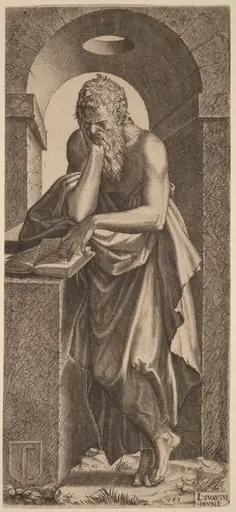
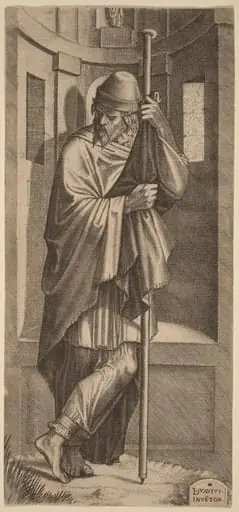
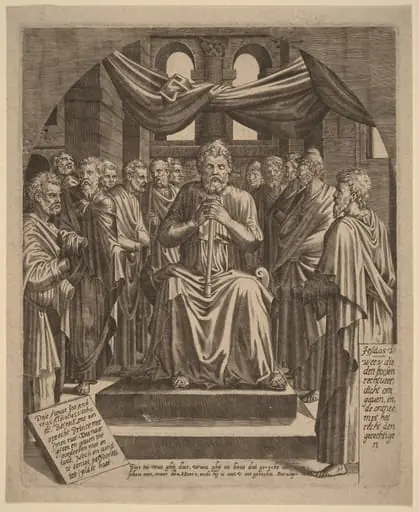
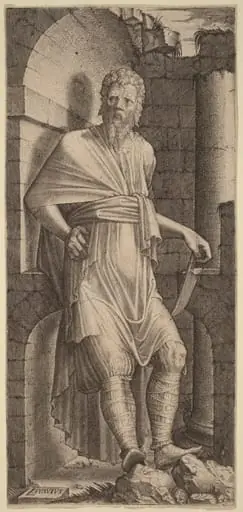
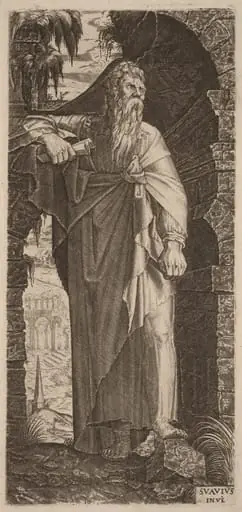
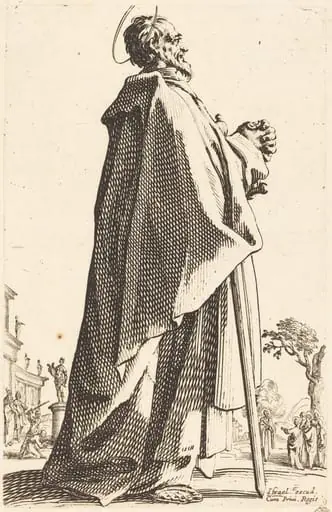
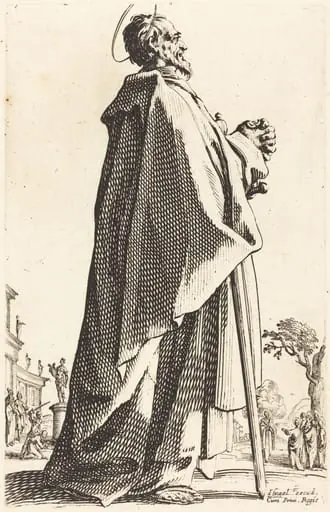
Saint Matthias (?) is an ink print by the Renaissance artist Lambert Suavius. It dates from 1548 and is held in the collection of the National Gallery of Art.
About this work
Overview
Lambert Suavius’s black‑and‑white print, dated to around 1548, depicts a bearded figure in flowing robes positioned within a doorway. The figure lifts a heavy curtain with both hands, suggesting a moment of revelation. The composition rests on a rocky ground with a modest plant, and the subject is tentatively identified as Saint Matthias.
Subject & Meaning
The central figure, likely Saint Matthias, is shown in the act of unveiling, a visual metaphor for the apostle’s role in revealing the faith. The bare feet and simple surroundings emphasize humility, while the curtain may symbolize the unveiling of divine truth.
Technique & Style
Suavius employs fine, intersecting lines to model form and shade, a method known as cross‑hatching. This technique creates subtle gradations in the fabric, beard, and stone, lending the engraving a tactile quality despite its monochrome medium.
History & Provenance
The engraving originates from the mid‑16th century, a period when religious prints were widely circulated for devotional purposes. It is attributed to Lambert Suavius, a Dutch printmaker active in the 1540s, though the work’s exact ownership trail remains undocumented.
Context
Created during the Reformation era, the image reflects the period’s emphasis on personal engagement with sacred narratives. Prints such as this served both as instructional tools and as objects of private contemplation within households.
Artist & collection